Kirjojen hintavertailu. Mukana 12 390 323 kirjaa ja 12 kauppaa.

Kirjailija

Teresa L. McCarty

Kirjat ja teokset yhdessä paikassa: 9 kirjaa, julkaisuja vuosilta 2002-2024, suosituimpien joukossa Language Planning and Policy in Native America. Vertaile teosten hintoja ja tarkista saatavuus suomalaisista kirjakaupoista.

9 kirjaa

Kirjojen julkaisuhaarukka 2002-2024.

To Remain an Indian

To Remain an Indian

K. Tsianina Lomawaima; Teresa L. McCarty

TEACHERS' COLLEGE PRESS
2024
nidottu
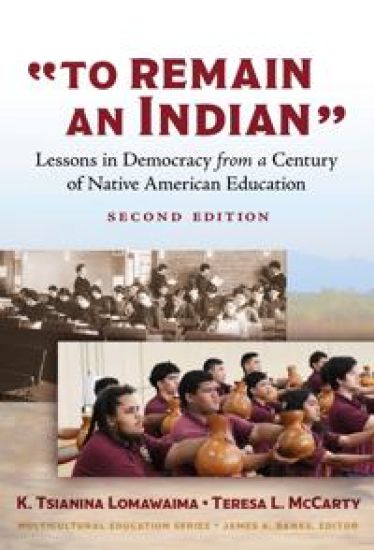
"To Remain an Indian" traces the footprints of Indigenous education in what is now the United States. Native Peoples' educational systems are rooted in ways of knowing and being that have endured for millennia, despite the imposition of colonial schooling. In this second edition, the authors amplify their theoretical framework of settler colonial Safety Zones by adding Indigenous Sovereignty Zones. Safety Zones are designed to break Indigenous relationships and impose relations of domination while Sovereignty Zones foster Indigenous growth, nurture relationships, and support life. This fascinating portrait of Native American education highlights the genealogy of relationships across Peoples, places, and education initiatives in the 20th and 21st centuries. New scholarship re-evaluates early 20th-century "reforms" as less an endorsement of Indigenous self-determination and more a continuation of federal control. The text includes personal narratives from program architects and examines Indigenous language, culture, and education resurgence movements that reckon with the coloniality of U.S. schooling.Book Features:Enriched theoretical framework contrasting settler colonial Safety Zones designed to control with Indigenous Sovereignty Zones designed to nurture Indigenous futures.The voices of activists and educators who are linked together in a genealogy of Indigenous educational self-determination. Developments in Indigenous schooling contextualized within the Piper v. Big Pine and Brown v. Board desegregation cases.Empirically updated case studies of ongoing language, culture, and education resurgence movements.Recent scholarship highlighting Progressive Era continuities in federal powers over Native Peoples and the impact of the 1924 Indian Citizenship Act.Visual imagery, including historic and contemporary photos of people and programs, curricular materials, and schools.
To Remain an Indian

To Remain an Indian

K. Tsianina Lomawaima; Teresa L. McCarty

TEACHERS' COLLEGE PRESS
2024
sidottu
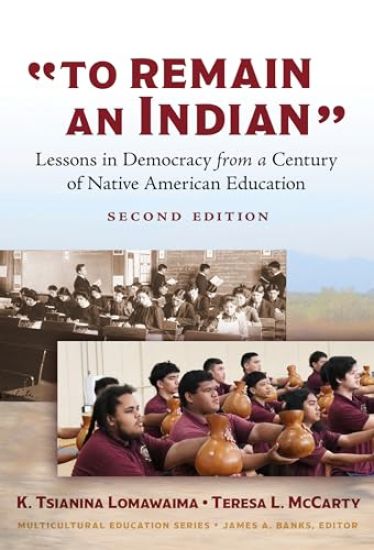
"To Remain an Indian" traces the footprints of Indigenous education in what is now the United States. Native Peoples' educational systems are rooted in ways of knowing and being that have endured for millennia, despite the imposition of colonial schooling. In this second edition, the authors amplify their theoretical framework of settler colonial Safety Zones by adding Indigenous Sovereignty Zones. Safety Zones are designed to break Indigenous relationships and impose relations of domination while Sovereignty Zones foster Indigenous growth, nurture relationships, and support life. This fascinating portrait of Native American education highlights the genealogy of relationships across Peoples, places, and education initiatives in the 20th and 21st centuries. New scholarship re-evaluates early 20th-century "reforms" as less an endorsement of Indigenous self-determination and more a continuation of federal control. The text includes personal narratives from program architects and examines Indigenous language, culture, and education resurgence movements that reckon with the coloniality of U.S. schooling.Book Features:Enriched theoretical framework contrasting settler colonial Safety Zones designed to control with Indigenous Sovereignty Zones designed to nurture Indigenous futures.The voices of activists and educators who are linked together in a genealogy of Indigenous educational self-determination. Developments in Indigenous schooling contextualized within the Piper v. Big Pine and Brown v. Board desegregation cases.Empirically updated case studies of ongoing language, culture, and education resurgence movements.Recent scholarship highlighting Progressive Era continuities in federal powers over Native Peoples and the impact of the 1924 Indian Citizenship Act.Visual imagery, including historic and contemporary photos of people and programs, curricular materials, and schools.
Culturally Sustaining Policymaking in Indigenous Communities

Culturally Sustaining Policymaking in Indigenous Communities

Aprille J. Phillips; Teresa L. McCarty

TEACHERS' COLLEGE PRESS
2024
sidottu
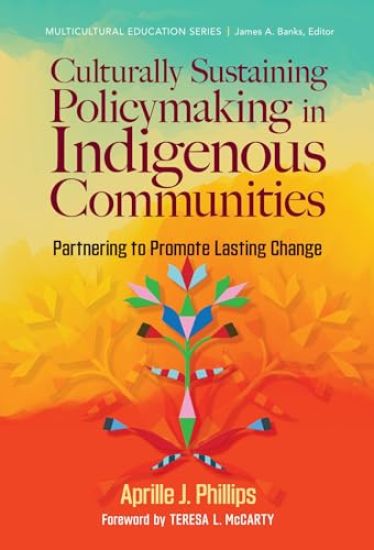
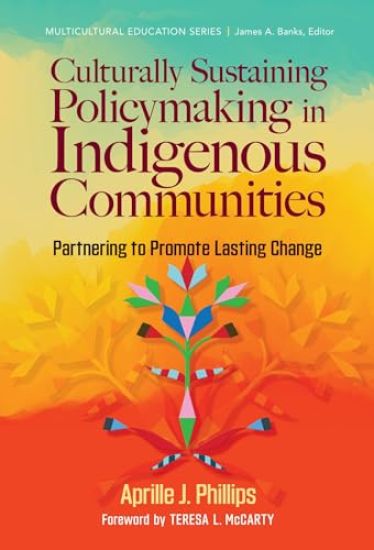
Discover how top-down, policy-into-practice educational mandates have adversely affected indigenous communities in the United States' midwestern core. The author scrutinizes how leaders and intermediaries in Nebraska, involved at various tiers of policy development and reform, conceptualized and implemented school accountability policy in Indian country. In particular, Phillips explores state-directed reform efforts in a school on the Santee Sioux Reservation consistently labeled as failing and persistently experiencing intervention from outsiders presented as experts. The book interrogates who gets to define educational quality, who counts as an expert on improving schools, and what improvement actually looks like. Additionally, the text highlights the way local educators and members of the community employed everyday tactics and incognito acts of improvement to reshape school turnaround efforts. Readers will see what is possible for education policy done with--rather than to--Native communities and schools, with lessons that have relevance beyond the midwestern states. Book Features:Offers an education system reform perspective that has impact in Indian country.Introduces the concept of culturally responsive and sustaining policymaking. Explores how policy reform efforts are implemented across tiers of the educational system, from the legislative floor to a local classroom.Shows how local actors assert agency to remake policy spaces and improve policy implementation.
Culturally Sustaining Policymaking in Indigenous Communities

Culturally Sustaining Policymaking in Indigenous Communities

Aprille J. Phillips; Teresa L. McCarty

TEACHERS' COLLEGE PRESS
2024
nidottu
Discover how top-down, policy-into-practice educational mandates have adversely affected indigenous communities in the United States' midwestern core. The author scrutinizes how leaders and intermediaries in Nebraska, involved at various tiers of policy development and reform, conceptualized and implemented school accountability policy in Indian country. In particular, Phillips explores state-directed reform efforts in a school on the Santee Sioux Reservation consistently labeled as failing and persistently experiencing intervention from outsiders presented as experts. The book interrogates who gets to define educational quality, who counts as an expert on improving schools, and what improvement actually looks like. Additionally, the text highlights the way local educators and members of the community employed everyday tactics and incognito acts of improvement to reshape school turnaround efforts. Readers will see what is possible for education policy done with--rather than to--Native communities and schools, with lessons that have relevance beyond the midwestern states. Book Features:Offers an education system reform perspective that has impact in Indian country.Introduces the concept of culturally responsive and sustaining policymaking. Explores how policy reform efforts are implemented across tiers of the educational system, from the legislative floor to a local classroom.Shows how local actors assert agency to remake policy spaces and improve policy implementation.
Language Planning and Policy in Native America

Language Planning and Policy in Native America

Teresa L. McCarty

Multilingual Matters
2013
nidottu
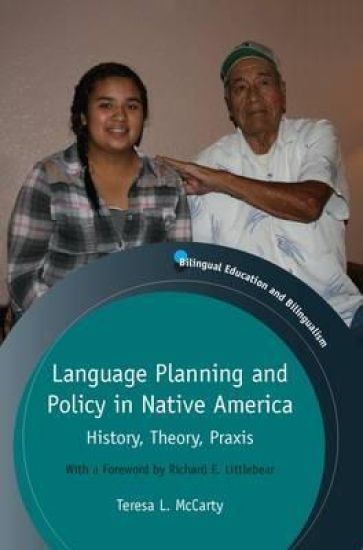
Comprehensive in scope and rich in detail, this book explores language planning, language education, and language policy for diverse Native American peoples across time, space, and place. Based on long-term collaborative and ethnographic work with Native American communities and schools, the book examines the imposition of colonial language policies against the fluorescence of contemporary community-driven efforts to revitalize threatened mother tongues. Here, readers will meet those who are on the frontlines of Native American language revitalization every day. As their efforts show, even languages whose last native speaker is gone can be reclaimed through family-, community-, and school-based language planning. Offering a critical-theory view of language policy, and emphasizing Indigenous sovereignties and the perspectives of revitalizers themselves, the book shows how language regenesis is undertaken in social practice, the role of youth in language reclamation, the challenges posed by dominant language policies, and the prospects for Indigenous language and culture continuance current revitalization efforts hold.
Language Planning and Policy in Native America

Language Planning and Policy in Native America

Teresa L. McCarty

Multilingual Matters
2013
sidottu
Comprehensive in scope and rich in detail, this book explores language planning, language education, and language policy for diverse Native American peoples across time, space, and place. Based on long-term collaborative and ethnographic work with Native American communities and schools, the book examines the imposition of colonial language policies against the fluorescence of contemporary community-driven efforts to revitalize threatened mother tongues. Here, readers will meet those who are on the frontlines of Native American language revitalization every day. As their efforts show, even languages whose last native speaker is gone can be reclaimed through family-, community-, and school-based language planning. Offering a critical-theory view of language policy, and emphasizing Indigenous sovereignties and the perspectives of revitalizers themselves, the book shows how language regenesis is undertaken in social practice, the role of youth in language reclamation, the challenges posed by dominant language policies, and the prospects for Indigenous language and culture continuance current revitalization efforts hold.
To Remain an Indian

To Remain an Indian

K. Tsianina Lomawaima; Teresa L. McCarty

Teachers' College Press
2006
nidottu
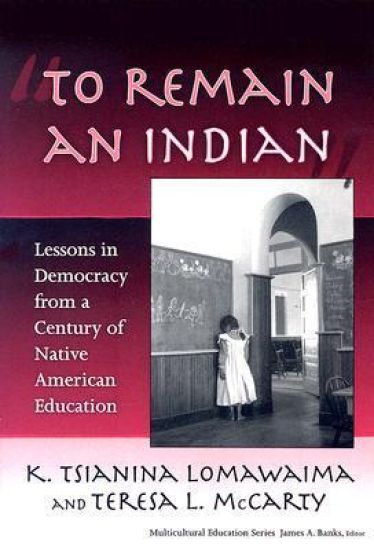
What might we learn from Native experiences with schools to help us forge a new vision of the democratic ideal - a critical democracy that respects, protects, and promotes diversity and human rights? In this fascinating portrait of American Indian education over the past century, the authors critically evaluate U.S. education policies and practices - from early 20th century federal incarnations of colonial education through the contemporary standards movement. In the process, they reveal the falseness of fears attached to notions of ""dangerous cultural difference,"" and convey the promise of diversity as a source of national strength. Featuring the voices and experiences of Native individuals that official history has silenced and pushed aside, this text: proposes a theoretical framework of the ""safety zone"" to explain shifts in federal educational policies and practices over the past century; offers lessons learned from Indigenous America's fight to protect and assert educational self-determination; overturns stereotypes of American Indians as one-dimensional learners; argues that the struggle to revitalize and maintain Indigenous languages is a fundamental human right; and, examines the standards movement as the most recent attempt to control the ""dangerous difference"" allegedly presented by students of color, poor and working class students, and English language learners in U.S. schools.
A Place to Be Navajo

A Place to Be Navajo

Teresa L. McCarty

Routledge Member of the Taylor and Francis Group
2002
sidottu
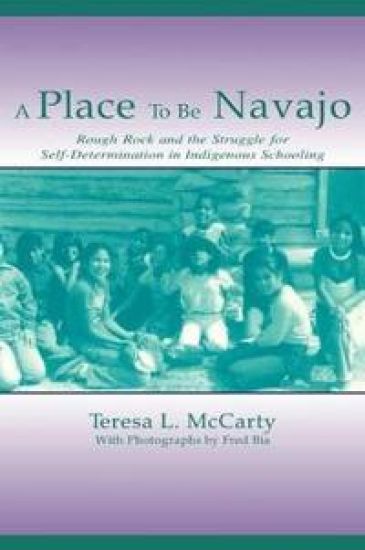
A Place To Be Navajo is the only book-length ethnographic account of a revolutionary Indigenous self-determination movement that began in 1966 with the Rough Rock Demonstration School. Called Diné Bi'ólta', The People's School, in recognition of its status as the first American Indian community-controlled school, Rough Rock was the first to teach in the Native language and to produce a body of quality children's literature by and about Navajo people. These innovations have positioned the school as a leader in American Indian and bilingual/bicultural education and have enabled school participants to wield considerable influence on national policy. This book is a critical life history of this singular school and community. McCarty's account grows out of 20 years of ethnographic work by the author with the Diné (Navajo) community of Rough Rock. The story is told primarily through written text, but also through the striking black-and-white images of photographer Fred Bia, a member of the Rough Rock community. Unlike most accounts of Indigenous schooling, this study involves the active participation of Navajo community members. Their oral testimony and that of other leaders in Indigenous/Navajo education frame and texture the account. Informed by critical theories of education, this book is not just the story of a single school and community. It is also an inquiry into the larger struggle for self-determination by Indigenous and other minoritized communities, raising issues of identity, voice, and community empowerment. A Place To Be Navajo asks whether school can be a place where children learn, question, and grow in an environment that values and builds upon who they are. The author argues that the questions Rough Rock raises, and the responses they summon, implicate us all.
A Place to Be Navajo

A Place to Be Navajo

Teresa L. McCarty

Routledge Member of the Taylor and Francis Group
2002
nidottu
A Place To Be Navajo is the only book-length ethnographic account of a revolutionary Indigenous self-determination movement that began in 1966 with the Rough Rock Demonstration School. Called Diné Bi'ólta', The People's School, in recognition of its status as the first American Indian community-controlled school, Rough Rock was the first to teach in the Native language and to produce a body of quality children's literature by and about Navajo people. These innovations have positioned the school as a leader in American Indian and bilingual/bicultural education and have enabled school participants to wield considerable influence on national policy. This book is a critical life history of this singular school and community. McCarty's account grows out of 20 years of ethnographic work by the author with the Diné (Navajo) community of Rough Rock. The story is told primarily through written text, but also through the striking black-and-white images of photographer Fred Bia, a member of the Rough Rock community. Unlike most accounts of Indigenous schooling, this study involves the active participation of Navajo community members. Their oral testimony and that of other leaders in Indigenous/Navajo education frame and texture the account. Informed by critical theories of education, this book is not just the story of a single school and community. It is also an inquiry into the larger struggle for self-determination by Indigenous and other minoritized communities, raising issues of identity, voice, and community empowerment. A Place To Be Navajo asks whether school can be a place where children learn, question, and grow in an environment that values and builds upon who they are. The author argues that the questions Rough Rock raises, and the responses they summon, implicate us all.