Kirjailija
Terje Aven
Kirjat ja teokset yhdessä paikassa: 33 kirjaa, julkaisuja vuosilta 2007-2025, suosituimpien joukossa Risk and risk science. Vertaile teosten hintoja ja tarkista saatavuus suomalaisista kirjakaupoista.
33 kirjaa
Kirjojen julkaisuhaarukka 2007-2025.
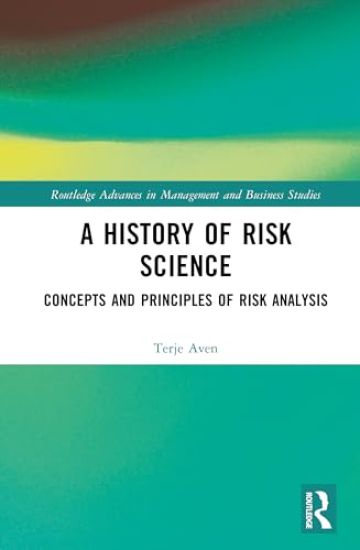
Risk has been handled as long as there have been humans on earth. However, the risk field is a young discipline; systematic attempts to access and handle risk – explicitly conceptualizing and expressing risk - in society is a recent endeavour. This book presents a history of risk science and risk analysis highlighting concepts and principles for understanding, assessing, communicating, managing and governing risk.The author presents and discusses key contributions to risk science using a historical lens and from the perspective of a risk scientist. The book strengthens our understanding of what risk science is and how it has evolved by exploring fundamental topics such as risk characterization, risk perception, risk communication, risk handling and decision making and concludes with reflection on the future of risk science, and in particular what we can learn from its history.A History of Risk Science will be essential reading for risk researchers and graduate students as well as scholars from associated fields applying risk-related analysis to their work.
Decoding Black Swans and Other Historic Risk Events
Shital Thekdi; Terje Aven
TAYLOR FRANCIS LTD
2024
nidottu
The field of risk science continues to learn from the long history of events to develop principles and practices that enable individuals, organizations, and societies to understand and manage future risk. Reflecting on these histories reminds us that risk and uncertainty are prevalent, yet it remains important to consider what is on the horizon: the possibility of future events, the consequences of those events, our vulnerability to those events, and how to recover from those events.Decoding Black Swans and Other Historic Risk Events offers a guide to understanding risk events and how to act before they occur. This book explores past risk events and analyzes how risk science principles apply to those events and studies whether current risk science concepts and approaches could potentially have avoided, reduced the impact, or supported recovery following the risk event. New insights are obtained by applying recent research progress in understanding and managing risk, considering aspects including quality of evidence, information, and misinformation in risk studies. The analysis results are used to identify how risk science approaches contribute to the overall management of risk and societal safety, and where improvements can be obtained, allowing the reader to possess a toolkit for identifying and planning for unsafe events.This title will be a critical read for professionals in the fields of occupational health and safety, risk management, civil engineering, mechanical engineering, energy, marine engineering, environmental engineering, business and management, and healthcare.
Decoding Black Swans and Other Historic Risk Events
Shital Thekdi; Terje Aven
TAYLOR FRANCIS LTD
2024
sidottu
The field of risk science continues to learn from the long history of events to develop principles and practices that enable individuals, organizations, and societies to understand and manage future risk. Reflecting on these histories reminds us that risk and uncertainty are prevalent, yet it remains important to consider what is on the horizon: the possibility of future events, the consequences of those events, our vulnerability to those events, and how to recover from those events.Decoding Black Swans and Other Historic Risk Events offers a guide to understanding risk events and how to act before they occur. This book explores past risk events and analyzes how risk science principles apply to those events and studies whether current risk science concepts and approaches could potentially have avoided, reduced the impact, or supported recovery following the risk event. New insights are obtained by applying recent research progress in understanding and managing risk, considering aspects including quality of evidence, information, and misinformation in risk studies. The analysis results are used to identify how risk science approaches contribute to the overall management of risk and societal safety, and where improvements can be obtained, allowing the reader to possess a toolkit for identifying and planning for unsafe events.This title will be a critical read for professionals in the fields of occupational health and safety, risk management, civil engineering, mechanical engineering, energy, marine engineering, environmental engineering, business and management, and healthcare.
Risk science is becoming increasingly important as businesses, policymakers and public sector leaders are tasked with decision-making and investment using varying levels of knowledge and information. Risk Science: An Introduction explores the theory and practice of risk science, providing concepts and tools for understanding and acting under conditions of uncertainty.The chapters in this book cover the fundamental concepts, principles, approaches, methods and models for how to understand, assess, communicate, manage and govern risk. These topics are presented and examined in a way which details how they relate, for example, how to characterize and communicate risk with particular emphasis on reflecting uncertainties; how to distinguish risk perception and professional risk judgments; how to assess risk and guide decision-makers, especially for cases involving large uncertainties and value differences; and how to integrate risk assessment with resilience-based strategies. The text provides a variety of examples and case studies that relate to highly visible and relevant issues facing risk academics, practitioners and non-risk leaders who must make risk-related decisions.This revised and updated second edition features an entirely new chapter on the integrity and quality of risk studies, and dealing with misinformation in the context of risk. Presenting both the foundational and most recent advancements in the subject matter, this work particularly suits students of risk science courses at college and university level. The book also provides broader key reading for students and scholars in other domains, including business, engineering and public health.
Risk is the single most prevalent and enduring factor that influences every individual, organization, and society. People often seek protection from negative risk events, but also seek to take advantage of opportunities arising from positive risk events. We may feel overwhelmed by messages encountered in daily interactions with media and society, contributing to a sense of ambiguity over how to act in response to risk-related information and misinformation. We seek to leverage evidence and reason to find our own balance between both positive and negative outcomes in an uncertain world. This groundbreaking book delivers practical concepts and tools that empower readers to leverage innovations in risk science to improve their abilities to interpret, assess, communicate, and handle risk. It provides a practical non-quantitative approach to understanding the risk and making better decisions involving risk. Think RISK covers several key themes in risk science: a) the main goals and strategies for understanding and managing risk; b) how readers can inform their risk stances by considering their own individual values and mission; c) the difference between risk and safety, and how that difference is critical for managing the risk; d) the role of psychological factors when understanding and managing the risk; e) the role of communication when understanding and managing the risk; and f) the general importance and incentives for effectively understanding and managing the risk. Written for business professionals in all private and public sectors, this book will also be relevant to non-business professionals such as medical practitioners and policymakers and would be an ideal fit for executive education and seminar-style courses in universities, corporate book clubs, and training seminars. Because it’s based on foundational and scientifically accepted ideas and principles, the book should remain relevant for many years.
Today, risk is on the agenda in most contexts: in connection with climate change, medicine and health, technology, economics, and much more. We often refer to the precautionary principle, but do we really understand this term? And when is it a meaningful principle to use? When accidents occur, we often complain about the preparedness being poor. But how good should the preparedness and safety be? It is rare for media people, bureaucrats, or politicians to explain to us what risk really means. The politicians would like to follow the science, but the science does not always give clear answers, particularly when the uncertainties are large. Metaphors like black swans and perfect storms are popular, but giving them precise interpretations is not so easy.This book is a collection of stories and reflections on risk and risk science. The aim is to give you, the reader, knowledge about how risk intervenes in our lives and society, and how risk science can help us understand, analyze, communicate, and handle risk. The author guides you through these topics without going into too much detail, and without becoming too technical.The book is aimed at pupils and students and will work excellently as a first introduction to studies in risk-related subjects. It also provides an interesting and exciting introduction to the subject for those who work with problems related to risk in society - for example if you are an engineer, economist, healthcare worker or manager - in both the public and private sectors.
Vi snakker i dag om risiko i alle mulige sammenhenger: i forbindelse med klimaendringer, medisin og helse, teknologi, økonomi og mye annet. Ofte viser vi til føre-var-prinsippet, men forstår vi egentlig dette begrepet? Og når er det et meningsfullt prinsipp å bruke? De gangene alvorlige hendelser skjer, klager vi ofte på at beredskapen var for dårlig. Men hvor god beredskap og sikkerhet skal vi egentlig ha?Det er sjelden mediefolk, byråkrater eller politikere forklarer oss hva risiko egentlig betyr. Politikerne vil gjerne følge vitenskapen, men vitenskapen gir ikke alltid klare svar, i hvert fall ikke når usikkerhetene er store. Metaforer som sorte svaner og perfekte stormer er populære, men å gi dem presise fortolkninger er ikke så lett.Denne boken er en samling av fortellinger og refleksjoner om risiko, risikofaget og risikovitenskapen. Målet er å gi deg som leser kunnskap om hvordan risiko griper inn i livet og samfunnet vårt, og hvordan risikofaget og risikovitenskapen kan hjelpe oss å forstå, analysere, kommunisere og håndtere risiko. Forfatteren loser deg gjennom disse temaene uten å gå for mye i detaljer, og uten å bli for omfattende og teknisk.Boken er rettet mot elever og studenter og fungerer utmerket som en første introduksjon til studier innen risikorelaterte fag. Den gir også en interessant og spennende innføring i faget for deg som arbeider med problemstillinger knyttet til risiko i samfunnet - for eksempel hvis du er ingeniør, økonom, helsepersonell eller leder, både i offentlig og privat sektor.
Risk science is becoming increasingly important as businesses, policymakers and public sector leaders are tasked with decision-making and investment using varying levels of knowledge and information. Risk Science: An Introduction explores the theory and practice of risk science, providing concepts and tools for understanding and acting under conditions of uncertainty. The chapters in this work cover the fundamental concepts, principles, approaches, methods and models for how to understand, assess, communicate, manage and govern risk. These topics are presented and examined in a way which details how they relate, for example, how to characterize and communicate risk with particular emphasis on reflecting uncertainties; how to distinguish risk perception and professional risk judgments; how to assess risk and guide decision-makers, especially for cases involving large uncertainties and value differences; and how to integrate risk assessment with resilience-based strategies. The text provides a variety of examples and case studies that relate to highly visible and relevant issues facing risk academics, practitioners and non-risk leaders who must make risk-related decisions. Presenting both the foundational and most recent advancements in the subject matter, this work particularly suits students of risk science courses at college and university level. The book also provides broader key reading for students and scholars in other domains, including business, engineering and public health.
Enterprise Risk Management: Advances on its Foundation and Practice relates the fundamental enterprise risk management (ERM) concepts and current generic risk assessment and management principles that have been influential in redefining the risk field over the last decade. It defines ERM with a particular focus on understanding the nexus between risk, uncertainty, knowledge and performance.The book argues that there is critical need for ERM concepts, principles and methods to adapt to the latest and most influential risk management developments, as there are several issues with outdated ERM theories and practices; problems include the inability to effectively and systematically balance both opportunity and downside performance, or relying too much on narrow probability-based perspectives for risk assessment and decision-making. It expands traditional loss-based risk principles into new and innovative performance-risk frameworks, and presents fundamental risk principles that have recently been developed by the Society for Risk Analysis (SRA). All relevant statistical and risk concepts are clearly explained and interpreted using minimal mathematical notation. The focus of the book is centered around ideas and principles, more than technicalities. The book is primarily intended for risk professionals, researchers and graduate students in the fields of engineering and business, and should also be of interest to executive managers and policy makers with some background in quantitative methods such as statistics.
This book provides a comprehensive demonstration of risk analysis as a distinct science covering risk understanding, assessment, perception, communication, management, governance and policy. It presents and discusses the key pillars of this science, and provides guidance on how to conduct high-quality risk analysis. The Science of Risk Analysis seeks to strengthen risk analysis as a field and science by summarizing and extending current work on the topic. It presents the foundation for a distinct risk field and science based on recent research, and explains the difference between applied risk analysis (to provide risk knowledge and tackle risk problems in relation to for example medicine, engineering, business or climate change) and generic risk analysis (on concepts, theories, frameworks, approaches, principles, methods and models to understand, assess, characterise, communicate, manage and govern risk). The book clarifies and describes key risk science concepts, and builds on recent foundational work conducted by the Society for Risk Analysis in order to provide new perspectives on science and risk analysis. The topics covered are accompanied by cases and examples relating to current issues throughout.This book is essential reading for risk analysis professionals, scientists, students and practitioners, and will also be of interest to scientists and practitioners from other fields who apply risk analysis in their work.
This book represents the proceedings of the 10th annual symposium of the Society of Reliability Engineers, Scandinavian Chapter, and was held in Stavanger, Norway, 9-11 October 1989. The theme of the symposium emphasised the need for obtaining a competitive edge through reliability in systems engineering and addressed the role of reliability in marketing, contracts, customer support and product liability. This book will be of interest to those involved in reliability engineering, risk assessment, safety and maintenance engineering.
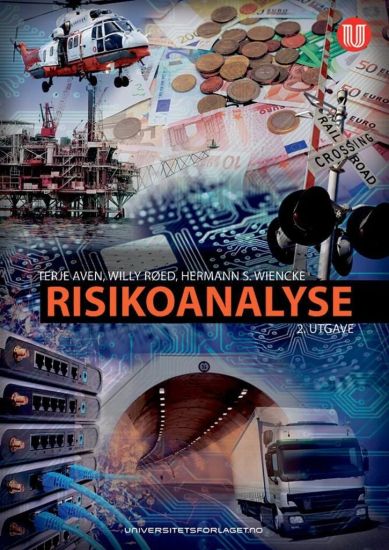
Hvordan kan din virksomhet sikre gode risikoanalyser? I denne boken drøftes analysenes plass i risikostyringen. Hvordan bør risikoanalysene planlegges, gjennomføres og brukes, slik at de holder faglig høyt nivå og blir nyttige for virksomheten?Teorien belyses gjennom en rekke eksempler fra ulike samfunnsområder, som transport, helse, olje og gass, IKT og kommunal virksomhet. Hvert eksempel innledes med et beslutningsproblem, og viser hvordan analysene kan brukes for å gi hensiktsmessig beslutningsstøtte. Risikoanalyse omhandler problemstillinger knyttet til sikkerhet både når det gjelder ulykkeshendelser og tilsiktede handlinger som sabotasje og terror.Boken retter seg mot fagpersonell innen risikoanalyse, studenter i risiko- og sikkerhetsfag og ledere og beslutningstakere i ulike virksomheter og sektorer. Denne andreutgaven er oppdatert i henhold til utviklingen i risikofaget siden 2007.
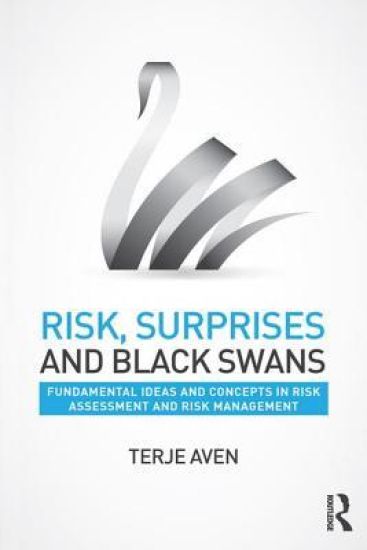
Risk, Surprises and Black Swans provides an in depth analysis of the risk concept with a focus on the critical link to knowledge; and the lack of knowledge, that risk and probability judgements are based on.Based on technical scientific research, this book presents a new perspective to help you understand how to assess and manage surprising, extreme events, known as ‘Black Swans’. This approach looks beyond the traditional probability-based principles to offer a broader insight into the important aspects of uncertain events and in doing so explores the ways to manage them.This book recognises the fundamental issues surrounding risk assessment and risk management to help you to understand and prepare for black swan events. Complete with international examples to illustrate ideas and concepts Integrates risk management and resilience based thinking Suitable for a variety of applications including engineering, finance and security.
A practical guide to the varied challenges presented in the ever-growing field of risk analysis. Risk Analysis presents an accessible and concise guide to performing risk analysis, in a wide variety of field, with minimal prior knowledge required. Forming an ideal companion volume to Aven's previous Wiley text Foundations of Risk Analysis, it provides clear recommendations and guidance in the planning, execution anduse of risk analysis. This new edition presents recent developments related to risk conceptualization, focusing on related issues on risk assessment and their application. New examples are also featured to clarify the reader's understanding in the application of risk analysis and the risk analysis process. Key features: Fully updated to include recent developments related to risk conceptualization and related issues on risk assessments and their applications.Emphasizes the decision making context of risk analysis rather than just computing probabilitiesDemonstrates how to carry out predictive risk analysis using a variety of case studies and examples.Written by an experienced expert in the field, in a style suitable for both industrial and academic audiences. This book is ideal for advanced undergraduates, graduates, analysts and researchers from statistics, engineering, finance, medicine and physical sciences. Managers facing decision making problems involving risk and uncertainty will also benefit from this book.
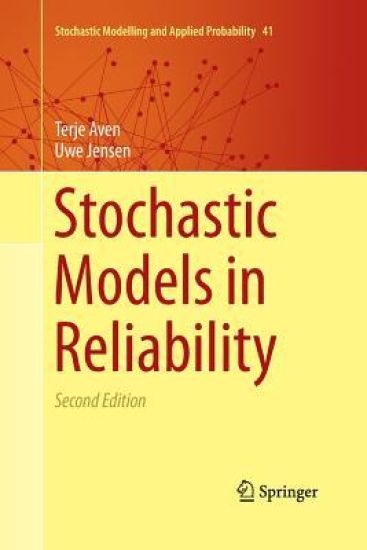
This book provides a comprehensive up-to-date presentation of some of the classical areas of reliability, based on a more advanced probabilistic framework using the modern theory of stochastic processes. This framework allows analysts to formulate general failure models, establish formulae for computing various performance measures, as well as determine how to identify optimal replacement policies in complex situations. In this second edition of the book, two major topics have been added to the original version: copula models which are used to study the effect of structural dependencies on the system reliability; and maintenance optimization which highlights delay time models under safety constraints. Terje Aven is Professor of Reliability and Risk Analysis at University of Stavanger, Norway. Uwe Jensen is working as a Professor at the Institute of Applied Mathematics and Statistics of the University of Hohenheim in Stuttgart, Germany. Review of first edition: "This is an excellent book on mathematical, statistical and stochastic models in reliability. The authors have done an excellent job of unifying some of the stochastic models in reliability. The book is a good reference book but may not be suitable as a textbook for students in professional fields such as engineering. This book may be used for graduate level seminar courses for students who have had at least the first course in stochastic processes and some knowledge of reliability mathematics. It should be a good reference book for researchers in reliability mathematics." --Mathematical Reviews (2000)