Kirjojen hintavertailu. Mukana 12 390 323 kirjaa ja 12 kauppaa.

Kirjailija

Terri L. Snyder

Kirjat ja teokset yhdessä paikassa: 4 kirjaa, julkaisuja vuosilta 2003-2026, suosituimpien joukossa The Power to Die. Vertaile teosten hintoja ja tarkista saatavuus suomalaisista kirjakaupoista.

4 kirjaa

Kirjojen julkaisuhaarukka 2003-2026.

The Power to Die

The Power to Die

Terri L. Snyder

THE UNIVERSITY OF CHICAGO PRESS
2026
nidottu
The history of slavery in early America is a history of suicide. On ships crossing the Atlantic, enslaved men and women refused to eat or leaped into the ocean. They strangled or hanged themselves. They tore open their own throats. In America, they jumped into rivers or out of windows, or even ran into burning buildings. Faced with the reality of enslavement, countless Africans chose death instead. In The Power to Die, Terri L. Snyder excavates the history of slave suicide, returning it to its central place in early American history. How did people—traders, plantation owners, and, most importantly, enslaved men and women themselves—view and understand these deaths, and how did they affect understandings of the institution of slavery then and now? Snyder draws on ships’ logs, surgeons' journals, judicial and legislative records, newspaper accounts, abolitionist propaganda and slave narratives, and many other sources to build a grim picture of slavery’s toll and detail the ways in which suicide exposed the contradictions of slavery, serving as a powerful indictment that resonated throughout the Anglo-Atlantic world and continues to speak to historians today.
The Power to Die

The Power to Die

Terri L. Snyder

University of Chicago Press
2015
sidottu
The history of slavery in early America is a history of suicide. On ships crossing the Atlantic, enslaved men and women refused to eat or leaped into the ocean. They strangled or hanged themselves. They tore open their own throats. In America, they jumped into rivers or out of windows, or even ran into burning buildings. Faced with the reality of enslavement, countless Africans chose death instead. In The Power to Die, Terri L. Snyder excavates the history of slave suicide, returning it to its central place in early American history. How did people-traders, plantation owners, and, most importantly, enslaved men and women themselves-view and understand these deaths, and how did they affect understandings of the institution of slavery then and now? Snyder draws on ships' logs, surgeons' journals, judicial and legislative records, newspaper accounts, abolitionist propaganda and slave narratives, and many other sources to build a grim picture of slavery's toll and detail the ways in which suicide exposed the contradictions of slavery, serving as a powerful indictment that resonated throughout the Anglo-Atlantic world and continues to speak to historians today.
Brabbling Women

Brabbling Women

Terri L. Snyder

Cornell University Press
2014
pokkari
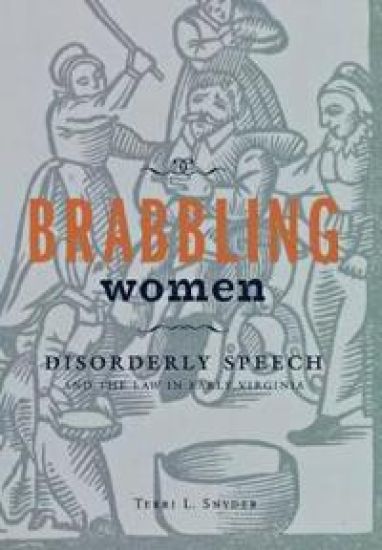
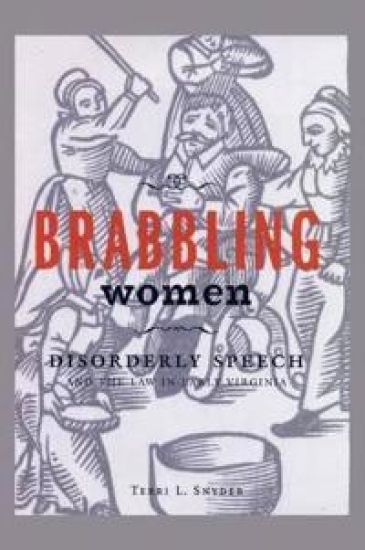
Brabbling Women takes its title from a 1662 law enacted by Virginia's burgesses, which was intended to offer relief to the "poore husbands" forced into defamation suits because their "brabling" wives had slandered or scandalized their neighbors. To quell such episodes of female misrule, lawmakers decreed that husbands could choose either to pay damages or to have their wives publicly ducked. But there was more at stake here. By examining women's use of language, Terri L. Snyder demonstrates how women resisted and challenged oppressive political, legal, and cultural practices in colonial Virginia. Contending that women's voices are heard most clearly during episodes of crisis, Snyder focuses on disorderly speech to illustrate women's complex relationships to law and authority in the seventeenth century. Ordinary women, Snyder finds, employed a variety of strategies to prevail in domestic crises over sexual coercion and adultery, conflicts over women's status as servants or slaves, and threats to women's authority as independent household governors. Some women entered the political forum, openly participating as rebels or loyalists; others sought legal redress for their complaints. Wives protested the confines of marriage; unfree women spoke against masters and servitude. By the force of their words, all strove to thwart political leaders and local officials, as well as the power of husbands, masters, and neighbors. The tactics colonial women used, and the successes they met, reflect the struggles for empowerment taking place in defiance of the inequalities of the colonial period.
Brabbling Women

Brabbling Women

Terri L. Snyder

Cornell University Press
2003
sidottu
Brabbling Women takes its title from a 1662 law enacted by Virginia's burgesses, which was intended to offer relief to the "poore husbands" forced into defamation suits because their "brabling" wives had slandered or scandalized their neighbors. To quell such episodes of female misrule, lawmakers decreed that husbands could choose either to pay damages or to have their wives publicly ducked. But there was more at stake here. By examining women's use of language, Terri L. Snyder demonstrates how women resisted and challenged oppressive political, legal, and cultural practices in colonial Virginia. Contending that women's voices are heard most clearly during episodes of crisis, Snyder focuses on disorderly speech to illustrate women's complex relationships to law and authority in the seventeenth century. Ordinary women, Snyder finds, employed a variety of strategies to prevail in domestic crises over sexual coercion and adultery, conflicts over women's status as servants or slaves, and threats to women's authority as independent household governors. Some women entered the political forum, openly participating as rebels or loyalists; others sought legal redress for their complaints. Wives protested the confines of marriage; unfree women spoke against masters and servitude. By the force of their words, all strove to thwart political leaders and local officials, as well as the power of husbands, masters, and neighbors. The tactics colonial women used, and the successes they met, reflect the struggles for empowerment taking place in defiance of the inequalities of the colonial period.