Kirjojen hintavertailu. Mukana 12 143 303 kirjaa ja 12 kauppaa.

Kirjailija

Terry Breverton

Kirjat ja teokset yhdessä paikassa: 28 kirjaa, julkaisuja vuosilta 2004-2019, suosituimpien joukossa The Tudor Kitchen. Vertaile teosten hintoja ja tarkista saatavuus suomalaisista kirjakaupoista.

28 kirjaa

Kirjojen julkaisuhaarukka 2004-2019.

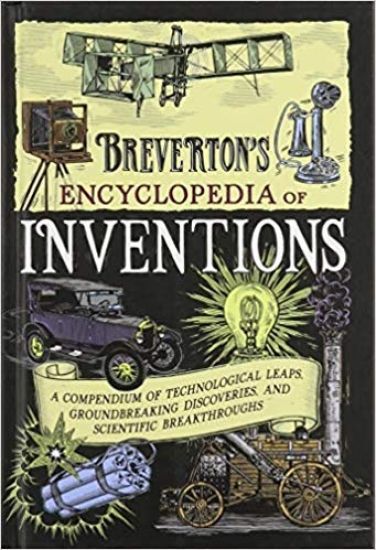
Breverton's Encyclopedia of Inventions

Breverton's Encyclopedia of Inventions

Terry Breverton

The Lyons Press
2019
sidottu
Who flew before the Wright Brothers? How was plastic surgery invented? Did Leonardo da Vinci design the first robot? When was the first email sent? Where was beer first brewed? Who invented zero? From the fish hook to fibre optics, the pyramids to postage stamps, and from gunpowder to GPS, this eclectic compendium will inform, inspire and fascinate anyone to know more about the moments of genius that gave shaped our lives today. An extraordinary guide to the greatest feats of ingenuity and innovation.
Owen Tudor

Owen Tudor

Terry Breverton

Amberley Publishing
2019
pokkari
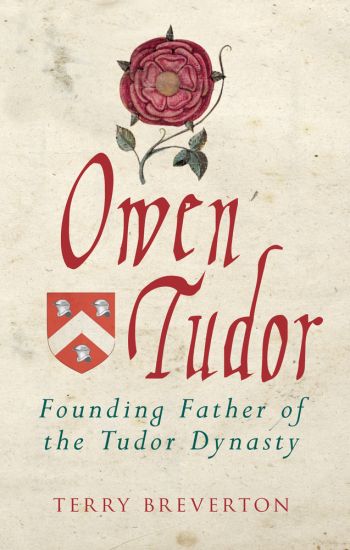
‘The Welsh habit of revolt against the English is an old-standing madness … from the sayings of the prophet Merlin they still hope to recover their land. Hence, they frequently rebel … but because they do not know the appointed time, they are often deceived and their labour is in vain.’ (Vita Edwardi Secundi) The appointed time, it turned out, was 1485. For generations, the ancestors of Welshman Owen Tudor had fought Romans, Irish Picts, Vikings, Saxons, Mercians and Normans. His uncles had been executed in the Glyndwr Welsh War of Independence. Owen fought for Henry V in France and entered the service of Henry’s queen, Catherine of Valois. Soon after the king’s death he secretly married her, the mother of the eight-month-old Henry VI. Owen and Catherine would have two boys together. Henry VI would go on to ennoble them as Edmund Earl of Richmond, and Jasper Earl of Pembroke, but upon Catherine’s death Owen was imprisoned. Escaping twice, Owen was thrown into the beginnings of the Wars of the Roses with his two sons. It would be Edmund’s son, Henry Tudor, who would take the English throne as Henry VII. When Jasper led the Lancastrian forces at Mortimer’s Cross in 1461, the ageing Owen led a wing of the defeated army, was captured and executed. Without his earlier secret marriage for love, there would have been no Tudor dynasty.
The Tudor Cookbook

The Tudor Cookbook

Terry Breverton

Amberley Publishing
2019
pokkari
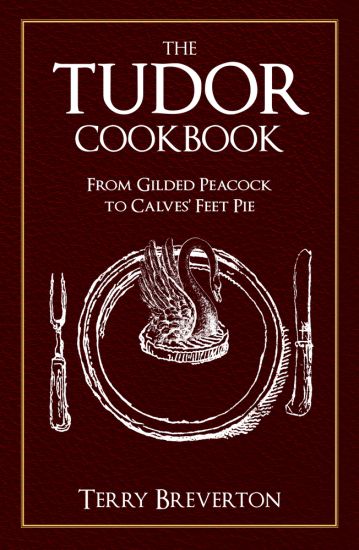
Have you ever wondered what the Tudors ate? What was served at the courtly feasts of Henry VIII, or what kept peasants alive through the harsh winters of the sixteenth century? The Tudor Cookbook provides over 250 recipes from authentic period manuals for starters, mains, desserts and drinks, from chicken blancmange to white pease pottage with seal and porpoise. It even covers vegetarian dishes – the Tudors designed dishes of vegetables to look like meat to be cooked during religious festivals when abstinence from meat was required. A few of the more outlandish ingredients and methods of cooking are now illegal, but the rest of the recipes have been trialled; many are delicious and surprising.
Henry VII

Henry VII

Terry Breverton

Amberley Publishing
2019
pokkari
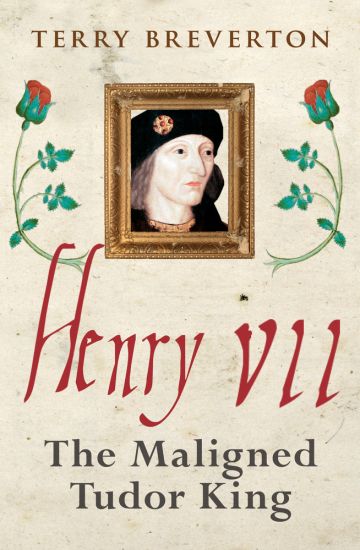
Henry Tudor, the future Henry VII, has been called the most unlikely King of England. Yet his rise from obscurity was foretold by the bards, and by 1485, the familial bloodbath of the Wars of the Roses left Henry as the sole adult Lancastrian claimant to the throne. The hunchback usurper Richard III desperately wanted him dead, and in his exile Henry Tudor was left with no choice. He either invaded England or faced being traded to Richard to meet certain death. Henry’s father, Edmund Tudor, Earl of Richmond, was the son of a Queen of England, sister to the King of France, and of an obscure Welsh court servant, who had been born in secrecy away from court. Edmund’s death at the beginning of the Wars of the Roses left Henry to grow up in almost constant danger, imprisonment and exile. In 1485, his ‘ragtag’ invading army at Bosworth faced overwhelming odds, but succeeded. Henry went on to become England’s wisest and greatest king, but it would be his son Henry VIII and granddaughter Elizabeth I who would take all the credit.
A Gross of Pirates

A Gross of Pirates

Terry Breverton

Amberley Publishing
2018
sidottu
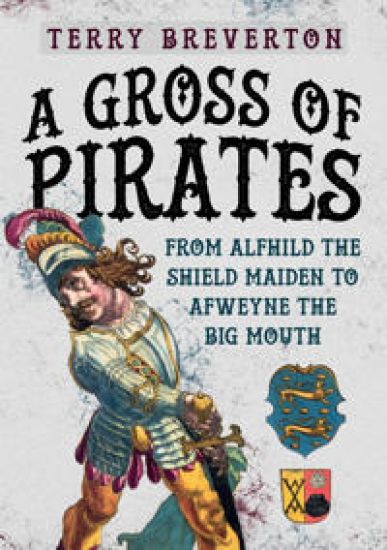
From anti-slavery heroes to evil murderers, from ‘the Victual Brothers’ to Somali raiders today, a 1000-year roll call of the pirates. It is no use pretending that these criminals do not evoke admiration - even envy. Part of the appeal is the democratic nature of their activities, characterised as far back as the 14th century by Klaus Stortebeker thieving in the Baltic - his crew were called the Likedeelers, the equal sharers. Author Terry Breverton has brought together the extraordinary stories of 144 pirates throughout history. They include Norman privateers, Barbary Corsairs, Elizabethan adventurers, Chinese pirates, ‘the Brethren of the Coast’ - and of course the pirates of the Caribbean. There are some surprises. Who, for example were the Dunkirkers? They were Spanish privateers based at Dunkirk, then held by the Spanish Habsburgs, who plagued the Dutch for more than eighty years. In 1587 the United Provinces of Holland declared the Dunkirk privateers to be pirates (there is a difference) making their naval captains swear an oath to throw all Dunkirker prisoners into the North Sea. The practice was known as voetenspoelen, ‘washing the feet’, and in winter would be a quick death. Beginning with the 9th-century ‘Shield Maiden’ pirate Alfhild and ending with Mohamed Abdi Hassan - ‘Afweyne’ (Big Mouth) - who ransomed supertankers for tens of millions of dollars, A Gross of Pirates is an exciting journey under full sail across a millennium of blood and treasure.
The Tudor Kitchen

The Tudor Kitchen

Terry Breverton

Amberley Publishing
2017
pokkari
Did you ever wonder what the Tudors ate and drank? What was Elizabeth I's first meal after the defeat of the Spanish Armada? Which pies did Henry VIII gorge on to go from a 32 to a 54-inch waist? The Tudor Kitchen provides a new history of the Tudor kitchen, and over 500 sumptuous – and more everyday – recipes enjoyed by rich and poor, all taken from authentic contemporary sources. The kitchens of the Tudor palaces were equipped to feed a small army of courtiers, visiting dignitaries and various hangers-on of the aristocracy. Tudor court food purchases in just one year were no fewer than 8,200 sheep, 2,330 deer and 53 wild boar, plus countless birds such as swan (and cygnet), peacock, heron, capon, teal, gull and shoveler. Tudor feasting was legendary; Henry VIII even managed to impress the French at the Field of the Cloth of Gold in 1520 with a twelve-foot marble and gold leaf fountain dispensing claret and white wine into silver cups, free for all!
100 Greatest Welshmen

100 Greatest Welshmen

Terry Breverton

GLYNDWR PUBLISHING
2017
nidottu
The 100 Greatest Welshmen is a veritable goldmine of a book.Did you know that Wales can boast the man who made possible the Internet, the world's first football superstar, the patron saint of computer technicians, America's greatest pathfinder, the founder of socialism, Europe's greatest legend, an American Public Enemy No. 1, the pioneer of cinema, the first British historian, the world's greatest pirate, the 20th century's most important liberal thinker, America's greatest architect, the man who won the First World War, five of the first six presidents of the United States of America and the world's most successful buccaneer?
Owen Tudor

Owen Tudor

Terry Breverton

Amberley Publishing
2017
sidottu
‘The Welsh habit of revolt against the English is an old-standing madness … from the sayings of the prophet Merlin they still hope to recover their land. Hence, they frequently rebel … but because they do not know the appointed time, they are often deceived and their labour is in vain.’ (Vita Edwardi Secundi) The appointed time, it turned out, was 1485. For generations, the ancestors of Welshman Owen Tudor had fought Romans, Irish Picts, Vikings, Saxons, Mercians and Normans. His uncles had been executed in the Glyndwr Welsh War of Independence. Owen fought for Henry V in France and entered the service of Henry’s queen, Catherine of Valois. Soon after the king’s death he secretly married her, the mother of the eight-month-old Henry VI. Owen and Catherine would have two boys together. Henry VI would go on to ennoble them as Edmund Earl of Richmond, and Jasper Earl of Pembroke, but upon Catherine’s death Owen was imprisoned. Escaping twice, Owen was thrown into the beginnings of the Wars of the Roses with two of his sons. It would be Edmund’s son, Henry Tudor, who would take the English throne as Henry VII. When Jasper led the Lancastrian forces at Mortimer’s Cross in 1461, the ageing Owen led a wing of the defeated army, was captured and executed. Without his earlier secret marriage for love, there would have been no Tudor dynasty.
Henry VII

Henry VII

Terry Breverton

Amberley Publishing
2016
sidottu
Henry Tudor, the future Henry VII, has been called the most unlikely King of England. Yet his rise from obscurity was foretold by the bards, and by 1485, the familial bloodbath of the Wars of the Roses left Henry as the sole adult Lancastrian claimant to the throne. The hunchback usurper Richard III desperately wanted him dead, and in his exile Henry Tudor was left with no choice. He either invaded England or faced being traded to Richard to meet certain death. Henry’s father, Edmund Tudor, Earl of Richmond, was the son of a Queen of England, sister to the King of France, and of an obscure Welsh court servant, who had been born in secrecy away from court. Edmund’s death at the beginning of the Wars of the Roses left Henry to grow up in almost constant danger, imprisonment and exile. In 1485, his ‘ragtag’ invading army at Bosworth faced overwhelming odds, but succeeded. Henry went on to become England’s wisest and greatest king, but it would be his son Henry VIII and granddaughter Elizabeth I who would take all the credit.
Everything You Ever Wanted to Know About the Tudors But Were Afraid to Ask
The Tudor Family is the most intriguing royal dynasty in British history. Their era took us out of the Middle Ages through the Renaissance, founded the British Empire and made Britain a world power for the first time. The flowering of literature and music was unprecedented in British history. And what a family! From Henry VII who usurped Richard III at the Battle of Bosworth, through his famous son whose multiple marriages led to the break with the Roman Church, to the brilliant reign of Henry VIII and Anne Boleyn’s daughter, Elizabeth I, we see over a century of people and events that sometimes seem more fiction than reality. Did Henry VIII compose Greensleeves? What were Thomas Cromwell’s bizarre toilet habits? Did Anne Boleyn have six fingers on one hand? For details of these, and many more entertaining Tudor facts, just open this book.
Jasper Tudor

Jasper Tudor

Terry Breverton

Amberley Publishing
2015
pokkari
The Wars of the Roses were a bitter and bloody dispute between the rival Plantagenet Houses of York and Lancaster. Only one man, Jasper Tudor, the Lancastrian half-brother to Henry VI, fought from the first battle at St Albans in 1455 to the last at Stoke Field in 1487 and lived to forge a new dynasty – the Tudors. Fighting the Yorkists, rallying the Lancastrians and spending years in exile with his nephew, the future first Tudor monarch, Henry VII, Jasper was the mainspring for continued Lancastrian defiance. He was twenty-four years old in his first battle and fifty-three when he won at Bosworth Field in 1485. Now he could style himself ‘the high and mighty prince, Jasper, brother and uncle of kings, duke of Bedford and earl of Pembroke’. Without the heroic Jasper Tudor there could have been no Tudor dynasty. This is the first biography of the real ‘kingmaker’ of British history.
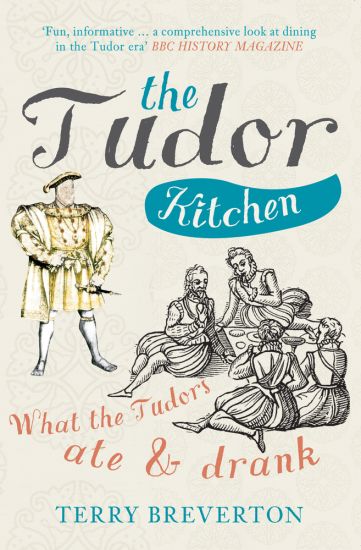
The Tudor Kitchen

The Tudor Kitchen

Terry Breverton

Amberley Publishing
2015
sidottu
Did you ever wonder what the Tudors ate and drank? What was Elizabeth I's first meal after the defeat of the Spanish Armada? Which pies did Henry VIII gorge on to go from a 32 to a 54-inch waist? The Tudor Kitchen provides a new history of the Tudor kitchen, and over 500 sumptuous – and more everyday – recipes enjoyed by rich and poor, all taken from authentic contemporary sources. The kitchens of the Tudor palaces were equipped to feed a small army of courtiers, visiting dignitaries and various hangers-on of the aristocracy. Tudor court food purchases in just one year were no fewer than 8,200 sheep, 2,330 deer and 53 wild boar, plus countless birds such as swan (and cygnet), peacock, heron, capon, teal, gull and shoveler. Tudor feasting was legendary; Henry VIII even managed to impress the French at the Field of the Cloth of Gold in 1520 with a twelve-foot marble and gold leaf fountain dispensing claret and white wine into silver cups, free for all!
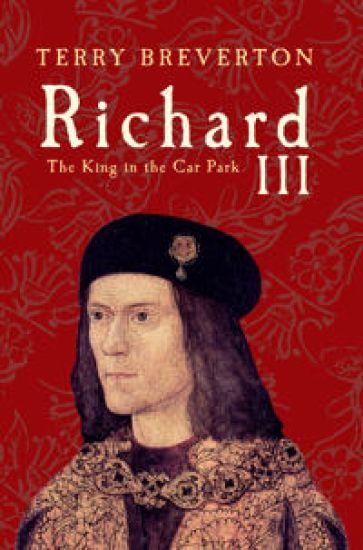
Richard III

Richard III

Terry Breverton

Amberley Publishing
2015
pokkari
The bloody Wars of the Roses between the Houses of Lancaster and York ended with the killing of Richard III. With the recent discovery of his skeleton, and the consequent controversy over his final resting place, it is time to re-examine the life of Richard as a duke and king. Was Richard the grotesque usurper and murderer of the Princes in the Tower, as depicted by Shakespeare just over a hundred years after his death in battle? Or has his name been blackened over the years, as claimed by his apologists, the Richard III Society? This biography sifts the contemporary evidence, placing Richard in the context of his times, and assesses the other candidates put forward to have killed the Princes in the Tower. John Locke wrote that ‘the actions of men are the best interpreters of their thoughts’ and upon this basis the investigation leads to one conclusion.
Breverton's First World War Curiosities

Breverton's First World War Curiosities

Terry Breverton

Amberley Publishing
2014
pokkari
A remarkable compendium of oddities, curiosities and little-known facts from the Great War What was a trench rabbit? What was known as a 'suicide ditch'? What were 'coffin nails'? Why did the Kaiser ban the production of sausages? What was the real 'War Horse'? Who was a 'donkey walloper'? Featuring the greatest battles, war slang, casualties, heroes and heroines, animals, spies and weapons, this terrific cornucopia of people and events is an entertaining but informative addition to our understanding of 'the War to End Wars'.
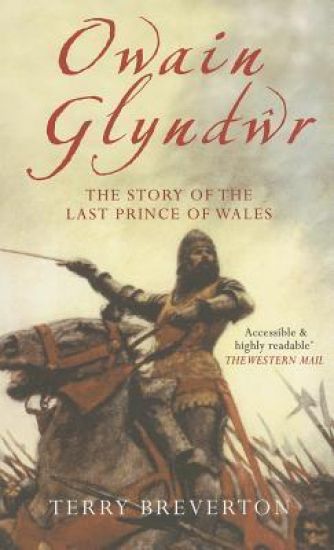
Owain Glyndwr

Owain Glyndwr

Terry Breverton

Amberley Publishing
2013
pokkari
If it had not been for Owain Glyndwr's 15-year struggle against overwhelming odds, the Welsh would not have survived as Europe's oldest nation. His war is the defining era in the history of Wales. Yet Glyndwr is hardly known - a cultured, literate warrior who was never betrayed or captured and vanished into history. No less than six separate invasions were beaten back by Glyndwr's army of volunteers before he disappeared, his family and children either dead or imprisoned for life. Not for Glyndwr the brutal public death of Braveheart, nor a grave to desecrate - only an immortal legacy of hope and freedom. His war of independence led the way for the success of another mab darogan (son of prophecy) seven decades later, when a Welsh army won at Bosworth Field and the Tudor dynasty was founded. This book tells us how Glyndwr came to stir Wales into war, and why his name still resonates today as one of the greatest warriors the world has ever seen.
Richard III

Richard III

Terry Breverton

Amberley Publishing
2013
sidottu
The bloody Wars of the Roses between the Houses of Lancaster and York ended with the killing of Richard III. With the recent discovery of his skeleton, and the consequent controversy over his final resting place, it is time to re-examine the life of Richard as a duke and king. Was he the grotesque usurper and murderer of the Princes in the Tower, as depicted by Shakespeare just over a hundred years after Richard's death in battle? Or has his name been blackened over the years, as claimed by his apologists, the Richard III Society? This biography sifts the contemporary evidence, placing Richard in the context of his times, and assesses the likelihood of other candidates put forward to have killed the Princes in the Tower. John Locke wrote that 'the actions of men are the best interpreters of their thoughts' and upon this basis the investigation leads to one conclusion.
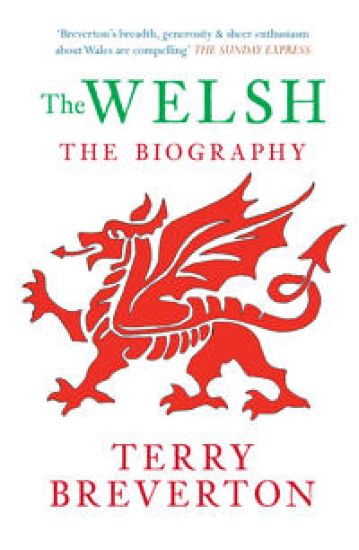
The Welsh The Biography

The Welsh The Biography

Terry Breverton

Amberley Publishing
2012
nidottu
The Welsh: The Biography tells the story of the remarkable survival of the oldest nation and oldest language in Europe. We see how the four original major Celtic tribes are still reflected in the location of Britain’s four oldest cathedrals, and how after one and a half millennia of constant invasions and eventual conquest, the Welsh retained their sense of nationality. The story of the Welsh is one of defending the nation against overwhelming odds, and of a major contribution to European literature. Its tenth century laws are acknowledged as the most progressive in the world until the later twentieth century. Almost uniquely in the world, Wales has had heroines as well as heroes, princesses as well as princes who contributed to its progress. Wales has given heroes such as Owain Glyndwr who are recognised across the globe, and men such as David Lloyd George, to whom Hitler attributed the winning of First World War. The character of the Welsh – their pacifism, literary abilities and influence – is splendidly described in this unique history of the Welsh as a people.
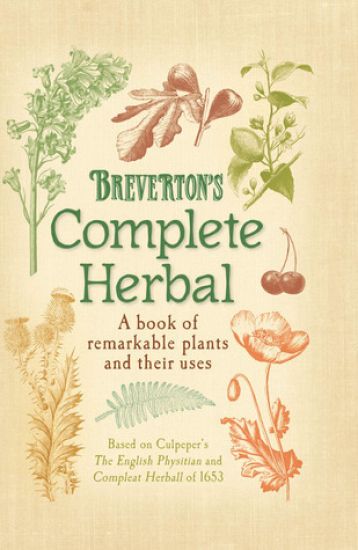
Breverton's Complete Herbal

Breverton's Complete Herbal

Terry Breverton

Globe Pequot Press
2012
sidottu
Nicholas Culpeper's The English Physitian: or an Astrologo-physical Discourse of the Vulgar Herbs of This Nation is more commonly known as "Culpeper's Complete Herbal." It was first printed in September 1653 (Culpeper died in January 1654) and immediately became a classic reference that is as fascinating today as it was more than 350 years ago. Breverton's Complete Herbal is a reworking of that classic text for a modern day audience. The book identifies each of Culpeper's herbs and spices, with a description of their appearance and Latin name/family; plus descriptions of the herbs' uses in medicine, dyeing and/or cuisine from the Greeks to the present day. Informative and entertaining, and is packed with interesting facts associated with herbs. For example, most herbs have their uses attached to their old names: Lungwort cured lung illnesses, Fleabane was strewn to get rid of fleas, Wolfbane poisoned wolves, and Henbane killed chickens.Dog's Grass was chewed by dogs when they were sick, Eye-Bright cured eye illnesses, Ducks-Meat was pond-algae, Gout-Herb cured gout, Mad-Wort cured the bite of a mad dog, Heart's-Ease was for heart illness, and Rupture-Wort and Spleen-Wort helped ruptures and spleen illnesses. Arranged alphabetically, Breverton's Complete Herbal describes 250 herbs and spices while containing feature sidebars and spreads on scented herb/medicinal gardens, the great herbalists, as well as New World herbs.