Kirjojen hintavertailu. Mukana 12 390 323 kirjaa ja 12 kauppaa.

Kirjailija

Terry Farrell

Kirjat ja teokset yhdessä paikassa: 4 kirjaa, julkaisuja vuosilta 2009-2024, suosituimpien joukossa Postmodernism. Vertaile teosten hintoja ja tarkista saatavuus suomalaisista kirjakaupoista.

4 kirjaa

Kirjojen julkaisuhaarukka 2009-2024.

Postmodernism

Postmodernism

Terry Farrell; Adam Nathaniel Furman

RIBA PUBLISHING
2024
sidottu
First published in 2017 as Revisiting Postmodernism, this refreshed edition of a seminal text reflects on a design movement that changed our world. Postmodernism invites readers to explore the style in a new light, as the cultural phenomenon that it is, one which thrives on complexity and pluralism. Exploring its expression not only in architecture, but in design, urban planning and placemaking, Postmodernism reflects on the history of the movement and its continuing influence on design practice today. Sir Terry Farrell and Adam Nathaniel Furman present two separate but complementary perspectives of this rich period of architectural history; one account as lived experience from a protagonist and pioneer in the field of postmodern architecture, and the other analysing the movement afresh, through the lens of the 21st century. Shedding new light onto the forces and influences of the time, and offering insight into how these were transforming approaches to architecture both in the UK and internationally, this important book presents a new appreciation of this period of architectural history. Sumptuously illustrated with examples from across the globe, Postmodernism offers a fresh perspective on buildings of this period, sharing their richness, diversity, and brilliance, with an emphasis on what was interesting, beautiful and unique about the architecture which emerged from this unusually fertile moment in history.
Lives in Architecture: Terry Farrell

Lives in Architecture: Terry Farrell

Terry Farrell

RIBA Publishing
2020
nidottu
A compelling personal account of Terry Farrell’s life in architecture, as an influential Postmodern designer, architect-planner and principal of a leading global practice. What have the defining projects and watershed moments and encounters been in Farrell's career? How has did he secure significant building projects such as Charing Cross, The MI6 Building and Beijing South Station? What have the highs and lows been in realising such large-scale schemes? Providing the inside view of what it is like to be an architect at the top of his profession, this autobiography highlights what it takes to develop a successful international practice. Farrell, alongside his High-Tech contemporaries, was a game-changer in the way he ran his business, with a deep commitment to marketing and finance. Working with the private sector, he made a complete break from a previous post-war generation of firms that were almost solely reliant on publicly funded building programmes. Tracing the story of his early life growing up in Greater Manchester and then on the post-war Grange Estate in Newcastle, before attending Newcastle University and the University of Pennsylvania in Philadelphia, and subsequently setting up in practice in London with Sir Nicholas Grimshaw in 1965, it highlights how Farrell, despite his working-class background, was able to seize the opportunities provided to him in the 1950s through free access to education. Featuring a richly illustrated full-colour section, including photos from his own private collection and images of Farrell’s most significant buildings, this book is a window into the life and career of one of Britain’s leading architects.
Revisiting Postmodernism

Revisiting Postmodernism

Terry Farrell; Adam Nathaniel Furman

RIBA Publishing
2017
pokkari
Revisiting Postmodernism invites readers to see postmodernism in a new light: not just as a style, but as a cultural phenomenon which embraces all areas of life, and thrives on complexity and pluralism. Focusing on architecture but touching on other elements of design, urban planning and place making, this engaging book reflects both on the historical movement and on how postmodernism influences practices today.Sir Terry Farrell and Adam Nathaniel Furman present two separate but complementary perspectives of this rich period of architectural history; one account as lived experience from a protagonist and pioneer in the field of postmodern architecture, and the other analysing the movement afresh, through the lens of the 21st century.Shedding new light onto the forces and influences of the time, and offering insight into how these were transforming approaches to architecture both in the UK and internationally, this important book presents a new appreciation of this period of architectural history. Sumptuously illustrated with examples from across the globe, Revisiting Postmodernism offers a fresh perspective on buildings of this period, sharing their richness, diversity, and brilliance, with an emphasis on what was interesting, beautiful and unique about the architecture which emerged from this unusually fertile moment in history.
Shaping London

Shaping London

Terry Farrell

John Wiley Sons Inc
2009
sidottu
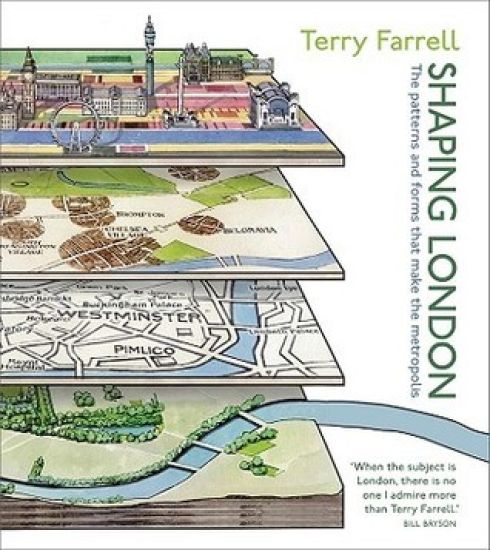
In this wholly new and dynamic view of London, Farrell looks beyond the contribution of individual buildings to the city. He creates a larger, more exciting frame, charting how the capital’s messy and complex shape has been hewn out of a series of layers – natural and manmade, so the Thames and the natural landscape gets as much attention as the railway infrastructure, the roads and the canals. This provides a whole series of revelations that allow us to see the city afresh: How might the natural bends in the river have impacted where and what was built? How have the Thames’ tributaries affected historic boundaries and development, played out in the estates of Mayfair? How is the Roman plan for the city of London still discernible in today’s street patterns? Illustrated with original sketches, maps, archive photographs and paintings, this book provides a vibrant and intriguing collage of London’s patterns and its history. Covers: • The Thames at West London, Central London, Docklands and the Estuary • Tributaries • Canals • Railways • The London Underground • The natural landscape