Kirjailija
Terry L. Anderson
Kirjat ja teokset yhdessä paikassa: 17 kirjaa, julkaisuja vuosilta 1995-2022, suosituimpien joukossa Free Market Environmentalism. Vertaile teosten hintoja ja tarkista saatavuus suomalaisista kirjakaupoista.
Mukana myös kirjoitusasut: Terry L Anderson
17 kirjaa
Kirjojen julkaisuhaarukka 1995-2022.
Although there is in the United States a clear national consensus supporting the protection of the environment, advocates often profoundly disagree about the policies best designed to achieve this end. The traditional answer has been that government must intervene, through legislation and regulation of behavior, to preserve environmental values. Th
Although there is in the United States a clear national consensus supporting the protection of the environment, advocates often profoundly disagree about the policies best designed to achieve this end. The traditional answer has been that government must intervene, through legislation and regulation of behavior, to preserve environmental values. This book takes a different approach, examining the prospects (and pitfalls) for improving natural resource allocation and environmental quality through market processes. The authors demonstrate that governmental policies often exacerbate environmental problems because of inadequate incentives and information. A property rights approach that focuses on the costs of operating markets as well as governments lays the framework for thinking about problems ranging from the American Frontier to global warming. Property rights solutions that encourage market processes are proposed for public land management, outdoor recreation, water quantity and quality, and ocean fisheries. The final chapter tackles the "tougher problems" of global warming and acid rain. Free Market Environmentalism applies the economic way of thinking to environmental problems of growing importance. It will be appropriate for environmental economic courses, but an economics background is not a prerequisite for understanding this nontechnical, innovative approach to natural resource management.
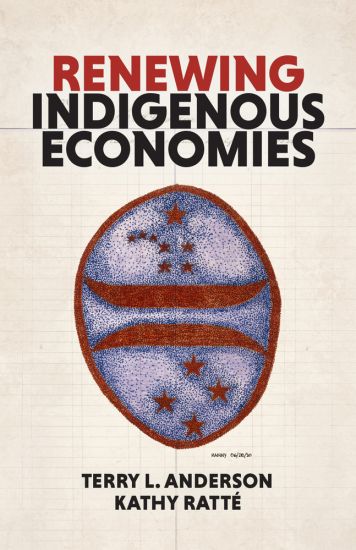
Renewing Indigenous Economies
Kathy Ratté; Terry L. Anderson
Hoover Institution Press,U.S.
2022
nidottu
Before the arrival of Europeans, Native Americans had thriving societies based on governing structures and property rights that encouraged productivity and trade. These traditional economies were crippled by federal law that has held Indians in colonial bondage. This book provides the knowledge for tribes trapped in "white tape" to revitalize their economies and communities.
Free Market Environmentalism applies the economic way of thinking to environmental problems of growing importance. It examines the prospects (and pitfalls) for improving natural resource allocation and environmental quality through market processes. .
Der gar nicht so Wilde Westen
Terry L. Anderson; Peter J. Hill
Lichtschlag Medien und Werbung KG
2019
nidottu
Although there is in the United States a clear national consensus supporting the protection of the environment, advocates often profoundly disagree about the policies best designed to achieve this end. The traditional answer has been that government must intervene, through legislation and regulation of behavior, to preserve environmental values. This book takes a different approach, examining the prospects (and pitfalls) for improving natural resource allocation and environmental quality through market processes. The authors demonstrate that governmental policies often exacerbate environmental problems because of inadequate incentives and information. A property rights approach that focuses on the costs of operating markets as well as governments lays the framework for thinking about problems ranging from the American Frontier to global warming. Property rights solutions that encourage market processes are proposed for public land management, outdoor recreation, water quantity and quality, and ocean fisheries. The final chapter tackles the “tougher problems” of global warming and acid rain. Free Market Environmentalism applies the economic way of thinking to environmental problems of growing importance. It will be appropriate for environmental economic courses, but an economics background is not a prerequisite for understanding this nontechnical, innovative approach to natural resource management.
Environmental Markets explains the prospects of using markets to improve environmental quality and resource conservation. No other book focuses on a property rights approach using environmental markets to solve environmental problems. This book compares standard approaches to these problems using governmental management, regulation, taxation, and subsidization with a market-based property rights approach. This approach is applied to land, water, wildlife, fisheries, and air and is compared to governmental solutions. The book concludes by discussing tougher environmental problems such as ocean fisheries and the global atmosphere, emphasizing that neither governmental nor market solutions are a panacea.
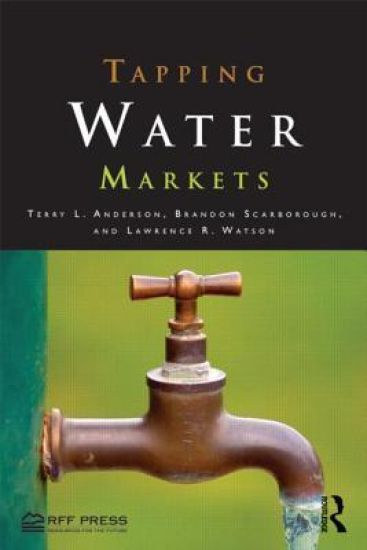
Tapping Water Markets
Terry L. Anderson; Brandon Scarborough; Lawrence R. Watson
Resources for the Future Press (RFF Press)
2012
nidottu
Tapping Water Markets is about the past, present, and future of water markets. It compares water markets with political water allocation, documents the growth of water markets, and explores the ways in which water markets can be improved and implemented further. This book provides up-to-date information of where and why water shortages are occurring and where and why water markets are evolving to resolve conflicting water uses. Though the main focus is on the United States, it includes examples from other parts of the world to show how water markets are beginning to thrive. It contains institutional detail that is accessible to people who are not economic or hydrologic experts, and comes alive with numerous examples and case studies of water markets. The book begins with an analysis of water institutions as they have varied over time and location. It then covers a range of discrete water management topics including surface water allocation, groundwater management, environmental flows, and water quality trading. The book concludes with predictions about the future of water scarcity and the ability of water markets to shape that future more positively.
Tapping Water Markets
Terry L. Anderson; Brandon Scarborough; Lawrence R. Watson
Resources for the Future Press (RFF Press)
2012
sidottu
Tapping Water Markets is about the past, present, and future of water markets. It compares water markets with political water allocation, documents the growth of water markets, and explores the ways in which water markets can be improved and implemented further. This book provides up-to-date information of where and why water shortages are occurring and where and why water markets are evolving to resolve conflicting water uses. Though the main focus is on the United States, it includes examples from other parts of the world to show how water markets are beginning to thrive. It contains institutional detail that is accessible to people who are not economic or hydrologic experts, and comes alive with numerous examples and case studies of water markets. The book begins with an analysis of water institutions as they have varied over time and location. It then covers a range of discrete water management topics including surface water allocation, groundwater management, environmental flows, and water quality trading. The book concludes with predictions about the future of water scarcity and the ability of water markets to shape that future more positively.
Drawing on the thoughts of various philosophers, political thinkers, economists, and lawyers, Terry Anderson and Laura Huggins present a blueprint for the nonexpert-expert on how societies can encourage or discourage freedom and prosperity through their property rights institutions. This Hoover Classic edition of Property Rightsdetails step-by-step what property rights are, what they do, how they evolve, how they can be protected, and how they promote freedom and prosperity.
To the doomsayers who maintain that natural resources are being depleted and the environment is getting worse, Terry Anderson and his fellow contributors offer a bold retort: it's getting better all the time. They present a powerful argument that, through such established institutions as property rights, the rules of law, and limited government, economic growth and environmental quality will both flourish. You Have to Admit It's Getting Better shows how, by focusing our energies on developing and protecting the institutions of freedom, rather than on regulating human use of natural resources through political processes, we can in fact have our environmental cake and eat it, too. The book offers a number of often-surprising revelations that debunk many commonly held beliefs about the future of our environment. It shows, for example, how liberalization of international trade is more likely to improve environmental quality than reduce it. It also explains how the prosperity and improved human well-being that we enjoy today are not leaving future generations worse off, but leaving them with more capital and larger stocks of natural resources. Throughout the book, the authors repeatedly show that economic growth is not the antithesis of environmental quality: rather, the two go hand in hand if the incentives are right.
Mention of the American West usually evokes images of rough and tumble cowboys, ranchers, and outlaws. In contrast, The Not So Wild, Wild West casts America's frontier history in a new framework that emphasizes the creation of institutions, both formal and informal, that facilitated cooperation rather than conflict. Rather than describing the frontier as a place where heroes met villains, this book argues that everyday people helped carve out legal institutions that tamed the West. The authors emphasize that ownership of resources evolves as those resources become more valuable or as establishing property rights becomes less costly. Rules evolving at the local level will be more effective because local people have a greater stake in the outcome. This theory is brought to life in the colorful history of Indians, fur trappers, buffalo hunters, cattle drovers, homesteaders, and miners. The book concludes with a chapter that takes lessons from the American frontier and applies them to our modern "frontiers"—the environment, developing countries, and space exploration.
Arguing that Americans should turn to private entrepreneurs rather than the federal government to guarantee the protection and improvement of environmental quality, the authors document numerous examples of how entrepreneurs have satisfied the growing demand for environmental quality. Beginning with historical cases from the turn of the century, they illuminate the benefits of entrepreneurial participation in wildlife preservation, aquatic habitat production, and environmentally friendly housing development. As government budgets shrink and more people question the efficacy of government regulations, Enviro-Capitalists offers alternatives to traditional thinking about the environment. While the book does not claim that the private sector can provide solutions to all environmental problems, it offers innovative ideas that will cultivate and encourage environmental entrepreneurship.
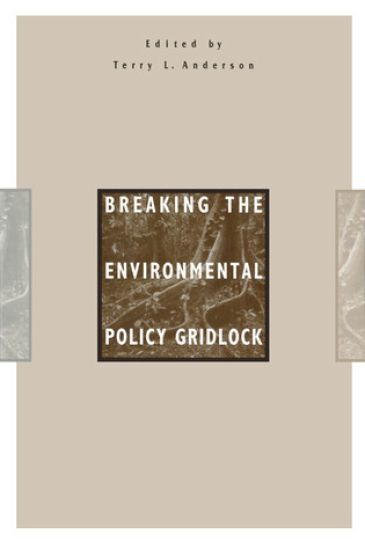
Breaking the Environmental Policy Gridlock
Terry L. Anderson
Hoover Institution Press,U.S.
1997
nidottu
Although the U.S. Congress has made progress toward fundamental change in economic and social programs. It remains gridlocked when it comes to creating needed environmental policy reform. This book shows how policymakers and opinion leader's can break that gridlock and offers specific policy recommendations that will be palatable to voters across the political spectrum.
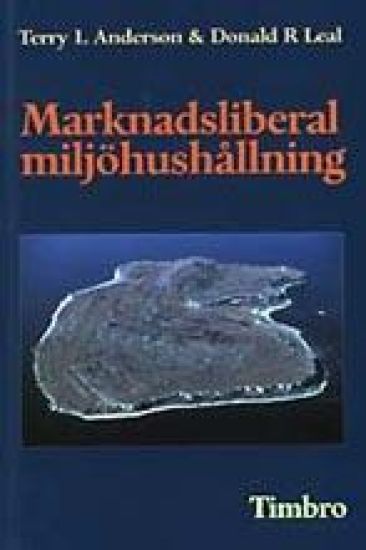
Visst kan mrknaden lösa miljöproblemen!Terry L Anderson och Donald R Leal presenterar ett betraktelsesätt på miljöfrågor och marknaden som bygger på ett system med noggrant specificerade äganderätter till miljöresurser. Ägarna av dessa rättigheter - det kan vara enskilda personer, företag eller organisationer - får då anledning att agera på ett sätt som är gynnsamt för miljön och inga politiska beslut behöver fattas.Anderson och Leal avfärdar missuppfattningen att marknaden är oförenlig med god miljö - att själva idén med marknadsliberal miljöhushållning är en motsägelse. Den modell för marknadsliberal miljöhushållning som författarna presenterar går att tillämpa också på svåra problem som förgiftning, högriskavfall, surt regn och global uppvärmning.
This collection of new and classic essays by a group of distinguished economists and wildlife experts challenges the prevailing idea that wildlife and markets are inimical to one another, arguing that markets can play an important role in preserving animal species and their habitat. In fact, the editors argue, the late nineteenth-century slaughter of wild game occurred because common ownership gave no incentive for hunters to limit their take or for owners of habitat to invest in wildlife. Using case studies from North America and southern Africa, the essays discuss how 'enviro-capitalism' has been successfully implemented to encourage elephant and rhino preservation and look at the politics of the international ivory ban. They examine the historical role of incentive wildlife management and the problems with political wildlife management that do not take into account the ownership of habitat.