Kirjojen hintavertailu. Mukana 12 657 676 kirjaa ja 12 kauppaa.

Kirjailija

Terry Smith

Kirjat ja teokset yhdessä paikassa: 32 kirjaa, julkaisuja vuosilta 1993-2026, suosituimpien joukossa Curating the Complex and the Open Strike. Vertaile teosten hintoja ja tarkista saatavuus suomalaisista kirjakaupoista.

32 kirjaa

Kirjojen julkaisuhaarukka 1993-2026.

Sidetracks

Sidetracks

Peter S. Meyer; Morten Kyndrup; Terry Smith; Øystein Sjåstad

Orfeus
2012
sidottu
Sidetracks - Painting in the Paramodern continuum Dette er en bok som undersøker det skildrende bildet og maleriet som et språk på lerretet. Forfatterne i boken er foruten Peter S. Meyer er professorene Morten Kyndrup, Terry Smith og Ph.D Øystein Sjåstad. Det har skjedd en forandring i måten vi oppfatter samtiden på og dette kan registreres i billedkunsten. Alle de 13 kunstnerne som er representert i boken har en relasjon til det skildrende bildet samtidig som de forhandler med maleriet som et språk på lerretet. Den "virkelige" verden er sett gjennom andres synsregimer. Det vil si at verden ikke lenger er sett med kunstnerens øyne. Den er sett gjennom andres måter å se og beskrive verden på. Kunstnere som er representert i denne flotte og interessante boken; Luc Tuymans, Toon Verhoef, Dag Erik Elgin, Hurvin Anderson, Marlene Dumas, Leonard Rickhard, Daniel Richter, Hurvin Anderson, Kaspar Bonnén, Matthias Weischer, Troels Wörsel, Toby Ziegler og Jesper Christiansen.
What Is Contemporary Art?

What Is Contemporary Art?

Terry Smith

University of Chicago Press
2009
nidottu
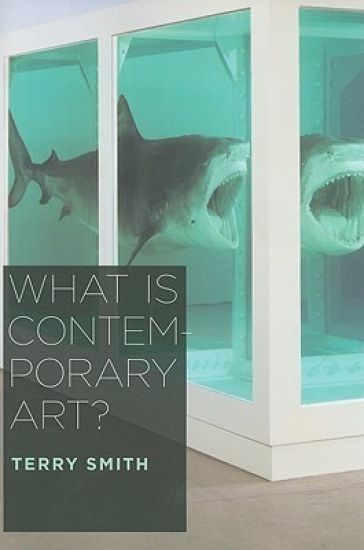
Who gets to say what counts as contemporary art? Artists, critics, curators, gallerists, auctioneers, collectors, or the public? Revealing how all of these groups have shaped today's multifaceted definition, Terry Smith brilliantly shows that a historical approach offers the best answer to the question: What Is Contemporary Art? Smith argues that the most recognizable kind is characterized by a return to mainstream modernism in the work of such artists as Richard Serra and Gerhard Richter, as well as the retro-sensationalism of figures like Damien Hirst and Takashi Murakami. At the same time, Smith reveals, post-colonial artists are engaged in a different kind of practice: one that builds on local concerns and tackles questions of identity, history, and globalization. A younger generation embodies yet a third approach to contemporaneity by investigating time, place, mediation, and ethics through small-scale, closely connective art making. Inviting readers into these diverse yet overlapping art worlds, Smith offers a behind-the-scenes introduction to the institutions, the personalities, the biennials, and of course the works that together are defining the contemporary. The resulting map of where art is now illuminates not only where it has been but also where it is going.
The Architecture of Aftermath

The Architecture of Aftermath

Terry Smith

University of Chicago Press
2006
nidottu
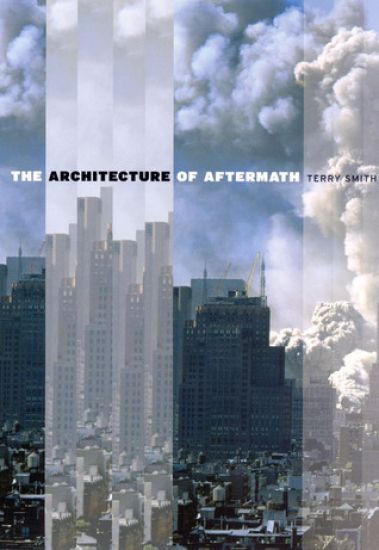
The September 11 terrorist attacks targeted, in Osama bin Laden's words, "America's icons of military and economic power." In "The Architecture of Aftermath", Terry Smith argues that it was no accident that these targets were buildings: architecture has long served as a symbol of proud, defiant power - and never more so than in the late twentieth century. But after September 11, Smith asserts, late modern architecture suddenly seemed an indulgence. With close readings of key buildings - including Jorn Utzon's Sydney Opera House, Minoru Yamasaki's World Trade Center, Frank Gehry's Guggenheim Museum Bilbao, and Richard Meier's Getty Center - Smith traces the growth of the spectacular architecture of modernity and then charts its aftermath in the conditions of contemporaneity. Indeed, Smith focuses on the very culture of aftermath itself, exploring how global politics, clashing cultures, and symbolic warfare have changed the way we experience destination architecture. Like other artists everywhere, architects are responding to the idea of aftermath by questioning the viability of their forms and the validity of their purposes. With his richly illustrated "The Architecture of Aftermath", Smith has done so as well.
The Architecture of Aftermath

The Architecture of Aftermath

Terry Smith

University of Chicago Press
2006
sidottu
The September 11 terrorist attacks targeted, in Osama bin Laden's words, "America's icons of military and economic power." In "The Architecture of Aftermath", Terry Smith argues that it was no accident that these targets were buildings: architecture has long served as a symbol of proud, defiant power - and never more so than in the late twentieth century. But after September 11, Smith asserts, late modern architecture suddenly seemed an indulgence. With close readings of key buildings - including Jorn Utzon's Sydney Opera House, Minoru Yamasaki's World Trade Center, Frank Gehry's Guggenheim Museum Bilbao, and Richard Meier's Getty Center - Smith traces the growth of the spectacular architecture of modernity and then charts its aftermath in the conditions of contemporaneity. Indeed, Smith focuses on the very culture of aftermath itself, exploring how global politics, clashing cultures, and symbolic warfare have changed the way we experience destination architecture. Like other artists everywhere, architects are responding to the idea of aftermath by questioning the viability of their forms and the validity of their purposes. With his richly illustrated "The Architecture of Aftermath", Smith has done so as well.
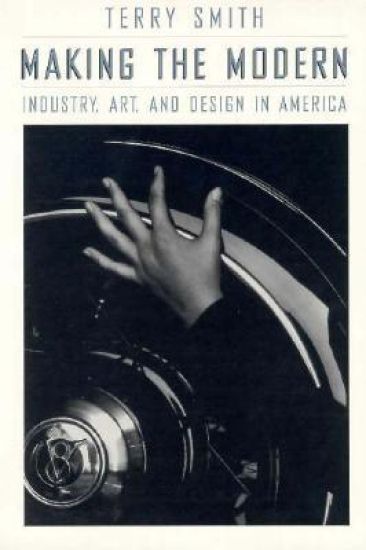
Making the Modern

Making the Modern

Terry Smith

University of Chicago Press
1994
nidottu
In this ambitious book, Terry Smith chronicles the modernist revolution in American art and design between the world wars—from its origins in the new industrial age of mass production, automation, and corporate culture to its powerful and transforming effects on the way Americans came to see themselves and their world. From Ford Motor's first assembly line in 1913 to the New York World's Fair of 1939, Smith traces the evolution of visual imagery in the first half of America's century of progress.