Kirjojen hintavertailu. Mukana 12 390 323 kirjaa ja 12 kauppaa.

Kirjailija

Tertullian

Kirjat ja teokset yhdessä paikassa: 96 kirjaa, julkaisuja vuosilta 1931-2025, suosituimpien joukossa Tertullian: On the Apparel of Women. Vertaile teosten hintoja ja tarkista saatavuus suomalaisista kirjakaupoista.

96 kirjaa

Kirjojen julkaisuhaarukka 1931-2025.

On Fasting

On Fasting

Tertullian; A M Overett

Lighthouse Publishing
2018
pokkari
I should wonder at the Psychics, if they were enthralled to voluptuousness alone, which leads them to repeated marriages, if they were not likewise bursting with gluttony, which leads them to hate fasts. Lust without voracity would certainly be considered a monstrous phenomenon; since these two are so united and concrete, that, had there been any possibility of disjoining them, the pudenda would not have been affixed to the belly itself rather than elsewhere. Look at the body: the region (of these members) is one and the same. In short, the order of the vices is proportionate to the arrangement of the members. First, the belly; and then immediately the materials of all other species of lasciviousness are laid subordinately to daintiness: through love of eating, love of impurity finds passage. I recognize, therefore, animal faith by its care of the flesh (of which it wholly consists)--as prone to manifold feeding as to manifold marrying--so that it deservedly accuses the spiritual discipline, which according to its ability opposes it, in this species of continence as well; imposing, as it does, reins upon the appetite, through taking, sometimes no meals, or late meals, or dry meals, just as upon lust, through allowing but one marriage.
On Exhortation to Chastity

On Exhortation to Chastity

Tertullian; S Thelwall; A M Overett

Lighthouse Publishing
2018
pokkari
No one deserves (favor) by availing himself of the indulgence, but by rendering a prompt obedience to the will, (of his master). The will of God is our sanctification, for He wishes His "image"--us--to become likewise His "likeness;" that we may be "holy" just as Himself is "holy." That good--sanctification, I mean--I distribute into several species, that in some one of those species we may be found. The first species is, virginity from one's birth: the second, virginity from one's second birth, that is, from the font; which (second virginity) either in the marriage state keeps (its subject) pure by mutual compact, or else perseveres in widowhood from choice: a third grade remains, monogamy, when, after the interception of a marriage once contracted, there is thereafter a renunciation of sexual connection. The first virginity is (the virginity) of happiness, (and consists in) total ignorance of that from which you will afterwards wish to be freed: the second, of virtue, (and consists in) contemning that the power of which you know full well: the remaining species, (that) of marrying no more after the disjunction of matrimony by death, besides being the glory of virtue, is (the glory) of moderation likewise; for moderation is the not regretting a thing which has been taken away, and taken away by the Lord God, without whose will neither does a leaf glide down from a tree, nor a sparrow of one farthing's worth fall to the earth.
The Chaplet or De Corona

The Chaplet or De Corona

Tertullian

Lighthouse Publishing
2018
pokkari
Keep for God His own property untainted; He will crown it if He choose. Nay, then, He does even choose. He calls us to it. To him who conquers He says, "I will give a crown of life." Be you, too, faithful unto death, and fight you, too, the good fight, whose crown the apostle feels so justly confident has been laid up for him. The angel also, as he goes forth on a white horse, conquering and to conquer, receives a crown of victory; and another is adorned with an encircling rainbow (as it were in its fair colors)--a celestial meadow. In like manner, the elders sit crowned around, crowned too with a crown of gold, and the Son of Man Himself flashes out above the clouds. If such are the appearances in the vision of the seer, of what sort will be the realities in the actual manifestation? Look at those crowns. Inhale those odors. Why condemn you to a little chaplet, or a twisted headband, the brow which has been destined for a diadem? For Christ Jesus has made us even kings to God and His Father. -Tertullian
De Fuga in Persecutione

De Fuga in Persecutione

Tertullian

Lighthouse Publishing
2018
pokkari
As persecutions in increasing number threaten us, so the more are we called on to give earnest thought to the question of how faith ought to receive them, and the duty of carefully considering it concerns you no less, who no doubt, by not accepting the Comforter, the guide to all truth, have, as was natural, opposed us hitherto in regard to other questions also. We have therefore applied a methodical treatment, too, to your inquiry, as we see that we must first come to a decision as to how the matter stands in regard to persecution itself, whether it comes on us from God or from the devil, that with the less difficulty we may get on firm ground as to our duty to meet it; for of everything one's knowledge is clearer when it is known from whom it has its origin. It is enough indeed to lay it down, (in bar of all besides, ) that nothing happens without the will of God. But lest we be diverted from the point before us, we shall not by this deliverance at once give occasion to the other discussions if one make answer--Therefore evil and sin are both from God; the devil henceforth, and even we ourselves, are entirely free. The question in hand is persecution. With respect to this, let me in the meantime say, that nothing happens without God's will; on the ground that persecution is especially worthy of God, and, so to speak, requisite, for the approving, to wit, or if you will, the rejection of His professing servants. For what is the issue of persecution, what other result comes of it, but the approving and rejecting of faith, in regard to which the Lord will certainly sift His people?
De Spectaculis

De Spectaculis

Tertullian

Lighthouse Publishing
2018
pokkari
The Shows or De Spectaculis, also known as On the Spectacles, is a treatise by Tertullian. Written somewhere between 197-202, the work comments on issues and consequences related to the attendance of circus, theatre, or amphitheatre ("the pleasures of public shows"). Tertullian's views of these public performances in the theatre are that they are immoral and lead to corruption. Tertullian argues that spectacles are derived from pagan ritual rites (the Liberalia, the Consualia, the Equiria, the Bacchanalia, etc.). The performances only excite the crowd which leads to "spiritual agitation." This work gives insight into the ancient world of the theatre and circus and how Christians should avoid their allure.
Against the Valentinians

Against the Valentinians

Tertullian

Lighthouse Publishing
2018
pokkari
In Which the Author Gives a Concise Account of, Together with Sundry Caustic Animadversions on, the Very Fantastic Theology of the Sect. This Treatise is Professedly Taken from the Writings of Justin, Miltiades, Iren us, and Proculus. "The Valentinians, who are no doubt a very large body of heretics--comprising as they do so many apostates from the truth, who have a propensity for fables, and no discipline to deter them (therefrom) care for nothing so much as to obscure what they preach, if indeed they (can be said to) preach who obscure their doctrine. The officiousness with which they guard their doctrine is an officiousness which betrays their guilt. Their disgrace is proclaimed in the very earnestness with which they maintain their religious system. Now, in the case of those Eleusinian mysteries, which are the very heresy of Athenian superstition, it is their secrecy that is their disgrace."
Ad Nationes

Ad Nationes

Tertullian

Lighthouse Publishing
2018
pokkari
Ad Nationes (To the Nations) shows that the Roman actions taken against the early Christians are violations of justice. This is followed by a listing of Roman slanders against the Christians. Tertullian points out the hypocrisy, since Romans hardly conduct themselves in anything resembling moral behavior. The second book condemns and criticizes Roman religion and their deities in particular. "The hatred held by the heathen against the Christians is unjust, because based on culpable ignorance. One proof of that ignorance of yours, which condemns whilst it excuses your injustice, is at once apparent in the fact, that all who once shared in your ignorance and hatred (of the Christian religion), as soon as they have come to know it, leave off their hatred when they cease to be ignorant; nay more, they actually themselves become what they had hated, and take to hating what they had once been. Day after day, indeed, you groan over the increasing number of the Christians. Your constant cry is, that the state is beset (by us); that Christians are in your fields, in your camps, in your islands." -Tertullian 197 AD
On the Flesh of Christ

On the Flesh of Christ

Tertullian

Lighthouse Publishing
2018
pokkari
This was written by our author in confutation of certain heretics who denied the reality of Christ's flesh, or at least its identity with human flesh--fearing that, if they admitted the reality of Christ's flesh, they must also admit his resurrection in the flesh; and, consequently, the resurrection of the human body after death. They who are so anxious to shake that belief in the resurrection which was firmly settled before the appearance of our modern Sadducees, as even to deny that the expectation thereof has any relation whatever to the flesh, have great cause for besetting the flesh of Christ also with doubtful questions, as if it either had no existence at all, or possessed a nature altogether different from human flesh. For they cannot but be apprehensive that, if it be once determined that Christ's flesh was human, a presumption would immediately arise in opposition to them, that that flesh must by all means rise again, which has already risen in Christ. Therefore, we shall have to guard our belief in the resurrection from the same armory, whence they get their weapons of destruction. Let us examine our Lord's bodily substance, for about His spiritual nature all are agreed. It is His flesh that is in question. Its verity and quality are the points in dispute. Did it ever exist? whence was it derived? And of what kind was it? If we succeed in demonstrating it, we shall lay down a law for our own resurrection.
On Baptism

On Baptism

Tertullian

Lighthouse Publishing
2018
pokkari
Happy is our sacrament of water, in that, by washing away the sins of our early blindness, we are set free and admitted into eternal life A treatise on this matter will not be superfluous; instructing not only such as are just becoming formed (in the faith), but them who, content with having simply believed, without full examination of the grounds of the traditions, carry (in mind), through ignorance, an untried though probable faith. The consequence is, that a viper of the Cainite heresy, lately conversant in this quarter, has carried away a great number with her most venomous doctrine, making it her first aim to destroy baptism. Which is quite in accordance with nature; for vipers and asps and basilisks themselves generally do affect arid and waterless places. But we, little fishes, after the example of our Jesus Christ, are born in water, nor have we safety in any other way than by permanently abiding in water; so that most monstrous creature, who had no right to teach even sound doctrine, knew full well how to kill the little fishes, by taking them away from the water
A Treatise on the Soul

A Treatise on the Soul

Tertullian

Lighthouse Publishing
2018
pokkari
Whatever noxious vapors, accordingly, exhaled from philosophy, obscure the clear and wholesome atmosphere of truth, it will be for Christians to clear away, both by shattering to pieces the arguments which are drawn from the principles of things--I mean those of the philosophers--and by opposing to them the maxims of heavenly wisdom--that is, such as are revealed by the Lord; in order that both the pitfalls wherewith philosophy captivates the heathen may be removed, and the means employed by heresy to shake the faith of Christians may be repressed. We have already decided one point in our controversy with Hermogenes, as we said at the beginning of this treatise, when we claimed the soul to be formed by the breathing of God, and not out of matter. We relied even there on the clear direction of the inspired statement which informs us how that "the Lord God breathed on man's face the breath of life, so that man became a living soul"--by that inspiration of God, of course. On this point, therefore, nothing further need be investigated or advanced by us. It has its own treatise, and its own heretic. I shall regard it as my introduction to the other branches of the subject. -Tertullian
On Modesty

On Modesty

Tertullian

Lighthouse Publishing
2018
pokkari
Modesty, the flower of manners, the honor of our bodies, the grace of the sexes, the integrity of the blood, the guarantee of our race, the basis of sanctity, the pre-indication of every good disposition; rare though it is, and not easily perfected, and scarce ever retained in perpetuity, will yet up to a certain point linger in the world, if nature shall have laid the preliminary groundwork of it, discipline persuaded to it, censorial rigor curbed its excesses--on the hypothesis, that is, that every mental good quality is the result either of birth, or else of training, or else of external compulsion. But as the conquering power of things evil is on the increase--which is the characteristic of the last times--things good are now not allowed either to be born, so corrupted are the seminal principles; or to be trained, so deserted are studies; nor to be enforced, so disarmed are the laws. In fact, (the modesty) of which we are now beginning (to treat) is by this time grown so obsolete, that it is not the abjuration but the moderation of the appetites which modesty is believed to be; and he is held to be chaste enough who has not been too chaste. But let the world's modesty see to itself, together with the world itself: together with its inherent nature, if it was wont to originate in birth; its study, if in training; its servitude, if in compulsion: except that it had been even more unhappy if it had remained only to prove fruitless, in that it had not been in God's household that its activities had been exercised.
Adversus Marcionem - Gegen Markion IV: Lateinisch - Deutsch
Der Gnostiker Markion und seine schismatische Bewegung stellten fur die Kirche des 2. und 3. Jh. eine ernstzunehmende Gefahr dar. Seiner Trennung von Altem und Neuem Testament schlossen sich zahlreiche Glaubige als "markionitische Kirche" an. Tertullian, der bedeutende Theologe Nordafrikas, sieht sich so herausgefordert, auf die von Markion begrundete Stromung literarisch zu antworten. Er tut dies, indem er in Buch 1 von "Adversus Marcionem" zunachst die Existenz des auf den Neuen Bund beschrankten Gottes Markions, und damit auch dessen Zweigotterlehre, bestreitet. Im folgenden Buch bemuht sich Tertullian, die Wurdigkeit des Schopfergottes als Gottes des Alten und Neuen Bundes zu beweisen. Im Zuge der ersten beiden Bucher gegen Markion beruhrt der Autor notwendig neben der Gotterlehre auch Fragen der Ethik, der Anthropologie, der Psychologie und der Ekklesiologie. Buch 3 ist der Christologie vorbehalten. Der Exegese dienen die Bucher 4 und 5. Tertullian erweist sich wie in anderen Werken auch hier als Meister der Latinitat. Die vorliegende Edition stellt die erste komplette lateinisch-deutsche Ausgabe dieses Werkes dar.
Adversus Marcionem - Gegen Markion III: Lateinisch - Deutsch
Der Gnostiker Markion und seine schismatische Bewegung stellten fur die Kirche des 2. und 3. Jh. eine ernstzunehmende Gefahr dar. Seiner Trennung von Altem und Neuem Testament schlossen sich zahlreiche Glaubige als "markionitische Kirche" an. Tertullian, der bedeutende Theologe Nordafrikas, sieht sich so herausgefordert, auf die von Markion begrundete Stromung literarisch zu antworten. Er tut dies, indem er in Buch 1 von "Adversus Marcionem" zunachst die Existenz des auf den Neuen Bund beschrankten Gottes Markions, und damit auch dessen Zweigotterlehre, bestreitet. Im folgenden Buch bemuht sich Tertullian, die Wurdigkeit des Schopfergottes als Gottes des Alten und Neuen Bundes zu beweisen. Im Zuge der ersten beiden Bucher gegen Markion beruhrt der Autor notwendig neben der Gotterlehre auch Fragen der Ethik, der Anthropologie, der Psychologie und der Ekklesiologie. Buch 3 ist der Christologie vorbehalten. Der Exegese dienen die Bucher 4 und 5. Tertullian erweist sich wie in anderen Werken auch hier als Meister der Latinitat. Die vorliegende Edition stellt die erste komplette lateinisch-deutsche Ausgabe dieses Werkes dar.
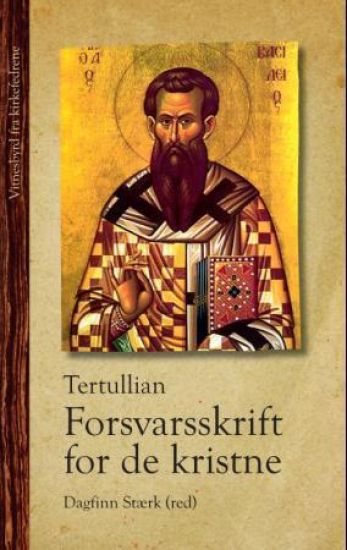
Forsvarsskrift for de kristne
Tertullians forsvarsskrift fra år 197 e. Kr. består av 50 kapitler der han tilbakeviser angrepene på de kristne og deres tro og forklarer hva kristen tro egentlig består i. Forsvarsskrift for de kristne er en del av serien Vitnesbyrd fra kirkefedrene.
Disciplinary, Moral and Ascetical Works

Disciplinary, Moral and Ascetical Works

Tertullian; Roy Joseph Deferrari

Literary Licensing, LLC
2011
sidottu
Disciplinary, Moral and Ascetical Works by Tertullian is a collection of writings by the early Christian theologian Tertullian. The book is divided into three sections, each focusing on a different aspect of Christian life and practice. The first section deals with discipline, including topics such as fasting, prayer, and the use of the sacraments. The second section focuses on morality, discussing issues such as marriage, sexuality, and the virtues of humility and charity. The third and final section is concerned with asceticism, exploring the practices of monasticism and the pursuit of spiritual perfection. Throughout the book, Tertullian emphasizes the importance of living a holy and virtuous life, and offers practical advice for achieving this goal. The works in this collection are considered foundational texts in the development of Christian theology and ethics, and remain relevant to contemporary readers seeking to deepen their understanding of the Christian faith.Additional Translator Are Emily Joseph Daly And Edwin A. Quain. Fathers Of The Church, Volume 40.This scarce antiquarian book is a facsimile reprint of the old original and may contain some imperfections such as library marks and notations. Because we believe this work is culturally important, we have made it available as part of our commitment for protecting, preserving, and promoting the world's literature in affordable, high quality, modern editions, that are true to their original work.