Kirjojen hintavertailu. Mukana 12 595 353 kirjaa ja 12 kauppaa.

Kirjailija

Thad Sitton

Kirjat ja teokset yhdessä paikassa: 10 kirjaa, julkaisuja vuosilta 1983-2025, suosituimpien joukossa From Can See to Can't. Vertaile teosten hintoja ja tarkista saatavuus suomalaisista kirjakaupoista.

10 kirjaa

Kirjojen julkaisuhaarukka 1983-2025.

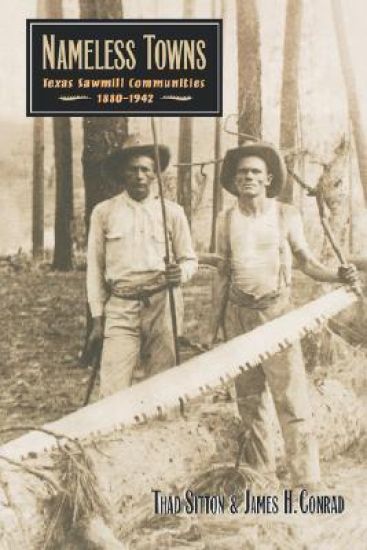
Nameless Towns

Nameless Towns

Thad Sitton; James H. Conrad

University of Texas Press
1998
pokkari
Winner, T. H. Fehrenbach Award, Texas Historical CommissionSawmill communities were once the thriving centers of East Texas life. Many sprang up almost overnight in a pine forest clearing, and many disappeared just as quickly after the company "cut out" its last trees. But during their heyday, these company towns made Texas the nation's third-largest lumber producer and created a colorful way of life that lingers in the memories of the remaining former residents and their children and grandchildren.Drawing on oral history, company records, and other archival sources, Sitton and Conrad recreate the lifeways of the sawmill communities. They describe the companies that ran the mills and the different kinds of jobs involved in logging and milling. They depict the usually rough-hewn towns, with their central mill, unpainted houses, company store, and schools, churches, and community centers. And they characterize the lives of the people, from the hard, awesomely dangerous mill work to the dances, picnics, and other recreations that offered welcome diversions.
From Can See to Can't

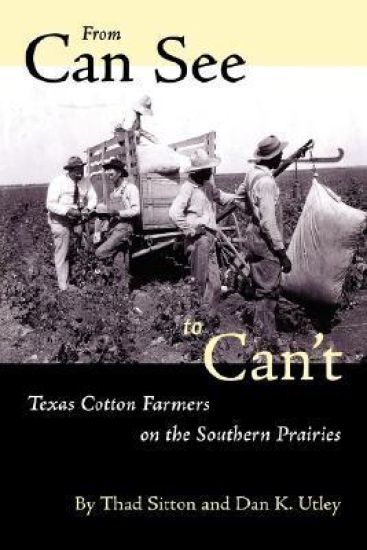
From Can See to Can't

Thad Sitton; Dan K. Utley

University of Texas Press
1997
pokkari
Cotton farming was the only way of life that many Texans knew from the days of Austin's Colony up until World War II. For those who worked the land, it was a dawn-till-dark, "can see to can't," process that required not only a wide range of specialized skills but also a willingness to gamble on forces often beyond a farmer's control-weather, insects, plant diseases, and the cotton market.This unique book offers an insider's view of Texas cotton farming in the late 1920s. Drawing on the memories of farmers and their descendants, many of whom are quoted here, the authors trace a year in the life of south central Texas cotton farms. From breaking ground to planting, cultivating, and harvesting, they describe the typical tasks of farm families-as well as their houses, food, and clothing; the farm animals they depended on; their communities; and the holidays, activities, and observances that offered the farmers respite from hard work.Although cotton farming still goes on in Texas, the lifeways described here have nearly vanished as the state has become highly urbanized. Thus, this book preserves a fascinating record of an important part of Texas' rural heritage.
Caddo

Caddo

Thad Sitton; Andrew Sansom

Texas A M University Press
2015
sidottu
In a stunning tribute to one of Texas' most enigmatic waterways, a veteran East Texas historian and a professional photographer have together created an homage to a lake like no other - half Texas, half Louisiana, a swampy labyrinth of bald cypress and water plants filled with mystery, legend, and a staggering amount of biological complexity.Classified as a Category 1 Habitat for wildlife by the US Fish and Wildlife Service and encompassing a state wildlife management area as well as a state park, Caddo Lake and adjacent areas have also been designated as a Ramsar Site under the international convention to preserve world-class wetlands and their waterfowl. In both words and pictures, writer Thad Sitton and photographer Carolyn Brown have captured the human, animal, and plant life of Caddo, as well as the history of the lake itself, better likened to an ever-changing network of cypress woodlands, bayou-like channels, water-plant meadows, and hardwood bottoms covered more or less by water.
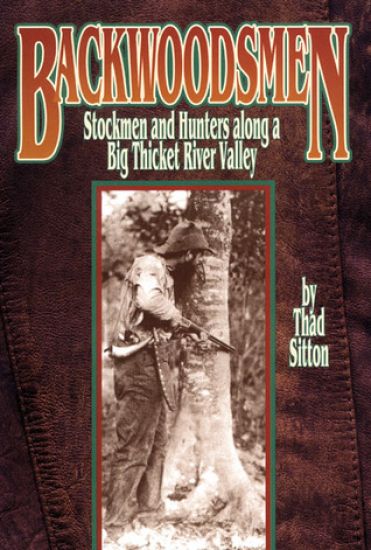
Backwoodsmen

Backwoodsmen

Thad Sitton

University of Oklahoma Press
2008
nidottu
Backwoodsmen:Stockmen and Hunters along a BIg Thicket Valley presents a detailed social history of the back-country stockmen, hunters, and woodsmen of the Neches River in southeastern Texas. Labeled ""crackers,"" ""pineys,"" ""sandhillers,"" and ""nesters"" by townspeople across the upland South, southern backwoodsmen have often been dismissed by historians. One of the first works to challenge these stereotypes was Frank Owsley's Plain Folk of the Old South (1949). In Backwoodsmen, Thad Sitton follows Owsley's stockmen and small farmers into the twentieth century.As in parts of Appalachia, many elements of centuries-old herding and hunting lifeways survived in the Neches Valley into the 1960s. In what early settlers called the ""Big Thicket"" or ""Big Woods,"" everything outside fenced fields was, by long established custom, ""open range,"" a wooded commons in which hogs, cattle, and backwoodsmen were free to roam. And roam they did--not only stockmen, with their ""rooter hogs"" and ""woods cattle,"" but also tir cutters, grey-moss gatherers, hunters, trappers, fishermen, and moonshiners. Sitton details their daily activities, relying mainly on oral history interviews he conducted with dozens of Neches Valley woodsmen. Along the edge of river bottoms, at the end of county roads, the author found hist story, still alive in the memories of the people of the Neches River.
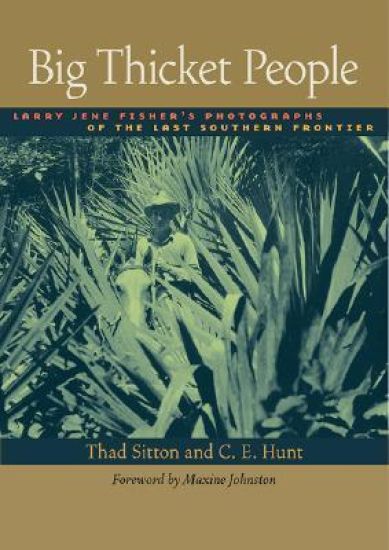
Big Thicket People

Big Thicket People

Larry Jene Fisher; Thad Sitton; C.E. Hunt

University of Texas Press
2008
sidottu
Living off the land-hunting, fishing, and farming, along with a range of specialized crafts that provided barter or cash income-was a way of life that persisted well into the twentieth century in the Big Thicket of southeast Texas. Before this way of life ended with World War II, professional photographer Larry Jene Fisher spent a decade between the 1930s and 1940s photographing Big Thicket people living and working in the old ways. His photographs, the only known collection on this subject, constitute an irreplaceable record of lifeways that first took root in the southeastern woodlands of the colonial United States and eventually spread all across the Southern frontier.Big Thicket People presents Fisher's photographs in suites that document a wide slice of Big Thicket life-people, dogs, camps, deer hunts, farming, syrup mills, rooter hogs and stock raising, railroad tie making, barrel stave making, chimney building, peckerwood sawmills, logging, turpentining, town life, church services and picnics, funerals and golden weddings, and dances and other amusements. Accompanying each suite of images is a cultural essay by Thad Sitton, who also introduces the book with a historical overview of life in the Big Thicket. C. E. Hunt provides an informative biography of Larry Jene Fisher.
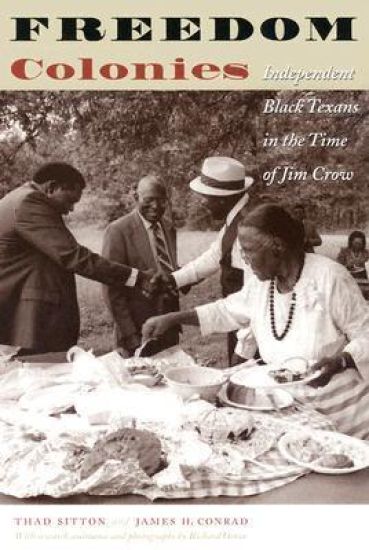
Freedom Colonies

Freedom Colonies

Thad Sitton; James H. Conrad

University of Texas Press
2005
pokkari
Friends of the Dallas Public Library Award, 2006 Best Book on East Texas, East Texas Historical Association, 2007In the decades following the Civil War, nearly a quarter of African Americans achieved a remarkable victory-they got their own land. While other ex-slaves and many poor whites became trapped in the exploitative sharecropping system, these independence-seeking individuals settled on pockets of unclaimed land that had been deemed too poor for farming and turned them into successful family farms. In these self-sufficient rural communities, often known as "freedom colonies," African Americans created a refuge from the discrimination and violence that routinely limited the opportunities of blacks in the Jim Crow South.Freedom Colonies is the first book to tell the story of these independent African American settlements. Thad Sitton and James Conrad focus on communities in Texas, where blacks achieved a higher percentage of land ownership than in any other state of the Deep South. The authors draw on a vast reservoir of ex-slave narratives, oral histories, written memoirs, and public records to describe how the freedom colonies formed and to recreate the lifeways of African Americans who made their living by farming or in skilled trades such as milling and blacksmithing. They also uncover the forces that led to the decline of the communities from the 1930s onward, including economic hard times and the greed of whites who found legal and illegal means of taking black-owned land. And they visit some of the remaining communities to discover how their independent way of life endures into the twenty-first century.
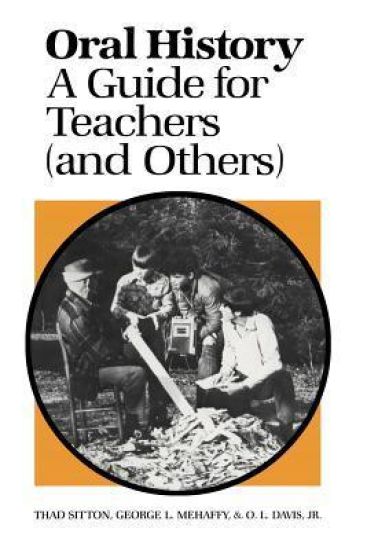
Oral History

Oral History

Thad Sitton; George L. Mehaffy; O.L. Davis

University of Texas Press
1983
pokkari
More than a mode of gathering information about the past, oral history has become an international movement. Historians, folklorists, and other educational and religious groups now recognize the importance of preserving the recollections of people about the past. The recorded memories of famous and common folk alike provide a vital complement to textbook history, bringing the past to life through the stories of those who lived it. Oral History is designed to introduce teachers, students, and interested individuals to the techniques, problems, and pleasures of collecting oral history. The authors, themselves experienced educators, examine the uses of oral history in the classroom, looking at a wide range of projects that have been attempted and focusing on those that have succeeded best. Besides suggesting many possible projects, they discuss the necessary hardware and its use: recording equipment and procedures, interview outlines and preliminary research, photography and note-taking in the field, transcription and storage of information, legal forms, and more. For the teacher, the authors offer helpful advice on training students to be sensitive interviewers in both formal and informal situations. How can oral histories collected in the classroom be put to use? The authors discuss their uses within the curriculum; in projects such as oral history archives, publications such as the popular Foxfire books, and other media productions; and in researching current community problems. Useful appendixes survey a variety of reference tools for the oral historian and describe in detail how a Foxfire-concept magazine may be developed.
A Resurrection of Springs

A Resurrection of Springs

Thad Sitton; Adrian F. van Dellen; Cynthia Nesser

TEXAS A M UNIVERSITY PRESS
2025
sidottu
The Krause Ranch is not a normal Hill Country landscape—it has bottomless holes, dinosaur tracks, high limestone river cliffs where golden eagles nest, and occasional visits by TPWD-authenticated pumas and black bears. Historian Thad Sitton offers a detailed description of the 1,670-acre property, its human history, its natural history, and Gary Krause—the man who has spent several decades clearing cedar to bring grass and good water back to the land. Krause resurrected the springs using native grasses with feet-deep roots that act as conduits bringing water down into the ground. Chapters cover descriptions of the land before settlement, the first settlers, the Aulds, and Krause’s commitment to returning the land to its original state. No wonder that the Texas Nature Conservancy is working with Krause so assiduously to preserve it. Coauthor Cynthia Nesser, a professional conservationist, provides a valuable set of resources for readers who will be moved to practice conservation in their own backyards. Over 200 photographs by Adrian Van Dellen capture the Krause ranchland in sweeping vistas around the seasons, examining everything from the rivers and water features such as Englishmen’s Well, rumored to be over 200 feet deep, to the minutiae of individual plants and animals. Special sections on Texas grasses, Texas cedar, water management in the riparian habitat, and wildlife provide factual grounding illustrated by specific examples from Krause’s ranchlands.
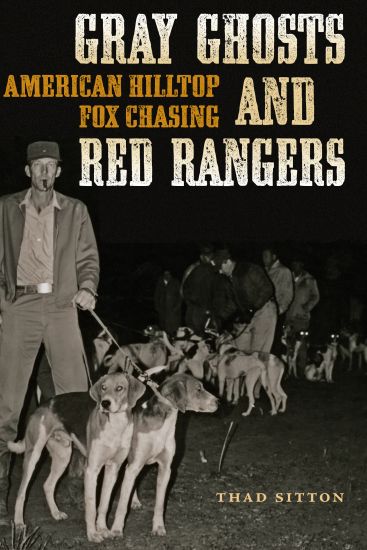
Gray Ghosts and Red Rangers

Gray Ghosts and Red Rangers

Thad Sitton

University of Texas Press
2010
nidottu
Around a campfire in the woods through long hours of night, men used to gather to listen to the music of hounds' voices as they chased an elusive and seemingly preternatural fox. To the highly trained ears of these backwoods hunters, the hounds told the story of the pursuit like operatic voices chanting a great epic. Although the hunt almost always ended in the escape of the fox-as the hunters hoped it would-the thrill of the chase made the men feel "that they [were] close to something lost and never to be found, just as one can feel something in a great poem or a dream."Gray Ghosts and Red Rangers offers a colorful account of this vanishing American folkway-back-country fox hunting known as "hilltopping," "moonlighting," "fox racing," or "one-gallus fox hunting." Practiced neither for blood sport nor to put food on the table, hilltopping was worlds removed from elite fox hunting where red- and black-coated horsemen thundered across green fields in daylight. Hilltopping was a nocturnal, even mystical pursuit, uniting men across social and racial lines as they gathered to listen to dogs chasing foxes over miles of ground until the sun rose. Engaged in by thousands of rural and small-town Americans from the 1860s to the 1980s, hilltopping encouraged a quasi-spiritual identification of man with animal that bound its devotees into a "brotherhood of blood and cause" and made them seem almost crazy to outsiders.
The Texas Sheriff

The Texas Sheriff

Thad Sitton

University of Oklahoma Press
2006
nidottu
The Texas Sheriff takes a fresh, colorful, and insightful look at Texas law enforcement during the decades before 1960. In the first half of the twentieth century, rural Texas was a strange, often violent, and complicated place. Nineteenth-century lifestyles persisted, blood relationships made a difference, and racial apartheid was still rigidly enforced.Citizens expected their county sheriff to uphold local customs as well as state laws. He had to help constituents with their personal problems, which often had little or nothing to do with law enforcement. The rural sheriff served as his county's ""Mr. Fixit,"" its resident ""good old boy,"" and the lord of an intricate rural society.Basing his interpretations on primary sources and extensive interviews, Thad Sitton explores the dual nature of Texas sheriffs, demonstrating their far-reaching power both to do good and to abuse the law.