Kirjojen hintavertailu. Mukana 12 612 822 kirjaa ja 12 kauppaa.
Kirjailija
Theo Nichols
Kirjat ja teokset yhdessä paikassa: 12 kirjaa, julkaisuja vuosilta 2009-2025, suosituimpien joukossa Living with Capitalism. Vertaile teosten hintoja ja tarkista saatavuus suomalaisista kirjakaupoista.
Part 1. Labour for Capital 1. ChemCo 2. The Labour of Labouring Men 3. The Labour of Superintendence: Managers 4. The Labour of Superintendence: Foremen 5. Capital’s Division of Labour Part 2. Individuals in a Class Society 6. Lives in Process Part 3. The Politics of the Factory 7. The Management Strategy 8. The Worker’s Struggle 9. The Politics of Representation 10. Trade Unionism, Corporate Capitalism and the Working Class Part 4. Living with Capitalism 11. The Politics of ‘Trust’ and the Lack of Trust in ‘Politics’ 12. ‘Success’ and ‘Failure’ 13. The Ideology of Sacrifice 14. Production, Consumption, Waste
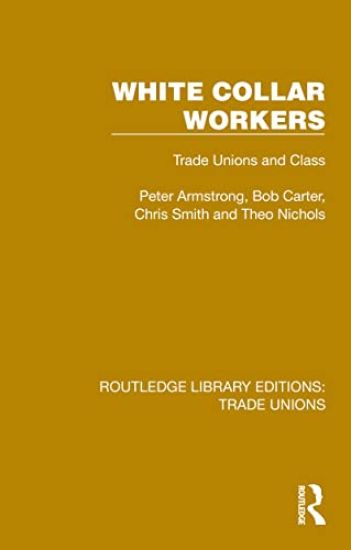
Originally published in 1986, the 1970s and 80s saw the emergence of the ‘the new working class’ or ‘new middle class’. This book is an authoritative study of the ‘white collar workers’ relationship with their unions and analysis of their newly designated class. The authors drew extensively on original fieldwork and verbatim accounts from technical workers and foremen in industry. White Collar Workers examines the particular circumstances of different groups of workers and their functions in relation to capital and labour. It analyses changes in the composition of union membership and the effect of these changes on the structure and policy of unions.
Part 1. Labour for Capital 1. ChemCo 2. The Labour of Labouring Men 3. The Labour of Superintendence: Managers 4. The Labour of Superintendence: Foremen 5. Capital’s Division of Labour Part 2. Individuals in a Class Society 6. Lives in Process Part 3. The Politics of the Factory 7. The Management Strategy 8. The Worker’s Struggle 9. The Politics of Representation 10. Trade Unionism, Corporate Capitalism and the Working Class Part 4. Living with Capitalism 11. The Politics of ‘Trust’ and the Lack of Trust in ‘Politics’ 12. ‘Success’ and ‘Failure’ 13. The Ideology of Sacrifice 14. Production, Consumption, Waste
Originally published in 1986, the 1970s and 80s saw the emergence of the ‘the new working class’ or ‘new middle class’. This book is an authoritative study of the ‘white collar workers’ relationship with their unions and analysis of their newly designated class. The authors drew extensively on original fieldwork and verbatim accounts from technical workers and foremen in industry. White Collar Workers examines the particular circumstances of different groups of workers and their functions in relation to capital and labour. It analyses changes in the composition of union membership and the effect of these changes on the structure and policy of unions.
Ownership, Control and Ideology (1969) looks at the debate surrounding issues of ownership and control. It analyses a large body of existing literature from several disciplines, examining the ‘factual’ issues but also showing that the terminology of the debate also requires fundamental re-analysis. In addition an empirical study of directors and senior managers is used to explore the businessman’s definition of the situation.
The British Worker Question (1986) examines the productivity of British workers, drawing upon a wide range of management, trade union and other sources, and spanning the traditional preserves of several other areas and disciplines – economic history, industrial administration, industrial relations and Marxism. It criticises much earlier research for its lack of a grounded sociological analysis of both workers and managements and for its lack of detailed attention to how goods and services are actually produced. The book accords a central place in its analysis of workers and productivity to the role of social organisation and management, matters which both the orthodox and Marxist traditions neglect.
The British Worker Question (1986) examines the productivity of British workers, drawing upon a wide range of management, trade union and other sources, and spanning the traditional preserves of several other areas and disciplines – economic history, industrial administration, industrial relations and Marxism. It criticises much earlier research for its lack of a grounded sociological analysis of both workers and managements and for its lack of detailed attention to how goods and services are actually produced. The book accords a central place in its analysis of workers and productivity to the role of social organisation and management, matters which both the orthodox and Marxist traditions neglect.
Ownership, Control and Ideology (1969) looks at the debate surrounding issues of ownership and control. It analyses a large body of existing literature from several disciplines, examining the ‘factual’ issues but also showing that the terminology of the debate also requires fundamental re-analysis. In addition an empirical study of directors and senior managers is used to explore the businessman’s definition of the situation.
A cutting edge look at the experience of worker representation in the employment relations of workplace health and safety. Examining the extent to which existing arrangements deliver results, this book reflects on whether the effectiveness of worker representation is eroded or enhanced by current regulatory and organizational constructs.
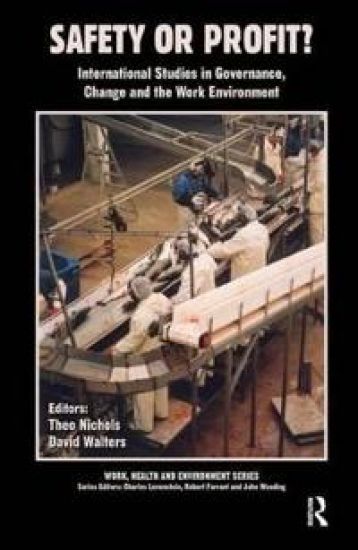
As the title Safety or Profit? suggests, health and safety at work needs to be understood in the context of the wider political economy. This book brings together contributions informed by this view from internationally recognized scholars. It reviews the governance of health and safety at work, with special reference to Australia, Canada, Sweden, and the United Kingdom. Three main aspects are discussed. The restructuring of the labor market: this is considered with respect to precarious work and to gender issues and their implications for the health and safety of workers. The neoliberal agenda: this is examined with respect to the diminished power of organized labor, decriminalization, and new governance theory, including an examination of how well the health-and-safety-at-work regimes put in place in many industrial societies about forty years ago have fared and how distinctive the recent emphasis on self-regulation in several countries really is. The role of evidence: there is a dearth of evidence-based policy. The book examines how policy on health and safety at work is formulated at both company and state levels. Cases considered include the scant regard paid to evidence by an official inquiry into future strategy in Canada; the lack of evidence-based policy and the reluctance to observe the precautionary principle with respect to work-related cancer in the United Kingdom; and the failure to learn from past mistakes in the Deepwater Horizon disaster in the Gulf of Mexico.
As the title Safety or Profit? suggests, health and safety at work needs to be understood in the context of the wider political economy. This book brings together contributions informed by this view from internationally recognized scholars. It reviews the governance of health and safety at work, with special reference to Australia, Canada, Sweden, and the United Kingdom. Three main aspects are discussed. The restructuring of the labor market: this is considered with respect to precarious work and to gender issues and their implications for the health and safety of workers. The neoliberal agenda: this is examined with respect to the diminished power of organized labor, decriminalization, and new governance theory, including an examination of how well the health-and-safety-at-work regimes put in place in many industrial societies about forty years ago have fared and how distinctive the recent emphasis on self-regulation in several countries really is. The role of evidence: there is a dearth of evidence-based policy. The book examines how policy on health and safety at work is formulated at both company and state levels. Cases considered include the scant regard paid to evidence by an official inquiry into future strategy in Canada; the lack of evidence-based policy and the reluctance to observe the precautionary principle with respect to work-related cancer in the United Kingdom; and the failure to learn from past mistakes in the Deepwater Horizon disaster in the Gulf of Mexico.
A cutting edge look at the experience of worker representation in the employment relations of workplace health and safety. Examining the extent to which existing arrangements deliver results, this book reflects on whether the effectiveness of worker representation is eroded or enhanced by current regulatory and organizational constructs.