Kirjojen hintavertailu. Mukana 12 390 323 kirjaa ja 12 kauppaa.

Kirjailija

Theo Schofield

Kirjat ja teokset yhdessä paikassa: 3 kirjaa, julkaisuja vuosilta 1995-2008, suosituimpien joukossa The New MRCPsych Paper II Practice MCQs and EMIs. Vertaile teosten hintoja ja tarkista saatavuus suomalaisista kirjakaupoista.

3 kirjaa

Kirjojen julkaisuhaarukka 1995-2008.

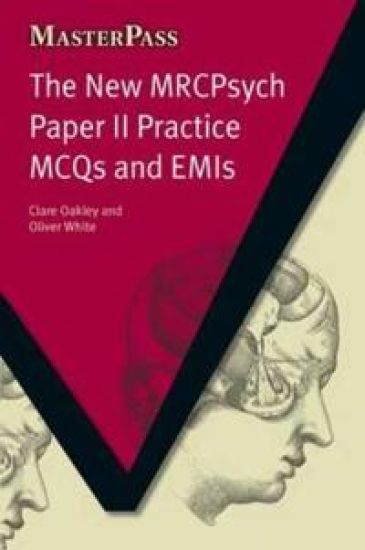
The New MRCPsych Paper II Practice MCQs and EMIs

The New MRCPsych Paper II Practice MCQs and EMIs

Clare Oakley; Oliver White; Theo Schofield

Radcliffe Publishing Ltd
2008
nidottu
The structure of the MRCPsych examination has changed significantly. This book is specifically written for the new exam, providing 250 practice best-of-five multiple choice questions (MCQs) and 100 extended matching item (EMI) questions for Paper II. It contains clear, concise answers to questions, along with explanatory notes and further reading for each topic. It gives practical advice on the format and content of the examination and techniques for answering questions. It is comprehensive and authoritative: both authors are members of the Psychiatric Trainees' Committee of the Royal College of Psychiatrists. This is an essential revision aid for candidates sitting Paper II of the MRCPsych examination.
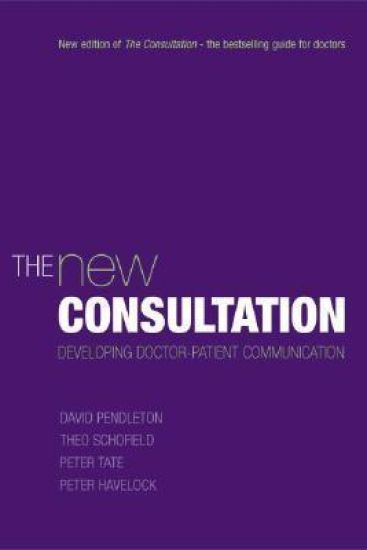
The New Consultation

The New Consultation

David Pendleton; Theo Schofield; Peter Tate; Peter Havelock

Oxford University Press
2003
nidottu
The Consultation, published almost 20 years ago by the same authors, has been completely rewritten. The New Consultation will be an essential aid for all doctors and their educators to increase the effectiveness of their consultations and to help to make them more patient-centred. It includes theoretical background as well as practical help for both consulters and teachers. The consultation is 'the central act of medicine': the meeting between the patient and the doctor. The first part of the book takes the reader from the context of the consultation in society and with the medical profession, to the intimacy of the consulting room, and then delves into its processes. The reader is invited to share the individual perspectives of doctor and patient and to consider what will lead to positive outcomes. The last chapter of the first section puts all these factors together and provides a coherent, evidence-based description of the processes needed for an effective consultation for the patient, the doctor, and society. The second part of the book takes the reader into the practicalities of learning and teaching effective consultations. It starts with a brief description of the evidence for effective teaching and outlines the authors' experience of teaching in this way with over 1,000 doctors. Realizing that many doctors organize their own self-directed learning, the authors have included a chapter that enables individuals to develop their own consulting technique. Help is offered for teachers of the consultation in both undergraduate and postgraduate settings. The consultation is now assessed by a number of the royal medical colleges to measure competence and there is a chapter on these issues. The last chapter discusses the difficulties that many doctors still have in conducting patient-centred consultations and makes some suggestions for effective implementation of skills.
Professional Education for General Practice

Professional Education for General Practice

Peter Havelock; John Hasler; Richard Flew; Donald McIntyre; Theo Schofield

Oxford University Press
1995
nidottu
Vocational training for general practice has been tremendously successful over the past two decades, but the need became apparent at the beginning of the 1990s for revision of the education of GP trainers already experienced in setting up a training practice, who were demanding a fresh, more detailed consideration of the educational aspects of vocational training. The authors of Professional Education for General Practice comprise general practitioners from training practices, regional advisers in primary care, and an expert in adult education. They describe the history of vocational training and examine the educational requirements of adult learners, then go on to discuss particular aspects of curriculum design, assessment, teaching methods, trainer-trainee relationships, and evaluation, followed by an appraisal of what changes are needed in training for general practice in the future. Throughout the preparation of the book the authors worked closely with general practice trainers and trainees as well as their educators, thus ensuring that the book is completely appropriate for these groups. This book is essential for everyone involved in teaching GP trainers as well as for the trainers themselves, and will be of interest to doctors training in primary care.