Kirjojen hintavertailu. Mukana 12 390 323 kirjaa ja 12 kauppaa.

Kirjailija

Theodor Adorno

Kirjat ja teokset yhdessä paikassa: 21 kirjaa, julkaisuja vuosilta 1989-2025, suosituimpien joukossa Kymmenen puheenvuoroa yhteiskunnasta. Vertaile teosten hintoja ja tarkista saatavuus suomalaisista kirjakaupoista.

21 kirjaa

Kirjojen julkaisuhaarukka 1989-2025.

Kymmenen puheenvuoroa yhteiskunnasta

Kymmenen puheenvuoroa yhteiskunnasta

Theodor Adorno

TUTKIJALIITTO
2025
nidottu
Kymmenen puheenvuoroa yhteiskunnasta on kokoelma Adornon puheita ja luentoja. Tekstien aiheet vaihtelevat autoritäärisen persoonallisuuden käsitteestä taikauskoisuuteen, kaupunkisuunnittelusta poliittiseen kansalaiskasvatukseen ja sosiologian ajankohtaisuudesta angloamerikkalaisen ja saksalaisen kulttuurikäsityksen eroihin. Kokoelmaan valikoitujen tekstien yhdistävänä ajatuksena on esitellä Adornoa yhteiskunnan ja politiikan ajattelijana.Suomessa Adorno tunnetaan ennen kaikkea modernin taiteen, etiikan ja estetiikan teoreetikkona. Kuitenkin nykyisessä poliittisessa ilmapiirissä myös hänen oikeistoradikalismia käsittelevät kirjoituksensa ovat tulleet uudella tavalla ajankohtaisiksi. Kymmenen puheenvuoroa yhteiskunnasta tuo ”esteetikko-Adornon” sijaan esiin ristiriitoja kaihtamattoman ja vastakarvaisen kapitalismikriitikon ja Saksan kulttuuriseen jälleenrakentamiseen ja sen ristiriitojen selvittelyyn sitoutuneen intellektuellin, joka pyrkii keskustelemaan myös uusien yhteiskunnallisten liikkeiden kanssa ja tarjoaa tuoreita ja kriittisiä näkökulmia nykyisyyteen.
Berlin Childhood around 1900

Berlin Childhood around 1900

Walter Benjamin; Theodor Adorno

Verso Books
2025
sidottu
Completed in exile in Paris, as the second World War was dawning, Walter Benjamin looks back at the city of his birth at the beginning of the century. The book is both a sensory memoir of childhood as well as a tour of the iconic spaces of city. These are 'expeditions into the depths of memory', moving through vignettes of domestic settings and classrooms, city squares, parks and streets. The memories of childhood merge with a city that is about to disappear into darkness. As his friend, Adorno, wrote, the work is 'illuminated by lightning flashes of immediate remembrance . . .the images this book unearths and brings strangely near are not idyllic and not contemplative. Over them lies the shadow of the Third Reich. And through them dreamily runs a shudder at the long forgotten.'
Aesthetics and Politics

Aesthetics and Politics

Fredric Jameson; Bertolt Brecht; Ernst Bloch; Georg Lukács; Theodor Adorno; Walter Benjamin

Verso Books
2020
nidottu
No other country and no other period has produced a tradition of major aesthetic debate to compare with that which unfolded in German culture from the 1930s to the 1950s. In Aesthetics and Politics the key texts of the great Marxist controversies over literature and art during these years are assembled in a single volume. They do not form a disparate collection but a continuous, interlinked debate between thinkers who have become giants of twentieth-century intellectual history.
Minima Moralia

Minima Moralia

Theodor Adorno

Verso Books
2020
nidottu
Written between 1944 and 1947, Minima Moralia is a collection of rich, lucid aphorisms and essays about life in modern capitalist society. Adorno casts his penetrating eye across society in mid-century America and finds a life deformed by capitalism. This is Adorno's theoretical and literary masterpiece and a classic of twentieth-century thought.
The Authoritarian Personality

The Authoritarian Personality

Theodor Adorno

Verso Books
2019
nidottu
What makes a fascist? Are there character traits that make someone more likely to vote for the far right? The Authoritarian Personality, written in the shadow of Fascism and the Holocaust, looked to analyse the rise of Fascism in Europe through the specific psychological traits that make people prone to authoritarianism. Based on extensive empirical studies of Americans conducted by a team which included the leading member of the Frankfurt School Theodor Adorno, The Authoritarian Personality ranked a range of character traits on what it called the 'F scale' (F for fascist). These included conventionalism, anti-intellectualism, superstition and occultism, power and toughness, destructiveness and cynicism, projectivity, and exaggerated concerns over sex.The Authoritarian Personality is not only one of the most influential works of social psychology ever written, it also marks a milestone in the development of Adorno's thought, showing him grabbling with the problem of fascism and the reasons for Europe's turn to reaction. Over half a century later and with the rise of right-wing populism and the reemergence of the far-right in recent years, this hugely influential study remains as insightful and relevant as ever.
Towards a New Manifesto

Towards a New Manifesto

Max Horkheimer; Theodor Adorno

Verso Books
2019
nidottu
Theodor Adorno and Max Horkheimer wrote the central text of "critical theory", Dialectic of Enlightenment, a measured critique of the Enlightenment reason that, they argued, had resulted in fascism and totalitarianism. Towards a New Manifesto shows the two philosophers in a uniquely spirited and free-flowing exchange of ideas. This book is a record of their discussions over three weeks in the spring of 1956, recorded with a view to the production of a contemporary version of The Communist Manifesto. A philosophical jam-session in which the two thinkers improvise freely, often wildly, on central themes of their work-theory and practice, labor and leisure, domination and freedom-in a political register found nowhere else in their writing. Amid a careening flux of arguments, aphorisms and asides, in which the trenchant alternates with the reckless, the playful with the ingenuous, positions are swapped and contradictions unheeded, without any compulsion for consistency. A thrilling example of philosophy in action and a compelling map of a possible passage to a new world. This new edition contains two texts on needs by Adorno and Horkheimer that have been translated for the first time or have been difficult to access.
Dialectic of Enlightenment

Dialectic of Enlightenment

Max Horkheimer; Theodor Adorno

Verso Books
2016
nidottu
Theodor Adorno and Max Horkheimer are the leading figures of the Frankfurt School and this book is their magnum opus. Dialectic of Enlightenment is one of the most celebrated works of modern social philosophy that continues to impress in its wide-ranging ambition.Writing just after the Second World War and reflecting on the bureaucracy and myths of National Socialism and the inanity of the dawn of consumerism, Adorno and Horkheimer addressed themselves to a question which went to the very heart of the modern age: 'why mankind, instead of entering into a truly human condition, is sinking into a new kind of barbarism'. Modernity, far from redeeming the promises and hopes of the Enlightenment, had resulted in a stultification of mankind and administered society, characterised by simulation and candy-floss entertainment.Tracing humanity's modern fall to the very rationality that was to be its liberation, the authors exposed the domination and violence that underpin the Enlightenment project.
The Stars Down to Earth

The Stars Down to Earth

Theodor Adorno

Routledge
2015
sidottu
The Stars Down to Earth shows us a stunningly prescient Adorno. Haunted by the ugly side of American culture industries he used the different angles provided by each of these three essays to showcase the dangers inherent in modern obsessions with consumption. He engages with some of his most enduring themes in this seminal collection, focusing on the irrational in mass culture - from astrology to new age cults, from anti-semitism to the power of neo-fascist propaganda. He points out that the modern state and market forces serve the interest of capital in its basic form. Stephan Crook's introduction grounds Adorno's arguments firmly in the present where extreme religious and political organizations are commonplace - so commonplace in fact that often we deem them unworthy of our attention. Half a century ago Theodore Adorno not only recognised the dangers, but proclaimed them loudly. We did not listen then. Maybe it is not too late to listen now.
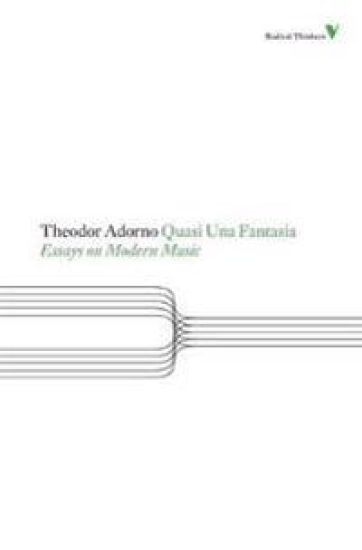
Quasi Una Fantasia

Quasi Una Fantasia

Theodor Adorno

Verso Books
2012
nidottu
This collection covers a wide range of topics, from a moving study of Bizet's Carmen to an entertainingly caustic exploration of the hierarchies of the auditorium. Especially significant is Adorno's "dialectical portrait" of Stravinsky, in which Adorno both reconsiders and refines his damning indictment of the composer in Philosophy on Modern Music. Throughout, Adorno is sustained by the conviction that music is supremely human because it is capable of communicating inhumanity while resisting it. His belief in the benevolent and transformative power of music reverberates throughout these writings.
In Search of Wagner

In Search of Wagner

Theodor Adorno; Slavoj Zizek

Verso Books
2009
nidottu
Written in exile from Germany, this potent study of Europe's most controversial composer explodes the frontiers of musical and cultural analysis. Measuring key elements of Wagner's oeuvre with patent musical dexterity, Adorno sheds light on a nineteenth-century bourgeois figure whose operas betray the social gestures and high-culture fantasies that helped plant the seeds of the modern Culture Industry. A foreword by Slavoj Zizek situates Adorno's reflections within present debates over Wagner's anti-Semitism and the moral status of his work, proving why this book remains one of the most important character studies of the twentieth century.
Can One Live After Auschwitz?

Can One Live After Auschwitz?

Theodor Adorno

Stanford University Press
2003
pokkari
This is a comprehensive collection of readings from the work of Theodor Adorno, one of the most influential German thinkers of the twentieth century. What took place in Auschwitz revokes what Adorno termed the "Western legacy of positivity," the innermost substance of traditional philosophy. The prime task of philosophy then remains to reflect on its own failure, its own complicity in such events. Yet in linking the question of philosophy to historical occurrence, Adorno seems not to have abandoned his paradoxical, life-long hope that philosophy might not be entirely closed to the idea of redemption. He prepares for an altogether different praxis, one no longer conceived in traditionally Marxist terms but rather to be gleaned from "metaphysical experience." In this collection, Adorno's literary executor has assembled the definitive introduction to his thinking. Its five sections anatomize the range of Adorno's concerns: "Toward a New Categorical Imperative," "Damaged Life," "Administered World, Reified Thought," "Art, Memory of Suffering," and "A Philosophy That Keeps Itself Alive." A substantial number of Adorno's writings included appear here in English for the first time. This collection comes with an eloquent introduction from Rolf Tiedemann, the literary executor of Adorno's work.
Can One Live After Auschwitz?

Can One Live After Auschwitz?

Theodor Adorno

Stanford University Press
2003
sidottu
This is a comprehensive collection of readings from the work of Theodor Adorno, one of the most influential German thinkers of the twentieth century. What took place in Auschwitz revokes what Adorno termed the "Western legacy of positivity," the innermost substance of traditional philosophy. The prime task of philosophy then remains to reflect on its own failure, its own complicity in such events. Yet in linking the question of philosophy to historical occurrence, Adorno seems not to have abandoned his paradoxical, life-long hope that philosophy might not be entirely closed to the idea of redemption. He prepares for an altogether different praxis, one no longer conceived in traditionally Marxist terms but rather to be gleaned from "metaphysical experience." In this collection, Adorno's literary executor has assembled the definitive introduction to his thinking. Its five sections anatomize the range of Adorno's concerns: "Toward a New Categorical Imperative," "Damaged Life," "Administered World, Reified Thought," "Art, Memory of Suffering," and "A Philosophy That Keeps Itself Alive." A substantial number of Adorno's writings included appear here in English for the first time. This collection comes with an eloquent introduction from Rolf Tiedemann, the literary executor of Adorno's work.
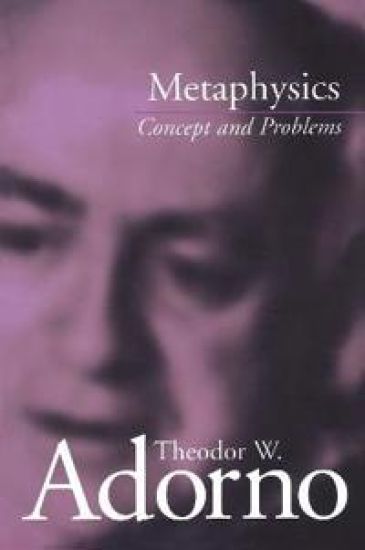
Metaphysics

Metaphysics

Theodor Adorno

Stanford University Press
2002
pokkari
This volume makes available in English for the first time Adorno's lectures on metaphysics. It provides a unique introduction not only to metaphysics but also to Adorno's own intellectual standpoint, as developed in his major work Negative Dialectics. Metaphysics for Adorno is defined by a central tension between concepts and immediate facts. Adorno traces this dualism back to Aristotle, whom he sees as the founder of metaphysics. In Aristotle it appears as an unresolved tension between form and matter. This basic split, in Adorno's interpretation, runs right through the history of metaphysics. Perhaps not surprisingly, Adorno finds this tension resolved in the Hegelian dialectic. Underlying this dualism is a further dichotomy, which Adorno sees as essential to metaphysics: while it dissolves belief in transcendental worlds by thought, at the same time it seeks to rescue belief in a reality beyond the empirical, again by thought. It is to this profound ambiguity, for Adorno, that the metaphysical tradition owes its greatness. The major part of these lectures, given by Adorno late in his life, is devoted to a critical exposition of Aristotle's thought, focusing on its central ambiguities. In the last lectures, Adorno's attention switches to the question of the relevance of metaphysics today, particularly after the Holocaust. He finds in metaphysical experiences, which transcend rational discourse without lapsing into irrationalism, a last precarious refuge of the humane truth to which his own thought always aspired. This volume will be essential reading for anyone interested in Adorno's work and will be a valuable text for students and scholars of philosophy and social theory.
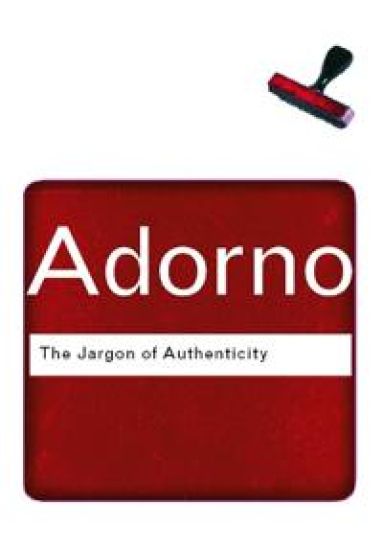
The Jargon of Authenticity

The Jargon of Authenticity

Theodor Adorno

Routledge
2002
nidottu
Theodor Adorno was no stranger to controversy. In The Jargon of Authenticity he gives full expression to his hostility to the language employed by certain existentialist thinkers such as Martin Heidegger. With his customary alertness to the uses and abuses of language, he calls into question the jargon, or 'aura', as his colleague Walter Benjamin described it, which clouded existentialists' thought. He argued that its use undermined the very message for meaning and liberation that it sought to make authentic. Moreover, such language - claiming to address the issue of freedom - signally failed to reveal the lack of freedom inherent in the capitalist context in which it was written. Instead, along with the jargon of the advertising jingle, it attributed value to the satisfaction of immediate desire. Alerting his readers to the connection between ideology and language, Adorno's frank and open challenge to directness, and the avoidance of language that 'gives itself over either to the market, to balderdash, or to the predominating vulgarity', is as timely today as it ever has been.
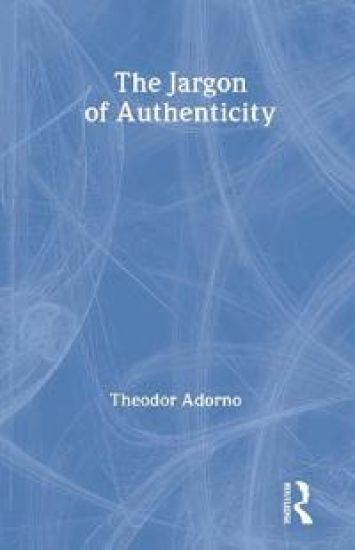
The Jargon of Authenticity

The Jargon of Authenticity

Theodor Adorno

Routledge
2002
sidottu
Theodor Adorno was no stranger to controversy. In The Jargon of Authenticity he gives full expression to his hostility to the language employed by certain existentialist thinkers such as Martin Heidegger. With his customary alertness to the uses and abuses of language, he calls into question the jargon, or 'aura', as his colleague Walter Benjamin described it, which clouded existentialists' thought. He argued that its use undermined the very message for meaning and liberation that it sought to make authentic. Moreover, such language - claiming to address the issue of freedom - signally failed to reveal the lack of freedom inherent in the capitalist context in which it was written. Instead, along with the jargon of the advertising jingle, it attributed value to the satisfaction of immediate desire. Alerting his readers to the connection between ideology and language, Adorno's frank and open challenge to directness, and the avoidance of language that 'gives itself over either to the market, to balderdash, or to the predominating vulgarity', is as timely today as it ever has been.
Essays on Music

Essays on Music

Theodor Adorno

University of California Press
2002
sidottu
Theodor W. Adorno (1903-1969), one of the principal figures associated with the Frankfurt School, wrote extensively on culture, modernity, aesthetics, literature, and - more than any other subject - music. To this day, Adorno remains the single most influential contributor to the development of qualitative musical sociology which, together with his nuanced intertextual readings of musical works, gives him broad claim as a continuing force in the study of music. This long-awaited collection of twenty-seven essays represents the full range of Adorno's music writing. Nearly half of the essays appear in English for the first time; all of the essays are fully annotated; and the previously translated essays have been corrected and missing text restored, making this volume the definitive resource on Adorno's musical thought.
Essays on Music

Essays on Music

Theodor Adorno

University of California Press
2002
pokkari
Theodor W. Adorno (1903-1969), one of the principal figures associated with the Frankfurt School, wrote extensively on culture, modernity, aesthetics, literature, and - more than any other subject - music. To this day, Adorno remains the single most influential contributor to the development of qualitative musical sociology which, together with his nuanced intertextual readings of musical works, gives him broad claim as a continuing force in the study of music. This long-awaited collection of twenty-seven essays represents the full range of Adorno's music writing. Nearly half of the essays appear in English for the first time; all of the essays are fully annotated; and, the previously translated essays have been corrected and missing text restored, making this volume the definitive resource on Adorno's musical thought.
The Stars Down to Earth

The Stars Down to Earth

Theodor Adorno

Routledge
2001
sidottu
The Stars Down to Earth shows us a stunningly prescient Adorno. Haunted by the ugly side of American culture industries he used the different angles provided by each of these three essays to showcase the dangers inherent in modern obsessions with consumption. He engages with some of his most enduring themes in this seminal collection, focussing on the irrational in mass culture - from astrology to new age cults, from anti-semitism to the power of neo-fascist propaganda. He points out that the modern state and market forces serve the interest of capital in its basic form. Stephan Crook's introduction grounds Adorno's arguments firmly in the present where extreme religious and political organizations are commonplace - so commonplace in fact that often we deem them unworthy of our attention. Half a century ago Theodore Adorno not only recognised the dangers, but proclaimed them loudly. We did not listen then. Maybe it is not too late to listen now.
The Stars Down to Earth

The Stars Down to Earth

Theodor Adorno

Routledge
2001
nidottu
The Stars Down to Earth shows us a stunningly prescient Adorno. Haunted by the ugly side of American culture industries he used the different angles provided by each of these three essays to showcase the dangers inherent in modern obsessions with consumption. He engages with some of his most enduring themes in this seminal collection, focusing on the irrational in mass culture - from astrology to new age cults, from anti-semitism to the power of neo-fascist propaganda. He points out that the modern state and market forces serve the interest of capital in its basic form. Stephan Crook's introduction grounds Adorno's arguments firmly in the present where extreme religious and political organizations are commonplace - so commonplace in fact that often we deem them unworthy of our attention. Half a century ago Theodore Adorno not only recognised the dangers, but proclaimed them loudly. We did not listen then. Maybe it is not too late to listen now.
Metaphysics

Metaphysics

Theodor Adorno

Stanford University Press
2000
sidottu
This volume makes available in English for the first time Adorno's lectures on metaphysics. It provides a unique introduction not only to metaphysics but also to Adorno's own intellectual standpoint, as developed in his major work Negative Dialectics. Metaphysics for Adorno is defined by a central tension between concepts and immediate facts. Adorno traces this dualism back to Aristotle, whom he sees as the founder of metaphysics. In Aristotle it appears as an unresolved tension between form and matter. This basic split, in Adorno's interpretation, runs right through the history of metaphysics. Perhaps not surprisingly, Adorno finds this tension resolved in the Hegelian dialectic. Underlying this dualism is a further dichotomy, which Adorno sees as essential to metaphysics: while it dissolves belief in transcendental worlds by thought, at the same time it seeks to rescue belief in a reality beyond the empirical, again by thought. It is to this profound ambiguity, for Adorno, that the metaphysical tradition owes its greatness. The major part of these lectures, given by Adorno late in his life, is devoted to a critical exposition of Aristotle's thought, focusing on its central ambiguities. In the last lectures, Adorno's attention switches to the question of the relevance of metaphysics today, particularly after the Holocaust. He finds in metaphysical experiences, which transcend rational discourse without lapsing into irrationalism, a last precarious refuge of the humane truth to which his own thought always aspired. This volume will be essential reading for anyone interested in Adorno's work and will be a valuable text for students and scholars of philosophy and social theory.