Kirjojen hintavertailu. Mukana 12 390 323 kirjaa ja 12 kauppaa.
Kirjailija
Theodore J. Lowi
Kirjat ja teokset yhdessä paikassa: 21 kirjaa, julkaisuja vuosilta 1986-2025, suosituimpien joukossa The End of Liberalism. Vertaile teosten hintoja ja tarkista saatavuus suomalaisista kirjakaupoista.
Building on We the People’s?unparalleled focus on participation and the citizen’s role, new coauthor Megan Ming Francis uses her experience as an instructor and scholar of race and ethnicity politics to?energize coverage of race and social movements. New Check Your Understanding questions—in both print and ebook formats—motivate students and builds confidence in their learning. In the Norton Illumine Ebook Check Your Understanding questions include rich answer-feedback that helps students practice their learning. InQuizitive activities confirm chapter-level understanding and allow students to practice applying essential concepts.
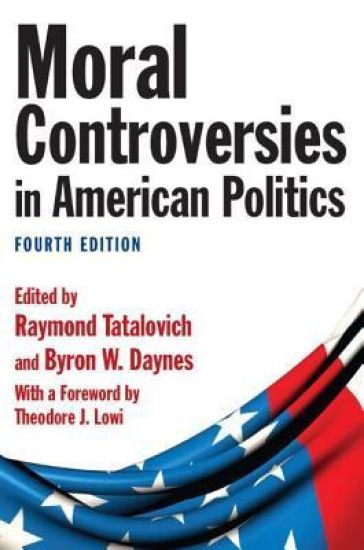
No area of public policymaking is more hotly debated than the use of government authority to enforce certain standards of behavior in areas of moral controversy. Now thoroughly revised and updated, this collection examines a variety of such policy areas - ranging from abortion and affirmative action to gay rights - including two new chapters on animal rights and hate crimes. In discussing each policy area the book examines relevant issues and arguments, as well as policy shifts over time. It considers the roles of key political and institutional actors in policymaking - including lobbies and interest groups, the bureaucracy, the president, Congress, the judiciary, and state and local authorities. Written in an accessible style that is sure to spark classroom discussion, each chapter of this new edition includes a list of relevant books, web sites, and videos for further research.
No area of public policymaking is more hotly debated than the use of government authority to enforce certain standards of behavior in areas of moral controversy. Now thoroughly revised and updated, this collection examines a variety of such policy areas - ranging from abortion and affirmative action to gay rights - including two new chapters on animal rights and hate crimes. In discussing each policy area the book examines relevant issues and arguments, as well as policy shifts over time. It considers the roles of key political and institutional actors in policymaking - including lobbies and interest groups, the bureaucracy, the president, Congress, the judiciary, and state and local authorities. Written in an accessible style that is sure to spark classroom discussion, each chapter of this new edition includes a list of relevant books, web sites, and videos for further research.
Fifteen years in the making, "Hyperpolitics" is an interactive dictionary offering a wholly original approach for understanding and working with the most central concepts in political science. Designed and authored by two of the discipline's most distinguished scholars, its purpose is to provide its readers with fresh critical insights about what informs these political concepts, as well as a method by which readers - and especially students - can unpack and reconstruct them on their own. International in scope, "Hyperpolitics" draws upon a global vocabulary in order to turn complex ideas into an innovative teaching aid. Its companion open access website has already been widely acknowledged in the fields of education and political science and will continue to serve as a formidable hub for the book's audience. Much more than a dictionary and enhanced by dynamic graphics, "Hyperpolitics" introduces an ingenious means of understanding complicated concepts that will be an invaluable tool for scholars and students alike.
Fifteen years in the making, "Hyperpolitics" is an interactive dictionary offering a wholly original approach for understanding and working with the most central concepts in political science. Designed and authored by two of the discipline's most distinguished scholars, its purpose is to provide its readers with fresh critical insights about what informs these political concepts, as well as a method by which readers - and especially students - can unpack and reconstruct them on their own. rnational in scope, "Hyperpolitics" draws upon a global vocabulary in order to turn complex ideas into an innovative teaching aid. Its companion open access website has already been widely acknowledged in the fields of education and political science and will continue to serve as a formidable hub for the book's audience. Much more than a dictionary and enhanced by dynamic graphics, "Hyperpolitics" introduces an ingenious means of understanding complicated concepts that will be an invaluable tool for scholars and students alike.
The main argument which Lowi develops through this book is that the liberal state grew to its immense size and presence without self-examination and without recognizing that its pattern of growth had problematic consequences. Its engine of growth was delegation. The government expanded by responding to the demands of all major organized interests, by assuming responsibility for programs sought by those interests, and by assigning that responsibility to administrative agencies. Through the process of accommodation, the agencies became captives of the interest groups, a tendency Lowi describes as clientelism. This in turn led to the formulation of new policies which tightened the grip of interest groups on the machinery of government.
Arenas of Power represents the first time that Theodore J. Lowi's model of policy analysis has been presented together with key applications and case studies drawn from his long history of scholarship-all in one place. Lowi's signature four-fold typology is shown as conceived and then as extended to include that most relevant of contemporary phenomena-"social regulatory policy." As Lowi says, when radicals add morality to the goals of public policy, the system may be turned on its head. This volume shows the evolution of the public policy arena over more than forty years of writing and thinking and presents some never before published material including helpful analytical introductions. The book concludes as Lowi looks ahead to an internationalizing U.S. political economy and the need for a global political science.
Arenas of Power represents the first time that Theodore J. Lowi's model of policy analysis has been presented together with key applications and case studies drawn from his long history of scholarship-all in one place. Lowi's signature four-fold typology is shown as conceived and then as extended to include that most relevant of contemporary phenomena-"social regulatory policy." As Lowi says, when radicals add morality to the goals of public policy, the system may be turned on its head. This volume shows the evolution of the public policy arena over more than forty years of writing and thinking and presents some never before published material including helpful analytical introductions. The book concludes as Lowi looks ahead to an internationalizing U.S. political economy and the need for a global political science.
Periods of disorder in the United States have generally been regarded as evil times which must be terminated as quickly as possible. But in this provocative analysis of our political system, pursuing the argument of his noted study The End of Liberalism, Theodore J. Lowi maintains that political disorder affords new opportunities for effective political action—or that it can, in system of juridical democracy. Professor Lowi presents a convincing case for the workable possibility of juridical democracy—formal democracy, whose main feature is rule of law—as against interest-group democracy, characterized by policy-without-law.
A national map of legalized gambling from 1963 would show one state, Nevada, with casino gambling and no states with lotteries. Today's map shows eleven commercial casino states, most of them along the Mississippi River, forty-two states with state-owned lotteries, and racetrack betting, slot-machine parlors, charitable bingo, and Native American gambling halls flourishing throughout the nation. For the past twenty years, the South has wrestled with gambling issues. In How the South Joined the Gambling Nation, Michael Nelson and John Lyman Mason examine how modern southern state governments have decided whether to adopt or prohibit casinos and lotteries. Nelson and Mason point out that although the South participated fully in past gambling eras, it is the last region to join the modern movement embracing legalized gambling. Despite the prevalence of wistful, romantic images of gambling on southern riverboats, the politically and religiously conservative ideology of the modern South makes it difficult for states to toss their chips into the pot.The authors tell the story of the arrival or rejection of legalized gambling in seven southern states -- Mississippi, Louisiana, Tennessee, South Carolina, Georgia, Arkansas, and Alabama. The authors suggest that some states chose to legalize gambling based on the examples of other nearby states, as when Mississippi casinos spurred casino legalization in Louisiana and the Georgia lottery inspired lottery campaigns in neighboring South Carolina, Alabama, and Tennessee. Also important was the influence of Democratic policy entrepreneurs, such as Zell Miller in Georgia, Don Siegelman in Alabama, and Edwin Edwards in Louisiana, who wanted to sell the idea of gambling in order to sell themselves to voters. At the same time, each state had its own idiosyncrasies, such as certain provisions of their state constitutions weighing heavily as a factor.Nelson and Mason show that the story of gambling's spread in the South exemplifies the process of state policy innovation. In exploring how southern states have weighed the moral and economic risk of legalizing gambling, especially the political controversies that surround these discussions, Nelson and Mason employ a suspenseful, fast-paced narrative that echoes the oftentimes hurried decisions made by state legislators. Although each of these seven states fought a unique battle over gambling, taken together, these case studies help tell the larger story of how the South -- sometimes reluctantly, sometimes enthusiastically -- decided to join the gambling nation.
Americans have debated the efficacy of our two-party political system since the founding of the nation. Generations of political scientists have asked: Is the two- party system an antiquated arrangement, so entrenched in our political structure that any third party is destined to be peripheral, or is it an essential component of the political and constitutional order articulated by our founders? This book forces readers to decide for themselves. Theodore J. Lowi and Joseph Romance debate the promises and pitfalls of the two-party system and provide readers with the strongest available arguments for and against the two-party system of government. Lowi argues that the inability of the existing parties to provide adequate representation for our diverse nation is rapidly causing the obsolescence of the two party system. Romance counters that the two-party system is vital for unifying a divided country and instructs Americans about the compromises necessary to maintain a democratic government. With an introduction by esteemed political scientist Gerald Pomper that outlines the history, evolution, and current status of this perennial debate, and a collection of primary documents that covers the entire history of the controversy, this book will be indispensable for classes on American government, political parties, elections, and political science.
In The End of the Republican Era, Theodore J. Lowi predicts not only a collapse of the Republican coalition but also the potential collapse of the United States' republican experiment at large. Professing that the ideologies of dominant political coalitions contain the seeds of their own destruction, Lowi suggests that the efforts of a new conservative Right to enforce a national, religion-based morality has brought about the demise of the Republican era.A new, in-depth afterword by Lowi brings the text up to date with a discussion of political events since the book's original publication. Noting the appearance of the new Conservative coalition, whose ideology runs counter to that of the traditional Republican party, Lowi affirms that the Republican era did in fact come to an end during the 1990s, having morphed into a Conservative party.