Kirjojen hintavertailu. Mukana 12 390 323 kirjaa ja 12 kauppaa.

Kirjailija

Theodore M. Hesburgh

Kirjat ja teokset yhdessä paikassa: 13 kirjaa, julkaisuja vuosilta 1978-2023, suosituimpien joukossa God, Country, Notre Dame. Vertaile teosten hintoja ja tarkista saatavuus suomalaisista kirjakaupoista.

13 kirjaa

Kirjojen julkaisuhaarukka 1978-2023.

Four Hasidic Masters and Their Struggle Against Melancholy

Four Hasidic Masters and Their Struggle Against Melancholy

Elie Wiesel; Theodore M. Hesburgh

UNIVERSITY OF NOTRE DAME PRESS
2023
sidottu
Elie Wiesel, winner of the Nobel Peace Prize, studies four different rebbes in eighteenth-century Eastern Europe, delving into their lives, their work, and their impact on the Hasidic movement and beyond. In Four Hasidic Masters and Their Struggle against Melancholy, Jewish author, philosopher, and humanist Elie Wiesel presents the stories of four Hasidic masters, framing their biographies in the context of his own life, with direct attention to their premonitions of the tragedy of the Holocaust. These four leaders—Rebbe Pinhas of Koretz, Rebbe Barukh of Medzebozh, the Holy Seer of Lublin, and Rebbe Naphtali of Ropshitz—are each charismatic and important figures in Eastern European Hasidism. Through careful study and consideration, Wiesel shows how each of these men were human, fallible, and susceptible to anger, melancholy, and despair. We are invited to truly understand their work both as religious figures studying and pursuing the divine and as humans trying their best to survive in a world rampant with pain and suffering. This new edition of Four Hasidic Masters, originally published in 1978, includes a new text design, cover, the original foreword by Theodore M. Hesburgh, C.S.C., and a new introduction by Rabbi Irving Greenberg, introducing Wiesel's work to a new generation of readers.
God, Country, Notre Dame

God, Country, Notre Dame

Theodore M. Hesburgh

University of Notre Dame Press
2018
nidottu
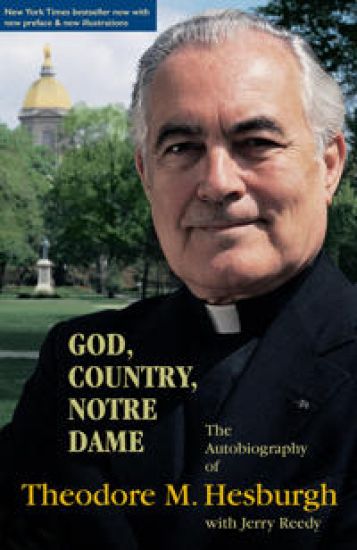
Experience Father Hesburgh's life story in his own words in God, Country, Notre Dame. As an adviser to presidents, special envoy to popes, theologian, author, educator, and activist, Father Hesburgh was considered the most influential priest in America for decades. His autobiography brings his phenomenal accomplishments to readers with his own voice and personal perspective. Father Hesburgh recounts his family history, describing the people who helped make him the man he became, as well as his own childhood and adolescence. He tells stories of his time at Notre Dame all the way to his retirement. "This is essentially a memory book," he explains in the acknowledgements, and there is no better way to get to know the incredible man he was and the legacy he created.
Black Domers

Black Domers

Theodore M. Hesburgh

University of Notre Dame Press
2017
nidottu
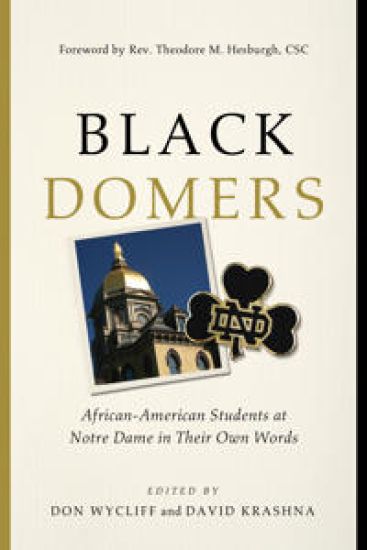
Black Domers tells the compelling story of racial integration at the University of Notre Dame in the post–World War II era. In a series of seventy-five essays, beginning with the first African-American to graduate from Notre Dame in 1947 to a member of the class of 2017 who also served as student body president, we can trace the trials, tribulations, and triumphs of the African-American experience at Notre Dame through seven decades. Don Wycliff and David Krashna's book is a revised edition of a 2014 publication. With a few exceptions, the stories of these graduates are told in their own words, in the form of essays on their experiences at Notre Dame. The range of these experiences is broad; joys and opportunities, but also hardships and obstacles, are recounted. Notable among several themes emerging from these essays is the importance of leadership from the top in successfully bringing African-Americans into the student body and enabling them to become fully accepted, fully contributing members of the Notre Dame community. The late Rev. Theodore Hesburgh, president of the university from 1952 to 1987, played an indispensable role in this regard and also wrote the foreword to the book. This book will be an invaluable resource for Notre Dame graduates, especially those belonging to African-American and other minority groups, specialists in race and diversity in higher education, civil rights historians, and specialists in race relations.
Black Domers

Black Domers

Theodore M. Hesburgh

University of Notre Dame Press
2017
sidottu
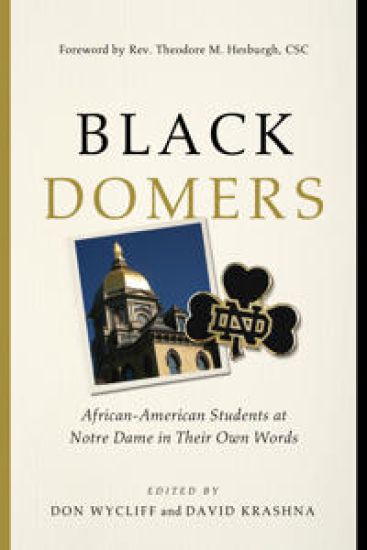
Black Domers tells the compelling story of racial integration at the University of Notre Dame in the post–World War II era. In a series of seventy-five essays, beginning with the first African-American to graduate from Notre Dame in 1947 to a member of the class of 2017 who also served as student body president, we can trace the trials, tribulations, and triumphs of the African-American experience at Notre Dame through seven decades. Don Wycliff and David Krashna's book is a revised edition of a 2014 publication. With a few exceptions, the stories of these graduates are told in their own words, in the form of essays on their experiences at Notre Dame. The range of these experiences is broad; joys and opportunities, but also hardships and obstacles, are recounted. Notable among several themes emerging from these essays is the importance of leadership from the top in successfully bringing African-Americans into the student body and enabling them to become fully accepted, fully contributing members of the Notre Dame community. The late Rev. Theodore Hesburgh, president of the university from 1952 to 1987, played an indispensable role in this regard and also wrote the foreword to the book. This book will be an invaluable resource for Notre Dame graduates, especially those belonging to African-American and other minority groups, specialists in race and diversity in higher education, civil rights historians, and specialists in race relations.
The Intellectual Appeal of Catholicism and the Idea of a Catholic University

The Intellectual Appeal of Catholicism and the Idea of a Catholic University

Mark William Roche; Theodore M. Hesburgh

University of Notre Dame Press
2003
sidottu
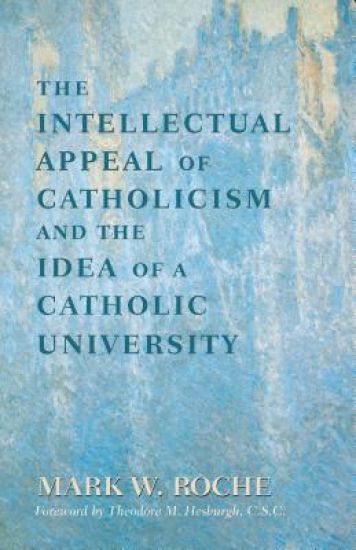
Mark W. Roche presents a clear, precise, and positive view of the challenge and promise of a Catholic university. Roche makes visible the ideal of a Catholic university and illuminates in original ways the diverse, but interconnected, dimensions of Catholic identity. Roche's vision of the distinct intellectual mission of a Catholic university will appeal to Catholics as well as to persons who are not Catholic but who may recognize through this essay the unexpected allure of a Catholic university.
The Intellectual Appeal of Catholicism and the Idea of a Catholic University

The Intellectual Appeal of Catholicism and the Idea of a Catholic University

Mark William Roche; Theodore M. Hesburgh

University of Notre Dame Press
2003
nidottu
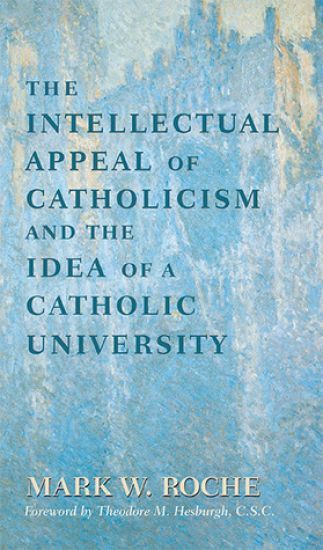
Mark W. Roche presents a clear, precise, and positive view of the challenge and promise of a Catholic university. Roche makes visible the ideal of a Catholic university and illuminates in original ways the diverse, but interconnected, dimensions of Catholic identity. Roche's vision of the distinct intellectual mission of a Catholic university will appeal to Catholics as well as to persons who are not Catholic but who may recognize through this essay the unexpected allure of a Catholic university.
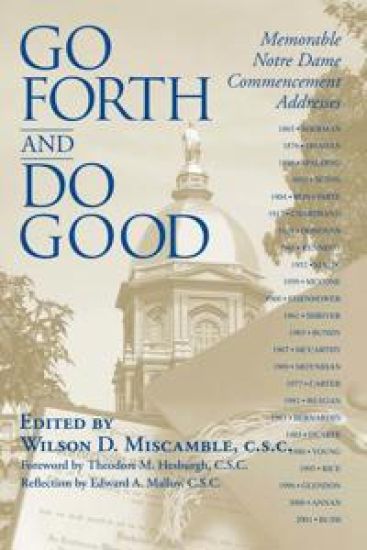
Go Forth and Do Good

Go Forth and Do Good

Theodore M. Hesburgh

University of Notre Dame Press
2003
nidottu
Go Forth and Do Good: Memorable Notre Dame Commencement Addresses brings together twenty-four notable graduation speeches, ranging from the words General Sherman delivered in 1865 to President George W. Bush's remarks in 2001. Also included in this fine collection is a letter sent to 1986 graduates by Mother Teresa and Father Theodore M. Hesburgh's final charge to the graduating class of 1987. Wilson D. Miscamble, C.S.C. provides a delightful introduction that clarifies the importance of the selected speeches, and places them in the context of the history of both Notre Dame and the world. A brief biographical introduction and photograph of the speaker precede each address.
The World Court in Action

The World Court in Action

Howard N. Meyer; Theodore M. Hesburgh

Rowman Littlefield Publishers
2001
nidottu
Over a century ago, a precursor to the International Court of Justice, usually called the World Court, was created. The United States had an important role in founding the Court, and a U.S. citizen—Andrew Carnegie-funded the Peace Palace, the building in which the World Court still convenes. But in 1985, during the second Reagan-Bush Administration, the U.S. effectively withdrew its support and authority from the Court in respose to its ruling on the U.S. use of force in Nicaragua. Since that time, the role of the World Court has grown in importance internationally even though the U.S. refuses to participate fully. And because the U.S. role has been so attenuated, the full story of the World Court has not been told, especially to U.S. citizens and students whose ignorance of it is a national embarrassment. Howard N. Meyer-longtime legal authority, activist, and champion of untold or misunderstood histories-traces the World Court all the way back to The Hague Conference of 1899 and shows its development through World War I, the League of Nations, World War II, and the Cold War, all the way up to the contemporary challenges of East Timor and Kosovo. More recently, Meyer distinguishes between the nation-state oriented work of the World Court and the work of the International Criminal Court which was proposed in 1998 to prosecute individual war criminals like Milosevic and others coming out of the conflicts in the former Yugoslavia and Rwanda. As different as they are, the World Court and the ICC have a common problem that this book seeks to address: resistance in Washington to the international rule of law, especially when it comes to authority surrounding the use of force.
God, Country, Notre Dame

God, Country, Notre Dame

Theodore M. Hesburgh

University of Notre Dame Press
2000
sidottu
Experience Father Hesburgh's life story in his own words in God, Country, Notre Dame. As an adviser to presidents, special envoy to popes, theologian, author, educator, and activist, Father Hesburgh was considered the most influential priest in America for decades. His autobiography brings his phenomenal accomplishments to readers with his own voice and personal perspective. Father Hesburgh recounts his family history, describing the people who helped make him the man he became, as well as his own childhood and adolescence. He tells stories of his time at Notre Dame all the way to his retirement. "This is essentially a memory book," he explains in the acknowledgements, and there is no better way to get to know the incredible man he was and the legacy he created.
The Ambivalence of the Sacred

The Ambivalence of the Sacred

Scott R. Appleby; Theodore M. Hesburgh

Rowman Littlefield
1999
sidottu
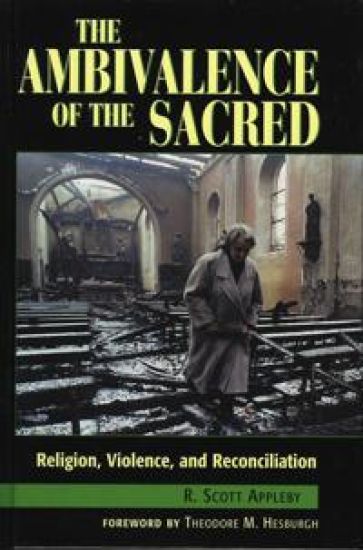
Terrorists and peacemakers may grow up in the same community and adhere to the same religious tradition. The killing carried out by one and the reconciliation fostered by the other indicate the range of dramatic and contradictory responses to human suffering by religious actors. Yet religion's ability to inspire violence is intimately related to its equally impressive power as a force for peace, especially in the growing number of conflicts around the world that involve religious claims and religiously inspired combatants. This book explains what religious terrorists and religious peacemakers share in common, what causes them to take different paths in fighting injustice, and how a deeper understanding of religious extremism can and must be integrated more effectively into our thinking about tribal, regional, and international conflict.
The Ambivalence of the Sacred

The Ambivalence of the Sacred

Scott R. Appleby; Theodore M. Hesburgh

Rowman Littlefield
1999
nidottu
Terrorists and peacemakers may grow up in the same community and adhere to the same religious tradition. The killing carried out by one and the reconciliation fostered by the other indicate the range of dramatic and contradictory responses to human suffering by religious actors. Yet religion's ability to inspire violence is intimately related to its equally impressive power as a force for peace, especially in the growing number of conflicts around the world that involve religious claims and religiously inspired combatants. This book explains what religious terrorists and religious peacemakers share in common, what causes them to take different paths in fighting injustice, and how a deeper understanding of religious extremism can and must be integrated more effectively into our thinking about tribal, regional, and international conflict.
Travels with Ted & Ned

Travels with Ted & Ned

Theodore M. Hesburgh

Doubleday Books
1995
nidottu
The warm and moving story of one of the greatest religious and secular leaders of our time. "...the riveting story of an incredible man who made an enormous impact on history and lived his dream." --Ann Landers