Kirjailija
Theodore Winthrop
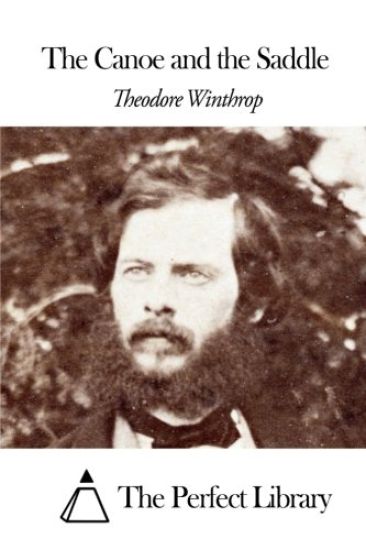
Kirjat ja teokset yhdessä paikassa: 60 kirjaa, julkaisuja vuosilta 1970-2026, suosituimpien joukossa The Canoe and the Saddle, By: Theodore Winthrop: This work is subtitled "Adventures Among the Northwestern Rivers and Forests". It is an account of. Vertaile teosten hintoja ja tarkista saatavuus suomalaisista kirjakaupoista.
Mukana myös kirjoitusasut: Théodore Winthrop
60 kirjaa
Kirjojen julkaisuhaarukka 1970-2026.
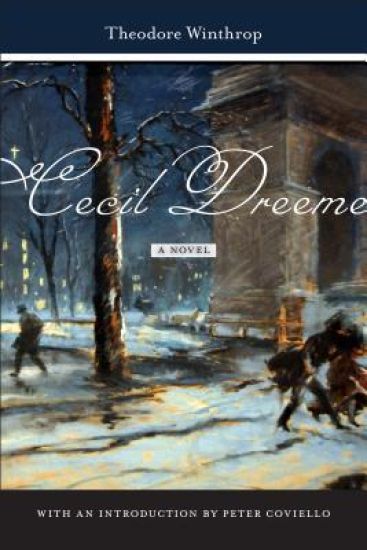
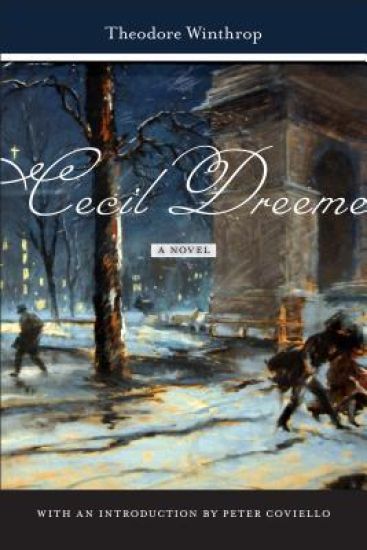
A curious gem of 19th-century gothic fiction Cecil Dreeme is one of the queerest American novels of the 19th century. This edition, which includes a new introduction contextualizing the sexual history of the period and queer longings of the book, brings a rare, almost forgotten, sensational gothic novel set in New York's West Village back to light. Published posthumously in 1861, the novel centers on Robert Byng, a young man who moves back to New York after traveling abroad and finds himself unmarried and underemployed, adrift in the heathenish dens of lower Manhattan. When he takes up rooms in "Chrysalis College"—a thinly veiled version of the 19th-century New York University building in Washington Square—he quickly finds himself infatuated with a young painter lodging there, named Cecil Dreeme. As their friendship grows and the novel unfolds against the backdrop of the bohemian West Village, Robert confesses that he "loves Cecil with a love passing the love of women." Yet, there are dark forces at work in the form of the sinister and magnetic Densdeth, a charismatic figure of bad intention, who seeks to ensnare Robert for his own. Full of romantic entanglements, mistaken identity, blackmail, and the dramas of temptation and submission, Cecil Dreeme is a gothic novel at its finest. Poetically written—with flashes of Walt Whitman, Charles Dickens, and Oscar Wilde—Cecil Dreeme is an early example of that rare bird, a queer novel from the 19th century.
Life in the Open Air - Part I
Theodore Winthrop
Createspace Independent Publishing Platform
2015
nidottu
"Life in the Open Air - Part I", by Theodore Winthrop. Theodore Winthrop was lawyer, and world traveller (1828-1861).
"Edwin Brothertoft", by Theodore Winthrop. Theodore Winthrop was lawyer, and world traveller (1828-1861).
Life in the Open Air - Part II
Theodore Winthrop
Createspace Independent Publishing Platform
2015
nidottu
In 1853, with money in his pocket and elegant clothes in his saddlebags, a twenty-four-year-old New Englander of aristocratic Yankee stock toured the territories of California, Oregon, Washington, and British Columbia. The Canoe and the Saddle recounts Theodore Winthrop's Northwest tour. A novelized memoir of his travels, it became a bestseller when it was published shortly after the author's untimely death in the Civil War. This critical edition of Winthrop's work, the first in over half a century, offers readers the original text with a narrative overview of the nature and culture of the Pacific Northwest and reflections on the ecological and racial turmoil that gripped the region at the time. It also provides a fresh perspective on the aesthetic, historical, cultural, anthropological, social, and environmental contexts in which Winthrop wrote his sometimes disturbing, sometimes enlightening, and always riveting account. Whether offering portraits of Native American culture—in particular, commenting on the Chinook Jargon—making keen and often prescient observations on nature, or deploying transcendental, animist, or Hudson River School aesthetics (likely learned from his friend Frederick Church), Winthrop develops a clear and compelling picture of a time and place still resonant and relevant today.
To find more information about Rowman and Littlefield titles, please visit www.rowmanlittlefield.com.