
Kirjailija
Theodore Ziolkowski
Kirjat ja teokset yhdessä paikassa: 24 kirjaa, julkaisuja vuosilta 1965-2022, suosituimpien joukossa Hermann Hesse. Vertaile teosten hintoja ja tarkista saatavuus suomalaisista kirjakaupoista.
24 kirjaa
Kirjojen julkaisuhaarukka 1965-2022.
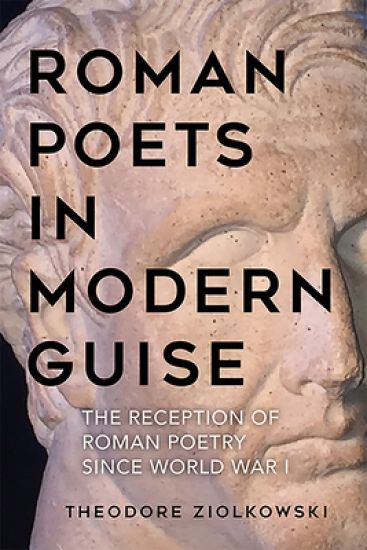
Identifies and explores Roman modes of poetry as received by twentieth- and twenty-first-century Anglo-American, German, and French poets. Analogies with Rome have been a powerful motif in American thought - and poetry - since the Founding Fathers. They resurged in the twentieth century, and especially after World War II, when the US saw its mission as analogous to that of Augustan Rome - a theme conspicuous in Robert Frost's poem for the Kennedy inauguration, which prophesied "The glory of a next Augustan age." This theme showed up in the poetry of other countries too. The Roman mode that Frost proclaimed was evident in not only American, but also French and German treatments of Virgil's Eclogues. Horace figures in poets from Bertolt Brecht and Ezra Pound down to James Wright. The Augustan poets were displaced during the more cynical postwar years by their Republican counterparts: the poet/scientist Lucretius (especially in Germany), the poet/lover Catullus, and the outsider Propertius. And the poets of the empire - Ovid, Seneca, and Juvenal - added certain dissonances to the Roman harmony. In a period when all the arts have looked increasingly to the past for models, the Roman poets have offered modern ones a wide variety of attitudes - from the patriotic fervor of Virgil and Horace to the cultural cynicism of Juvenal. All these tones are evident in the Anglo-American, German, and French examples discussed in this book.
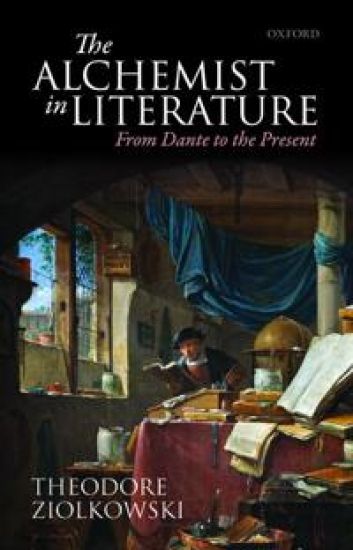
Unlike most other studies of alchemy and literature, which focus on alchemical imagery in poetry of specific periods or writers, this book traces the figure of the alchemist in Western literature from its first appearance in the Eighth Circle of Dante's Inferno down to the present. From the beginning alchemy has had two aspects: exoteric or operative (the transmutation of baser metals into gold) and esoteric or speculative (the spiritual transformation of the alchemist himself). From Dante to Ben Jonson, during the centuries when the belief in exoteric alchemy was still strong and exploited by many charlatans to deceive the gullible, writers in major works of many literatures treated alchemists with ridicule in an effort to expose their tricks. From the Renaissance to the Enlightenment, as that belief weakened, the figure of the alchemist disappeared, even though Protestant poets in England and Germany were still fond of alchemical images. But when eighteenth-century science almost wholly undermined alchemy, the figure of the alchemist began to emerge again in literature--now as a humanitarian hero or as a spirit striving for sublimation. Following these esoteric romanticizations, as scholarly interest in alchemy intensified, writers were attracted to the figure of the alchemist and his quest for power. The fin-de-siecle saw a further transformation as poets saw in the alchemist a symbol for the poet per se and others, influenced by the prevailing spiritism, as a manifestation of the religious spirit. During the interwar years, as writers sought surrogates for the widespread loss of religious faith, esoteric alchemy underwent a pronounced revival, and many writers turned to the figure of the alchemist as a spiritual model or, in the case of Paracelsus in Germany, as a national figurehead. This tendency, theorized by C. G. Jung in several major studies, inspired after World War II a vast popularization of the figure in novels--historical, set in the present, or juxtaposing past and present-- in England, France, Germany, Italy, Brazil, and the United States. The inevitable result of this popularization was the trivialization of the figure in advertisements for healing and cooking or in articles about scientists and economists. In sum: the figure of the alchemist in literature provides a seismograph for major shifts in intellectual and cultural history.
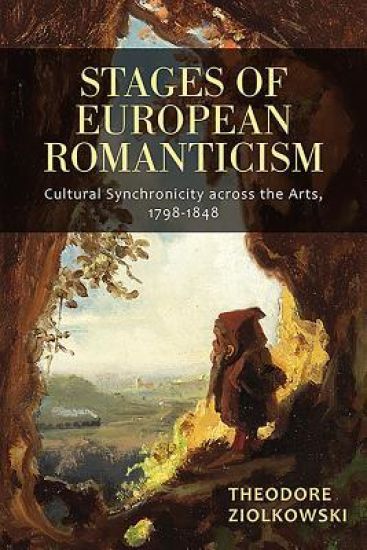
Employs an innovative approach by "stages" to offer a unified vision of European Romanticism over the half-century of its growth and decline. Romanticism was a truly European phenomenon, extending roughly from the French Revolution to the 1848 revolutions and embracing not only literature and drama but also music and visual arts. Because of Romanticism's vast scope, most treatments have restricted themselves to single countries or to specific forms, notably literature, art, or music. This book takes a wider view by considering in each of six chapters representative examples of works - from across Europe and across a range of the arts - that were created in a single year. For instance, in the first chapter, focusing on the year 1798, Beethoven's Pathétique sonata, Wordsworth and Coleridge's Lyrical Ballads,Tieck's novel Franz Sternbalds Wanderungen, and Goya's painting El sueño de la razón. The following chapters treat works from the years 1808, 1818, 1828, 1838, and 1848. This approach by "stages" makes it possible to determine characteristics of six stages of Romanticism in its historical and intellectual context and to note the conspicuous differences between these stages as European Romanticism developed-for example, the waxing and waning of religious themes, the shifting visions of landscape, the gradual ironic detachment from early Romanticism. In sum, the volume offers a unified vision of European Romanticism in all its aesthetic forms over the half-centuryof its growth and decline. Theodore Ziolkowski is Professor Emeritus of German and Comparative Literature, Princeton University.
Human beings have believed in conspiracies presumably as long as there have been groups of at least three people in which one was convinced that the other two were plotting against him or her. In that sense one might look back as far as Eve and the serpent to find the world's first conspiracy. Whereas recent generations have tended to find their conspiracies in politics and government, the past often sought its mysteries in religious cults or associations. In ancient Rome, for example, the senate tried to prohibit the cult of Isis lest its euphoric excesses undermine public morality and political stability. And during the Middle Ages, many rulers feared such powerful and mysterious religious orders as the Knights Templar. Fascination with the arcane is a driving force in this comprehensive survey of conspiracy fiction. Theodore Ziolkowski traces the evolution of cults, orders, lodges, secret societies, and conspiracies through various literary manifestations-drama, romance, epic, novel, opera-down to the thrillers of the twenty-first century. Arguing that the lure of the arcane throughout the ages has remained a constant factor of human fascination, Ziolkowski demonstrates that the content of conspiracy has shifted from religion by way of philosophy and social theory to politics. In the process, he reveals, the underlying mythic pattern was gradually co-opted for the subversive ends of conspiracy. Cults and Conspiracies considers Euripides's Bacchae, Andreae's Chymical Wedding, Mozart's The Magic Flute, and Eco's Foucault's Pendulum, among other seminal works. Mimicking the genre's quest-driven narrative arc, the reader searches for the significance of conspiracy fiction and is rewarded with the author's cogent reflections in the final chapter. After much investigation, Ziolkowski reinforces Umberto Eco's notion that the most powerful secret, the magnetic center of conspiracy fiction, is in fact "a secret without content."
Illuminates unexplored dimensions of the music-literature relationship and the sometimes unrecognized talents of certain famous writers and composers. This book deals with three aspects that have been neglected in the burgeoning field of music and literature. The "First Movement" of the book considers writers from German Romanticism to the present who, like Robert Schumann, first saw themselves as writers before they turned to composition, or, like E. T. A. Hoffmann and Anthony Burgess, sought careers in music before becoming writers. It also considers the few operatic composers, such as Richard Wagner and Arnold Schoenberg, who wrote their own libretti. The "Second Movement" turns to literary works based specifically on musical compositions. This group includes, first and more generally, prose works whose author chose a specific musical form such as sonata or fugue as an organizational model. And second, it includes novels based structurally or thematically on specific compositions, such as Bach's Goldberg Variations. The "Finale" concludes with a unique case: efforts by modern composers to render musically the compositions described in detail by Thomas Mann in his novel Doktor Faustus. This book, which addresses itself to readers interested generally in music and literature and is written in a reader-friendly style, draws attention to unexplored dimensions of the music-literature relationship and to the sometimes unrecognized talents of certain writers and composers. Theodore Ziolkowski is Professor Emeritus of German and Comparative Literature, Princeton University.
Immediately after World War I, four major European and American poets and thinkers--W. B. Yeats, Robinson Jeffers, R. M. Rilke, and C. G. Jung--moved into towers as their principal habitations. Taking this striking coincidence as its starting point, this book sets out to locate modern turriphilia in its cultural context and to explore the biographical circumstances that motivated the four writers to choose their unusual retreats. From the ziggurats of ancient Mesopotamia to the ivory towers of the fin de si cle, the author traces the emergence of a variety of symbolic associations with the proud towers of the past, ranging from spirituality and intellect to sexuality and sequestration. But in every case the tower served both literally and symbolically as a refuge from the urban modernism with whose values the four writers found themselves at odds. While the classic modernists (Eliot, Woolf, Hart Crane) often singled out the broken tower as the image of a crumbling past, these writers actualized their powerful visions: Yeats and Rilke moved into medieval towers in Ireland and Switzerland, while Jeffers and Jung built themselves towers at Carmel and Bollingen as secluded spaces in which to cultivate the traditions and values they cherished. The last chapter traces this perseverance of the ancient image through its heyday in the twenties and into the present, where it has undergone renewal, institutionalization, and parody. Originally published in 1998. The Princeton Legacy Library uses the latest print-on-demand technology to again make available previously out-of-print books from the distinguished backlist of Princeton University Press. These editions preserve the original texts of these important books while presenting them in durable paperback and hardcover editions. The goal of the Princeton Legacy Library is to vastly increase access to the rich scholarly heritage found in the thousands of books published by Princeton University Press since its founding in 1905.
In Uses and Abuses of Moses, Theodore Ziolkowski surveys the major literary treatments of the biblical figure of Moses since the Enlightenment. Beginning with the influential treatments by Schiller and Goethe, for whom Moses was, respectively, a member of a mystery cult and a violent murderer, Ziolkowski examines an impressive array of dramas, poems, operas, novels, and films to show the many ways in which the charismatic figure of Moses has been exploited—the "uses and abuses" of the title—to serve a variety of ideological and cultural purposes. Ziolkowski's wide-ranging and in-depth study compares and analyzes the attempts by nearly one hundred writers to fill in the gaps in the biblical account of Moses' life and to explain his motivation as a leader, lawgiver, and prophet. As Ziolkowski richly demonstrates, Moses' image has been affected by historical factors such as the Egyptomania of the 1820s, the revolutionary movements of the mid-nineteenth century, the early move toward black liberation in the United States, and critical biblical scholarship of the late nineteenth century before, in the twentieth century, being appropriated by Marxists, Socialists, Nazis, and Freudians. The majority of the works studied are by Austro-German and Anglo-American writers, but Ziolkowski also includes significant examples of works from Hungary, Sweden, Norway, the Ukraine, Denmark, the Netherlands, Italy, and France. The figure of Moses becomes an animate seismograph, in Ziolkowski's words, through whose literary reception we can trace many of the shifts in the cultural landscape of the past two centuries.
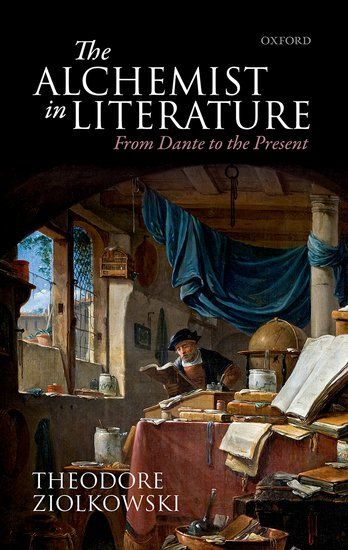
Unlike most other studies of alchemy and literature, which focus on alchemical imagery in poetry of specific periods or writers, this book traces the figure of the alchemist in Western literature from its first appearance in the Eighth Circle of Dante's Inferno down to the present. From the beginning alchemy has had two aspects: exoteric or operative (the transmutation of baser metals into gold) and esoteric or speculative (the spiritual transformation of the alchemist himself). From Dante to Ben Jonson, during the centuries when the belief in exoteric alchemy was still strong and exploited by many charlatans to deceive the gullible, writers in major works of many literatures treated alchemists with ridicule in an effort to expose their tricks. From the Renaissance to the Enlightenment, as that belief weakened, the figure of the alchemist disappeared, even though Protestant poets in England and Germany were still fond of alchemical images. But when eighteenth-century science almost wholly undermined alchemy, the figure of the alchemist began to emerge again in literature--now as a humanitarian hero or as a spirit striving for sublimation. Following these esoteric romanticizations, as scholarly interest in alchemy intensified, writers were attracted to the figure of the alchemist and his quest for power. The fin-de-siecle saw a further transformation as poets saw in the alchemist a symbol for the poet per se and others, influenced by the prevailing spiritism, as a manifestation of the religious spirit. During the interwar years, as writers sought surrogates for the widespread loss of religious faith, esoteric alchemy underwent a pronounced revival, and many writers turned to the figure of the alchemist as a spiritual model or, in the case of Paracelsus in Germany, as a national figurehead. This tendency, theorized by C. G. Jung in several major studies, inspired after World War II a vast popularization of the figure in novels--historical, set in the present, or juxtaposing past and present-- in England, France, Germany, Italy, Brazil, and the United States. The inevitable result of this popularization was the trivialization of the figure in advertisements for healing and cooking or in articles about scientists and economists. In sum: the figure of the alchemist in literature provides a seismograph for major shifts in intellectual and cultural history.
The triumph of avant-gardes in the 1920s tends to dominate our discussions of the music, art, and literature of the period. But the broader current of modernism encompassed many movements, and one of the most distinct - and influential - was a turn to classicism. In Classicism of the twenties, Theodore Ziolkowski offers a compelling account of that movement. Giving equal attention to music, art, and literature, and focusing in particular on the works of Stravinsky, Picasso, and T. S. Eliot, he shows how the turn to classicism manifested itself. In reaction both to the excesses of neoromanticism and early modernism and to the horrors of World War I - and with respectful detachment - artists, writers, and composers adapted themes and forms from the past and tried to imbue their own works with the values of simplicity and order that epitomized earlier classicisms. By identifying elements common to all three arts, and carefully situating classicism within the broader sweep of modernist movements, Ziolkowski presents a refreshingly original view of the cultural life of the 1920s.
Immediately after World War I, four major European and American poets and thinkers--W. B. Yeats, Robinson Jeffers, R. M. Rilke, and C. G. Jung--moved into towers as their principal habitations. Taking this striking coincidence as its starting point, this book sets out to locate modern turriphilia in its cultural context and to explore the biographical circumstances that motivated the four writers to choose their unusual retreats. From the ziggurats of ancient Mesopotamia to the ivory towers of the fin de si cle, the author traces the emergence of a variety of symbolic associations with the proud towers of the past, ranging from spirituality and intellect to sexuality and sequestration. But in every case the tower served both literally and symbolically as a refuge from the urban modernism with whose values the four writers found themselves at odds. While the classic modernists (Eliot, Woolf, Hart Crane) often singled out the broken tower as the image of a crumbling past, these writers actualized their powerful visions: Yeats and Rilke moved into medieval towers in Ireland and Switzerland, while Jeffers and Jung built themselves towers at Carmel and Bollingen as secluded spaces in which to cultivate the traditions and values they cherished. The last chapter traces this perseverance of the ancient image through its heyday in the twenties and into the present, where it has undergone renewal, institutionalization, and parody. Originally published in 1998. The Princeton Legacy Library uses the latest print-on-demand technology to again make available previously out-of-print books from the distinguished backlist of Princeton University Press. These editions preserve the original texts of these important books while presenting them in durable paperback and hardcover editions. The goal of the Princeton Legacy Library is to vastly increase access to the rich scholarly heritage found in the thousands of books published by Princeton University Press since its founding in 1905.

Fascination with the arcane is a driving force in this comprehensive survey of conspiracy fiction. Theodore Ziolkowski traces the evolution of cults, orders, lodges, secret societies, and conspiracies through various literary manifestations-drama, romance, epic, novel, opera-down to the thrillers of the twenty-first century. Lure of the Arcane considers Euripides's Bacchae, Andreae's Chymical Wedding, Mozart's The Magic Flute, and Eco's Foucault's Pendulum, among other seminal works. Mimicking the genre's quest-driven narrative arc, the reader searches for the significance of conspiracy fiction and is rewarded with the author's cogent reflections in the final chapter. After much investigation, Ziolkowski reinforces Umberto Eco's notion that the most powerful secret, the magnetic center of conspiracy fiction, is in fact "a secret without content."
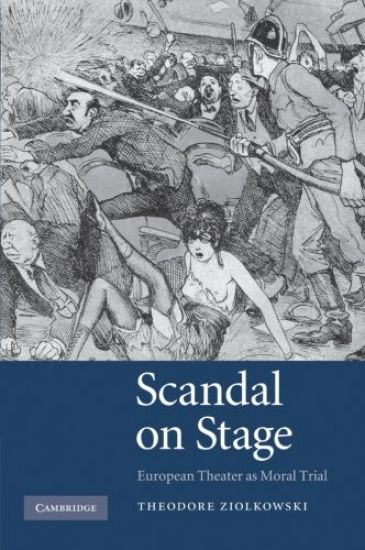
New plays and operas have often tried to upset the status quo or disturb the assumptions of theatre audiences. Yet, as this study explores, the reactions of the audience or of the authorities are often more extreme than the creators had envisaged, to include outrage, riots, protests or censorship. Scandal on Stage looks at ten famous theater scandals of the past two centuries in Germany and France as symptoms of contemporary social, political, ethical, and aesthetic upheavals. The writers and composers concerned, including Schiller, Stravinsky, Strauss, Brecht and Weil, portrayed new artistic and ideological ideas that came into conflict with the expectations of their audiences. In a comparative perspective, Theodore Ziolkowski shows how theatrical scandals reflect or challenge cultural and ethical assumptions and asks whether theatre can still be, as Schiller wrote, a moral institution: one that successfully makes its audience think differently about social, political and ethical questions.
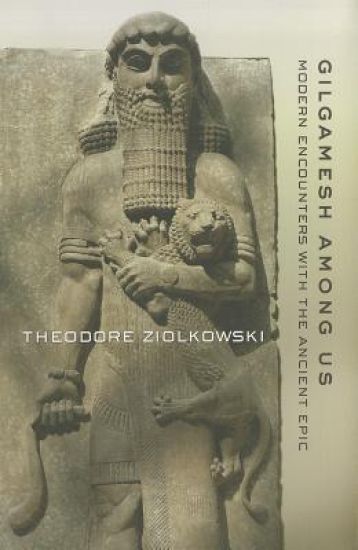
The world's oldest work of literature, the Epic of Gilgamesh recounts the adventures of the semimythical Sumerian king of Uruk and his ultimately futile quest for immortality after the death of his friend and companion, Enkidu, a wildman sent by the gods. Gilgamesh was deified by the Sumerians around 2500 BCE, and his tale as we know it today was codified in cuneiform tablets around 1750 BCE and continued to influence ancient cultures—whether in specific incidents like a world-consuming flood or in its quest structure—into Roman times. The epic was, however, largely forgotten, until the cuneiform tablets were rediscovered in 1872 in the British Museum's collection of recently unearthed Mesopotamian artifacts. In the decades that followed its translation into modern languages, the Epic of Gilgamesh has become a point of reference throughout Western culture. In Gilgamesh among Us, Theodore Ziolkowski explores the surprising legacy of the poem and its hero, as well as the epic's continuing influence in modern letters and arts. This influence extends from Carl Gustav Jung and Rainer Maria Rilke's early embrace of the epic's significance—"Gilgamesh is tremendous!" Rilke wrote to his publisher's wife after reading it—to its appropriation since World War II in contexts as disparate as operas and paintings, the poetry of Charles Olson and Louis Zukofsky, novels by John Gardner and Philip Roth, and episodes of Star Trek: The Next Generation and Xena: Warrior Princess. Ziolkowski sees fascination with Gilgamesh as a reflection of eternal spiritual values—love, friendship, courage, and the fear and acceptance of death. Noted writers, musicians, and artists from Sweden to Spain, from the United States to Australia, have adapted the story in ways that meet the social and artistic trends of the times. The spirit of this capacious hero has absorbed the losses felt in the immediate postwar period and been infused with the excitement and optimism of movements for gay rights, feminism, and environmental consciousness. Gilgamesh is at once a seismograph of shifts in Western history and culture and a testament to the verities and values of the ancient epic.
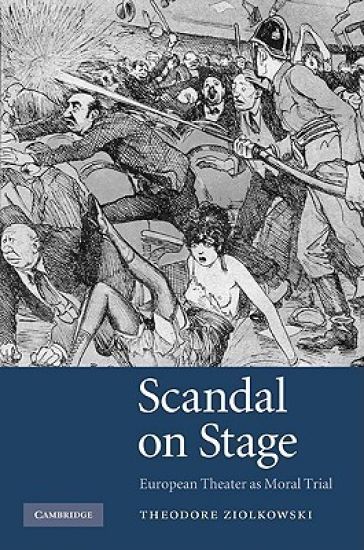
New plays and operas have often tried to upset the status quo or disturb the assumptions of theatre audiences. Yet, as this study explores, the reactions of the audience or of the authorities are often more extreme than the creators had envisaged, to include outrage, riots, protests or censorship. Scandal on Stage looks at ten famous theater scandals of the past two centuries in Germany and France as symptoms of contemporary social, political, ethical, and aesthetic upheavals. The writers and composers concerned, including Schiller, Stravinsky, Strauss, Brecht and Weil, portrayed new artistic and ideological ideas that came into conflict with the expectations of their audiences. In a comparative perspective, Theodore Ziolkowski shows how theatrical scandals reflect or challenge cultural and ethical assumptions and asks whether theatre can still be, as Schiller wrote, a moral institution: one that successfully makes its audience think differently about social, political and ethical questions.
In Friedrich Durrenmatt's experimental thriller "The Assignment", the wife of a psychiatrist has been raped and killed near a desert ruin in North Africa. Her husband hires a woman named F. to reconstruct the unsolved crime in a documentary film. F. is soon thrust into a paranoid world of international espionage where everyone is watched - including the watchers. After discovering a recent photograph of the supposed murder victim happily reunited with her husband, F. becomes trapped in an apocalyptic landscape riddled with political intrigue, crimes of mistaken identity, and terrorism.F.'s labyrinthine quest for the truth is Durrenmatt's fictionalized warning against the dangers of a technologically advanced society that turns everyday life into one of constant scrutiny. Joel Agee's elegant translation will introduce a generation of English-speaking readers to a master of language, suspense, and dystopia.
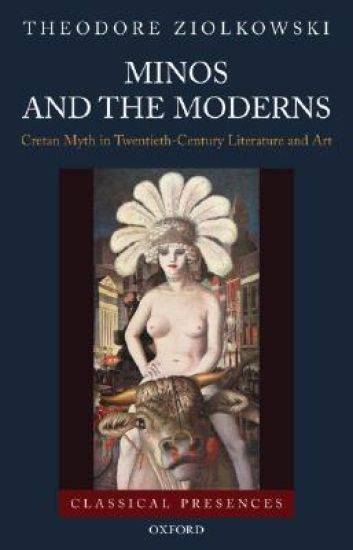
Minos and the Moderns considers three mythological complexes that enjoyed a unique surge of interest in early twentieth-century European art and literature: Europa and the bull, the minotaur and the labyrinth, and Daedelus and Icarus. All three are situated on the island of Crete and are linked by the figure of King Minos. Drawing examples from fiction, poetry, drama, painting, sculpture, opera, and ballet, Minos and the Moderns is the first book of its kind to treat the role of the Cretan myths in the modern imagination. Beginning with the resurgence of Crete in the modern consciousness in 1900 following the excavations of Sir Arthur Evans, Theodore Ziolkowski shows how the tale of Europain poetry, drama, and art, but also in cartoons, advertising, and currency was initially seized upon as a story of sexual awakening, then as a vehicle for social and political satire, and finally as a symbol of European unity. In contast, the minotaur provided artists ranging from Picasso to Durrenmatt with an image of the artists sense of alienation, while the labyrinth suggested to many writers the threatening sociopolitical world of the twentieth century. Ziolkowski also considers the roles of such modern figures as Marx, Nietzsche, and Freud; of travelers to Greece and Crete from Isadora Duncan to Henry Miller; and of the theorists and writers, including T. S. Eliot and Thomas Mann, who hailed the use of myth in modern literature. Minos and the Moderns concludes with a summary of the manners in which the economic, aesthetic, psychological, and anthropological revisions enabled precisely these myths to be taken up as a mirror of modern consciousness. The book will appeal to students and scholars across several disciplines, especially in Classics and Literary Studies.
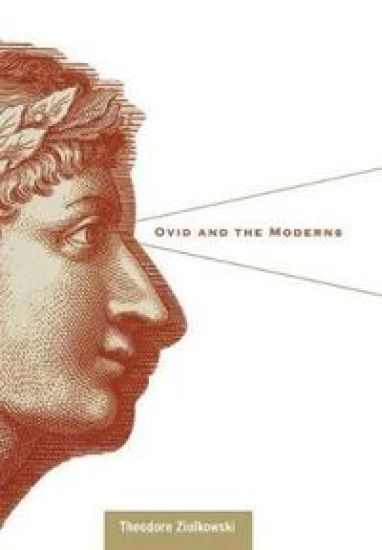
"The reasons for the conspicuous popularity of Ovid—his life as well as his works—at the turn of the new millennium bear investigation.... This book speaks of the new bodies assumed in the twentieth century by the poems and tales to which Ovid gave their classic form—including prominently the account of his own life, which has been hailed by many writers of our time as the archetype of exile.... I intend to suggest some of the reasons for Ovid's appeal to different writers and different generations."—from the Preface Theodore Ziolkowski approaches Ovid's Latin poetry as a comparatist, not as a classicist, and maintains that the contextualization of individual works helps place them in a larger tradition. Covering the period 1912–2002, Ovid and the Moderns deals with the reception of Ovid and of Ovid's works in literature. After beginning with a discussion of Giorgio de Chirico's Ariadne paintings of 1912 and the Hofmannsthal-Strauss opera Ariadne auf Naxos, Ziolkowski considers European literary landmarks from the High Modernism of Joyce, Kafka, Mandelstam, and Pound, by way of the mid-century exiles, to postmodernism and the century's end, when a surge of interest in Ovid was fueled by a new generation of translations. One of Ziolkowski's conclusions is that the popularity of Ovid alternates in a regular rhythm and for definable reasons with that of Virgil.
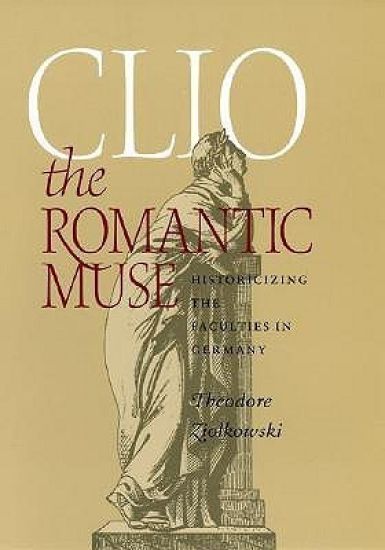
"It is not sufficiently appreciated, I believe, how profoundly Clio, the muse of history, permeated every aspect of thought during the Romantic era: philosophy, theology, law, natural science, medicine, and all other fields of intellectual endeavor.... Thoughtful students of the period well understand that 'Romanticism' is not merely a literary or aesthetic movement but, rather, a general climate of opinion."—from the Introduction In a book certain to be of interest to readers in many disciplines, the distinguished scholar Theodore Ziolkowski shows how a strong impulse toward historical concerns was formalized in the four German academic faculties: philosophy, theology, law, and medicine/biology. In Clio the Romantic Muse, he focuses on representative figures in whose early work the sense of history was first manifested: G. W. F. Hegel, Barthold Georg Niebuhr, Friedrich Karl von Savigny, Friedrich Wilhelm Joseph von Schelling, and Friedrich Schleiermacher. Through biographical treatments of these and other leading German scholars, Ziolkowski traces how the disciplines became historicized in the period 1790–1810. He goes on to suggest how powerfully the Romantic thinkers influenced their disciples in the twentieth century.
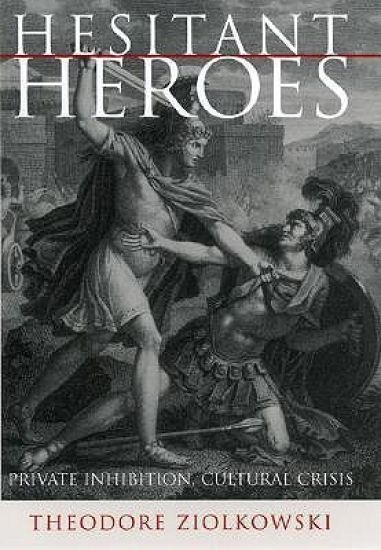
Why, Theodore Ziolkowski wonders, does Western literature abound with figures who experience a crucial moment of uncertainty in their actions? In this highly original and engaging work, he explores the significance of these unlikely heroes for literature and history.From Aeneas—who wavered momentarily before plunging his sword into Turnus's chest—to Hamlet, Orestes, Parzival, Wallenstein, and others, including Kafka's Josef K., Ziolkowski demonstrates that characters' private uncertainty reveals a classic opposition of binary forces. He describes how Aeneas, for example, was forced to choose between the ancient code of blood vengeance and the new civic virtues of law and justice. Ziolkowski asserts that the indecision of the characters reflects the tensions that authors observed in their own societies. Drawing on the insights of Hegel and Freud, he analyzes the ways in which these tensions represent turning points in cultural history. In stark contrast to Aeneas, Josef K. temporized for a year before his executioners thrust a knife into his heart. For Ziolkowski, the centuries separating Virgil and Kafka are ones in which the notion of the hero was transformed almost to the point of total inversion. He sheds light on this transformation and a corresponding change in literary form.