Kirjojen hintavertailu. Mukana 12 390 323 kirjaa ja 12 kauppaa.

Kirjailija

Theresa M. Schenck

Kirjat ja teokset yhdessä paikassa: 3 kirjaa, julkaisuja vuosilta 2007-2025, suosituimpien joukossa William W. Warren. Vertaile teosten hintoja ja tarkista saatavuus suomalaisista kirjakaupoista.

3 kirjaa

Kirjojen julkaisuhaarukka 2007-2025.

William W. Warren

William W. Warren

Theresa M. Schenck

University of Nebraska Press
2007
sidottu
This is the first full-length biography of William W. Warren (1825-53), an Ojibwe interpreter, historian, and legislator in the Minnesota Territory. Devoted to the interests of the Ojibwe at a time of government attempts at removal, Warren lives on in his influential book History of the Ojibway, still the most widely read and cited source on the Ojibwe people. The son of a Yankee fur trader and an Ojibwe-French mother, Warren grew up in a frontier community of mixed cultures. Warren's loyalty to government Indian policies was challenged, but never his loyalty to the Ojibwe people. In his short life the issues with which he was concerned included land rights, treaties, Indian removal, mixed-blood politics, and state and federal Indian policy. Theresa M. Schenck has assembled a remarkable collection of newly discovered documents. Dozens of letters and other writings illuminate not only Warren's heart and mind but also a time of radical change in American Indian history. These documents, combined with Schenck's commentary, provide historical and contextual perspective on Warren's life, on the breadth of his activities, and on the complexity of the man himself; as such they offer a useful and long-awaited companion to Warren's History of the Ojibway.
William W. Warren

William W. Warren

Theresa M. Schenck

University of Nebraska Press
2009
pokkari
This is the first full-length biography of William W. Warren (1825–53), an Ojibwe interpreter, historian, and legislator in the Minnesota Territory. Devoted to the interests of the Ojibwe at a time of government attempts at removal, Warren lives on in his influential book History of the Ojibway, still the most widely read and cited source on the Ojibwe people. The son of a Yankee fur trader and an Ojibwe-French mother, Warren grew up in a frontier community of mixed cultures. Warren's loyalty to government Indian policies was challenged, but never his loyalty to the Ojibwe people. In his short life the issues with which he was concerned included land rights, treaties, Indian removal, mixed-blood politics, and state and federal Indian policy. Theresa M. Schenck has assembled a remarkable collection of newly discovered documents. Dozens of letters and other writings illuminate not only Warren's heart and mind but also a time of radical change in American Indian history. These documents, combined with Schenck's commentary, provide historical and contextual perspective on Warren's life, on the breadth of his activities, and on the complexity of the man himself; as such they offer a useful and long-awaited companion to Warren's History of the Ojibway.
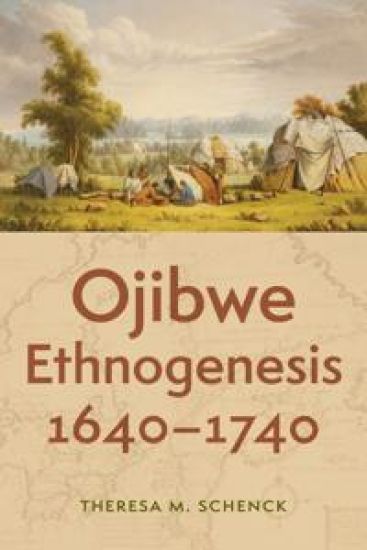
Ojibwe Ethnogenesis, 1640–1740

Ojibwe Ethnogenesis, 1640–1740

Theresa M. Schenck

University of Nebraska Press
2025
sidottu
In Ojibwe Ethnogenesis, 1640–1740 Theresa M. Schenck (Ojibwe, Huron, and Blackfeet) presents the first scholarly work to untangle the origin, rise, and spread of Ojibwe identity and culture from the mid-seventeenth to mid-eighteenth centuries, as well as the emergence of Ojibwe identity in the early years of French imperial incursions into the Upper Midwest. Schenck traces the names ascribed to the Ojibwe by French officials, traders, missionaries, and settlers in the earliest European records to their presences in French America. Schenck then follows the people themselves and their complex relationships through the centuries. Schenck’s proficiency in French and her close reading of the sources, many in French, have facilitated a more accurate, traceable, and comprehensive documentary study than achieved by previous generations of scholars. Ojibwe Ethnogenesis, 1640–1740 has thus achieved our fullest understanding to date of Ojibwe roots and culture going back four hundred years.