Kirjojen hintavertailu. Mukana 12 459 402 kirjaa ja 12 kauppaa.

Kirjailija

Thom Nickels

Kirjat ja teokset yhdessä paikassa: 9 kirjaa, julkaisuja vuosilta 2001-2026, suosituimpien joukossa Death in Philadelphia: The Murder of Kimberly Ernest. Vertaile teosten hintoja ja tarkista saatavuus suomalaisista kirjakaupoista.

9 kirjaa

Kirjojen julkaisuhaarukka 2001-2026.

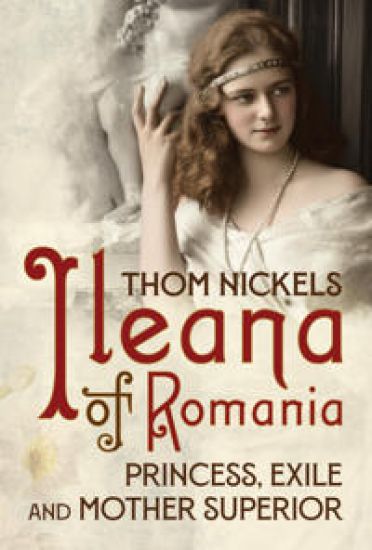
Ileana of Romania

Ileana of Romania

Thom Nickels

PEN SWORD BOOKS LTD
2026
sidottu
Princess Ileana of Romania (1909–1991), known later in life as Mother Alexandra, was the youngest daughter of King Ferdinand I of Romania and his consort, Queen Marie. Kind, intelligent, and beautiful, she was exalted among the royal courts of Europe and the darling of the Romanian people. She married Archduke Anton of Austria in 1931 and made Schloss Sonnberg her home before returning to Romania during World War II, where she converted the famous Bran Castle into a hospital for wounded soldiers. Exiled after the Soviet occupation of 1944, she eventually settled near Boston, Massachusetts, where Senator John F. Kennedy helped her on the path to citizenship. Having pawned the magnificent Vladimir Sapphire Kokoshnik crown, once the possession of Empress Alexandra Feodorovna of Russia, to buy a home and raise her six children in relative security, life could have taken a predictable course from then on—but not so for the princess. In 1961 she travelled to France to train as a monastic, and six years later founded a monastery in Ellwood, Pennsylvania. During the quiet decades that followed, she gradually revealed to intimate friends the startling secrets her mother had told her about the murder of her relatives, the Romanov family, by the Bolsheviks on July 16, 1918. Ileana of Romania: Princess, Exile and Mother Superior is both a narrative of an extraordinary life and an unveiling of new evidence pertaining to one of the great mysteries of the twentieth century. It is a story of war and struggle, the complete upending of an old order, and of finding peace at the end of it.

Death in Philadelphia: The Murder of Kimberly Ernest
The 1995 murder of a jogger in Philadelphia, shrouded in mystery and false confessions, remains unsolved. When the body of a young female jogger was found at the bottom of a stairwell near Philadelphia's Rittenhouse Square in the early morning hours of November 2, 1995, the brutality of the crime shocked the city and led to an outpouring of grief that caused the mayor to weep publicly. The victim, who came from a prominent Illinois family, had been attacked by two petty car thieves with a history of terrorizing local residents. Yet nothing in this case was what it seemed to be. The suspects claimed that their signed confessions were forced by police officers in a hurry to prosecute. DNA evidence not compatible with the killers' profiles led the sequestered jury (in a rush to go home) to declare a not guilty verdict. When a rogue attorney eager for publicity entered the picture and presented "evidence" that the killer of the jogger was really the son of a prominent city lawyer, the new charges led to a complex web of criminal types from the city's drug and prostitution underworld. The Center City jogger's death still cries out for justice.
Learn to Do a Bad Thing Well: Looking for Johnny Bobbitt
The media's embrace of the plight of a homeless ex Marine EMT firefighter from North Carolina who struck public relations pay dirt when he came to the aid of a driver who ran out of gas near his Philadelphia I-95 exit panhandling station had all the elements of a Walt Disney After School Special. Pretty girl runs out of gas, attempts to leave her vehicle after sunset in an area as bleak as it is dark; sees a shadowy figure emerge in front of her. Is it an alien from Whitely Strieber's Communion? No, it's Johnny S. Bobbitt, Jr. a transplant to Philadelphia from North Carolina who wound up homeless on the streets of the city through a series of "bad choices." The "bad choices" part is what the media chose to ignore now that the full story of this nocturnal meeting has gone viral. Most people are probably unaware that the 95 exit ramp near Richmond Street where Johnny met the woman Kate was a relatively new panhandling spot for Johnny. A few months prior to the meeting Johnny was stationed outside the Dollar Tree store in the Port Richmond Shopping Center. He would sit yogi-like on a slat of cardboard near the entrance of the store so that shoppers had a good view of him. A sign propped up beside him read: Homeless Vet trying to go home, anything helps. He would change the sign periodically, as most homeless do. The words, "Anything Helps" meant just that. Johnny's method of asking for money in front of Dollar Tree was never intrusive. He often had his nose in a book and only rarely looked at people entering the store. Intense and highly charismatic, Johnny had a large following of people willing to help him prior to his 25 minutes of homeless fame. This is the story of Johnny Bobbitt and the homeless scene in Philadelphia's Riverwards neighborhood as told by an intimate friend of Bobbitt's. Nickels was there there. He knew Bobbitt's friends; he followed them into Kensington where they would go to score drugs or to hustle men and women for money. He observed their lives, their fights, struggles, and problems with police and overzealous security guards. This story is not for children; it is also certainly no Disney 'After School' special.
Philadelphia Mansions: Stories and Characters Behind the Walls

Philadelphia Mansions: Stories and Characters Behind the Walls

Thom Nickels

History Press Library Editions
2018
sidottu
Philadelphia's grand mansions and architectural treasures reflect its iconic status in American history, for each Greek Revival home and Corinthian column tells a compelling story of the people behind it. Historic Strawberry Mansion in North Philadelphia was home to Judge William Lewis, a Patriot who defended colonists accused of treason and was Aaron Burr's defense lawyer. Socialite, millionaire and world-renowned art collector Henry McIlhenny made his home at Rittenhouse Square and left his art collection to the Philadelphia Museum of Art. Famed architect Addison Mizner's Spanish Colonial Revival house La Ronda brought the stark contrast of South Florida to Philadelphia. Author Thom Nickels presents the city's most iconic homes and the stories behind them.
Literary Philadelphia: A History of Poetry and Prose in the City of Brotherly Love
Since Thomas Paine and Benjamin Franklin put type to printing press, Philadelphia has been a haven and an inspiration for writers. Local essayist Agnes Repplier once shared a glass of whiskey with Walt Whitman, who frequently strolled Market Street. Gothic writers like Edgar Allan Poe and George Lippard plumbed the city's dark streets for material. In the twentieth century, Northern Liberties native John McIntyre found a backdrop for his gritty noir in the working-class neighborhoods, while novelist Pearl S. Buck discovered a creative sanctuary in Center City. From Quaker novelist Charles Brockden Brown to 1973 U.S. poet laureate Daniel Hoffman, author Thom Nickels explores Philadelphia's literary landscape.
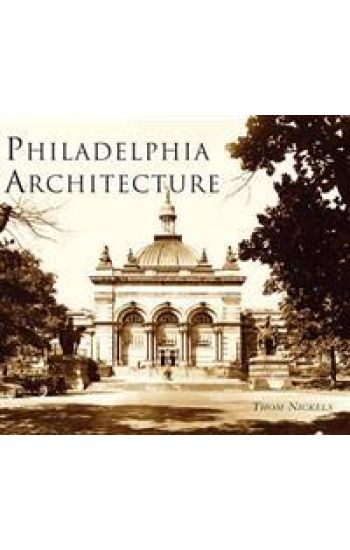
Philadelphia Architecture

Philadelphia Architecture

Thom Nickels

Arcadia Publishing (SC)
2005
nidottu
Philadelphia is a city of Colonial and ghostly architecture with narrow historic streets that open up onto vistas of bold, towering skyscrapers. It is a city of Greek Revival banks, Italian Renaissance, and Second Empire buildings, a city of Beaux-Arts hotels, Byzantine and Gothic churches, and International-style high-rises. A hybrid of gritty Chicago and pristine Boston, Philadelphia stands alone, an aristocrat in bib overalls, as a livable, intimate city of neighborhoods and luxurious townhouses, of hidden treasures and spectacular surprises. Philadelphia Architecture, a walk through Philadelphia streets past and present, highlights the richness and diversity of the city's architectural history.