Kirjojen hintavertailu. Mukana 12 657 676 kirjaa ja 12 kauppaa.

Kirjailija

Thomas A. Carlson

Kirjat ja teokset yhdessä paikassa: 9 kirjaa, julkaisuja vuosilta 1999-2021, suosituimpien joukossa Image. Vertaile teosten hintoja ja tarkista saatavuus suomalaisista kirjakaupoista.

9 kirjaa

Kirjojen julkaisuhaarukka 1999-2021.

Image

Image

Mark C. Taylor; Mary-Jane Rubenstein; Thomas A. Carlson

University of Chicago Press
2021
sidottu
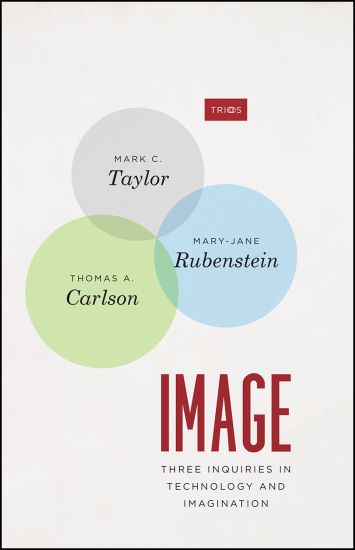
The three essays in Image, written by leading philosophers of religion, explore the modern power of the visual at the intersection of the human and the technological. Modern life is steeped in images, image-making, and attempts to control the world through vision. Mastery of images has been advanced by technologies that expand and reshape vision and enable us to create, store, transmit, and display images. The three essays in Image, written by leading philosophers of religion Mark C. Taylor, Mary-Jane Rubenstein, and Thomas A. Carlson, explore the power of the visual at the intersection of the human and the technological. Building on Heidegger’s notion that modern humanity aims to master the world by picturing or representing the real, they investigate the contemporary culture of the image in its philosophical, religious, economic, political, imperial, and military dimensions, challenging the abstraction, anonymity, and dangerous disconnection of contemporary images. Taylor traces a history of capitalism, focusing on its lack of humility, particularly in the face of mortality, and he considers art as a possible way to reconnect us to the earth. Through a genealogy of iconic views from space, Rubenstein exposes the delusions of conquest associated with extraterrestrial travel. Starting with the pressing issues of surveillance capitalism and facial recognition technology, Carlson extends Heidegger’s analysis through a meditation on the telematic elimination of the individual brought about by totalizing technologies. Together, these essays call for a consideration of how we can act responsibly toward the past in a way that preserves the earth for future generations. Attending to the fragility of material things and to our own mortality, they propose new practices of imagination grounded in love and humility.
Image

Image

Mark C. Taylor; Mary-Jane Rubenstein; Thomas A. Carlson

University of Chicago Press
2021
nidottu
The three essays in Image, written by leading philosophers of religion, explore the modern power of the visual at the intersection of the human and the technological. Modern life is steeped in images, image-making, and attempts to control the world through vision. Mastery of images has been advanced by technologies that expand and reshape vision and enable us to create, store, transmit, and display images. The three essays in Image, written by leading philosophers of religion Mark C. Taylor, Mary-Jane Rubenstein, and Thomas A. Carlson, explore the power of the visual at the intersection of the human and the technological. Building on Heidegger’s notion that modern humanity aims to master the world by picturing or representing the real, they investigate the contemporary culture of the image in its philosophical, religious, economic, political, imperial, and military dimensions, challenging the abstraction, anonymity, and dangerous disconnection of contemporary images. Taylor traces a history of capitalism, focusing on its lack of humility, particularly in the face of mortality, and he considers art as a possible way to reconnect us to the earth. Through a genealogy of iconic views from space, Rubenstein exposes the delusions of conquest associated with extraterrestrial travel. Starting with the pressing issues of surveillance capitalism and facial recognition technology, Carlson extends Heidegger’s analysis through a meditation on the telematic elimination of the individual brought about by totalizing technologies. Together, these essays call for a consideration of how we can act responsibly toward the past in a way that preserves the earth for future generations. Attending to the fragility of material things and to our own mortality, they propose new practices of imagination grounded in love and humility.
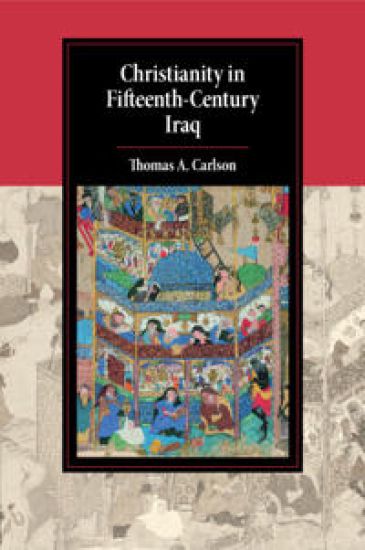
Christianity in Fifteenth-Century Iraq

Christianity in Fifteenth-Century Iraq

Thomas A. Carlson

Cambridge University Press
2020
pokkari
Christians in fifteenth-century Iraq and al-Jazira were socially and culturally home in the Middle East, practicing their distinctive religion despite political instability. This insightful book challenges the normative Eurocentrism of scholarship on Christianity and the Islamic exceptionalism of much Middle Eastern history to reveal the often unexpected ways in which inter-religious interactions were peaceful or violent in this region. The multifaceted communal self-concept of the 'Church of the East' (so-called 'Nestorians') reveals cultural integration, with certain distinctive features. The process of patriarchal succession clearly borrowed ideas from surrounding Christian and Muslim groups, while public rituals and communal history reveal specifically Christian responses to concerns shared with Muslim neighbors. Drawing on sources from various languages, including Arabic, Armenian, Persian, and Syriac, this book opens new possibilities for understanding the rich, diverse, and fascinating society and culture that existed in Iraq during this time.
With the World at Heart

With the World at Heart

Thomas A. Carlson

University of Chicago Press
2019
pokkari
What is the role of love in opening and sustaining the temporal worlds we inhabit? One of the leading scholars in philosophy and the history of religious thought, Thomas A. Carlson here traces this question through Christian theology, twentieth-century phenomenological and deconstructive philosophy, and nineteenth-century individualism. Revising Augustine's insight that when we love a place, we dwell there in the heart, Carlson also pointedly resists lines of thought that seek to transcend loss and its grief by loving all things within the realm of the eternal. Through masterful readings of Heidegger, Derrida, Marion, Nancy, Emerson, and Nietzsche, Carlson shows that the fragility and sorrow of mortal existence in its transience do not, in fact, contradict love, but instead empower love to create a world.
With the World at Heart

With the World at Heart

Thomas A. Carlson

University of Chicago Press
2019
sidottu
What is the role of love in opening and sustaining the temporal worlds we inhabit? One of the leading scholars in philosophy and the history of religious thought, Thomas A. Carlson here traces this question through Christian theology, twentieth-century phenomenological and deconstructive philosophy, and nineteenth-century individualism. Revising Augustine's insight that when we love a place, we dwell there in the heart, Carlson also pointedly resists lines of thought that seek to transcend loss and its grief by loving all things within the realm of the eternal. Through masterful readings of Heidegger, Derrida, Marion, Nancy, Emerson, and Nietzsche, Carlson shows that the fragility and sorrow of mortal existence in its transience do not, in fact, contradict love, but instead empower love to create a world.
Christianity in Fifteenth-Century Iraq

Christianity in Fifteenth-Century Iraq

Thomas A. Carlson

Cambridge University Press
2018
sidottu
Christians in fifteenth-century Iraq and al-Jazira were socially and culturally home in the Middle East, practicing their distinctive religion despite political instability. This insightful book challenges the normative Eurocentrism of scholarship on Christianity and the Islamic exceptionalism of much Middle Eastern history to reveal the often unexpected ways in which inter-religious interactions were peaceful or violent in this region. The multifaceted communal self-concept of the 'Church of the East' (so-called 'Nestorians') reveals cultural integration, with certain distinctive features. The process of patriarchal succession clearly borrowed ideas from surrounding Christian and Muslim groups, while public rituals and communal history reveal specifically Christian responses to concerns shared with Muslim neighbors. Drawing on sources from various languages, including Arabic, Armenian, Persian, and Syriac, this book opens new possibilities for understanding the rich, diverse, and fascinating society and culture that existed in Iraq during this time.
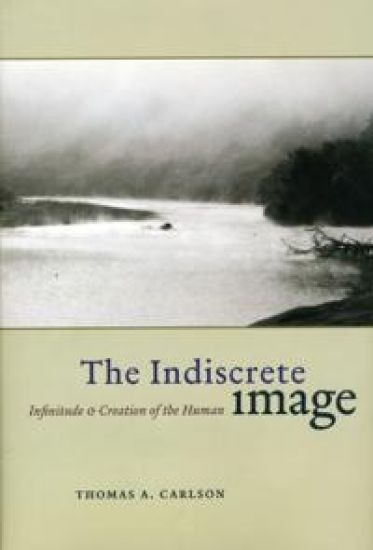
The Indiscrete Image

The Indiscrete Image

Thomas A. Carlson

University of Chicago Press
2008
sidottu
Humanity's creative capacity has never been more unsettling than it is at our current moment, when it has ushered us into new technological worlds that challenge the very definition of 'the human.' Those anxious to safeguard the human against techno-scientific threats often appeal to religious traditions to protect the place and dignity of the human. But how well do we understand both theological tradition and today's technological culture? In "The Indiscrete Image", Thomas A. Carlson challenges our common ideas about both, arguing instead that it may be humanity's final lack of definition that first enables, and calls for, human creativity and its correlates - including technology, tradition, and their inextricable interplay within religious existence.Framed in response to Martin Heidegger's influential account of the relation between technological modernity and theological tradition, "The Indiscrete Image" builds an understanding of creativity as conditioned by insurmountable unknowing and incalculable possibility through alternative readings of Christian theological tradition and technological culture - and the surprising resonance between these two. Carlson concludes that the always ongoing work of world creation, tied essentially to human self-creation, implies neither an idol's closure nor an icon's transcendence, but the 'indiscrete image' whose love makes possible - by keeping open - both the human and its world.
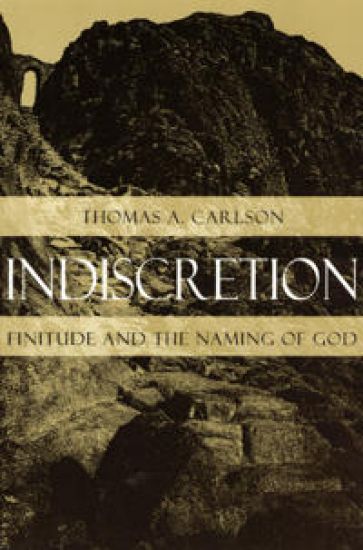
Indiscretion

Indiscretion

Thomas A. Carlson

University of Chicago Press
1999
nidottu
How can one think and name an inconceivable and ineffable God? Christian mystics have approached the problem by speaking of God using "negative" language - devices such as grammatical negation and the rhetoric of "darkness" or "unknowing" - and their efforts have fascinated contemporary scholars. In this text, Thomas A. Carlson reinterprets premodern approaches to God's ineffability and postmodern approaches to the mystery of the human subject in light of one another. The recent interest in mystical theological traditions, Carlson argues, is best understood in relation to contemporary philosophy's emphasis on the idea of human finitude and mortality. Combining both historical research in theology (from Pseudo-Dionysius to Aquinas to Eckhart) and contemporary philosophical analysis (from Hegel and Nietzsche to Heidegger, Derrida, and Marion), this text should interest philosophers, theologians, and other scholars concerned with the possibilities and limits of language surrounding both God and human subjectivity.
Indiscretion

Indiscretion

Thomas A. Carlson

University of Chicago Press
1999
sidottu
How can one think and name an inconceivable and ineffable God? Christian mystics have approached the problem by speaking of God using "negative" language - devices such as grammatical negation and the rhetoric of "darkness" or "unknowing" - and their efforts have fascinated contemporary scholars. In this text, Thomas A. Carlson reinterprets premodern approaches to God's ineffability and postmodern approaches to the mystery of the human subject in light of one another. The recent interest in mystical theological traditions, Carlson argues, is best understood in relation to contemporary philosophy's emphasis on the idea of human finitude and mortality. Combining both historical research in theology (from Pseudo-Dionysius to Aquinas to Eckhart) and contemporary philosophical analysis (from Hegel and Nietzsche to Heidegger, Derrida, and Marion), this text should interest philosophers, theologians, and other scholars concerned with the possibilities and limits of language surrounding both God and human subjectivity.