Kirjojen hintavertailu. Mukana 12 152 606 kirjaa ja 12 kauppaa.

Kirjailija

Thomas A Howe

Kirjat ja teokset yhdessä paikassa: 7 kirjaa, julkaisuja vuosilta 2008-2024, suosituimpien joukossa A Critique of William Lane Craig's in Quest of the Historical Adam. Vertaile teosten hintoja ja tarkista saatavuus suomalaisista kirjakaupoista.

Mukana myös kirjoitusasut: Thomas A. Howe

7 kirjaa

Kirjojen julkaisuhaarukka 2008-2024.

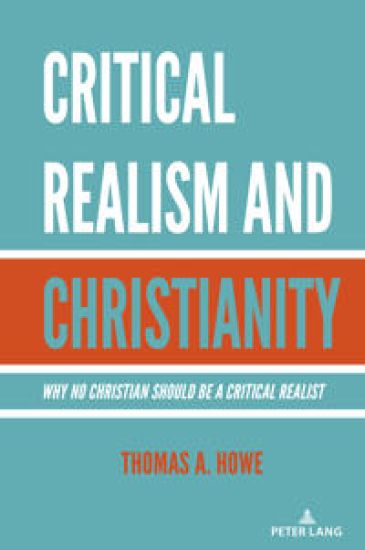
Critical Realism and Christianity

Critical Realism and Christianity

Thomas A. Howe

PETER LANG PUBLISHING INC
2024
sidottu
This book is an exposition and analysis of Critical Realism, a philosophical approach that is quickly becoming the go-to epistemological position among Christian authors. Author Thomas A. Howe argues that Critical Realism’s claims and commitments pose a serious threat to Christian theology and hermeneutics. In recent years, the movement has made significant inroads in the interpretation of Scripture; influential Christian authors argue for Critical Realism as an essential aspect of their hermeneutic methodology; and evangelical scholars claim it has great potential for biblical studies. But as Howe shows, Critical Realism is incompatible with Christian doctrine. By surveying some of the Christian proponents of Critical Realism, this book shows how it conflicts with and subverts orthodox Christian theology and hermeneutics. It also shows how Critical Realism undermines Christian apologetics by blunting the possibility of deciding between the claims of conflicting and contradictory theologies and beliefs. This book is an effort to alert Christian authors to the dangers of adopting Critical Realism as a part of a Christian worldview. It will be of interest to all those seeking to understand the impact of Critical Realism on Christian theology and hermeneutics.
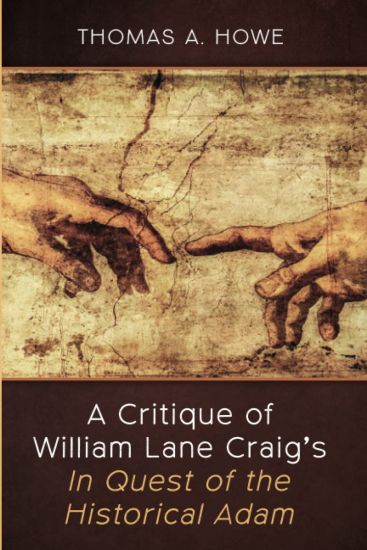
A Critique of William Lane Craig's in Quest of the Historical Adam
For many, Dr. William Lane Craig is considered to be a Christian scholar's scholar. Even attempting to list the books, articles, debates, lectures, etc. would not do justice to his importance for Christian apologetics, theology, and philosophy. He has defended the historic Christian faith against countless attacks and has demonstrated that Christian thinkers are a force that cannot be brushed aside or ignored. His latest book, In Quest for the Historical Adam, is generating as much if not more attention than any of his previous publications. This text is controversial, but the controversy is not primarily from those outside the faith. His claims penetrate to the foundations of classical orthodox theology, and many Christians are alarmed at his conclusions. He has set out on a quest to discover, by philosophical argument, analysis of the biblical text, appeal to contemporary evolutionary theory, and arguments from an array of disciplines, whether the Adam depicted in Genesis was an actual historical person. Following the structure of his book, this essay is a critical evaluation of his arguments and conclusions about the historical Adam.
What the Bible Really Says?

What the Bible Really Says?

Thomas A Howe; Norman L Geisler

Wipf Stock Publishers
2009
sidottu
The study of the End Times has been a popular topic for many years, and there are many different positions that are proposed on how to understand the unfolding of God's program. The debate over the End Times has often been heated and has failed to showcase the best that Christian scholarship has to offer. It sometimes seems like everyone wants to get in on the action, and anyone who has an audience can (and has) put together his thoughts and made his opinions known through the printed page. Anyone can publish his views regardless of the level of competency in the original languages, his level of hermeneutic ability, or his understanding of history or theology. In his book The Apocalypse Code, Hank Hanegraaff declares that his goal is to ""put hermeneutical tools into your hands so that you can draw from Scripture what God intends you to understand rather than uncritically accepting end-time models that may well be foreign to the text."" It would be extremely helpful for someone to equip readers to be able to make their way through the maze of views. What the Bible Really Says? is a point-by-point analysis of the arguments of Hank Hanegraaff concerning end-times prophecy. This book is not an effort to promote one eschatological perspective over another. Rather it is an analysis of Hanegraaff's arguments and claims in order to discover whether or not he has succeeded in putting hermeneutical tools into the hands of his readers, or whether he has simply added his voice and his opinions to the cacophony of claims and counterclaims. Thomas A. Howe is Professor of Bible and Biblical Languages at Southern Evangelical Seminary in Charlotte, North Carolina, where he also directs the PhD program. He and his wife, Pat, have been married for over thirty years. They have three children and six grandchildren. Dr. Howe has published numerous articles and several books, including Objectivity in Biblical Interpretation and The Big Book of Bible Difficulties (with Norman L. Geisler).
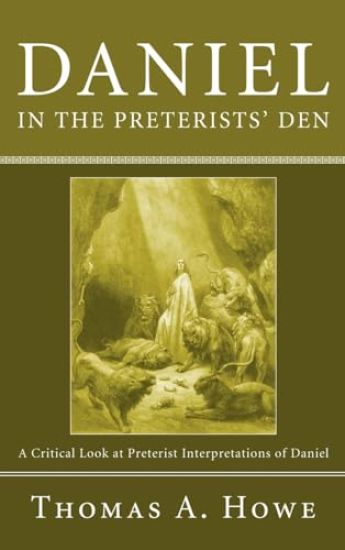
Daniel in the Preterists' Den

Daniel in the Preterists' Den

Thomas A Howe

Wipf Stock Publishers
2008
sidottu
In recent years, there has been rise in popularity and visibility of the debate about the last things. Preterists and Futurists have published books, articles, and even movies promoting their respective views. This debate has elevated the interest of the Christian public in eschatological issues. Along with the increased interest in eschatology, there has been a rise in popularity of the Preterist view, which holds that most or all of the prophecies about Christ's coming have already been fulfilled--that the "second coming" took place in 70 AD. Most of the discussion from those who espouse the Preterist view, however, revolves around certain passages in the New Testament, and their treatment of Old Testament passages is sporadic and selective. The importance of the book of Daniel in these discussions cannot be overstated. However, most commentaries on Daniel from a Futurist perspective have not dealt with the Preterists' interpretations of the key prophetic passages. There simply is no detailed commentary on the book of Daniel that addresses the Presterist interpretations of this important book. This book is a commentary on the entire book of Daniel from a Futurist perspective that specifically addresses the Preterist interpretations of the key prophetic passages. This is not a book that selects passages out of the context of the book and attempts to explain their prophetic significance. Rather, this is a commentary on the entire book of Daniel that places these critical prophetic passages in their literary and historical context, and then deals with the various interpretations of these passages as they fit into the context of the book as a whole.
Daniel in the Preterists' Den

Daniel in the Preterists' Den

Thomas A Howe

Wipf Stock Publishers
2008
pokkari
In recent years, there has been rise in popularity and visibility of the debate about the last things. Preterists and Futurists have published books, articles, and even movies promoting their respective views. This debate has elevated the interest of the Christian public in eschatological issues. Along with the increased interest in eschatology, there has been a rise in popularity of the Preterist view, which holds that most or all of the prophecies about Christ's coming have already been fulfilled--that the "second coming" took place in 70 AD. Most of the discussion from those who espouse the Preterist view, however, revolves around certain passages in the New Testament, and their treatment of Old Testament passages is sporadic and selective. The importance of the book of Daniel in these discussions cannot be overstated. However, most commentaries on Daniel from a Futurist perspective have not dealt with the Preterists' interpretations of the key prophetic passages. There simply is no detailed commentary on the book of Daniel that addresses the Presterist interpretations of this important book. This book is a commentary on the entire book of Daniel from a Futurist perspective that specifically addresses the Preterist interpretations of the key prophetic passages. This is not a book that selects passages out of the context of the book and attempts to explain their prophetic significance. Rather, this is a commentary on the entire book of Daniel that places these critical prophetic passages in their literary and historical context, and then deals with the various interpretations of these passages as they fit into the context of the book as a whole.