Kirjailija
Thomas A. Sebeok
Kirjat ja teokset yhdessä paikassa: 18 kirjaa, julkaisuja vuosilta 1975-2013, suosituimpien joukossa Culture Signs. Vertaile teosten hintoja ja tarkista saatavuus suomalaisista kirjakaupoista.
Mukana myös kirjoitusasut: Thomas A Sebeok
18 kirjaa
Kirjojen julkaisuhaarukka 1975-2013.
""Studies in Cheremis Folklore, V1"" is a comprehensive book written by Thomas A. Sebeok that explores the folklore of the Cheremis people. The Cheremis are a Finno-Ugric ethnic group who live in the Volga-Ural region of Russia. The book is divided into several chapters that cover different aspects of Cheremis folklore, including their mythology, legends, folktales, and customs. The author draws upon a wide range of sources, including oral traditions, written records, and ethnographic research, to provide a detailed and insightful analysis of Cheremis folklore. The book is an invaluable resource for anyone interested in the folklore and culture of the Cheremis people, as well as for scholars of folklore and anthropology more generally.This is a new release of the original 1952 edition.This scarce antiquarian book is a facsimile reprint of the old original and may contain some imperfections such as library marks and notations. Because we believe this work is culturally important, we have made it available as part of our commitment for protecting, preserving, and promoting the world's literature in affordable, high quality, modern editions, that are true to their original work.
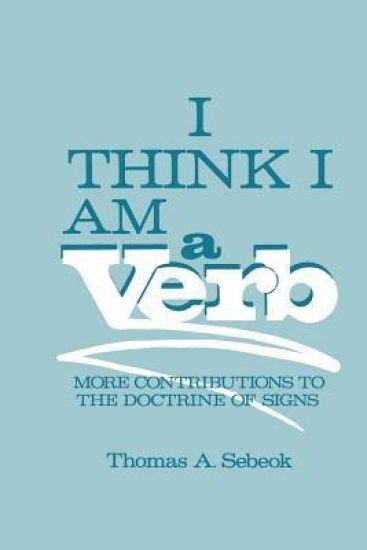
My writing career has been, at least in this one respect, idiosyncratic: it had to mark and chart, step by step, its own peculiar champaign. My earliest papers, beginning in 1942, were technical articles in this or that domain of Uralic linguistics, ethnography, and folklore, with a sprinkling of contributions to North and South American linguistics. In 1954, my name became fecklessly associated with psycholinguistics, then, successively, with explorations in my thology, religious studies, and stylistic problems. It now takes special effort for me to even revive the circumstances under which I came to publish, in 1955, a hefty tome on the supernatural, another, in 1958, on games, and yet another, in 1961, utilizing a computer for extensive sorting of literary information. By 1962, I had edged my way into animal communication studies. Two years after that, I first whiffled through what Gavin Ewart evocatively called "the tulgey wood of semiotics." In 1966, I published three books which tem porarily bluffed some of my friends into conjecturing that I was about to meta morphose into a historiographer of linguistics. The topmost layer in my scholarly stratification dates from 1976, when I started to compile what eventually became my "semiotic tetralogy," of which this volume may supposably be the last. In the language of "Jabberwocky," the word "tulgey" is said to connote variability and evasiveness. This notwithstanding, the allusion seems to me apt.

Language Teaching Today: International Journal of American Linguistics, V26, No. 4, Part 2, October, 1960
Felix J. Oinas; C. F. Voegelin; Thomas a. Sebeok
Literary Licensing, LLC
2013
nidottu
Studies in Cheremis, V4: Derivation
Eeva Kangasmaa Minn; C. F. Voegelin; Thomas A. Sebeok
Literary Licensing, LLC
2013
nidottu
Studies in Cheremis, V4: Derivation
Eeva Kangasmaa Minn; C. F. Voegelin; Thomas A. Sebeok
Literary Licensing, LLC
2013
sidottu
""Studies in Cheremis, V4: Derivation"" is a linguistic book written by Eeva Kangasmaa Minn. The book focuses on the Cheremis language, also known as Mari, which is a Finno-Ugric language spoken by the Mari people in Russia. The book specifically covers the topic of derivation, which is the process of forming new words from existing ones by adding affixes or changing the word's form. The author analyzes the different types of derivation in Cheremis, including the use of suffixes, prefixes, and infixes. The book also examines the semantic and syntactic properties of derived words in Cheremis. This book is a valuable resource for linguists and researchers interested in the Cheremis language and the process of word formation.International Journal Of American Linguistics, V22, No. 2, April, 1956.This scarce antiquarian book is a facsimile reprint of the old original and may contain some imperfections such as library marks and notations. Because we believe this work is culturally important, we have made it available as part of our commitment for protecting, preserving, and promoting the world's literature in affordable, high quality, modern editions, that are true to their original work.

A Critical Anthology of TwoWay Communication with Man.
Journal of American Folklore, V70, No. 278, October-December, 1957
Thomas A. Sebeok; Alan P. Merriam
Literary Licensing, LLC
2011
nidottu
Journal of American Folklore V69, No. 271, January, 1956
Thomas A. Sebeok
Literary Licensing, LLC
2011
nidottu
The Chief in Hawaiian Mythology, Part 8: Journal of American Folklore, V70, No. 278, October-December, 1957
Samuel H. Elbert; Thomas A. Sebeok; Alan P. Merriam
Literary Licensing, LLC
2011
nidottu
The study of semiotics underwent a gradual but radical paradigm shift during the past century, from a glottocentric (language-centered) enterprise to one that encompasses the whole terrestrial biosphere. In this collection of 17 essays, Thomas A. Sebeok, one of the seminal thinkers in the field, shows how this progression took place. His wide-ranging discussion of the evolution of the field covers many facets, including discussions of biosemiotics, semiotics as a bridge between the humanities and natural sciences, semiosis, nonverbal communication, cat and horse behavior, the semiotic self, and women in semiotics. This thorough account will appeal to seasoned scholars and neophytes alike.

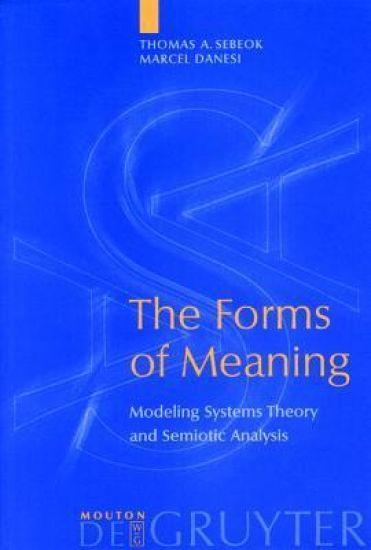
Semiotics has had a profound impact on our comprehension of a wide range of phenomena, from how animals signify and communicate, to how people read TV commercials. This series features books on semiotic theory and applications of that theory to understanding media, language, and related subjects. The series publishes scholarly monographs of wide appeal to students and interested non-specialists as well as scholars. AAS is a peer-reviewed series of international scope.
This book is a reprinting of the second collection (originally dated 1979) from among Thomas Sebeok's essays on general semiotics and some of its applications. In the first half of the book are essays that confront a postulated separation between nature and culture, which, for the past half-century or so, has had the force almost of dogma. In Chapter II, Sebeok writes about the Masters, such luminaries in the field of semiotic inquiry as John Lotz and Roman Jakobson. Sebeok asserts that the semiotic mainstream has so far been unnecessarily and counterproductively split into two traditions, one scientific, philosophical, and 'major,' the other literary, glottal, and 'minor.' In The Sign and Its Masters, Volume VIII in the Sources in Semiotics Series, Sebeok's vision is presented with characteristic brilliance.
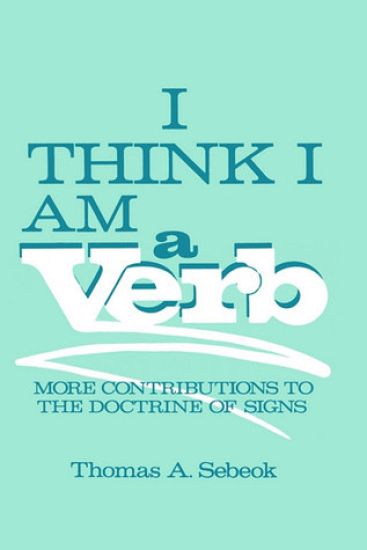
My writing career has been, at least in this one respect, idiosyncratic: it had to mark and chart, step by step, its own peculiar champaign. My earliest papers, beginning in 1942, were technical articles in this or that domain of Uralic linguistics, ethnography, and folklore, with a sprinkling of contributions to North and South American linguistics. In 1954, my name became fecklessly associated with psycholinguistics, then, successively, with explorations in my thology, religious studies, and stylistic problems. It now takes special effort for me to even revive the circumstances under which I came to publish, in 1955, a hefty tome on the supernatural, another, in 1958, on games, and yet another, in 1961, utilizing a computer for extensive sorting of literary information. By 1962, I had edged my way into animal communication studies. Two years after that, I first whiffled through what Gavin Ewart evocatively called "the tulgey wood of semiotics." In 1966, I published three books which tem porarily bluffed some of my friends into conjecturing that I was about to meta morphose into a historiographer of linguistics. The topmost layer in my scholarly stratification dates from 1976, when I started to compile what eventually became my "semiotic tetralogy," of which this volume may supposably be the last. In the language of "Jabberwocky," the word "tulgey" is said to connote variability and evasiveness. This notwithstanding, the allusion seems to me apt.