
Kirjailija
Thomas Aquinas
Kirjat ja teokset yhdessä paikassa: 249 kirjaa, julkaisuja vuosilta 1968-2026, suosituimpien joukossa The Mosaic Leader. Vertaile teosten hintoja ja tarkista saatavuus suomalaisista kirjakaupoista.
249 kirjaa
Kirjojen julkaisuhaarukka 1968-2026.




The "Summa Theologica" of St. Thomas Aquinas
Thomas Aquinas
Creative Media Partners, LLC
2026
sidottu

The Summa Contra Gentiles of St. Thomas Aquinas
Thomas Aquinas
Creative Media Partners, LLC
2026
sidottu



The "Summa Theologica" of St. Thomas Aquinas
Thomas Aquinas
Creative Media Partners, LLC
2026
pokkari
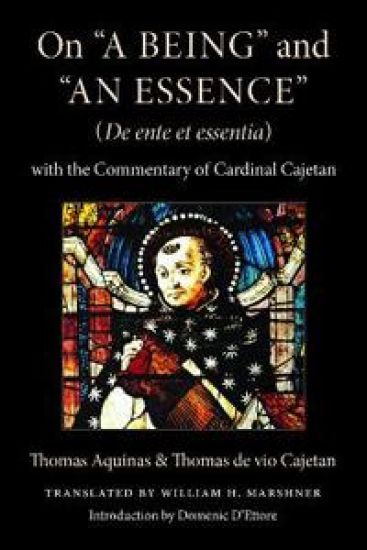
On "a Being" and "an Essence" (De Ente Et Essentia)
Thomas Aquinas; Thomas de Vio Cajetan
THE CATHOLIC UNIVERSITY OF AMERICA PRESS
2026
sidottu
The In De Ente et Essentia is a polemical work of a brilliant young Dominican professor, Thomas de Vio Cajetan (1469-1534), eager to defend the philosophical legacy of Thomas Aquinas. Drawing from the full range of St. Thomas's writings, the work offers a coherent Thomistic metaphysical theory set against the rival Scotist and Averroist positions defended at Italian Universities in the 1490s. This new English translation is an invitation to philosophers and historians to re-engage with Cajetan, with his 15th Century rivals, and, of course, with Thomas Aquinas himself. It is also a challenge and inspiration to do metaphysics through dialectical engagement with the greatest rival theories of our own time and place.

OF all human pursuits, the pursuit of wisdom is the more perfect, the more sublime, the more useful, and the more agreeable. The more perfect, because in so far as a man gives himself up to the pursuit of wisdom, to that extent he enjoys already some portion of true happiness. Blessed is the man that shall dwell in wisdom (Ecclus xiv, 22). The more sublime, because thereby man comes closest to the likeness of God, who hath made all things in wisdom (Ps. ciii, 24). The more useful, because by this same wisdom we arrive at the realm of immortality. The desire of wisdom shall lead to an everlasting kingdom (Wisd. vi, 21). The more agreeable, because her conversation hath no bitterness, nor her company any weariness, but gladness and joy (Wisd. viii, 16). But on two accounts it is difficult to proceed against each particular error: first, because the sacrilegious utterances of our various erring opponents are not so well known to us as to enable us to find reasons, drawn from their own words, for the confutation of their errors: for such was the method of the ancient doctors in confuting the errors of the Gentiles, whose tenets they were readily able to know, having either been Gentiles themselves, or at least having lived among Gentiles and been instructed in their doctrines. Secondly, because some of them, as Mohammedans and Pagans, do not agree with us in recognizing the authority of any scripture, available for their conviction, as we can argue against the Jews from the Old Testament, and against heretics from the New. But these receive neither: hence it is necessary to have recourse to natural reason, which all are obliged to assent to. But in the things of God natural reason is often at a loss.

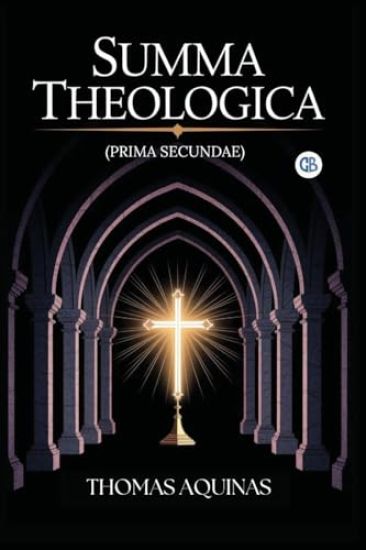
"Since happiness is the perfect and sufficient good, it excludes every evil and fulfils every desire." "Human acts are those which proceed from deliberate will." With unmatched clarity and depth, Summa Theologica (Prima Secundae) presents Thomas Aquinas's most influential treatment of moral philosophy and ethics. Here, Aquinas confronts the fundamental questions of human life: the nature of happiness, the structure of moral action, the formation of virtue and vice, and the role of law and grace in directing human freedom toward its proper end. This volume examines the inner workings of human action-intellect, will, passions, habits-and builds a comprehensive moral framework rooted in reason and elevated by theology. Drawing upon classical philosophy, especially Aristotle, Aquinas articulates a vision in which moral law is not arbitrary but grounded in human nature itself. His methodical approach, presenting objections and reasoned responses, invites disciplined reflection and intellectual rigor. Enduring in relevance, this work continues to shape Catholic moral theology, virtue ethics, natural law theory, and Western ethical thought. Its insights speak as powerfully today as they did in the thirteenth century, offering a coherent and profound account of how human beings are ordered toward the highest good through right action, cultivated virtue, and divine assistance.
"Since happiness is the perfect and sufficient good, it excludes every evil and fulfils every desire." "Human acts are those which proceed from deliberate will." With unmatched clarity and depth, Summa Theologica (Prima Secundae) presents Thomas Aquinas's most influential treatment of moral philosophy and ethics. Here, Aquinas confronts the fundamental questions of human life: the nature of happiness, the structure of moral action, the formation of virtue and vice, and the role of law and grace in directing human freedom toward its proper end. This volume examines the inner workings of human action-intellect, will, passions, habits-and builds a comprehensive moral framework rooted in reason and elevated by theology. Drawing upon classical philosophy, especially Aristotle, Aquinas articulates a vision in which moral law is not arbitrary but grounded in human nature itself. His methodical approach, presenting objections and reasoned responses, invites disciplined reflection and intellectual rigor. Enduring in relevance, this work continues to shape Catholic moral theology, virtue ethics, natural law theory, and Western ethical thought. Its insights speak as powerfully today as they did in the thirteenth century, offering a coherent and profound account of how human beings are ordered toward the highest good through right action, cultivated virtue, and divine assistance.
The Sentences of Peter Lombard was the standard theological text from the twelfth through the fifteenth century;Thomas Aquinas's Commentary on the Sentences (ca. 1252–1256), written by a young Aquinas in fulfilling the qualifications for becoming a teaching master at the University of Paris, is perhaps the most comprehensive and detailed of all his works. The Commentary on the Sentences is not a commentary in the sense of a line-by-line analysis of the Lombard's text, but instead, it is the product of lively classroom discussion, in which Aquinas enjoys the liberty to take up any inquiry inspired by the text, treating topics not found anywhere elsewhere in his opus. The first book of the Sentences is concerned with questions revolving around the mystery of the Most Holy Trinity.
The Sentences of Peter Lombard was the standard theological text from the twelfth through the fifteenth century;Thomas Aquinas's Commentary on the Sentences (ca. 1252–1256), written by a young Aquinas in fulfilling the qualifications for becoming a teaching master at the University of Paris, is perhaps the most comprehensive and detailed of all his works. The Commentary on the Sentences is not a commentary in the sense of a line-by-line analysis of the Lombard's text, but instead, it is the product of lively classroom discussion, in which Aquinas enjoys the liberty to take up any inquiry inspired by the text, treating topics not found anywhere elsewhere in his opus. The first book of the Sentences is concerned with questions revolving around the mystery of the Most Holy Trinity.
Opuscula IV Prayers & Hymns, Office of Corpus Christi, Sermons
Thomas Aquinas
Emmaus Academic
2024
sidottu
This fourth volume of St. Thomas Aquinas's opuscula brings together those works of Aquinas that show him in his capacity as both a talented preacher and a loving spiritual master. For the first time, all of Aquinas's prayers, hymns, sermons, and sermon fragments have been gathered together into one volume whose contents are an invaluable service to both devotion and contemplation. Also included in the volume are the two offices of Corpus Christi, with both the texts and music indicated by Aquinas for the feast established in 1264: Aquinas's selections of music and texts from Scripture and Church Doctors provide rich fruit for contemplation and reveal a Saint with a deep knowledge and love of the Word in the Sacrament and in the Scriptures.