
Kirjailija
Thomas Brooks
Kirjat ja teokset yhdessä paikassa: 86 kirjaa, julkaisuja vuosilta 1980-2026, suosituimpien joukossa Precious Remedies Against Satan's Devices. Vertaile teosten hintoja ja tarkista saatavuus suomalaisista kirjakaupoista.
86 kirjaa
Kirjojen julkaisuhaarukka 1980-2026.



An Ark for All God's Noahs in a Gloomy Stormy Day; Or, the Best Wine Reserved Till Last
Thomas Brooks
Gale Ecco, Print Editions
2010
pokkari

An Authentic Account Of All The Different Coins, Both Real And Imaginary, By Which Accounts In The East Indies Are Kept (1766)
Thomas Brooks
KESSINGER PUBLISHING, LLC
2010
sidottu







Authentic Account Of All The Different Coins, Both Real And Imaginary, By Which Accounts In The East Indies Are Kept (1766)
Thomas Brooks
KESSINGER PUBLISHING CO
2009
pokkari

The Complete Works of Thomas Brooks
Thomas Brooks; Alexander Balloch (EDT) Grosart
Kessinger Pub
2007
sidottu

The Complete Works Of Thomas Brooks V1: Containing Precious Remedies Against Satan's Devices, Apples Of Gold For Young Men And Women And More
Thomas Brooks
KESSINGER PUBLISHING, LLC
2007
nidottu

Untersuchungen Zur Syntax in Oberdeutschen Drucken Des 16.-18. Jahrhunderts
Thomas Brooks
Peter Lang AG
2006
nidottu
Obwohl die Mehrzahl der aktuellen Handbucher zur Sprachgeschichte des Deutschen einen geradlinigen Entwicklungsweg der neuhochdeutschen Schriftsprache auf der ostmitteldeutschen Basis der von Martin Luther in seinen Schriften, besonders aber in der Bibelubersetzung verwendeten Sprachform beschreibt, ist dies nur eine Seite des Weges. Ehe sich namlich um die Mitte des 18. Jahrhunderts auch der oberdeutsche Raum dem als Leitvarietat fungierenden, bis um die Mitte des 17. Jahrhunderts ausgebildeten ostmitteldeutsch-norddeutschen protestantischen Typus der Schriftsprache ganzlich anschloss, gab es auch temporare Umwege. Einer davon betrifft den oberdeutschen bayerisch-oesterreichischen Raum. Ziel dieser Arbeit ist es, diesen Umweg am Beispiel der Syntax nachzuzeichnen.
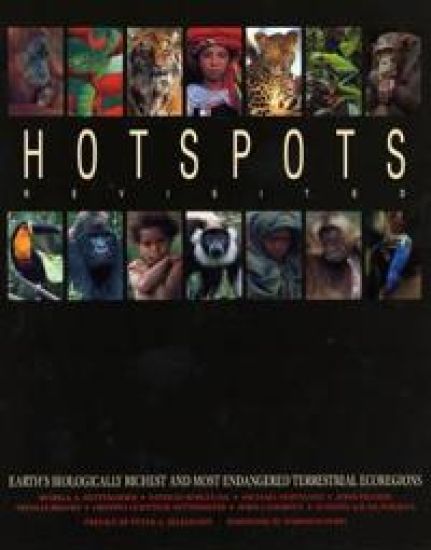
Hotspots Revisited
Russell A. Mittermeier; Patricio Robles Gil; Michael Hoffman; John Pilgrim; Thomas Brooks; Cristina Goettsch Mittermeier; John Lamoreux; Gustavo A. B. da Fonseca; Harrison Ford
Agrupacion Sierra Madre,Mexico
2005
sidottu
For decades, Conservation International has devoted itself not only to saving endangered regions on the planet but also to chronicling, in lavish volumes, the biodiversity of these areas. These volumes, according to Choice, are "a superbly produced...source of hard-to-find information on biodiversity, biogeography, and conservation." "Hotspots Revisited" continues this rich tradition, drawing on the organization's continuing work to identify, research, and document biologically diverse yet dangerously threatened regions. The first "Hotspots" volume identified twenty-five endangered regions; "Hotspots Revisited" reveals nine additional areas, from Melanesia to northern Mexico, that now meet the same criteria. "Hotspots Revisited" presents the most up-to-date analyses of the ecology of these endangered areas - including new information on freshwater fish and other animal populations. But the heart of the volume is the hundreds of vibrant color photographs of the animals and plants under threat. Magnificent in conception and flawless in execution, "Hotspots Revisited" will be equally at home on a scientist's shelf or an ecotourist's coffee table.
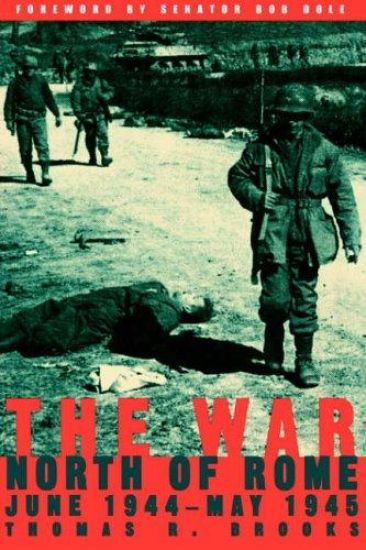
The British had a song for it: "Oh, we are the D-Day Dodgers," based on a comment from a female member of Parliament that dismissed all those not on the beaches at Normandy as draft evaders. Indeed, after the invasion of France the Allied armies in Italy found themselves in a forgotten theatre of war. Until now, their eleven-month saga of bitter combat and gallant sacrifice has been ignored.The problem for the Allies was that the fall of the Italian capital on June 4, 1944- although a spectacular public relations triumph- did not end the campaign. The Germans had simply conducted a short strategic withdrawal, conceding one objective while proceeding to fortify additional defence lines.From Salerno to Rome, and most famously at Cassino, the Germans took advantage of the mountains, ridges and rivers that crisscross Italy to exact every drop of blood from the Allied forces. Although the press was no longer paying attention, in the north of Rome the process of continued Allied offensives met by a German resistance that alternated between ferocity and flexibility.A notable feature of the combat in Italy was the large mixture of Allied nationalities involved. Although the American Fifth and the British Eighth Armies were the major forces, on different parts of the line fought South Africans, Canadians, Greeks, Nisei, Jews, Poles, French, Gurkhas, Indians and others. The first U.S. black division fought here, as well as the Brazilian contingent (a curiosity to the Germans, who constantly probed their front). The War North of Rome features a forward by Senator Bob Dole, who fought in this neglected theatre of war. He was one of 364 wounded (98 killed) in his regiment's attack on a series of German-held hills. Though he barely survived the battle he states, "I always felt I was fortunate . . ."By the time Allied forces vanquished the enemy in Italy, Russian soldiers were already dancing on Hitler's grave. Nevertheless, our young men north of Rome fought as bravely, and suffered as much, as troops on any front in WWII. Their record of courage and sacrifice is described here in a long-overdue, comprehensive account.