Kirjojen hintavertailu. Mukana 12 152 606 kirjaa ja 12 kauppaa.
Kirjailija
Thomas C. Bruneau
Kirjat ja teokset yhdessä paikassa: 7 kirjaa, julkaisuja vuosilta 1974-2024, suosituimpien joukossa Maras. Vertaile teosten hintoja ja tarkista saatavuus suomalaisista kirjakaupoista.
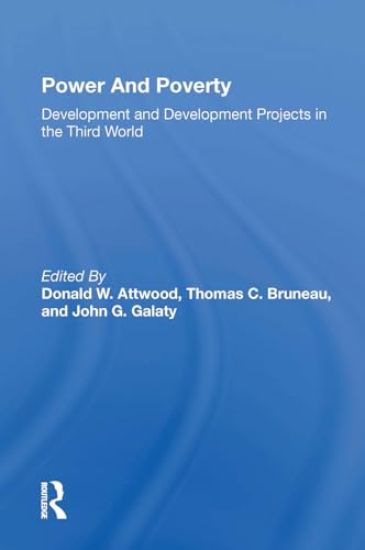
This book presents case studies concerning the impact of development projects on societies at various levels of affluence and modernization. They demonstrate project variety, and the ecological, economic, political and social contexts within which development is attempted but seldom achieved.
This book presents case studies concerning the impact of development projects on societies at various levels of affluence and modernization. They demonstrate project variety, and the ecological, economic, political and social contexts within which development is attempted but seldom achieved.
Sensational headlines have publicized the drug trafficking, brutal violence, and other organized crime elements associated with Central America's mara gangs, but there have been few clear-eyed analyses of the history, hierarchies, and future of the mara phenomenon. The first book to look specifically at the Central American gang problem by drawing on the perspectives of researchers from different disciplinary backgrounds, Maras: Gang Violence and Security in Central America provides much-needed insight. These essays trace the development of the gangs, from Mara Salvatrucha to the 18th Street Gang, in Los Angeles and their spread to El Salvador, Honduras, Guatemala, and Nicaragua as the result of members' deportation to Central America; there, they account for high homicide rates and threaten the democratic stability of the region. With expertise in areas ranging from political science to law enforcement and human rights, the contributors also explore the spread of mara violence in the United States. Their findings comprise a complete documentation that spans sexualized violence, case studies of individual gangs, economic factors, varied responses to gang violence, the use of intelligence gathering, the limits of state power, and the role of policy makers. Raising crucial questions for a wide readership, these essays are sure to spark productive international dialogues.
In 1980, Brazil was the largest Roman Catholic country in the world, with 90 percent of its more than 120 million people numbered among the faithful. The Church hierarchy became aware, however, that the religion practiced by the majority of its members was not that promoted by the institution, a point dramatized by the rapid growth of other religious movements in Brazil-particularly Protestant sects and spirit-possession cults. In response, the Church created and assumed new roles. The Church in Brazil is a case study of the changes within the Church and their impact on Brazilian society. In an original and illuminating discussion, Thomas Bruneau combines institutional analysis and survey data to explore the relationship between structural changes in the Church and evolving patterns of practice and belief. His discussion displays the richness and variety of devotion in Brazil-characteristics recognized by many observers-and examines the Church's potential for influencing the people's religious life. Moving from the historical and national to the regional, Bruneau analyzes and compares changes among eight dioceses. He concludes that the Church is actively promoting a progressive social role for itself and, by backing its statements with actions, is perceived as being socially effective by both supporters and opponents. The first study in which the national and diocesan levels of the Church are analyzed together, it is also the first to inspect systematically the Basic Christian Communities, thought by some to be the most significant grass-roots movement in the Catholic world of that time.
This 1974 book provides an institutional and historical analysis of the Brazilian Church, focusing in particular on its political role in relation to the state and society. There is a great interest in the Catholic Church in Latin America, both as an institution and as a progressive social force. The author pays special attention to the part played by the Church in the 'Brazilian Revolution' before 1964. By analyzing its internal reactions to changes in the external political order, he explains why the Church regressed after 1964 and from this develops an explanation of how change took place in the Church. The various threads of Professor Bruneau's analysis are brought together in the final section of the book. Here, it is shown that conflicts between Church and state are inevitable, and that they promise to change the whole system of which the Church has always been an integral part.
This 1974 book provides an institutional and historical analysis of the Brazilian Church, focusing in particular on its political role in relation to the state and society. There is a great interest in the Catholic Church in Latin America, both as an institution and as a progressive social force. The author pays special attention to the part played by the Church in the 'Brazilian Revolution' before 1964. By analyzing its internal reactions to changes in the external political order, he explains why the Church regressed after 1964 and from this develops an explanation of how change took place in the Church. The various threads of Professor Bruneau's analysis are brought together in the final section of the book. Here, it is shown that conflicts between Church and state are inevitable, and that they promise to change the whole system of which the Church has always been an integral part.