Kirjojen hintavertailu. Mukana 12 290 406 kirjaa ja 12 kauppaa.

Kirjailija

Thomas C. (EDT) Oden

Kirjat ja teokset yhdessä paikassa: 7 kirjaa, julkaisuja vuosilta 2000-2009, suosituimpien joukossa Mark. Vertaile teosten hintoja ja tarkista saatavuus suomalaisista kirjakaupoista.

7 kirjaa

Kirjojen julkaisuhaarukka 2000-2009.

Mark

Mark

Christopher A. (EDT) Hall; Thomas C. (EDT) Oden

Inter-Varsity Press,US
2005
sidottu
The early church valued the Gospel of Mark for its preservation of the apostolic voice and gospel narrative of Peter. Yet the early church fathers very rarely produced sustained commentary on Mark. This brisk-paced and robust little Gospel, so much enjoyed by modern readers, was overshadowed in the minds of the fathers by the magisterial Gospels of Matthew and John. But now with the assistance of computer searches, an abundance of comment has been discovered to be embedded and interleaved amidst the textual archives of patristic homilies, apologies, letters, commentaries, theological treatises and hymnic verses. In this Ancient Christian Commentary on Mark, the insights of Augustine of Hippo and Clement of Alexandria, Ephrem the Syrian and Cyril of Jerusalem join in a polyphony of interpretive voices of the Eastern and Western church from the second century to the seventh. St. Mark's Gospel displays the evocative power of its story, parables and passion as it ignites a brilliant exhibit of theological insight and pastoral wisdom. The Ancient Christian Commentary on Mark (now in its second edition) opens up a long-forgotten passage through the arid and precipitous slopes of post-Enlightenment critical interpretation and bears us along to a fertile valley basking in the sunshine of theological and spiritual interpretation. In these pages we enter the interpretive world that long nurtured the great premodern pastors, theologians and saints of the church.
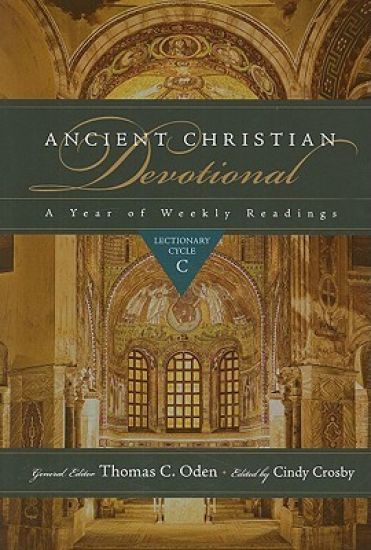
Ancient Christian Devotional

Ancient Christian Devotional

Thomas C. (EDT) Oden; Cindy (EDT) Crosby

IVP Academic
2009
pokkari
There are fifty-two weeks of readings following the weekly lectionary cycle C, which you can read through in order or by thematic interest. Each day you will also find a simple opening and closing prayer drawn from the prayers and hymns of the ancient church. Come and find the deep nourishment God offers.
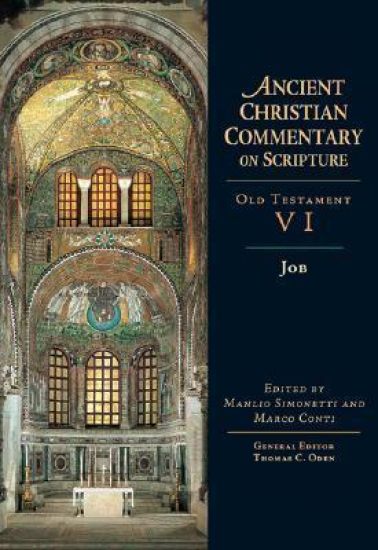
Job

Job

Marco (EDT) Conti; Thomas C. (EDT) Oden

Inter-Varsity Press,US
2006
sidottu
The book of Job presents its readers with a profound drama concerning innocent suffering. Such honest, forthright wrestling with evil and the silence of God has intrigued a wide range of readers, both religious and nonreligious. Surprisingly, the earliest fathers showed little interest in the book of Job. Not until Origen in the early third century is there much evidence of any systematic treatment of the book, and most of Origen's treatment is known to us only from the catenae. More intense interest came at the end of the fourth century and the beginning of the fifth. The excerpts in this collection focus on systematic treatment. Among Greek texts are those from Origen, Didymus the Blind, Julian the Arian, John Chrysostom, Hesychius of Jerusalem and Olympiodorus. Among Latin sources we find Julian of Eclanum, Philip the Priest and Gregory the Great. Among Syriac sources we find Ephrem the Syrian and Ishodad of Merv, some of whose work is made available here for the first time in English. In store for readers of this volume is once again a great feast of wisdom from the ancient resources of the church."
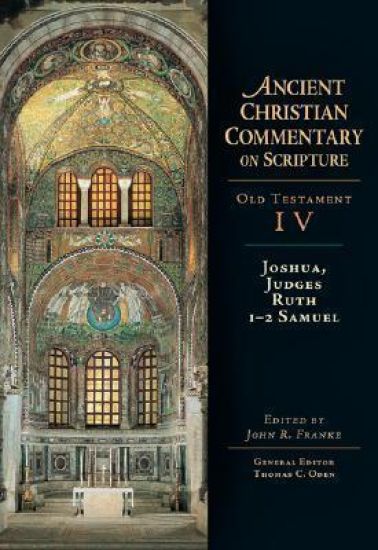
Joshua, Judges, Ruth, 1-2 Samuel

Joshua, Judges, Ruth, 1-2 Samuel

Thomas C. (EDT) Oden; John R. (EDT) Franke

Inter-Varsity Press,US
2005
sidottu
The history of the entry into the Promised Land followed by that of the period of the judges and early monarchy may not appear to readers today as a source for expounding the Christian faith. But the church fathers readily found parallels, or types, in the narrative that illumined the New Testament. An obvious link was the similarity in name between Joshua, Moses' successor, and Jesus--indeed, in Greek both names are identical. Thus Joshua was consistently interpreted as a type of Christ. So too was Samuel. David was recognized as an ancestor of Jesus, and parallels between their two lives were readily explored. And Ruth, in ready fashion, was seen as a type of the church. Among the most important sources for commentary on these books are the homilies of Origen, most of which are known to us through the Latin translations of Rufinus and Jerome. Only two running commentaries exist--one from Gregory of Nazianzus, one of the famous Cappadocian theologians, the other from Bede the Venerable. Another key source for the selections found here derives from question-and-answer format, such asQuestions on the Heptateuch from Augustine, Questions on the Octateuch from Theodoret of Cyr and Thirty Questions on 1 Samuel from Bede. The remainder of materials come from a wide variety of occasional and doctrinal writings, which make mention of the biblical texts to support the arguments. Readers will find a rich treasure trove of ancient wisdom, some appearing here for the first time in English translation, that speaks with eloquence and challenging spiritual insight to the church today.
Colossians, 1-2 Thessalonians, 1-2 Timothy, Titus, Philemon

Colossians, 1-2 Thessalonians, 1-2 Timothy, Titus, Philemon

Thomas C. (EDT) Oden; Peter (EDT) Gorday

Inter-Varsity Press,US
2000
sidottu
While patristic commentary on St. Paul's shorter letters--Colossians, 1-2 Thessalonians, the Pastorals and Philemon--was not so extensive as that on his longer letters, certain passages in these letters proved particularly important in doctrinal disputes and practical church matters. Pivotal in controversies with the Arians and the Gnostics, the most commented-upon christological text amid these letters was Colossians 1:15-20, where Jesus is declared "the image of the invisible God, the firstborn of all creation." In other texts scattered throughout the Pastorals, the fathers found ample support for the divinity of the Son and the Spirit and for the full union of humanity and divinity in the one redeemer, the "one mediator between God and men, the man Christ Jesus" (1 Timothy 2:5). These early Christian commentators also looked to the Pastorals, where Pauline authorship was assumed, for important ethical and moral teaching, as well as explicit qualifications for choosing church leaders and guidelines for overseeing the work and behavior of widows. Chief among the Eastern commentators and widely excerpted throughout this volume is John Chrysostom, praised for his pastoral insight and shrewd, generous empathy with the apostle Paul. Other Greek commentators whose works are cited include Theodoret of Cyr, Theodore of Mopsuestia, Severian of Gabala, Ignatius of Antioch, Justin Martyr, Irenaeus, Clement of Alexandria, Athanasius, Basil the Great, Gregory of Nazianzus and Gregory of Nyssa. Among Western commentators Augustine dominates. His work is joined by that of Ambrosiaster, Pelagius, Jerome, Hippolytus, Tertullian, Novatian, Cyprian of Carthage, Hilary of Poitiers and Ambrose, among others. Of particular interest for their ascetical and devotional insight are works from Syrian and Egyptian churches, including Aphrahat, Ephrem the Syrian, Isaac of Nineveh and Philoxenus of Mabbug. This volume opens up a treasure house of ancient wisdom that allows these faithful witnesses, some appearing here in English translation for the first time, to speak with eloquence and intellectual acumen to the church today.