Kirjojen hintavertailu. Mukana 12 595 353 kirjaa ja 12 kauppaa.

Kirjailija

Thomas Chermack

Kirjat ja teokset yhdessä paikassa: 4 kirjaa, julkaisuja vuosilta 2011-2018, suosituimpien joukossa Theory Building in Applied Disciplines. Vertaile teosten hintoja ja tarkista saatavuus suomalaisista kirjakaupoista.

4 kirjaa

Kirjojen julkaisuhaarukka 2011-2018.

Foundations of Scenario Planning

Foundations of Scenario Planning

Thomas Chermack

Routledge
2018
nidottu
Pierre Wack was head of scenario planning at Royal Dutch / Shell Oil in London for just over ten years. He died in 1997. He was a pioneer of what we know today as scenario planning – an alternative and complement to strategic planning. Scenarios explore a variety of possible futures for examining decisions in organizational planning. Pierre was a unique man with interests in Indian and Japanese cultures and traditions. He travelled extensively and led a unique life that involved long periods of visiting gurus in India and extended sabbaticals in Japan. His experiences with Eastern thought no doubt shaped his ability to evolve the scenario method at Shell, and as a result he was able to lead a team that foresaw the oil crises of the 1970’s and 80’s. This new volume will cover the basic context of his life timeline and attach it to the development of his thinking about scenario planning over the course of his career. After his death, Wack’s materials, papers and documents were collected by Napier Collyns and have recently been made available at the University of Oxford where the Pierre Wack Memorial Library has been established. These documents contain a variety of clues and stories that reveal more about who Pierre Wack was, how he thought and will provide details about scenario planning that have never been seen or published. They also reveal a curious man and include a timeline written by his wife, Eve, which details their relationship over the course of 40 years. Written for management and business historians and researchers, this book will uncover unseen contributions by a scenario planning pioneer shaped by significant events in his personal life that helped him to see the world differently.
Foundations of Scenario Planning

Foundations of Scenario Planning

Thomas Chermack

Routledge
2017
sidottu
Pierre Wack was head of scenario planning at Royal Dutch / Shell Oil in London for just over ten years. He died in 1997. He was a pioneer of what we know today as scenario planning – an alternative and complement to strategic planning. Scenarios explore a variety of possible futures for examining decisions in organizational planning. Pierre was a unique man with interests in Indian and Japanese cultures and traditions. He travelled extensively and led a unique life that involved long periods of visiting gurus in India and extended sabbaticals in Japan. His experiences with Eastern thought no doubt shaped his ability to evolve the scenario method at Shell, and as a result he was able to lead a team that foresaw the oil crises of the 1970’s and 80’s. This new volume will cover the basic context of his life timeline and attach it to the development of his thinking about scenario planning over the course of his career. After his death, Wack’s materials, papers and documents were collected by Napier Collyns and have recently been made available at the University of Oxford where the Pierre Wack Memorial Library has been established. These documents contain a variety of clues and stories that reveal more about who Pierre Wack was, how he thought and will provide details about scenario planning that have never been seen or published. They also reveal a curious man and include a timeline written by his wife, Eve, which details their relationship over the course of 40 years. Written for management and business historians and researchers, this book will uncover unseen contributions by a scenario planning pioneer shaped by significant events in his personal life that helped him to see the world differently.
Theory Building in Applied Disciplines

Theory Building in Applied Disciplines

Richard Swanson; Thomas Chermack

Berrett-Koehler
2013
nidottu
When facing important professional problems, practitioners regularly respond with the latest gimmick, or by throwing everything and anything at the problem. In contrast, scholars regularly slice problems into small segments to study and explain them, without directly addressing the practical problem itself. Both approaches miss the target of sound theory and practice.Most theory development methodologies are incomplete, inappropriate, or totally overwhelming. This book presents a complete, five-stop methodology for developing sound theory that can be employed with any applied discipline-it is not discipline-specific. This methodology engages input from practitioners and scholars. By fusing them, a complete and accurate understanding of the phenomena being investigated results an understanding that meets the standards of both scholarship and practice.
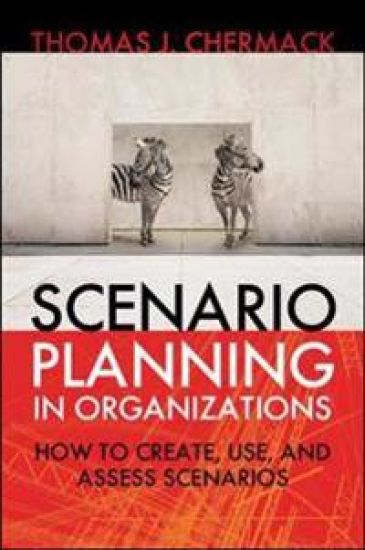
Scenario Planning in Organizations: How to Create, Use, and Assess Scenarios
While there are several books that cover portions of the topic of scenario planning, none of them cover it in its entirety. The key weaknesses shown in most competitive titles in publication:None address the complexity (practical and theoretical) of the scenario planning process. Recent books are edited volumes that do not incorporate a unified perspective and are rather disjointed collections of chapters unconnected from each other. None of the books currently available provide any mention of evaluative techniques. Thus, there are multiple gaps in the literature that remain unaddressed.This book will add important new knowledge and fill in the information gaps by providing a comprehensive view of scenario planning within the larger organizational and national contexts. The work will address scenario planning as a system itself, its role and connection to organizational strategy, and will provide discussion of the importance of theory and provide a theory of the system. The goal is a book that will discuss theory in a way that is useful to practitioners, describe research studies that bring academic rigor, and yet, also inform practice in that they demonstrate the effectiveness of scenario planning. Evaluating scenarios and scenario planning projects will also be discussed, as well as a phased process for conducting, managing, and framing scenario work. The key contribution of the proposed text is that it will genuinely bridge theory and practice, research and implementation, and generally serve as a text suitable for graduate courses, and thoughtful practitioners seeking understanding beyond a "how-to" manual.