Kirjojen hintavertailu. Mukana 12 595 353 kirjaa ja 12 kauppaa.
Kirjailija
Thomas Christensen
Kirjat ja teokset yhdessä paikassa: 12 kirjaa, julkaisuja vuosilta 2003-2022, suosituimpien joukossa Apopleksi. Vertaile teosten hintoja ja tarkista saatavuus suomalaisista kirjakaupoista.
Apopleksi – sygdom, behandling og organisation giver en omfattende gennemgang af alle aspekter omkring apopleksipatienter. Emner som diagnose og udredning, forebyggelse, akut/subakut behandling og rehabilitering beskrives af forfattere, der er specialister på området. Vinklen er tværfaglig, og bogen er en grundbog og opslagsværk. Den henvender sig til tværfagligt personale, der vil specialisere sig i apopleksipatienter eller den, der er specialist på sit felt, men har brug for mere viden om andre aspekter af sygdommen, behandlingen og organisationen.
In 1952, John T. “Jack” Downey, a twenty-three-year-old CIA officer from Connecticut, was shot down over Manchuria during the Korean War. The pilots died in the crash, but Downey and his partner Richard “Dick” Fecteau were captured by the Chinese. For the next twenty years, they were harshly interrogated, put through show trials, held in solitary confinement, placed in reeducation camps, and toured around China as political pawns. Other prisoners of war came and went, but Downey and Fecteau’s release hinged on the United States acknowledging their status as CIA assets. Not until Nixon’s visit to China did Sino-American relations thaw enough to secure Fecteau’s release in 1971 and Downey’s in 1973.Lost in the Cold War is the never-before-told story of Downey’s decades as a prisoner of war and the efforts to bring him home. Downey’s lively and gripping memoir—written in secret late in life—interweaves horrors and deprivation with humor and the absurdities of captivity. He recounts his prison experiences: fearful interrogations, pantomime communications with his guards, a 3,000-page overstuffed confession designed to confuse his captors, and posing for “show” photographs for propaganda purposes. Through the eyes of his captors and during his tours around China, Downey watched the Great Leap Forward, the Cultural Revolution, and the drastic transformations of the Mao era. In interspersed chapters, Thomas J. Christensen, an expert on Sino-American relations, explores the international politics of the Cold War and tells the story of how Downey and Fecteau’s families, the CIA, the U.S. State Department, and successive presidential administrations worked to secure their release.
Anders Bonde Jensen; Annelli Sandbæk; Bjørn Richelsen; Hans Karle; Henning Bliddal; Jes Bruun Lauritzen; Knud Juel; Lisbeth Nilas; Morten Klöcker Grønbæk; Olav J. Bergmann; Per Sørensen; Therese Ovesen; Thomas Mandrup-Poulsen; Lars Vedel Kessing; Knud Larsen; Ole Hilberg; Anne Marie Lynge Pedersen; Thomas Christensen; Anne Lene Dalkjær Riis; Anette Bagger Sørensen; Jørgen Gram; Charlotte Graugaard-Jensen; Ida Hageman; Henrik Steen Hansen; Mette Skalshøi Kjær; Troels Wesenberg Kjær; Alex Lund Laursen; Peter Meldgaard
Sygdomslære for ikke-klinikere giver et indgående kendskab til de hyppigste og væsentligste sygdomme i den vestlige befolkning. Målgruppen er studerende, som ikke selv skal tilse eller behandle patienter, men som skal kunne agere i tværfaglig sammenhæng med læger, sygeplejersker og andet sundhedspersonale. Det kan fx være studerende inden for folkesundhedsvidenskab, medicoteknik, odontologi, sundhedsteknologi og -informatik samt andre sundheds- og naturvidenskabelige uddannelser. Ud over en gennemgående revision og opdatering af alle kapitler er der i denne 2. udgave tilføjet et helt nyt kapitel om Diagnostiske modaliteter, ligesom der, hvor det er relevant, er tilføjet særlige bokse med sygdommenes odontologiske aspekter af specifik interesse for tandlægestuderende. I beskrivelserne af de enkelte sygdomme er der lagt vægt på en grundig beskrivelse af sygdommenes patogenese og ætiologi, mens kun principperne for diagnostik og behandling bliver gennemgået. Forebyggende tiltag beskrives, ligesom læseren får indblik i hyppigheden af de enkelte sygdomme, og hvordan de belaster patienter, sundhedsvæsen og samfund. Bogens opbygning er systematisk og med mange oversigter, figurer, kliniske billeder og tabeller. Alle medicinske betegnelser er samlet bagerst i bogen i en ordliste med forklaringer, så bogen kan læses uden brug af klinisk ordbog.
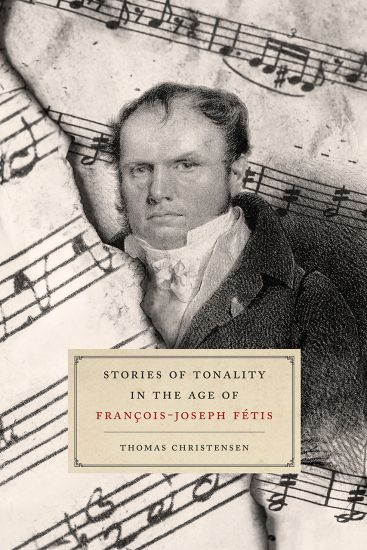
Stories of Tonality in the Age of François-Joseph Fétis explores the concept of musical tonality through the writings of the Belgian musicologist François-Joseph Fétis (1784–1867), who was singularly responsible for theorizing and popularizing the term in the nineteenth century. Thomas Christensen weaves a rich story in which tonality emerges as a theoretical construct born of anxiety and alterity for Europeans during this time as they learned more about “other” musics and alternative tonal systems. Tonality became a central vortex in which French musicians thought—and argued—about a variety of musical repertoires, be they contemporary European musics of the stage, concert hall, or church, folk songs from the provinces, microtonal scale systems of Arabic and Indian music, or the medieval and Renaissance music whose notational traces were just beginning to be deciphered by scholars. Fétis’s influential writings offer insight into how tonality ingrained itself within nineteenth-century music discourse, and why it has continued to resonate with uncanny prescience throughout the musical upheavals of the twentieth and twenty-first centuries.
This thesis provides a comprehensive introduction to two active research directions within the field of plasmonics: (i) nonclassical, or quantum, aspects of the plasmonic response; and (ii) two-dimensional plasmonics, a recent innovation in the field stimulated by the advent of two-dimensional materials. It discusses the fundamentals of this field in detail, and explores several current research directions. Nonclassical plasmonics has been spurred on in recent years by the tremendous technological progress in nanofabrication and optical characterization; today, it is possible to investigate the plasmonic features of nanostructures with characteristic features in the few nanometer range. The book describes and analyzes the breakdown of the classical theory under these conditions and explores several alternatives and extensions. The unique electronic and dimensional features of novel two-dimensional materials, such as graphene, lie at the coreof plasmonics' most rapidly developing subfield; two-dimensional plasmonics. This thesis provides a clear and comprehensive exposition of the central features for interested researchers looking for an entry point to this riveting area.
With its title harkening back to the sack of Baghdad in 1258 when the Tigris ran black with the ink of books flung into the water by Mongol invaders River of Ink is a collection of essays that range widely across time and cultures to illuminate the role of literature and art throughout history. Christensen draws from a panoply of subjects, from the writings of prehistoric Chinese cultures known only through archaeology to the heroic efforts of contemporary Afghanis to keep the legacy of their ancient culture alive under the barrage of endless war.Christensen's encyclopedic knowledge of world art and vast understanding of literature allows him to move easily from a discussion of the invention of moveable type in Korea, to Johannes Kepler's search for the harmony of the spheres, to the strange journey of an iron sculpture from Benin to the Louvre. Other essays cover the Popol Vuh of the Maya as exemplum of translation, the pioneering explorations of the early American naturalist John Bartram, and the balletic works of Louis-Ferdinand Celine.It is Christensen's gift to see the world whole, to offer a wealth of connections vital for us as citizens of a rapidly globalizing world.
This collection brings together an anthology of articles by Thomas Christensen, one of the leading historians of music theory active today. Published over the span of the past 25 years, the selected articles provide a historical conspectus about a range of vital topics in the history of music theory, focusing in particular upon writings from the seventeenth and eighteenth centuries. Christensen examines a variety of theorists and their arguments within the intellectual and musical contexts of their time, in the process highlighting the diverse and idiosyncratic nature of the discipline of music theory itself. In the first section of the book Christensen offers general reflections on the meaning and interpretation of historical music theories, with especial attention paid to their value for music theorists today. The second section of the book contains a number of articles that consider the catalytic role of the thorough bass in the development of harmonic theory during the seventeenth and eighteenth centuries. In the final two sections of the anthology, focus turns to the writings of several individual music theorists, including Marin Mersenne, Seth Calvisius, Johann Mattheson, Johann Nicolaus Bach, Denis Diderot and Johann Nichelmann. The volume includes essays from hard-to-find publications as well as newly-translated material and the articles are prefaced by a new, wide-ranging autobiographical essay by the author that offers a broad re-assessment of his historical project. This book is essential reading for music theorists and seventeenth- and eighteenth-century musicologists.
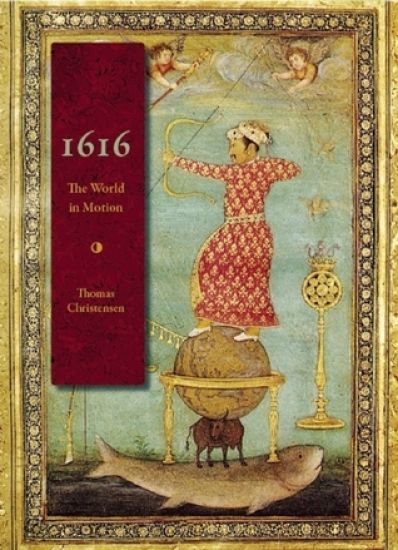
The world of 1616 was a world of motion. Enormous galleons carrying silk and silver across the Pacific created the first true global economy, and the first international megacorporations were emerging as economic powers. In Europe, the deaths of Shakespeare and Cervantes marked the end of an era in literature, as the spirit of the Renaissance was giving way to new attitudes that would lead to the Age of Revolution. Great changes were also taking place in East Asia, where the last native Chinese dynasty was entering its final years and Japan was beginning its long period of warrior rule. Artists there, as in many parts of the world, were rethinking their connections to ancient traditions and experimenting with new directions. Women everywhere were redefining their roles in family and society. Slave trading was relocating large numbers of people, while others were migrating in search of new opportunities. The first tourists, traveling not for trade or exploration but for personal fulfillment, were exploring this new globalized world.
This is a collection of essays based on lectures presented at the International Orpheus Academy for Music and Theory on "Historical Theory, Performance, and Meaning in Baroque Music". The often complex connections and intersections between, e.g., modal and tonal idioms, contrapuntal and harmonic organisation, were considered from various perspectives as to the transition (towards tonality) from the Renaissance to the Baroque era.
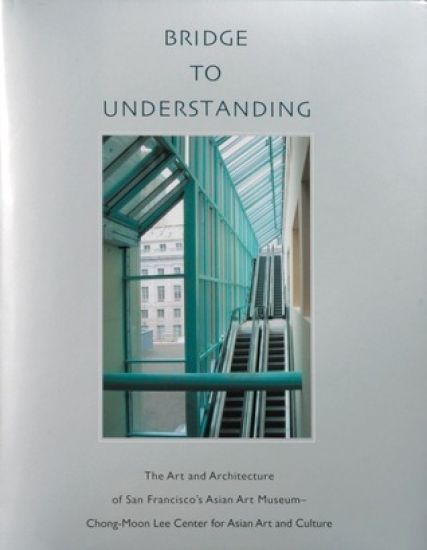
Bridge to Understanding, highlights hundreds of the finest Asian paintings, sculptures, and textiles from the Asian Art Museum of San Francisco as well as the architecture of the new building itself.In the spring of 2003 the Asian Art Muesum-home to one of the world's most significant collections of Asian art-moved into a historic building, reconfigured by the renowned architect Gae Aulenti, in the dynamic heart of San Francisco. The occasion is an important event not only for the institution but also for the city, which now more than ever may serve as a bridge between East and West. Celebrating the museum's stunning new home, Bridge to Understanding showcases both the beauty of the building and the depth of the collection, highlighting many treasures that could not previously be displayed. Exploring the museum's role in promoting cross-cultural understanding, the text interweaves the history of the museum with the history of the city. it delves into the development, construction, and renovation of the building, which retains such historic features as a monumental beaux arts staircase, while adding a dramatic indoor / outdoor escalator, a new third level, and signature V-shaped skylights that illuminate an indoor courtyard designed by the architect on the model of an Italian piazza. Featuring a full-color gallery of Asian masterworks from the museum's collection, Bridge to Understanding confirms the museum's significance as one of the foremost institutions of Asian art in the world.