Kirjojen hintavertailu. Mukana 12 390 323 kirjaa ja 12 kauppaa.

Kirjailija

Thomas DeVere Wolsey

Kirjat ja teokset yhdessä paikassa: 12 kirjaa, julkaisuja vuosilta 2012-2024, suosituimpien joukossa Assessment Literacy. Vertaile teosten hintoja ja tarkista saatavuus suomalaisista kirjakaupoista.

12 kirjaa

Kirjojen julkaisuhaarukka 2012-2024.

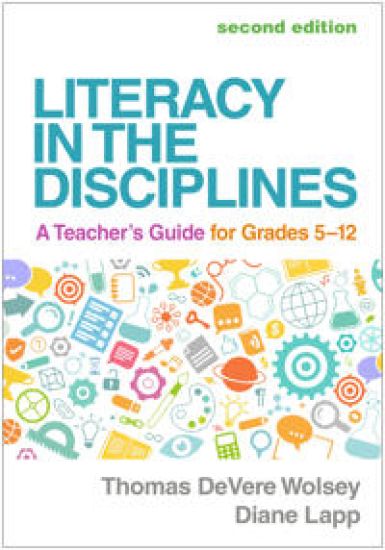
Literacy in the Disciplines, Second Edition

Literacy in the Disciplines, Second Edition

Thomas DeVere Wolsey; Diane Lapp

Guilford Publications
2024
sidottu
This successful guide--now in a revised and expanded second edition--gives teachers effective strategies to support adolescents' development of relevant literacy skills in specific disciplines. Demonstrating why disciplinary literacies matter, the authors discuss ways to teach close reading of complex texts; discipline-specific argumentation, communication, and writing skills; academic vocabulary; and more. The book draws on revealing interviews with content-area experts and professionals in history, science, mathematics, literature, the arts, and physical education. Teacher-friendly tools include 21 reproducible forms that also can be downloaded and printed, "Try It On" practice activities, lesson plans, chapter anticipation guides, and links to recommended online teaching videos. New to This Edition *Chapter on assessment. *Chapter on disciplinary literacies beyond school--in civic, professional, and personal life. *Expanded coverage of math, more attention to evidence and sources used in different disciplines, new and updated expert interviews, and advice on how both teachers and students can use AI tools productively. *Anticipation guides that invite reflection on key questions before, during, and after reading most chapters.
Literacy in the Disciplines, Second Edition

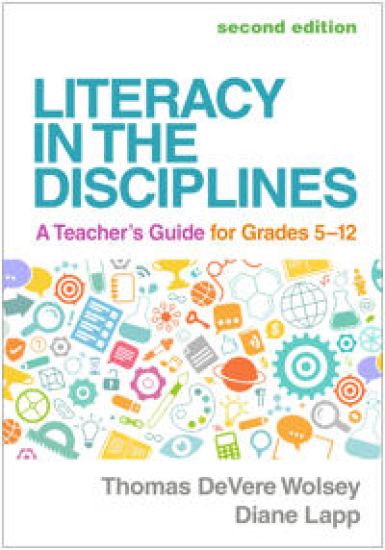
Literacy in the Disciplines, Second Edition

Thomas DeVere Wolsey; Diane Lapp

Guilford Publications
2024
nidottu
This successful guide--now in a revised and expanded second edition--gives teachers effective strategies to support adolescents' development of relevant literacy skills in specific disciplines. Demonstrating why disciplinary literacies matter, the authors discuss ways to teach close reading of complex texts; discipline-specific argumentation, communication, and writing skills; academic vocabulary; and more. The book draws on revealing interviews with content-area experts and professionals in history, science, mathematics, literature, the arts, and physical education. Teacher-friendly tools include 21 reproducible forms that also can be downloaded and printed, "Try It On!" practice activities, lesson plans, chapter anticipation guides, and links to recommended online teaching videos. New to This Edition *Chapter on assessment. *Chapter on disciplinary literacies beyond school--in civic, professional, and personal life. *Expanded coverage of math, more attention to evidence and sources used in different disciplines, new and updated expert interviews, and advice on how both teachers and students can use AI tools productively. *Anticipation guides that invite reflection on key questions before, during, and after reading most chapters.
Teaching the Language Arts

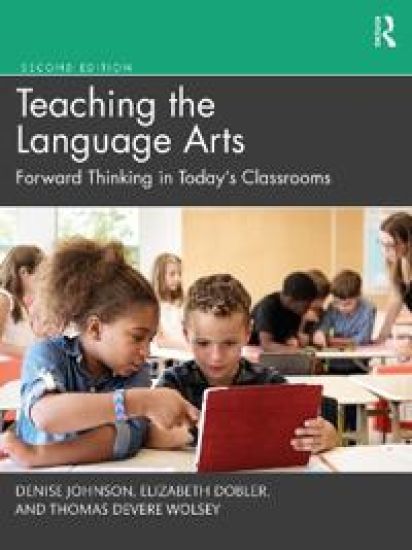
Teaching the Language Arts

Denise Johnson; Elizabeth Dobler; Thomas DeVere Wolsey

TAYLOR FRANCIS LTD
2022
nidottu
This eBook+ version includes the following enhancements: interactive features and links to the up-to-date Companion Website, with more strategies and examples of practice and student work. This book’s unique and engaging voice, supported by its many resources, will help future and in-service teachers bring the language arts to life in their own classrooms.This book helps readers envision their future classrooms, including the role technology will play, as they prepare to be successful teachers. Comprehensively updated, the second edition addresses new demands on teaching in traditional and virtual ELA classrooms, and the new ways technology facilitates effective instructional practices. Organized around the receptive language arts—the way learners receive information—and the expressive language arts—the way leaners express ideas—chapters cover all aspects of language arts instruction, including new information on planning and assessment; teaching reading and writing fundamentals; supporting ELLs, dyslexic, and dysgraphic learners; using digital tools; and more. In every chapter, readers can explore a rich array of teaching tools and experiences, which allow readers to learn from real-world classrooms.
Teaching the Language Arts

Teaching the Language Arts

Denise Johnson; Elizabeth Dobler; Thomas DeVere Wolsey

TAYLOR FRANCIS LTD
2022
sidottu
This eBook+ version includes the following enhancements: interactive features and links to the up-to-date Companion Website, with more strategies and examples of practice and student work. This book’s unique and engaging voice, supported by its many resources, will help future and in-service teachers bring the language arts to life in their own classrooms.This book helps readers envision their future classrooms, including the role technology will play, as they prepare to be successful teachers. Comprehensively updated, the second edition addresses new demands on teaching in traditional and virtual ELA classrooms, and the new ways technology facilitates effective instructional practices. Organized around the receptive language arts—the way learners receive information—and the expressive language arts—the way leaners express ideas—chapters cover all aspects of language arts instruction, including new information on planning and assessment; teaching reading and writing fundamentals; supporting ELLs, dyslexic, and dysgraphic learners; using digital tools; and more. In every chapter, readers can explore a rich array of teaching tools and experiences, which allow readers to learn from real-world classrooms.
Becoming a Metacognitive Teacher

Becoming a Metacognitive Teacher

Roya Q. Scales; Thomas DeVere Wolsey; Seth A. Parsons; Gerald G. Duffy

Teachers' College Press
2020
sidottu
How can early and preservice teachers master the complex practice of teaching? This clearly written, research-based guide shows how to successfully navigate coursework, build relationships with mentors, and negotiate fieldwork and student teaching while developing metacognitive thinking skills. These are skills that allow teachers to continuously reflect on instructional practices and adapt them to fit their own teaching context and their students' diverse needs. Metacognitive teaching requires higher-level thought processes that, for teachers, include making connections among each segment of the teacher preparation program, as well as deciding how these experiences directly and effectively apply to their classrooms. The authors argue that this kind of support is needed early in the journey of a teacher if they are to succeed and remain in the classroom. Book Features:Engages and empowers teacher candidates to become metacognitive teachers.Encompasses the entire preservice program, while also being of help to novice teachers.Includes key points, vignettes, and reflection questions. Based on research from a 3-year longitudinal, national study of teacher candidates.
Becoming a Metacognitive Teacher

Becoming a Metacognitive Teacher

Roya Q. Scales; Thomas DeVere Wolsey; Seth A. Parsons; Gerald G. Duffy

Teachers' College Press
2020
nidottu
How can early and preservice teachers master the complex practice of teaching? This clearly written, research-based guide shows how to successfully navigate coursework, build relationships with mentors, and negotiate fieldwork and student teaching while developing metacognitive thinking skills. These are skills that allow teachers to continuously reflect on instructional practices and adapt them to fit their own teaching context and their students' diverse needs. Metacognitive teaching requires higher-level thought processes that, for teachers, include making connections among each segment of the teacher preparation program, as well as deciding how these experiences directly and effectively apply to their classrooms. The authors argue that this kind of support is needed early in the journey of a teacher if they are to succeed and remain in the classroom. Book Features:Engages and empowers teacher candidates to become metacognitive teachers.Encompasses the entire preservice program, while also being of help to novice teachers.Includes key points, vignettes, and reflection questions. Based on research from a 3-year longitudinal, national study of teacher candidates.
Assessment Literacy

Assessment Literacy

Thomas DeVere Wolsey; Susan Lenski; Dana L. Grisham

Guilford Press
2020
nidottu
This clear, no-nonsense book guides current and future teachers through the concepts, tools, methods, and goals of classroom literacy assessment. The expert authors examine the roles of formative, summative, and benchmark assessments; demystify state and national tests and standards; and show how assessment can seamlessly inform instruction. Strategies for evaluating, choosing, and interpreting assessments are discussed, as are ways to communicate data to parents and administrators. User-friendly resources include boxed vignettes from teachers and researchers, practical assessment tips (and traps to avoid), and 12 reproducible planning forms and handouts. Purchasers get access to a Web page where they can download and print the reproducible materials in a convenient 8 1/2" x 11" size.
Assessment Literacy

Assessment Literacy

Thomas DeVere Wolsey; Susan Lenski; Dana L. Grisham

Guilford Press
2020
sidottu
This clear, no-nonsense book guides current and future teachers through the concepts, tools, methods, and goals of classroom literacy assessment. The expert authors examine the roles of formative, summative, and benchmark assessments; demystify state and national tests and standards; and show how assessment can seamlessly inform instruction. Strategies for evaluating, choosing, and interpreting assessments are discussed, as are ways to communicate data to parents and administrators. User-friendly resources include boxed vignettes from teachers and researchers, practical assessment tips (and traps to avoid), and 12 reproducible planning forms and handouts. Purchasers get access to a Web page where they can download and print the reproducible materials in a convenient 8 1/2" x 11" size.
Mining Complex Text, Grades 2-5

Mining Complex Text, Grades 2-5

Lapp Diane K.; Thomas DeVere Wolsey; Wood Karen D.

Corwin Press Inc
2014
nidottu
Your power tools for making the complex comprehensible Now more than ever, our students are being asked to do highly advanced thinking, talking, and writing around their reading. If only there were ingenious new tools that could give our students the space to tease apart complex ideas in order to comprehend and weld their understandings into a new whole. Good news: these tools exist—Mining Complex Text. You’ll learn how graphic organizers can: Help students read, reread, and take notes on a text Promote students’ oral sharing of information and their ideasElevate organized note-making from complex text(s)Scaffold students’ narrative and informational writing
Mining Complex Text, Grades 6-12

Mining Complex Text, Grades 6-12

Lapp Diane K.; Thomas DeVere Wolsey; Wood Karen D.; Johnson Kelly

Corwin Press Inc
2014
nidottu
Your power tools for making the complex comprehensible Now more than ever, our students are being asked to do highly advanced thinking, talking, and writing around their reading. If only there were ingenious new tools that could give our students the space to tease apart complex ideas in order to comprehend and weld their understandings into a new whole. Good news: these tools exist—Mining Complex Text. You’ll learn how graphic organizers can: Help students read, reread, and take notes on a textPromote students’ oral sharing of information and their ideasElevate organized note-making from complex text(s)Scaffold students’ narrative and informational writing
Transforming Writing Instruction in the Digital Age

Transforming Writing Instruction in the Digital Age

Thomas DeVere Wolsey; Dana L. Grisham

Guilford Press
2012
nidottu
An innovative, practical guide for middle and high school teachers, this book is packed with specific ways that technology can help serve the goals of effective writing instruction. It provides ready-to-implement strategies for teaching students to compose and edit written work electronically; conduct Internet inquiry; create blogs, websites, and podcasts; and use text messaging and Twitter productively. The book is grounded in state-of-the-art research on the writing process and the role of writing in content-area learning. Teacher-friendly features include vivid classroom examples, differentiation tips, links to online resources, and reproducible worksheets and forms. The large-size format facilitates photocopying.