Kirjojen hintavertailu. Mukana 12 595 353 kirjaa ja 12 kauppaa.

Kirjailija

Thomas F. Babor

Kirjat ja teokset yhdessä paikassa: 2 kirjaa, julkaisuja vuosilta 2018-2022, suosituimpien joukossa Setting Limits. Vertaile teosten hintoja ja tarkista saatavuus suomalaisista kirjakaupoista.

2 kirjaa

Kirjojen julkaisuhaarukka 2018-2022.

Setting Limits

Setting Limits

Pekka Sulkunen; Thomas F. Babor; Jenny Cisneros Ornberg; Michael Egerer; Matilda Hellman; Charles Livingstone; Virve Marionneau; Janne Nikkinen; Jim Orford; Robin Room; Ingeborg Rossow

Oxford University Press
2018
nidottu
Commercial gambling is a recent historical phenomenon. It has developed into a profitable industry that supplies a range of recreational activities to its customers, and is a significant way of collecting money from players to distribute to companies, state budgets, and other beneficiaries. Many of these are civil society organizations, using the money for producing services in sports, culture, social work, and health care. However, gambling can also develop into pathological behaviour. Using a public interest framework, this book discusses the policies that will best serve the public good and minimize individual and collective harms. After describing the historical context of the gambling and the current global burden of the activity, available methods of regulating the industry are evaluated using the available scientific evidence. By analysing the effectiveness of gambling policies and their alignment with the public interest, the epidemiological obstacles to successful regulation are considered in detail. There is good evidence for the effectiveness of restrictions on availability and access, but preventing gambling-related harm is not possible without limiting the overall volume of the activity, and hence the profits for the gambling industry and governments. Taking an international approach, this book delivers a comprehensive review of the epidemiological evidence documenting the harmful effects of gambling on individuals, communities, and societies. Essential reading for policymakers, social and behavioural scientists in gambling research, and public health researchers, Setting Limits examines a global view of an emerging epidemic of gambling problems.
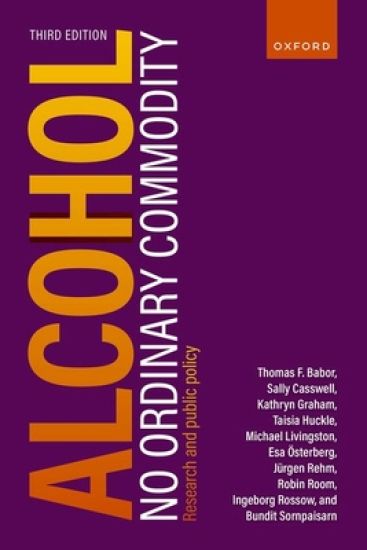
Alcohol: No Ordinary Commodity

Alcohol: No Ordinary Commodity

Thomas F. Babor; Sally Casswell; Kathryn Graham; Taisia Huckle; Michael Livingston; Esa Österberg; Jürgen Rehm; Robin Room; Ingeborg Rossow; Bundit Sornpaisarn

Oxford University Press
2022
nidottu
Alcohol: No Ordinary Commodity is a collaborative effort by an international group of addiction scientists to improve the linkages between addiction science and alcohol policy. It presents, in a comprehensive, practical, and readily accessible form, the accumulated scientific knowledge on alcohol research that has a direct relevance to the development of alcohol policy on local, national, and international levels. It provides an objective basis on which to build relevant policies globally and informs policy makers who have direct responsibility for public health and social welfare. By locating alcohol policy primarily within the realm of public health, this book draws attention to the growing tendency for governments, both national and local, to consider alcohol misuse as a major determinant of ill health, and to organize societal responses accordingly. The scope of the book is comprehensive and global. The authors describe the conceptual basis for a rational alcohol policy and present new epidemiological data on the global dimensions of alcohol misuse. The core of the book is a critical review of the cumulative scientific evidence in seven general areas of alcohol policy: pricing and taxation, regulating the physical availability of alcohol, modifying the environment in which drinking occurs, drinking-driving countermeasures, marketing restrictions, primary prevention programs in schools and other settings, and treatment and early intervention services. The final chapters discuss the current state of alcohol policy in different parts of the world and describe the need for a new approach to alcohol policy that is evidence-based, global, and coordinated. A valuable resource for those involved in addiction science and drug policy, as well as those in the wider fields of public health, health policy, epidemiology, and practising clinicians.