Kirjojen hintavertailu. Mukana 12 595 353 kirjaa ja 12 kauppaa.

Kirjailija

Thomas Fischer

Kirjat ja teokset yhdessä paikassa: 41 kirjaa, julkaisuja vuosilta 1979-2025, suosituimpien joukossa OpenGeoSys Tutorial. Vertaile teosten hintoja ja tarkista saatavuus suomalaisista kirjakaupoista.

41 kirjaa

Kirjojen julkaisuhaarukka 1979-2025.

OpenGeoSys Tutorial

OpenGeoSys Tutorial

Agnes Sachse; Erik Nixdorf; Eunseon Jang; Karsten Rink; Thomas Fischer; Beidou Xi; Christof Beyer; Sebastian Bauer; Marc Walther; Yuanyuan Sun; Yonghui Song

Springer International Publishing AG
2017
nidottu
This book explores the application of the open-source software OpenGeoSys (OGS) for hydrological numerical simulations concerning conservative and reactive transport modeling. It provides general information on the hydrological and groundwater flow modeling of a real case study and step-by-step model set-up with OGS, while also highlighting related components such as the OGS Data Explorer. The material is based on unpublished manuals and the results of a collaborative project between China and Germany (SUSTAIN H2O). Though the book is primarily intended for graduate students and applied scientists who deal with hydrological modeling, it also offers a valuable source of information for professional geoscientists wishing to expand their knowledge of the numerical modeling of hydrological processes including nitrate reactive transport modeling. This book is the second in a series that showcases further applications of computational modeling in hydrological science.
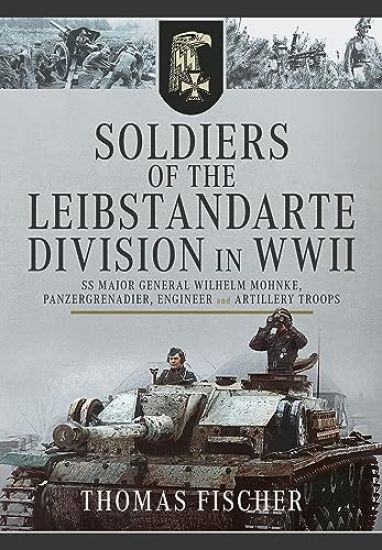
Soldiers of the Leibstandarte Division in WWII

Soldiers of the Leibstandarte Division in WWII

Thomas Fischer

PEN SWORD BOOKS LTD
2025
sidottu
The Leibstandarte, which started out as Hitler’s personal bodyguard, was considered the elite within the elite of the SS. Even before the war broke out in September 1939, the Leibstandarte had started to expand and take on more and more military duties in addition to its representational function in guarding the Führer at the Reich chancellery, at his mountain retreat in Austria, or on his travels and parades. It participated in the occupation of the Sudetenland and then the rest of Czechoslovakia and the annexation of Austria. It started the war as a reinforced motorized rifle regiment and expanded almost exponentially during the conflict, eventually evolving into the 1. SS-Panzer-Division Leibstandarte SS Adolf Hitler and providing much of the cadre for the I. SS-Panzer-Korps and the 12. SS-Panzer-Division Hitlerjugend. It gained a reputation in fighting that was unequalled among both friend and foe alike. It produced some of the most famous and highly decorated German soldiers of the war and historians still dispute the military capabilities of its long-time commander, Sepp Dietrich. While numerous titles have appeared concerning the Leibstandarte, this is the first one in English to put a human face on the elite formation. The author has gone to extraordinary lengths to locate and interview surviving members of the Leibstandarte, including the central figure of this narrative, SS-Brigadeführer und Generalmajor der Waffen-SS Wilhelm Mohnke, who was with the Leibstandarte from the very beginning serving on the first guard mount at the Reich Chancellery in Berlin to the very end when he was in charge of the final defense of the governmental seat of power. He provides fascinating insights into the inner circle around the Führer and, indeed, Hitler’s final moments and what transpired after his suicide. This book, the first of two exploring the men who made up the Leibstandarte, will focus on the Artillery, Panzer Grenadier, and Engineer units.
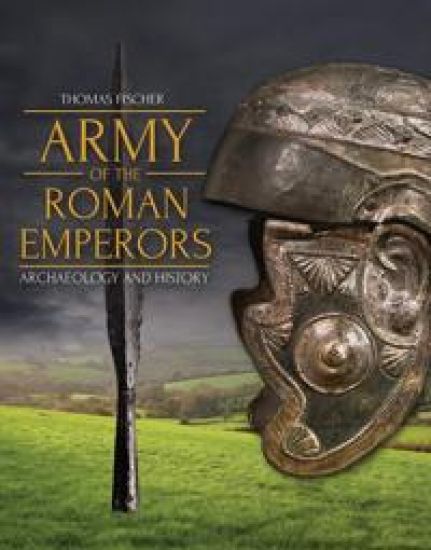
Army of the Roman Emperors

Army of the Roman Emperors

Thomas Fischer; M. C. Bishop

Oxbow Books
2019
sidottu
Compared to modern standard, the Roman army of the imperial era was surprisingly small. However, when assessed in terms of their various tasks, they by far outstrip modern armies – acting not only as an armed power of the state in external and internal conflicts, but also carrying out functions which nowadays are performed by police, local government, customs and tax authorities, as well as constructing roads, ships, and buildings.With this opulent volume, Thomas Fischer presents a comprehensive and unique exploration of the Roman military of the imperial era. With over 600 illustrations, the costumes, weapons and equipment of the Roman army are explored in detail using archaeological finds dating from the late Republic to Late Antiquity, and from all over the Roman Empire. The buildings and fortifications associated with the Roman army are also discussed. By comparing conflicts, border security, weaponry and artefacts, the development of the army through time is traced.This work is intended for experts as well as to readers with a general interest in Roman history. It is also a treasure-trove for re-enactment groups, as it puts many common perceptions of the weaponry, equipment and dress of the Roman army to the test.
Experimentalphysik

Experimentalphysik

Thomas Fischer

De Gruyter
2018
isokokoinen pokkari
Mit seinen stetig komplexeren Erläuterungen bildet dieses Werk den steigenden Schwierigkeitsgrad ab, den Studierende während der ersten Semester erleben. Durch zahlreiche Beispiele und künstlerisch sehr ansprechendes Bildmaterial unterstützt der Autor das selbständige und zugleich kreative Hinterfragen von physikalischen Zusammenhängen.
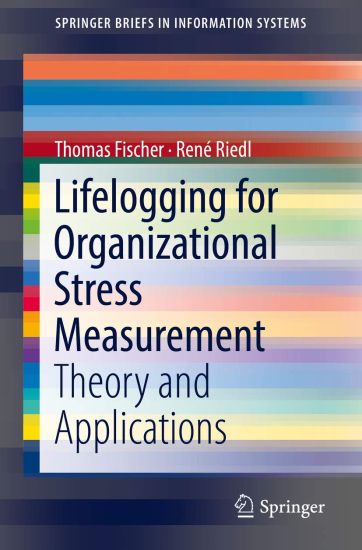
Lifelogging for Organizational Stress Measurement

Lifelogging for Organizational Stress Measurement

Thomas Fischer; René Riedl

Springer International Publishing AG
2018
nidottu
In recent decades, organizational stress researchers have repeatedly called for more longitudinal studies. This book argues that tools and devices that have been developed for the private or organizational domains could be helpful when it comes to studying longitudinal phenomena, as they offer unobtrusive measurement and are frequently employed by many individuals in daily life. In particular, the book examines lifelogging, a research field that addresses the computer-based collection of individual experiences. Further, it highlights areas in organizational stress research that benefit from insights in the lifelogging literature and provides a summary of tools that can be used for stress measurement. It also offers an overview of the latest research and current developments on lifelogging and organizational stress for researchers interested in self-measurement of stress-related effects and for organizational stress researchers.