Kirjojen hintavertailu. Mukana 12 535 188 kirjaa ja 12 kauppaa.
Kirjailija
Thomas Fisher
Kirjat ja teokset yhdessä paikassa: 34 kirjaa, julkaisuja vuosilta 1997-2026, suosituimpien joukossa Variability in Human Performance. Vertaile teosten hintoja ja tarkista saatavuus suomalaisista kirjakaupoista.
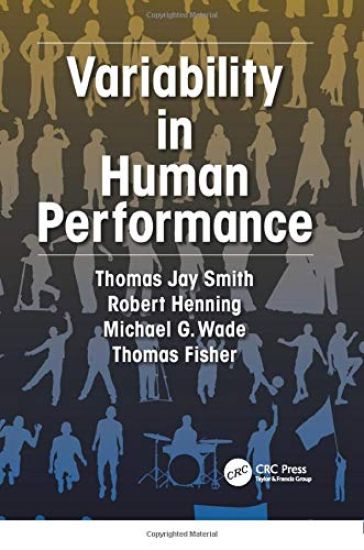
Understanding the conditions under which variability in performance may arise, and the processes related to its emergence, gives us insight into the development of techniques for improving the quality of performance.This book introduces a comprehensive framework for understanding human performance variability in terms of how human control of behavior is closely tied to design factors in the performance environment. Empirical evidence, as well as practical examples and application areas, introduced in support of this framework. The book provides suggestions on how individuals, groups, and organizations can significantly reduce variability in human performance that often leads to systems failures.
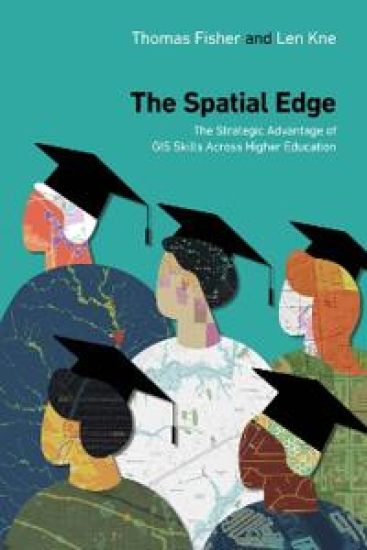
Bring your campus together academically and operationally with The Spatial Edge: The Strategic Advantage of GIS Skills Across Higher Education. Although GIS is now widely taught in higher education, it is typically associated with a handful of areas of study: geography, planning, natural resources, and landscape architecture. The Spatial Edge uses a series of case studies to show how integrating a geographic approach can unite campuses and address challenges by fostering spatial thinking across academic disciplines and university operations. It highlights the expanding role of GIS beyond traditional fields to enhance teaching, research, logistics and planning, and community engagement in higher education worldwide. This guide is easy to use and highly accessible, showing administrators and educators the many ways in which their colleagues, in virtually every field, are using GIS to: teach students, conduct research, connect with communities, operate facilities, and produce geospatially skilled graduates, ready for the workplace. This guide will bridge the gap between disciplines, and show how: educators are using GIS in the classroom in creative ways, researchers are using it in an array of scholarly projects, facilities managers are using it to operate universities more effectively, and community organizers are using it to engage community members. Learn how you can use GIS to proactively solve challenges at your campus to benefit management, students, and staff.
Bring your campus together academically and operationally with The Spatial Edge: The Strategic Advantage of GIS Skills Across Higher Education. Although GIS is now widely taught in higher education, it is typically associated with a handful of areas of study: geography, planning, natural resources, and landscape architecture. The Spatial Edge uses a series of case studies to show how integrating a geographic approach can unite campuses and address challenges by fostering spatial thinking across academic disciplines and university operations. It highlights the expanding role of GIS beyond traditional fields to enhance teaching, research, logistics and planning, and community engagement in higher education worldwide. This guide is easy to use and highly accessible, showing administrators and educators the many ways in which their colleagues, in virtually every field, are using GIS to: teach students, conduct research, connect with communities, operate facilities, and produce geospatially skilled graduates, ready for the workplace. This guide will bridge the gap between disciplines, and show how: educators are using GIS in the classroom in creative ways, researchers are using it in an array of scholarly projects, facilities managers are using it to operate universities more effectively, and community organizers are using it to engage community members. Learn how you can use GIS to proactively solve challenges at your campus to benefit management, students, and staff.
This training guide is a truly unique and informative book which is full of reliable and time tested information - written for the admirers and owners of this wonderful breed. Easy-to-read and in-depth in its nature - you will thoroughly enjoy your experience with this training guide. A wealth of reliable methods and procedures, alongside detailed advice for current or soon-to-be-owners is contained within. Contributed to by a series of specialist dog trainers, this book is certainly a must have addition to your collection.
"Whether you’re sunbathing at the beach, killing time waiting for the subway, or flying abroad for summer vacation, AN editors have compiled new architecture and design titles for you." — The Architect's Newspaper Environmental Activism by Design, a monograph by architects and educators Coleman Coker and Sarah Gamble, challenges designers to actively engage the environmental crisis through their work, while articulating an optimistic, tangible means to pursue community good and environmental justice through design activism and engagement. The authors assert that in addition to greener buildings, cheaper housing, and technological fixes, we must rethink pedagogy and praxis so that every single architecture graduate can define equity and transform the profession. Environmental Activism by Design centres on the award-winning Gulf Coast DesignLab at the University of Texas, which works directly with clients and stakeholders to produce spaces for the public to learn and researchers to undertake their environmental work. Environmental Activism by Design asks readers to challenge themselves, as agents of social equity, environmental justice, and climate action, to pursue operative practices and transformation rather than mere keywords and consensus.
The riveting, pulse-pounding story of a year in the life of an emergency room doctor trying to steer his patients and colleagues through a crushing pandemic and a violent summer, amidst a healthcare system that seems determined to leave them behind "Gripping . . . eloquent . . . This book reminds us how permanently interesting our bodies are, especially when they go wrong."--The New York Times ONE OF THE BEST BOOKS OF THE YEAR: Time As an emergency room doctor working on the rapid evaluation unit, Dr. Thomas Fisher has about three minutes to spend with the patients who come into the South Side of Chicago ward where he works before directing them to the next stage of their care. Bleeding: three minutes. Untreated wound that becomes life-threatening: three minutes. Kidney failure: three minutes. He examines his patients inside and out, touches their bodies, comforts and consoles them, and holds their hands on what is often the worst day of their lives. Like them, he grew up on the South Side; this is his community and he grinds day in and day out to heal them. Through twenty years of clinical practice, time as a White House fellow, and work as a healthcare entrepreneur, Dr. Fisher has seen firsthand how our country's healthcare system can reflect the worst of society: treating the poor as expendable in order to provide top-notch care to a few. In The Emergency, Fisher brings us through his shift, as he works with limited time and resources to treat incoming patients. And when he goes home, he remains haunted by what he sees throughout his day. The brutal wait times, the disconnect between hospital executives and policymakers and the people they're supposed to serve, and the inaccessible solutions that could help his patients. To cope with the relentless onslaught exacerbated by the pandemic, Fisher begins writing letters to patients and colleagues--letters he will never send--explaining it all to them as best he can. As fast-paced as an ER shift, The Emergency has all the elements that make doctors' stories so compelling--the high stakes, the fascinating science and practice of medicine, the deep and fraught interactions between patients and doctors, the persistent contemplation of mortality. And, with the rare dual perspective of somebody who also has his hands deep in policy work, Fisher connects these human stories to the sometimes-cruel machinery of care. Beautifully written, vulnerable and deeply empathetic, The Emergency is a call for reform that offers a fresh vision of health care as a foundation of social justice.
Pandemics have long-term effects on how we live and work, and the COVID-19 pandemic was no exception, accelerating us into a digital economy, in which people increasingly work, shop, and learn online, transforming how we use space in-person and remotely. Space, Structures, and Design in a Post-Pandemic World explores the rebalancing of our physical and digital interactions and what it means for the built environment going forward.This book examines the effect of the pandemic on our use of land, interior space, energy, and transportation, as well as on our approach to design, wealth, work, and practice. Author Thomas Fisher also discusses the plagues of institutional racism and climate change that coincided with the COVID-19 pandemic and how these were interrelated. At the same time as all of this, the automation of all or part of many jobs continued unabated, eliminating much of the work that people did before COVID-19 arrived. This text discusses how we might leverage the under-utilized human talent and material assets all around us to rebuild our communities and our economy in more creative ways for a more equitable, resilient future.Space, Structures, and Design in a Post-Pandemic World will influence anyone interested in how design thinking can transform how we see the world and those looking for new ways to understand what the COVID-19 pandemic means and what opportunities it creates for our environments.
Pandemics have long-term effects on how we live and work, and the COVID-19 pandemic was no exception, accelerating us into a digital economy, in which people increasingly work, shop, and learn online, transforming how we use space in-person and remotely. Space, Structures, and Design in a Post-Pandemic World explores the rebalancing of our physical and digital interactions and what it means for the built environment going forward.This book examines the effect of the pandemic on our use of land, interior space, energy, and transportation, as well as on our approach to design, wealth, work, and practice. Author Thomas Fisher also discusses the plagues of institutional racism and climate change that coincided with the COVID-19 pandemic and how these were interrelated. At the same time as all of this, the automation of all or part of many jobs continued unabated, eliminating much of the work that people did before COVID-19 arrived. This text discusses how we might leverage the under-utilized human talent and material assets all around us to rebuild our communities and our economy in more creative ways for a more equitable, resilient future.Space, Structures, and Design in a Post-Pandemic World will influence anyone interested in how design thinking can transform how we see the world and those looking for new ways to understand what the COVID-19 pandemic means and what opportunities it creates for our environments.
From a renowned emergency room doctor and healthcare policy expert, the riveting story of a year in the life of an emergency room on the South Side of Chicago.
The riveting, pulse-pounding story of a year in the life of an emergency room doctor trying to steer his patients and colleagues through a crushing pandemic and a violent summer, amidst a healthcare system that seems determined to leave them behind "Gripping . . . eloquent . . . This book reminds us how permanently interesting our bodies are, especially when they go wrong."--The New York Times ONE OF THE BEST BOOKS OF THE YEAR: Time As an emergency room doctor working on the rapid evaluation unit, Dr. Thomas Fisher has about three minutes to spend with the patients who come into the South Side of Chicago ward where he works before directing them to the next stage of their care. Bleeding: three minutes. Untreated wound that becomes life-threatening: three minutes. Kidney failure: three minutes. He examines his patients inside and out, touches their bodies, comforts and consoles them, and holds their hands on what is often the worst day of their lives. Like them, he grew up on the South Side; this is his community and he grinds day in and day out to heal them. Through twenty years of clinical practice, time as a White House fellow, and work as a healthcare entrepreneur, Dr. Fisher has seen firsthand how our country's healthcare system can reflect the worst of society: treating the poor as expendable in order to provide top-notch care to a few. In The Emergency, Fisher brings us through his shift, as he works with limited time and resources to treat incoming patients. And when he goes home, he remains haunted by what he sees throughout his day. The brutal wait times, the disconnect between hospital executives and policymakers and the people they're supposed to serve, and the inaccessible solutions that could help his patients. To cope with the relentless onslaught exacerbated by the pandemic, Fisher begins writing letters to patients and colleagues--letters he will never send--explaining it all to them as best he can. As fast-paced as an ER shift, The Emergency has all the elements that make doctors' stories so compelling--the high stakes, the fascinating science and practice of medicine, the deep and fraught interactions between patients and doctors, the persistent contemplation of mortality. And, with the rare dual perspective of somebody who also has his hands deep in policy work, Fisher connects these human stories to the sometimes-cruel machinery of care. Beautifully written, vulnerable and deeply empathetic, The Emergency is a call for reform that offers a fresh vision of health care as a foundation of social justice.
Ethics is one of the most important and least understood aspects of design practice. In his latest book, Thomas Fisher shows how ethics are inherent to the making of architecture – and how architecture offers an unusual and useful way of looking at ethics.The Architecture of Ethics helps students in architecture and other design disciplines to understand the major approaches to ethics and to apply them to the daily challenges they face in their work. The book covers each of the four dominant approaches to ethics: virtue ethics, social contract ethics, duty ethics, and utilitarian ethics. Each chapter examines the dilemmas designers face from the perspective of one of these categories. Written in an accessible, jargon-free style, the text also features 100 illustrations to help integrate these concepts into the design process and to support visual understanding.Ethics is now a required part of accredited architecture programs, making this book essential reading for all students in architecture and design.
Ethics is one of the most important and least understood aspects of design practice. In his latest book, Thomas Fisher shows how ethics are inherent to the making of architecture – and how architecture offers an unusual and useful way of looking at ethics.The Architecture of Ethics helps students in architecture and other design disciplines to understand the major approaches to ethics and to apply them to the daily challenges they face in their work. The book covers each of the four dominant approaches to ethics: virtue ethics, social contract ethics, duty ethics, and utilitarian ethics. Each chapter examines the dilemmas designers face from the perspective of one of these categories. Written in an accessible, jargon-free style, the text also features 100 illustrations to help integrate these concepts into the design process and to support visual understanding.Ethics is now a required part of accredited architecture programs, making this book essential reading for all students in architecture and design.
How to Speak Your Way to Wealth, Health & Prosperity This book will reveal to you the secrets of creative self talk You will learn how to shift from the majority of negative self talk to positive and empowering self talk. This transition will allow you to grow and develop your self image and self belief. You will be developing habits through the use of self talk to create more automatic behaviors and actions which will bring you more desirable outcomes. This will empower you to begin to achieve the life you truly desire You will learn self talk statements for Wealth, Health and Success, and establish a daily self talk routine which will give you the power to change your life in the direction you desire it to go Our conversations we have with ourselves truly have the power to shape our circumstances, and thus, our reality. This book will help you to take control of your inner dialouge, and with consistent effort, you will see big changes in your outer reality much sooner than you realize
The Secrets to Attracting Money Fast Revealed Sub Headline: This powerful book wil reveal to you the exact techniques and strategies to follow to maximize your ability to attrach money fast You will learn all of the most important components of programming your mind and energetic frequency of consciousness to align yourself with someone who attracts money fast Now you can breat through the mundane mind controlled illusion of poverty and break through to a new life of financial abundance and prosperity.If your sick and tired of being sick and tired, of just getting by, this is the book that will deliver the changes you desire Simply follow the steps within the Attract Money Fast Daily Routine and you will be well on your way to attracting money fast
The book that delivers the "step-by-step" process to getting rich Including The official strategies to gaining wealth and financial freedom. Thomas will be walking you through the 11 secret power codes covered within this life-changing book You will learn the step-by-step process of what it takes to get rich and wealthy. Following one code at a time, you will progress through the codes to reach code 9 where you can achieve your definition of being Rich Providing you with the easiest path to follow, you will learn how to create your goals, your initial income source and your first initial investment. Starting you off on your journey of growing Rich as you progress through each power code. Simply follow the step-by-step instructions, and you can realistically begin your journey to getting Rich You will be able to create the perfect blueprint and a build upon it as you move through each Power Code. Also included within this book are two bonuses you can take advantage of. One, How to Create a 6 Figure Online Business (Online Cource $67 Value), and a Turnkey Business You can start right away to begin your journey to growing Rich Start reading the 11 Secret Power Codes today and Get Ready to Get Rich
First published in 2007, this book examines the designs of seventeen architecture and design schools and answers questions such as: How has architectural education evolved and what is its future? Are architectural schools discernible types of designs and what are their effects on those who experience them? What lessons can be learned from evaluations of recently completed school buildings and what guidance do they provide for the design of future ones? Included in the multiple approaches to evaluation are examinations of the history of architectural education and building form; typologies of school for architecture; and the systematic user evaluations of the aesthetics, function, and technology which reveal the strengths to encourage and weaknesses to avoid in future designs. While offering specific guidelines for schools of design, it also includes findings that extend beyond the walls of design schools and can be applied to everything from the interiors of educational and campus buildings to planning offices and gathering places to build communities. This book will make readers more aware of problems in architectural interiors and suggest ways to make interiors work better for the building occupants.
Understanding the conditions under which variability in performance may arise, and the processes related to its emergence, gives us insight into the development of techniques for improving the quality of performance.This book introduces a comprehensive framework for understanding human performance variability in terms of how human control of behavior is closely tied to design factors in the performance environment. Empirical evidence, as well as practical examples and application areas, introduced in support of this framework. The book provides suggestions on how individuals, groups, and organizations can significantly reduce variability in human performance that often leads to systems failures.
Architectural Design and Ethics offers both professional architects and architecture students a theoretical base and numerous suggestions as to how we might rethink our responsibilities to the natural world and design a more sustainable future for ourselves. As we find ourselves on the steep slope of several exponential growth curves – in global population, in heat-trapping atmospheric gases, in the gap between the rich and poor, and in the demand for finite resources, Fisher lays down a theory of architecture based on ethics and explores how buildings can and do provide both social and moral dimensions. The book also has practical goals, demonstrating how architects can make better and more beautiful buildings whilst nurturing more responsible, sustainable development. Architectural Design and Ethics will prove an invaluable text not only to those in the architecture field, but to anyone simply interested in the ethical issues surrounding our built environment.
First published in 2007, this book examines the designs of seventeen architecture and design schools and answers questions such as: How has architectural education evolved and what is its future? Are architectural schools discernible types of designs and what are their effects on those who experience them? What lessons can be learned from evaluations of recently completed school buildings and what guidance do they provide for the design of future ones? Included in the multiple approaches to evaluation are examinations of the history of architectural education and building form; typologies of school for architecture; and the systematic user evaluations of the aesthetics, function, and technology which reveal the strengths to encourage and weaknesses to avoid in future designs. While offering specific guidelines for schools of design, it also includes findings that extend beyond the walls of design schools and can be applied to everything from the interiors of educational and campus buildings to planning offices and gathering places to build communities. This book will make readers more aware of problems in architectural interiors and suggest ways to make interiors work better for the building occupants.