Kirjojen hintavertailu. Mukana 12 390 323 kirjaa ja 12 kauppaa.

Kirjailija

Thomas Floyd

Kirjat ja teokset yhdessä paikassa: 26 kirjaa, julkaisuja vuosilta 2007-2025, suosituimpien joukossa DC/AC Fundamentals. Vertaile teosten hintoja ja tarkista saatavuus suomalaisista kirjakaupoista.

26 kirjaa

Kirjojen julkaisuhaarukka 2007-2025.

Electronics Fundamentals: Circuits, Devices & Applications, Global Edition

Electronics Fundamentals: Circuits, Devices & Applications, Global Edition

Thomas Floyd; David Buchla; Gary Snyder

pearson education limited
2024
nidottu
Electronics Fundamentals is more than a textbook: it's a hands-on electronics teaching system. The text provides both practical and theoretical coverage of electrical, magnetic and electronics concepts. Practical circuits, examples and troubleshooting exercises will help you develop useful analysis skills for resistive, reactive and device circuits. The 9th Edition preserves the legacy of the 8th Edition while updating its content. Fully revised simulation circuits and tutorials, as well as a laboratory manual, supplement the text. A new tutorial illustrates how to use TI-84 and HP Prime calculators to analyze circuits similar to those in the textbook.
Experiments in Electronics Fundamentals

Experiments in Electronics Fundamentals

David Buchla; Thomas Floyd; Gary Snyder

PEARSON
2021
nidottu
Electronics Fundamentals is more than a textbook: it's a hands-on electronics teaching system. The text provides both practical and theoretical coverage of electrical, magnetic and electronics concepts. Practical circuits, examples and troubleshooting exercises will help you develop useful analysis skills for resistive, reactive and device circuits. The 9th Edition preserves the legacy of the 8th Edition while updating its content. Fully revised simulation circuits and tutorials, as well as a laboratory manual, supplement the text. A new tutorial illustrates how to use TI-84 and HP Prime calculators to analyze circuits similar to those in the textbook.
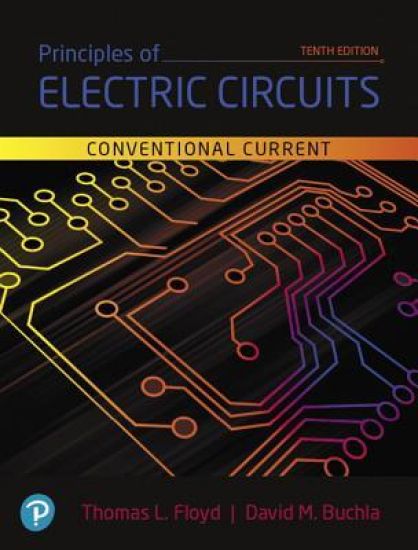
Principles of Electric Circuits

Principles of Electric Circuits

Thomas Floyd; David Buchla

Pearson
2019
sidottu
For courses in DC/AC circuits: conventional flow.Complete, accessible introduction to DC/AC circuitsPrinciples of Electric Circuits: Conventional Current Version provides a uniquely clear introduction to fundamental circuit laws and components, using math only when needed for understanding. Floyd’s acclaimed coverage of troubleshooting – combined with exercises, examples, and illustrations – gives students the problem-solving experience they need to step outside the classroom and into a job. The 10th edition has been heavily modified to improve readability and clarity and to update the text to reflect developments in technology since the last edition. This edition also adds new step-by-step procedures for solving problems with the TI-84 Plus CE graphing calculator.
Lab manual for Electronic Devices, Global Edition

Lab manual for Electronic Devices, Global Edition

Thomas Floyd

Pearson Education Limited
2018
nidottu
This laboratory manual is carefully coordinated to the text Electronic Devices, Tenth edition, Global edition, by Thomas L. Floyd. The seventeen experiments correspond to the chapters in the text (except the first experiment references Chapters 1 and the first part of Chapter 2). All of the experiments are subdivided into two or three "Parts." With one exception (Experiment 12-B), the Parts for the all experiments are completely independent of each other. The instructor can assign any or all Parts of these experiments, and in any order. This format provides flexibility depending on the schedule, laboratory time available, and course objectives. In addition, experiments 12 through 16 provide two options for experiments. These five experiments are divided into two major sections identified as A or B. The A experiments continue with the format of previous experiments; they are constructed with discrete components on standard protoboards as used in most electronic teaching laboratories. The A experiments can be assigned in programs where traditional devices are emphasized. Each B experiment has a similar format to the corresponding A experiment, but uses a programmable Analog Signal Processor (ASP) that is controlled by (free) Computer Aided Design (CAD) software from the Anadigm company (www.anadigm.com). These experiments support the Programmable Analog Design feature in the textbook. The B experiments are also subdivided into independent Parts, but Experiment 12-B, Part 1, is a software tutorial and should be performed before any other B experiments. This is anexcellent way to introduce the ASP technology because no other hardware is required otherthan a computer running the downloaded software. In addition to Experiment 12-B, the first 13 steps of Experiment 15-B, Part 2, are also tutorial in nature for the AnadigmFilter program. This is an amazing active filter design tool that is easy to learn and is included with the AnadigmDesigner2 (AD2) CAD software. The ASP is part of a Programmable Analog Module (PAM) circuit board from the Servenger company (www.servenger.com) that interfaces to a personal computer. The PAM is controlled by the AD2 CAD software from the Anadigm company website. Except for Experiment 12-B, Part 1, it is assumed that the PAM is connected to the PC and AnadigmDesigner2 is running. Experiment 16-B, Part 3, also requires a spreadsheet program such as Microsoft (R) Excel (R). The PAM is described in detail in the Quick Start Guide (Appendix B). Instructors may choose to mix A and B experiments with no loss in continuity, depending on course objectives and time. We recommend that Experiment 12-B,Part 1, be assigned if you want students to have an introduction to the ASP without requiring a hardware purchase.A text feature is the Device Application (DA) at the end of most chapters. All of the DAs have a related laboratory exercise using a similar circuit that is sometimes simplified to make laboratorytime as efficient as possible. The same text icon identifies the related DA exercise in the lab manual.One issue is the trend of industry to smaller surface-mount devices, which are very difficult to work with and are not practical for most lab work. For example, almost all varactors are supplied as surface mount devices now. In reviewing each experiment, we have found components that can illustrate the device function with a traditional one. The traditional through-hole MV2109 varactor is listed as obsolete, but will be available for the foreseeable future from Electronix Express (www.elexp.com), so it is called out in Experiment 3. All components are available from Electronix Express (www.elexp.com) as a kit of parts (see list in Appendix A). The format for each experiment has not changed from the last edition and is as follows:* Introduction: A brief discussion about the experiment and comments about each of the independent Parts that follow.* Reading: Reading assignment in the Floyd text related to the experiment.* Key Objectives: A statement specific to each Part of the experiment of what the student should be able to do.* Components Needed: A list components and small items required for each Part but not including the equipment found at a typical lab station. Particular care has been exercised to select materials that are readily available and reusable, keepingcost at a minimum.* Parts: There are two or three independent parts to each experiment. Needed tables, graphs, and figures are positioned close to the first referenced location to avoid confusion. Step numbering starts fresh with each Part, but figures and tables are numbered sequentially for the entire experiment to avoid multiple figures withthe same number.Conclusion: At the end of each Part, space is provided for a written conclusion.Questions: Each Part includes several questions that require the student to draw upon the laboratory work and check his or her understanding of the concepts. Troubleshooting questions are frequently presented. * Multisim Simulation: At the end of each A experiment (except #1), one or more circuits are simulated in a Multisim computer simulation. New Multisim troubleshooting problems have been added to this edition. Multisim troubleshooting files are identified with the suffixf1, f2, etc., in the file name (standing for fault1, fault2, etc.). Other files, with nf as the suffix include demonstrations or practice using instruments such as the Bode Plotter and the Spectrum Analyzer. A special icon is shown with all figures that are related to the Multisim simulation. Multisim files are found on the website: www.pearsonglobaledition.com/Floyd. Microsoft PowerPoint (R) slides are available at no cost to instructors for all experiments. The slides reinforce the experiments with troubleshooting questions and a related problem and are available on the instructor's resource site.Each laboratory station should contain a dual-variable regulated power supply, a function generator, a multimeter, and a dual-channel oscilloscope. A list of all required materials is given in Appendix A along with information on acquiring the PAM. As mentioned, components are also available as a kit from Electronix Express; the kit number is 32DBEDFL10.
Electronic Devices (Conventional Current Version)

Electronic Devices (Conventional Current Version)

Thomas Floyd; David Buchla; Steven Wetterling

Pearson
2017
sidottu
For courses in basic electronics and electronic devices and circuits A user-friendly, hands-on introduction to electronic devices filled with practical applications and software simulation Electronic Devices (Conventional Current Version), 10/e, provides a solid foundation in basic analog electronics and a thorough introduction to analog integrated circuits and programmable devices. The text identifies the circuits and components within a system, helping students see how the circuit relates to the overall system function. Full-color photos and illustrations and easy-to-follow worked examples support the text's strong emphasis on real-world application and troubleshooting. Updated throughout, the Tenth Edition features selected circuits keyed to Multisim V14 and LT Spice files so that students learn how to simulate, analyze, and troubleshoot using the latest circuit simulation software. Additionally, an entirely new Chapter 18, “Communication Devices and Methods,” introduces communication devices and systems.
Digital Fundamentals

Digital Fundamentals

Thomas Floyd

Prentice Hall
2015
sidottu
Digital Fundamentals, Eleventh Edition, continues its long and respected tradition of offering students a strong foundation in the core fundamentals of digital technology, providing basic concepts reinforced by plentiful illustrations, examples, exercises, and applications. The text’s teaching and learning resources include an Instructor’s Manual, PowerPoint lecture slides, and Test Bank, as well as study resources for students. Teaching and Learning Experience: Provides a strong foundation in the core fundamentals of digital technology. Covers basic concepts reinforced by plentiful illustrations, examples, exercises, and applications. Offers a full-color design, effective chapter organization, and clear writing that help students grasp complex concepts.
Digital Fundamentals, Global Edition

Digital Fundamentals, Global Edition

Thomas Floyd

pearson education limited
2015
nidottu
For courses in digital circuits, digital systems (including design and analysis), digital fundamentals, digital logic, and introduction to computers Digital Fundamentals, Eleventh Edition, continues its long and respected tradition of offering students a strong foundation in the core fundamentals of digital technology, providing basic concepts reinforced by plentiful illustrations, examples, exercises, and applications. The text’s teaching and learning resources include an Instructor’s Manual, PowerPoint lecture slides, and Test Bank, as well as study resources for students. Teaching and Learning Experience: Provides a strong foundation in the core fundamentals of digital technology. Covers basic concepts reinforced by plentiful illustrations, examples, exercises, and applications. Offers a full-color design, effective chapter organization, and clear writing that help students grasp complex concepts.
Renewable Energy Systems

Renewable Energy Systems

David Buchla; Thomas Kissell; Thomas Floyd

Pearson
2014
sidottu
Renewable Energy Systems is an introductory text that offers broad coverage of all major renewable energy systems, resources, and related topics, such as wind turbines, solar energy, biomass, geothermal energy, water related power generation, fuel cells and generators. Teaching and Learning Experience The text provides readers the detailed, accessible overview needed to understand the breadth of renewable energy technologies and materials. Accessible presentation. Chapter and section openers, margin features, and clear presentation of physics and mathematics help students learn the subject matter. Applied practice. Section check-ups, worked examples, and coverage of key technologies show how technologies and materials are applied. Visually engaging. The text is loaded with illustrations, original drawings, and photographs in full color.
Digital Fundamentals: A Systems Approach

Digital Fundamentals: A Systems Approach

Thomas Floyd

PEARSON EDUCATION LIMITED
2013
pokkari
For courses in Electronics and Electricity Technology Digital Fundamentals: A Systems Approach offers unique coverage of digital technology with a system emphasis, providing a fundamental grounding in the basic concepts of digital technology and systems reinforced by an abundance of illustrations, examples, applications, and exercises.