Kirjojen hintavertailu. Mukana 12 334 909 kirjaa ja 12 kauppaa.
Kirjailija
Thomas G. Weiss
Kirjat ja teokset yhdessä paikassa: 35 kirjaa, julkaisuja vuosilta 1986-2023, suosituimpien joukossa Thinking about Global Governance. Vertaile teosten hintoja ja tarkista saatavuus suomalaisista kirjakaupoista.
One of the more prolific and influential analysts of multilateral approaches to global problem-solving over the last three decades is Thomas G. Weiss. Thinking about Global Governance, Why People and Ideas Matter, assembles key scholarly and policy writing. This collection organizes his most recent work addressing the core issues of the United Nations, global governance, and humanitarian action. The essays are placed in historical and intellectual context in a substantial new introduction, which contains a healthy dose of the idealism and ethical orientation that invariably characterize his best work. This volume gives the reader a comprehensive understanding of these key topics for a globalizing world and is an invaluable resource for students and scholars alike.
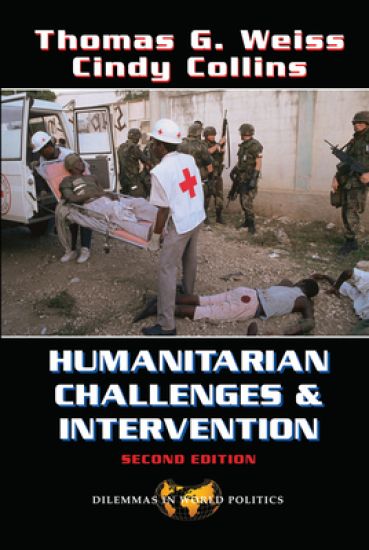
There are two distinct contemporary challenges to the relief of war-induced human suffering--one within the institutions that make up the international humanitarian system, the other on the ground in war zones. Varied interests, resources, and organizational structures within institutions hamper the effectiveness of efforts on behalf of war victims. And at the same time, on the ground, there are ethical, legal, and operational challenges and dilemmas that require actors continually to choose a course of action with associated necessary evils.Humanitarian challenges and intervention concerns within the international humanitarian system--combined with the domestic context of armed conflicts--often yield policies that do not serve the immediate requirements of victims for relief, protection of rights, stabilization, and reconstruction. Based on compelling, up-to-date case studies of the post-Cold War experience in Central America, northern Iraq, Somalia, the former Yugoslavia, and the African Great Lakes, the authors Thomas G. Weiss and Cindy Collins make recommendations for a more effective international humanitarian system.
A singular development in the post-Cold War era is the use of military force to protect human beings. From Rwanda to Kosovo, Sierra Leone to East Timor, and Libya to Côte d?Ivoire, soldiers have rescued civilians in some of the world's most notorious war zones. But what about Syria? Why have we observed the Syrian slaughter and done nothing? Is humanitarian intervention in crisis? Is the so-called responsibility to protect dead or alive? In this fully revised and expanded third edition of his highly accessible and popular text, Thomas Weiss explores these compelling questions. Drawing on a wide range of case studies and providing a persuasive overview of the theory and practice of humanitarian intervention in the modern world, he examines its political, ethical, legal, strategic, economic, and operational dimensions to highlight key debates and controversies. Neither celebratory nor complacent, his analysis is an engaging exploration of the current quandaries and future challenges for robust international humanitarian action in the twenty-first century.
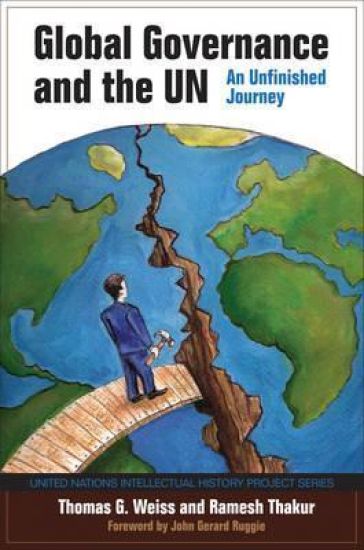
In the 21st century, the world is faced with threats of global scale that cannot be confronted without collective action. Although global government as such does not exist, formal and informal institutions, practices, and initiatives—together forming "global governance"—bring a greater measure of predictability, stability, and order to trans-border issues than might be expected. Yet, there are significant gaps between many current global problems and available solutions. Thomas G. Weiss and Ramesh Thakur analyze the UN's role in addressing such knowledge, normative, policy, institutional, and compliance lapses. The UN's relationship to these five global governance gaps is explored through case studies of some of the most burning problems of our age, including terrorism, nuclear proliferation, humanitarian crises, development aid, climate change, human rights, and HIV/AIDS.
This new volume traces the normative, legal, institutional, and political responses to the challenges of assisting and protecting internally displaced persons (IDPs).The crisis of IDPs was first confronted in the 1980s, and the problems of those suffering from this type of forced migration has grown continually since then. Drawing on official and confidential documents as well as interviews with leading personalities, Internal Displacement provides an unparalleled analysis of this important issue and includes: an exploration of the phenomenon of internal displacement and of policy research about ita review of efforts to increase awareness about the plight of IDPs and the development of a legal framework to protect them a 'behind-the-scenes' look at the creation and evolution of the mandate of the Representative of the Secretary-General on IDPs a variety of case studies illustrating the difficulties in overcoming the operational shortcomings within the UN system a foreword by former UN high commissioner for refugees, Sadako Ogata. Internal Displacement will appeal to students and scholars with interests in war and peace, forced migration, human rights and global governance.
This new volume traces the normative, legal, institutional, and political responses to the challenges of assisting and protecting internally displaced persons (IDPs).The crisis of IDPs was first confronted in the 1980s, and the problems of those suffering from this type of forced migration has grown continually since then. Drawing on official and confidential documents as well as interviews with leading personalities, Internal Displacement provides an unparalleled analysis of this important issue and includes: an exploration of the phenomenon of internal displacement and of policy research about ita review of efforts to increase awareness about the plight of IDPs and the development of a legal framework to protect them a 'behind-the-scenes' look at the creation and evolution of the mandate of the Representative of the Secretary-General on IDPs a variety of case studies illustrating the difficulties in overcoming the operational shortcomings within the UN system a foreword by former UN high commissioner for refugees, Sadako Ogata. Internal Displacement will appeal to students and scholars with interests in war and peace, forced migration, human rights and global governance.
There are two distinct contemporary challenges to the relief of war-induced human suffering--one within the institutions that make up the international humanitarian system, the other on the ground in war zones. Varied interests, resources, and organizational structures within institutions hamper the effectiveness of efforts on behalf of war victims. And at the same time, on the ground, there are ethical, legal, and operational challenges and dilemmas that require actors continually to choose a course of action with associated necessary evils.Humanitarian challenges and intervention concerns within the international humanitarian system--combined with the domestic context of armed conflicts--often yield policies that do not serve the immediate requirements of victims for relief, protection of rights, stabilization, and reconstruction. Based on compelling, up-to-date case studies of the post-Cold War experience in Central America, northern Iraq, Somalia, the former Yugoslavia, and the African Great Lakes, the authors Thomas G. Weiss and Cindy Collins make recommendations for a more effective international humanitarian system.
The Third UN is the ecology of supportive non-state actors-intellectuals, scholars, consultants, think tanks, NGOs, the for-profit private sector, and the media-that interacts with the intergovernmental machinery of the First UN (member states) and the Second UN (staff members of international secretariats) to formulate and refine ideas and decision-making at key junctures in policy processes. Some advocate for particular ideas, others help analyze or operationalize their testing and implementation; many thus help the UN 'think'. While think tanks, knowledge brokers, and epistemic communities are phenomena that have entered both the academic and policy lexicons, their intellectual role remains marginal to analyses of such intergovernmental organizations as the United Nations.
A pathbreaking call to halt the intertwined crises of cultural heritage attacks and mass atrocities and mobilize international efforts to protect people and cultures. Intentional destruction of cultural heritage has a long history. Contemporary examples include the Bamiyan Buddhas in Afghanistan, mosques in Xinjiang, mausoleums in Timbuktu, and Greco-Roman remains in Syria. Cultural heritage destruction invariably accompanies assaults on civilians, making heritage attacks impossible to disentangle from the mass atrocities of genocide, war crimes, crimes against humanity, and ethnic cleansing. Both seek to eliminate people and the heritage with which they identify. Cultural Heritage and Mass Atrocities assembles essays by thirty-eight experts from the heritage, social science, humanitarian, legal, and military communities. Focusing on immovable cultural heritage vulnerable to attack, the volume's guiding framework is the Responsibility to Protect (R2P), a United Nations resolution adopted unanimously in 2005 to permit international intervention against crimes of war or genocide. Based on the three pillars of prevent, react, and rebuild, R2P offers today's policymakers a set of existing laws and international norms that can and--as this book argues--must be extended to the protection of cultural heritage. Contributions consider the global value of cultural heritage and document recent attacks on people and sites in China, Guatemala, Iraq, Mali, Sri Lanka and Afghanistan, Syria, and Yemen. Comprehensive sections on vulnerable populations as well as the role of international law and the military offer readers critical insights and point toward research, policy, and action agendas to protect both people and cultural heritage. A concise abstract of each chapter is offered online in Arabic, Chinese, French, Russian, and Spanish to facilitate robust, global dissemination of the strategies and tactics offered in this pathbreaking call to action. The free online edition of this publication is available at getty.edu/publications/cultural-heritage-mass-atrocities. Also available are free PDF, EPUB, and Kindle/MOBI downloads of the book.
The Third UN is the ecology of supportive non-state actors-intellectuals, scholars, consultants, think tanks, NGOs, the for-profit private sector, and the media-that interacts with the intergovernmental machinery of the First UN (member states) and the Second UN (staff members of international secretariats) to formulate and refine ideas and decision-making at key junctures in policy processes. Some advocate for particular ideas, others help analyze or operationalize their testing and implementation; many thus help the UN 'think'. While think tanks, knowledge brokers, and epistemic communities are phenomena that have entered both the academic and policy lexicons, their intellectual role remains marginal to analyses of such intergovernmental organizations as the United Nations.
This book concentrates on the bureaucratic aspects of the United Nation. It is intended to be educational, and indeed young people are intended to be a special audience. The book attempts to identify explanations for stability and initiative within international secretariats.
This completely revised and updated eighth edition serves as the definitive text for courses in which the United Nations is either the focus or a central component. Built around three critical themes in international relations (peace and security, human rights and humanitarian affairs, and sustainable human development) the eighth edition of The United Nations and Changing World Politics guides students through the seven turbulent decades of UN politics.This new edition is fully revised to incorporate recent developments on the international stage, including new peace operations in Mali and the Central African Republic; ongoing UN efforts to manage the crises in Libya, Syria, and Iraq; the Iran Nuclear Deal; and the new Sustainable Development Goals. The authors discuss how international law frames the controversies at the UN and guides how the UN responds to violence and insecurity, gross violations of human rights, poverty, underdevelopment, and environmental degradation. Students of all levels will learn that the UN is a complex organization, comprised of three interactive entities that cooperate and also compete with each other to define and advance the UN's principles and purposes.
This book concentrates on the bureaucratic aspects of the United Nation. It is intended to be educational, and indeed young people are intended to be a special audience. The book attempts to identify explanations for stability and initiative within international secretariats.
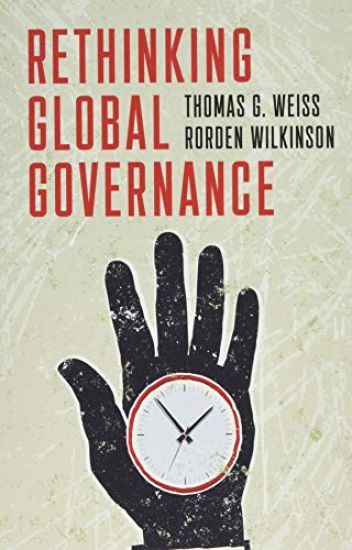
Rethinking Global Governance casts fresh eyes upon a once poignant but now languishing concept. Its purpose is to disrupt the simple association between global governance and the actions and activities of international organizations in the post-Cold War era and to focus instead on a set of questions that probe the intricate and multifaceted manner in which the world is governed. The book moves beyond the ubiquity and imprecision that has plagued the term and offers an intellectual framework with the potential to improve both thinking and practice. Building on the analytical insights of two of the leading scholars in the field, Rethinking Global Governance provides an antidote to simplistic usage and an authoritative yet readable attempt to grasp the governance of our globe — past, present, and future.
Rethinking Global Governance casts fresh eyes upon a once poignant but now languishing concept. Its purpose is to disrupt the simple association between global governance and the actions and activities of international organizations in the post-Cold War era and to focus instead on a set of questions that probe the intricate and multifaceted manner in which the world is governed. The book moves beyond the ubiquity and imprecision that has plagued the term and offers an intellectual framework with the potential to improve both thinking and practice. Building on the analytical insights of two of the leading scholars in the field, Rethinking Global Governance provides an antidote to simplistic usage and an authoritative yet readable attempt to grasp the governance of our globe — past, present, and future.
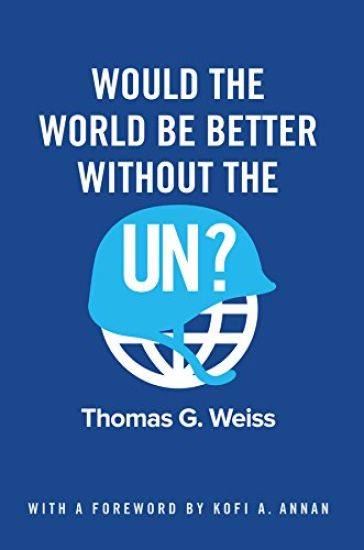
Do we need the United Nations? Where would the contemporary world be without its largest intergovernmental organization? And where could it be had the UN’s member states and staff performed better?These fundamental questions are explored by the leading analyst of UN history and politics, Thomas G. Weiss, in this hard-hitting, authoritative book. While counterfactuals are often dismissed as academic contrivances, they can serve to focus the mind; and here, Weiss uses them to ably demonstrate the pluses and minuses of multilateral cooperation. He is not shy about UN achievements and failures drawn from its ideas and operations in its three substantive pillars of activities: international peace and security; human rights and humanitarian action; and sustainable development. But, he argues, the inward-looking and populist movements in electoral politics worldwide make robust multilateralism more not less compelling. The selection of António Guterres as the ninth UN secretary-general should rekindle critical thinking about the potential for international cooperation. There is a desperate need to reinvigorate and update rather than jettison the United Nations in responding to threats from climate change to pandemics, from proliferation to terrorism. Weiss tells you why and how.
Do we need the United Nations? Where would the contemporary world be without its largest intergovernmental organization? And where could it be had the UN’s member states and staff performed better?These fundamental questions are explored by the leading analyst of UN history and politics, Thomas G. Weiss, in this hard-hitting, authoritative book. While counterfactuals are often dismissed as academic contrivances, they can serve to focus the mind; and here, Weiss uses them to ably demonstrate the pluses and minuses of multilateral cooperation. He is not shy about UN achievements and failures drawn from its ideas and operations in its three substantive pillars of activities: international peace and security; human rights and humanitarian action; and sustainable development. But, he argues, the inward-looking and populist movements in electoral politics worldwide make robust multilateralism more not less compelling. The selection of António Guterres as the ninth UN secretary-general should rekindle critical thinking about the potential for international cooperation. There is a desperate need to reinvigorate and update rather than jettison the United Nations in responding to threats from climate change to pandemics, from proliferation to terrorism. Weiss tells you why and how.
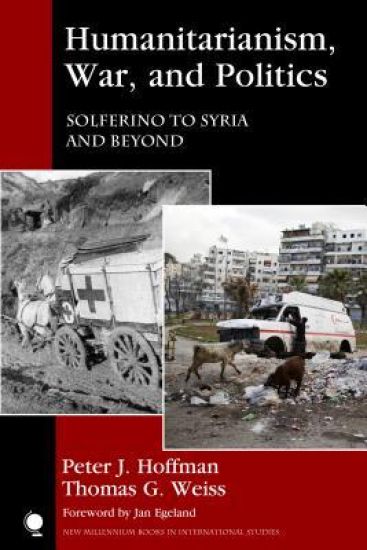
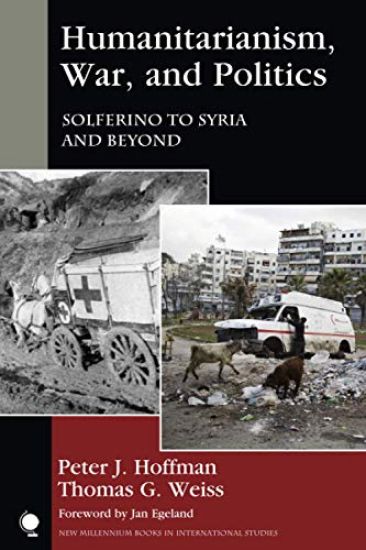
What is humanitarianism? This authoritative book provides a comprehensive analysis of the original idea and its evolution, exploring its triangulation with war and politics. Peter J. Hoffman and Thomas G. Weiss trace the origins of humanitarianism, its social movement, and the institutions (international humanitarian law) and organizations (providers of assistance and protection) that comprise it. They consider the international humanitarian system’s ability to regulate the conduct of war, to improve the wellbeing of its victims, and to prosecute war criminals. Probing the profound changes in the culture and capacities that underpin the sector and alter the meaning of humanitarianism, they assess the reinventions that constitute “revolutions in humanitarian affairs.” The book begins with traditions and perspectives—ranging from classic international relations approaches to “Critical Humanitarian Studies” —and reviews seminal wartime emergencies and the creation and development of humanitarian agencies in the late nineteenth and twentieth centuries. The authors then examine the rise of “new humanitarianisms” after the Cold War’s end and contemporary cases after 9/11. The authors continue by unpacking the most recent “revolutions”—the International Criminal Court and the “Responsibility to Protect”—as well as such core challenges as displacement camps, infectious diseases, eco-refugees, and marketization. They conclude by evaluating the contemporary system and the prospects for further transformations, identifying scholarly puzzles and the acute operational problems faced by practitioners.
What is humanitarianism? This authoritative book provides a comprehensive analysis of the original idea and its evolution, exploring its triangulation with war and politics. Peter J. Hoffman and Thomas G. Weiss trace the origins of humanitarianism, its social movement, and the institutions (international humanitarian law) and organizations (providers of assistance and protection) that comprise it. They consider the international humanitarian system’s ability to regulate the conduct of war, to improve the wellbeing of its victims, and to prosecute war criminals. Probing the profound changes in the culture and capacities that underpin the sector and alter the meaning of humanitarianism, they assess the reinventions that constitute “revolutions in humanitarian affairs.” The book begins with traditions and perspectives—ranging from classic international relations approaches to “Critical Humanitarian Studies” —and reviews seminal wartime emergencies and the creation and development of humanitarian agencies in the late nineteenth and twentieth centuries. The authors then examine the rise of “new humanitarianisms” after the Cold War’s end and contemporary cases after 9/11. The authors continue by unpacking the most recent “revolutions”—the International Criminal Court and the “Responsibility to Protect”—as well as such core challenges as displacement camps, infectious diseases, eco-refugees, and marketization. They conclude by evaluating the contemporary system and the prospects for further transformations, identifying scholarly puzzles and the acute operational problems faced by practitioners.