Kirjojen hintavertailu. Mukana 12 390 323 kirjaa ja 12 kauppaa.

Kirjailija

Thomas H. Murray

Kirjat ja teokset yhdessä paikassa: 11 kirjaa, julkaisuja vuosilta 1984-2022, suosituimpien joukossa Feeling Good and Doing Better. Vertaile teosten hintoja ja tarkista saatavuus suomalaisista kirjakaupoista.

Mukana myös kirjoitusasut: Thomas H Murray

11 kirjaa

Kirjojen julkaisuhaarukka 1984-2022.

Feeling Good and Doing Better

Feeling Good and Doing Better

Thomas H. Murray; Willard Gaylin; Ruth Macklin

Humana Press Inc.
1984
sidottu
The place of drugs in American society is a problem more apt to evoke diatribe than dialog. With the support of the Na­ tional Science Foundation's program on Ethics and Values in Science and Technology, and the National Endowment for the Humanities' program on Science, Technology, and Human Values, * The Hastings Center was able to sponsor such dialog as part of a major research into the ethics of drug use that spanned two years. We assembled a Research Group from leaders in the scientific, medical, legal, and policy com­ munities, leavened with experts in applied ethics, and brought them together several times a year to discuss the moral, legal and social issues posed by nontherapeutic drug use. At times we also called on other experts when we needed certain issues clarified. We did not try to reach a consensus, yet several broad areas of agreement emerged: That our society's response to nontherapeutic drug use has been irrational and inconsistent; that our attempts at control have been clumsy and ill-informed; that many complex moral values are entwined in the debate and cannot be reduced to a simple conflict between individual liberty and state paternalism. Of course each paper should be read as the statement of that particular author or authors. The views expressed in this book do not necessarily represent the views of The Hastings Center, the National Science Foundation, or the National En­ dowment for the Humanities.
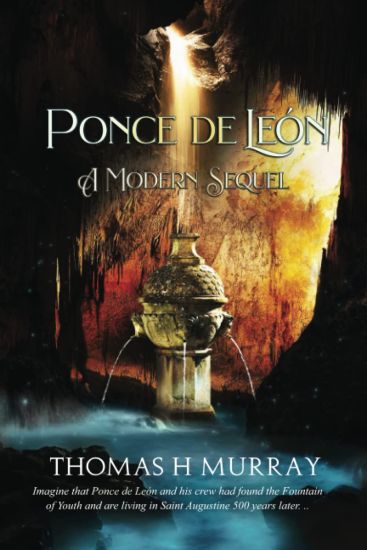
Ponce de León

Ponce de León

Thomas H Murray

Bastet Publishing
2022
pokkari
What is the meaning of life if you can live forever?What if 500 years ago Ponce de Le n did discover the Fountain of Youth? He and his crew have everything anyone could dream of: wealth, health, love of friends, and time; eternal time. But is immortality a blessing or a curse? Ponce de L on is not so sure. He enters a personal crisis searching for this answer and to understand the meaning of life.Join him in his search and get your copy today
Only After Dark

Only After Dark

Thomas H Murray

Bastet Publishing
2021
pokkari
"Ghosts and goddesses are foolish things to believe in." So one famous American author claims as he moves into a ruined palace in Portugal, eager to make progress on his next bestselling novel. Then a chance encounter with an unnamed, yet shockingly sensual woman pulls aside the veil of the world to reveal an alluring existence defined by unnatural delights and mind-twisting hedonism. As his mysterious lover draws him further into her realm of shadows and ultimate pleasure, how much is he willing to sacrifice to have her? A first-person narrative of one man's descent into obsession and madness. What is real and what is fevered imagination? An illustrated tale told in the vein of Lovecraft and Edgar Allen Poe.
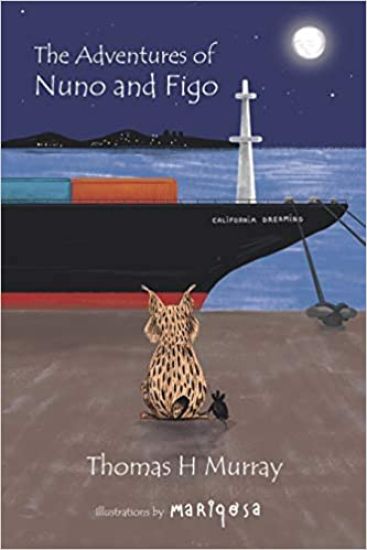
The Adventures of Nuno and Figo

The Adventures of Nuno and Figo

Thomas H Murray

Bastet Publishing
2020
pokkari
One clever rat, one ship, one hungry lynx ... When Nuno, an Iberian Lynx, decides to escape his struggling endangered life in scrubland eastern Portugal, he learns of Southern California, where the rabbits are fat, slow, and many. He boards a tramp steamer where he meets Figo, a streetwise ship rat. Figo introduces him to the different exotic cultures, music, and cuisines of the ports they visit along the way.Despite the odds, they form an unlikely friendship, but will it endure the journey? How will they survive the different perils lurking around every corner? Even if they do, what worse dangers await them in California?Madalena Bastos, an esteemed Portuguese artist, lovingly illustrated this book. The author will donate 10% of net proceeds to one or several organizations whose mission is to save the wonderful Iberian Lynx.Get you copy today
Good Sport

Good Sport

Thomas H. Murray

Oxford University Press Inc
2018
sidottu
Why are fiberglass vaulting poles and hinged skates accepted in sport - while performance-enhancing drugs are forbidden? Are the rules that forbid them arbitrary? Should we level the playing field by allowing all competitors to use drugs that allow them to run faster or longer, leap higher, or lift more? In this provocative exploration of what draws us to sport as participants and spectators, Thomas Murray argues that the values and meanings embedded within our games provide the guidance we need to make difficult decisions about fairness and performance-enhancing technologies. Good Sport reveals what we really care about in sport and how the reckless use of biomedical enhancements undermines those values. Implicit in sports history, rules, and practices are values that provide a sturdy foundation for an ethics of sport that celebrates natural talents and dedication. You see these values when the Paralympics creates multiple level playing fields among athletes with different kinds of impairments. They appear again in sports struggles to be fair to all when an extraordinary woman athlete emerges who appears to possess a mans hormone profile and muscles. They are threatened when the effort to assure athletes a fair chance to win without doping is subverted by cheating or by corruption, as in the case of Russias state-supported doping operation. Performance-enhancing drugs distort the connection between natural talents, the dedication to perfect those talents, and success in sport. Explaining the fundamental role of values and meanings, Good Sport reveals not just what we champion in the athletic arena but also, more broadly, what we value in human achievement.
Feeling Good and Doing Better

Feeling Good and Doing Better

Thomas H. Murray; Willard Gaylin; Ruth Macklin

Humana Press Inc.
2011
nidottu
The place of drugs in American society is a problem more apt to evoke diatribe than dialog. With the support of the Na­ tional Science Foundation's program on Ethics and Values in Science and Technology, and the National Endowment for the Humanities' program on Science, Technology, and Human Values, * The Hastings Center was able to sponsor such dialog as part of a major research into the ethics of drug use that spanned two years. We assembled a Research Group from leaders in the scientific, medical, legal, and policy com­ munities, leavened with experts in applied ethics, and brought them together several times a year to discuss the moral, legal and social issues posed by nontherapeutic drug use. At times we also called on other experts when we needed certain issues clarified. We did not try to reach a consensus, yet several broad areas of agreement emerged: That our society's response to nontherapeutic drug use has been irrational and inconsistent; that our attempts at control have been clumsy and ill-informed; that many complex moral values are entwined in the debate and cannot be reduced to a simple conflict between individual liberty and state paternalism. Of course each paper should be read as the statement of that particular author or authors. The views expressed in this book do not necessarily represent the views of The Hastings Center, the National Science Foundation, or the National En­ dowment for the Humanities.
Which Babies Shall Live?

Which Babies Shall Live?

Thomas H. Murray; Arthur L. Caplan

Humana Press Inc.
2011
nidottu
The fate of seriously ill newborns has captured the atten­ tion of the public, of national and state legislators, and of powerful interest groups. For the most part, the debate has been cast in the narrowest possible terms: "discrimination against the handicapped"; "physician authority"; "family autonomy." We believe that something much more profound is happening: the debate over the care of sick and dying babies appears to be both a manifestation of great changes in our feelings about infants, children, and families, and a reflection of deep and abiding attitudes toward the newborn, the handi­ capped, and perhaps other humans who are "less than" nor­ mal, rational adults. How could we cast some light on those feelings and attitudes that seemed to determine silently the course of the public debate? We chose to enlist the humanities-the dis­ players and critics of our cultural forms. Rather than closing down the public discussion, we wanted to open it up, to illuminate it with the light of history, religion, philosophy, literature, jurisprudence, and humanistically oriented sociol­ ogy. This book is a first effort to place the hotly contested Baby Doe debate into a broader cultural context.
Genetically Modified Athletes

Genetically Modified Athletes

Andy Miah; Thomas H. Murray

Routledge
2004
nidottu
In a provocative analysis of sport ethics and human values, Genetically Modified Athletes imagines the brave new world of sport. The internationally acclaimed book examines this issue at a crucial time in its theorisation, questioning the very cornerstone of sporting and medical ethics, asking whether sporting authorities can, or even should, protect sport from genetic modification.This book brings together sport studies and bioethics to challenge our understanding of the values that define sport. We already allow that athletes can optimise their performance by the use of technologies; without wishing to assert that 'anything goes' in sports performance enhancement, Andy Miah argues that simply being human matters in sport and that genetic modification does not have to challenge this capacity.Genetically Modifies Athletes includes examination of:* the concept of 'good sport' and the definition of cheating* the doped athlete - should we be more sympathetic?* the role of the medical industry* the usefulness (or not) of the terms 'doping' and 'anti-doping'.An important and growing field of interest, this book should be read by students, academics and practitioners.
The Worth of a Child

The Worth of a Child

Thomas H. Murray

University of California Press
1996
sidottu
Thomas Murray's graceful and humane book illuminates one of the most morally complex areas of everyday life: the relationship between parents and children. What do children mean to their parents, and how far do parental obligations go? What, from the beginning of life to its end, is the worth of a child? Ethicist Murray leaves the rarefied air of abstract moral philosophy in order to reflect on the moral perplexities of ordinary life and ordinary people. Observing that abstract moral terms such as altruism and selfishness can be buried in the everyday doings of families, he maintains that ethical theory needs a richer description than it now has of the moral life of parents and children. How far should adults go in their quest for children? What options are available to women who do not want to bear a child now? Should couples be allowed to reject a child because of genetic disability or 'wrong' gender? How can we weigh the competing claims of the genetic and the rearing parents to a particular child? "The Worth of a Child" couples impressive learning with a conversational style. Only by getting down to cases, Murray insists, can we reach moral conclusions that are unsentimental, far-sighted, and just. In an era of intense public and private acrimony about the place and meaning of 'family values', his practical wisdom about extraordinary difficult moral issues offers compelling reading for both experienced and prospective parents, as well as for ethicists, social and behavioral scientists, and legal theorists.
Which Babies Shall Live?

Which Babies Shall Live?

Thomas H. Murray; Arthur L. Caplan

Humana Press Inc.
1985
sidottu
The fate of seriously ill newborns has captured the atten­ tion of the public, of national and state legislators, and of powerful interest groups. For the most part, the debate has been cast in the narrowest possible terms: "discrimination against the handicapped"; "physician authority"; "family autonomy." We believe that something much more profound is happening: the debate over the care of sick and dying babies appears to be both a manifestation of great changes in our feelings about infants, children, and families, and a reflection of deep and abiding attitudes toward the newborn, the handi­ capped, and perhaps other humans who are "less than" nor­ mal, rational adults. How could we cast some light on those feelings and attitudes that seemed to determine silently the course of the public debate? We chose to enlist the humanities-the dis­ players and critics of our cultural forms. Rather than closing down the public discussion, we wanted to open it up, to illuminate it with the light of history, religion, philosophy, literature, jurisprudence, and humanistically oriented sociol­ ogy. This book is a first effort to place the hotly contested Baby Doe debate into a broader cultural context.