Kirjojen hintavertailu. Mukana 12 595 353 kirjaa ja 12 kauppaa.

Kirjailija

Thomas H. Ollendick

Kirjat ja teokset yhdessä paikassa: 5 kirjaa, julkaisuja vuosilta 1994-2020, suosituimpien joukossa Panic Disorder and Anxiety in Adolescence. Vertaile teosten hintoja ja tarkista saatavuus suomalaisista kirjakaupoista.

5 kirjaa

Kirjojen julkaisuhaarukka 1994-2020.

Exposure Therapy for Child and Adolescent Anxiety and OCD

Exposure Therapy for Child and Adolescent Anxiety and OCD

Stephen P. Whiteside; Thomas H. Ollendick; Bridget K. Biggs

Oxford University Press Inc
2020
nidottu
Exposure is the most important component of therapy for anxiety disorders and obsessive compulsive disorder (OCD) in children and adolescents. Unfortunately, few clinicians offer this treatment, making it very difficult for youth and their families to seek effective care. Exposure Therapy for Child and Adolescent Anxiety and OCD delivers a succinct yet comprehensive guide to the use of exposure therapy with youth suffering from anxiety and OCD. Within the heart of this book, clinicians will discover a clear, step-by-step model, illustrated with sample dialogue, for engaging their young patients in this most effective treatment. Detailed case examples bring to life the application of all forms of exposure (in vivo, imaginal, and interoceptive) to a wide range of anxiety and OCD presentations. Beyond teaching the mechanics for implementing exposure, the authors present a clinical model for understanding how exposure works, synthesizing the key issues from current competing theories. This model can enhance the ability of clinicians to apply exposure to new and more challenging presentations. The authors review common challenges to implementing exposure in real-world settings and assist clinicians in overcoming frequently encountered barriers. Within this compact book, clinicians will find a comprehensive guide to build their expertise in the delivery of exposure therapy for children and adolescents suffering from anxiety disorders or OCD.
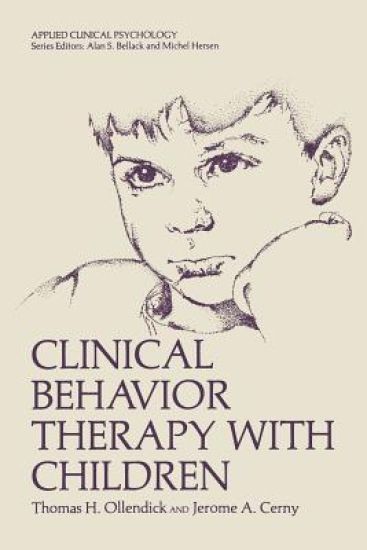
Clinical Behavior Therapy with Children

Clinical Behavior Therapy with Children

Thomas H. Ollendick; Jerome A. Cerny

Springer-Verlag New York Inc.
2012
nidottu
As noted by its title, the focus of this book is centered on an examination of behavior therapy with children in clinical settings. Throughout, our goal has been to examine theoretical underpinnings, review empirical research, and illustrate clinical utility for a variety of behavioral proce­ dures with children. In pursuing this goal, we have described child behavior therapy as an approach based on empirical methodology, de­ rived from behavioral principles, and focused upon adjustment disor­ ders of children. The hallmark of such an approach is its accountability­ the extent to which the procedures and techniques presented in this text are demonstrably accountable must be determined at least partially by the reader. As students of child behavior, we have become sensitized to two trends in behavior therapy with children during the preparation of this book. First, we have been concerned with the simple application of behavioral procedures to children, irrespective of developmental con­ siderations. All too frequently, assessment strategies and treatment pro­ cedures found to be useful with adults have been applied to children in an indiscriminate fashion. For example, some recent studies have examined and assessed the very same social skill deficits in children as in adults (e. g. , lack of eye contact, delayed latency of response, and absence of positive commendatory responses). Surely, skill deficits differ from age to age just as they differ from situation to situation.
Troubled Families-Problem Children

Troubled Families-Problem Children

Carolyn Webster-Stratton; Martin Herbert; Thomas H. Ollendick

JOHN WILEY SONS INC
1994
nidottu
Approximately two-thirds of all children referred to mental health agencies are labeled conduct-disordered. Typically such children exhibit antisocial behavior -- lying, cheating, stealing, firesetting, fighting, oppositional behavior and noncompliance to parental requests -- at abnormal rates. Troubled Families -- Problem Children helps the mental-health clinician understand the most effective "therapeutic processes" for supporting families who have children with conduct disorders. Help for these families is particularly urgent as the children are not only at increased risk of abuse by their parents but are more likely to be involved in school dropout, alcoholism, drug abuse, juvenile delinquency, etc., and also to suffer from poor physical health. From the Foreword by Thomas Ollendick "What sets this book apart from others of its genre is its careful attention to, and elucidation of, the 'collaborative process' in working with these oppositional, defiant, and conduct-disordered children and their families." "Webster-Stratton and Herbert do not just talk about troubled families and problem children; rather, they bring them to us in rich and graphic detail." "Troubled Families -- Problem Children is an outstanding and scholarly contribution to the field."