
Kirjailija
Thomas Harrison
Kirjat ja teokset yhdessä paikassa: 33 kirjaa, julkaisuja vuosilta 1996-2026, suosituimpien joukossa Her/Story. Vertaile teosten hintoja ja tarkista saatavuus suomalaisista kirjakaupoista.
33 kirjaa
Kirjojen julkaisuhaarukka 1996-2026.
A Funeral Sermon Occasioned by the Death of Mrs. Isabella Ewer, Late Wife of Mr. John Ewer, of Willesdon, Middlesex. Preach'd in Little Wild-Street, February 16, 1723. by Thomas Harrison.
Thomas Harrison
Gale Ecco, Print Editions
2010
pokkari


This work places Herodotus' religious beliefs at the centre of his conception of history, but by seeing instances of scepticism and of belief in relation to one another redresses the recent emphasis on the centrality of ritual, and presents Greek religion as a means for the explanation of events.

How did the Greeks view foreign peoples? This book considers what the Greeks thought of foreigners and their religions, cultures and politics, and what these beliefs and opinions reveal about the Greeks. The Greeks were occasionally intrigued by the customs and religions of the many different peoples with whom they came into contact; more often they were disdainful or dismissive, tending to regard non-Greeks as at best inferior, and at worst as candidates for conquest and enslavement. Facing up to this less attractive aspect of the classical tradition is vital, Thomas Harrison argues, to seeing both what the ancient world was really like and the full nature of its legacy in the modern. In this book he brings together outstanding European and American scholarship to show the difference and complexity of Greek representations of foreign peoples -- or barbarians, as the Greeks called them -- and how these representations changed over time. The book looks first at the main sources: the Histories of Herodotus, Greek tragedy, and Athenian art. Part II examines how the Greeks distinguished themselves from barbarians through myth, language and religion. Part III considers Greek representations of two different barbarian peoples -- the allegedly decadent and effeminate Persians, and the Egyptians, proverbial for their religious wisdom. In part IV three chapters trace the development of the Greek--barbarian antithesis in later history: in nineteenth-century scholarship, in Byzantine and modern Greece, and in western intellectual history. Of the twelve chapters six are published in English for the first time. The editor has provided an extensive general introduction, as well as introductions to the parts. The book contains two maps, a guide to further reading and an intellectual chronology. All passages of ancient languages are translated, and difficult terms are explained.

How did the Greeks view foreign peoples? This book considers what the Greeks thought of foreigners and their religions, cultures and politics, and what these beliefs and opinions reveal about the Greeks. The Greeks were occasionally intrigued by the customs and religions of the many different peoples with whom they came into contact; more often they were disdainful or dismissive, tending to regard non-Greeks as at best inferior, and at worst as candidates for conquest and enslavement. Facing up to this less attractive aspect of the classical tradition is vital, Thomas Harrison argues, to seeing both what the ancient world was really like and the full nature of its legacy in the modern. In this book he brings together outstanding European and American scholarship to show the difference and complexity of Greek representations of foreign peoples -- or barbarians, as the Greeks called them -- and how these representations changed over time. The book looks first at the main sources: the Histories of Herodotus, Greek tragedy, and Athenian art. Part II examines how the Greeks distinguished themselves from barbarians through myth, language and religion. Part III considers Greek representations of two different barbarian peoples -- the allegedly decadent and effeminate Persians, and the Egyptians, proverbial for their religious wisdom. In part IV three chapters trace the development of the Greek--barbarian antithesis in later history: in nineteenth-century scholarship, in Byzantine and modern Greece, and in western intellectual history. Of the twelve chapters six are published in English for the first time. The editor has provided an extensive general introduction, as well as introductions to the parts. The book contains two maps, a guide to further reading and an intellectual chronology. All passages of ancient languages are translated, and difficult terms are explained.
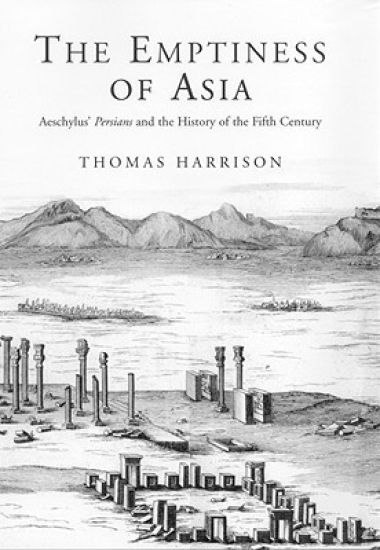
Aeschylus' "Persians" is not only the first surviving Greek drama, it is also the ony tragedy to take for its subject historical rather than mythical events: the repulse of the army of Xerxes at Salamis in 480 BC. It has frequently been mined for information on the tactics of Salamis or the Greeks' knowledge of Persian names or institutions, but it also has a broader value, one that has often been realised. What does it tell us about Greek representations of Persia, or of the Athenians' self-image? What can we glean from it of the politics of early fifth-century Athens, or of the Athenians' conception of their empire? How, if at all, can such questions be approached without doing violence to the "Persians" as a drama? What are the implications of the play for the nature of tragedy? This book provides aims to provide both a more satisfactory reading of the "Persians" and a richer picture of fifth-century history - the history both of events and of ideology.
Critics of Herodotus have generally shown an unease in the face of the religious passages of the Histories, a sense that he 'lets himself down' by delving into matters irrelevant to the proper purpose of history. They have tended consequently to latch on to isolated instances of scepticism in an attempt to vindicate Herodotus from imagined charges of obscurantism. Historians of Greek religion, on the other hand, by their concentration on ritual as the central feature of Greek religious experience, have often neglected the value of literary sources as evidence of religious belief; indeed the term belief has become something of a dirty word. In this book, the first full-length study of the subject in English, Dr Harrison not only places Herodotus' religious beliefs at the centre of his conception of history, but - by seeing instances of scepticism and of belief in relation to one another, and by the use of analogy from anthropological literature - also redresses the recent emphasis on the centrality of ritual.
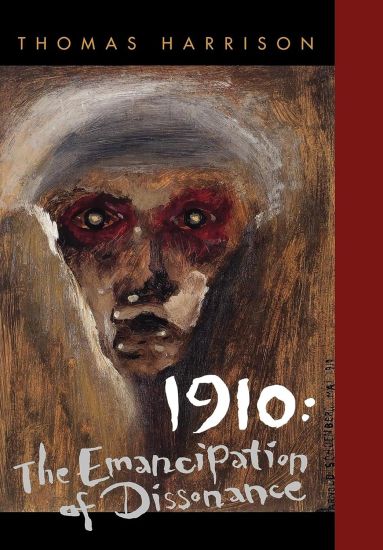
The year 1910 marks an astonishing, and largely unrecognized, juncture in Western history. In this perceptive interdisciplinary analysis, Thomas Harrison addresses the extraordinary intellectual achievement of the time. Focusing on the cultural climate of Middle Europe and paying particular attention to the life and work of Carlo Michelstaedter, he deftly portrays the reciprocal implications of different discourses - philosophy, literature, sociology, music, and painting. His beautifully balanced and deeply informed study provides a new, wider, and more ambitious definition of expressionism and shows the significance of this movement in shaping the artistic and intellectual mood of the age. "1910" probes the recurrent themes and obsessions in the work of intellectuals as diverse as Egon Schiele, Georg Trakl, Vasily Kandinsky, Georg Lukacs, Georg Simmel, Dino Campana, and Arnold Schoenberg. Together with Michelstaedter, who committed suicide in 1910 at the age of 23, these thinkers shared the essential concerns of expressionism: a sense of irresolvable conflict in human existence, the philosophical status of death, and a quest for the nature of human subjectivity. Expressionism, Harrison argues provocatively, was a last, desperate attempt by the intelligentsia to defend some of the most venerable assumptions of European culture. This ideological desperation, he claims, was more than a spiritual prelude to World War I: it was an unheeded, prophetic critique.