

Kirjailija
Thomas Jay Oord
Kirjat ja teokset yhdessä paikassa: 22 kirjaa, julkaisuja vuosilta 2005-2026, suosituimpien joukossa Renovating Holiness. Vertaile teosten hintoja ja tarkista saatavuus suomalaisista kirjakaupoista.
22 kirjaa
Kirjojen julkaisuhaarukka 2005-2026.
This is the first book ever written with the title A Systematic Theology of Love. Thomas Jay Oord not only puts love first, but he also offers an experience-informed and rationally-coherent theology. He argues that the universal Spirit always loves creation in uncontrolling and others-empowering ways. This progressive proposal draws heavily from the main themes of Christian scripture. But it's also attuned to other religious traditions, science, racial and gender matters, ethical concerns, philosophy, suffering, and more. This Systematic Theology of Love operates from a particular version of open and relational theology. That version prioritizes love, replaces omnipotence with amipotence, opposes divine timelessness and embraces a living deity, says God is relational rather than unaffected, rejects creatio ex nihilo but claims God is the ever creator, promotes pluriform love, and much more. Oord breaks so much new theological ground He must in order to overturn so many bad ideas advanced by other systematic theologies. All the while, the logic and experience of love orients his vision. Get this ground-breaking book from Thomas Jay Oord
Contrary to what some may say, this sequel, rather than being nine tenths of a lie, is an open and honest set of answers to another set of questions wrestled with by countless Christians the world over. And while nothing in Heretic, Too is completely unique-that is, much of the theology contained herein goes back as far as Christianity itself-Distefano again creatively puts his unique perspective and humor onto the pages with care. Restorative and healing, this is a must read for any who continue to question their inherited doctrines.
Deconstruction is hard Bad views of God and harmful experiences lead many of us to deconstruct. But we're right to run from the nonsense we've been taught and from those who hurt us.God After Deconstruction will not be welcomed by traditionalists. It's not a book for people who think conventional theology works. It isn't for people who just want to tweak a bit what they've been taught.Thomas Jay Oord and Tripp Fuller offer an open and relational vision of God. This vision makes sense; it fits our experience; it's livable. The open and relational view aligns with our deep intuitions about love and freedom.God After Deconstruction is for those deconstructing and those wanting help after deconstruction. It's for people in the fire and those with scars.God After Deconstruction is an adventure for lovers in tumultuous times Buy this book.Six-Word Endorsements for God After Deconstruction"When everything goes, only God remains." -- Simon Cross, chair of the Progressive Christianity Network (Britain)"Helpful companion on your deconstruction journey."-- EDJ, author of Deconstructing Religious Sexual Trauma: A Memoir"A faith beyond deconstruction is possible." -- Kathy Escobar, author of Faith Shift and Practicing "A relational way to think about purpose." -- Jonathan J. Foster, author of indigo: the color of grief"This is a really great book." -- Keith Giles, author of the 7-part "Jesus Un" book series"A God-centric approach to deconstruction." -- David Hayward, aka NakedPastor"A compassionate primer on our deconstruction."-- Angela Herrington, author of Deconstructing Your Faith Without Losing Yourself"A thoughtful third way - highly recommended."-- Olivia Jackson, author of (Un)Certain"Life-giving for doubters, deconstructors, wonderers."-- Mark Karris, author of The Diabolical Trinity"Powerful, essential, required reading for everyone." -- Grace Ji-Sun Kim, Madang Podcast and author of Invisible"Adventure guide to life after deconstruction."-- Brian D. McLaren, author of Do I Stay Christian?"I've always believed in this God " -- Mason Mennenga, A People's Theology podcast"A deconstruction journey worth taking "-- Sherri Pallas, author of We Have Ruined God"An exvangelical deconstruction guide to God." -- Jim Palmer, author of Inner Anarchy "A haven for the hard questions."-- Elizabeth Petters, the Deconstructing Mamas podcast"Faces the hard questions without blinking."-- Janet Kellogg Ray, The God of Monkey Science"The God you need right now "-- Gary Alan Taylor, the Sophia Society"Everyone deconstructing should read this book."-- Tim Whitaker, creator of The New Evangelicals"The God of Love always triumphs " -- John Williamson, The Deconstructionists Podcast

Omnipotence is dead. At least it should be. It has no biblical support. And it dies a death of a thousand qualifications in philosophy. Those harmed and hurting wonder why an omnipotent and loving God doesn't prevent pointless pain. Evil buries omnipotence six feet under. But the death of omnipotence is not the death of God. In this ground-breaking book, best-selling and award-winning author Thomas Jay Oord explains why omnipotence should be rejected. But Oord offers a replacement: amipotence, the power of love. If we think love shapes and guides God's power, we make better sense of life. We make better sense of the Bible. Amipotence explains why God doesn't prevent genuine evil and it overcomes other obstacles to belief. An amipotent Spirit empowers all that is loving, true, beautiful, and good. No book makes a bolder but more needed argument for why God is not all-powerful. Those who care about God, love, scripture, and logic will find what they've long been looking for. Get a copy of The Death of Omnipotence and Birth of Amipotence Endorsements: "Omnipotence has long been considered a basic, non-negotiable, characteristic of God. But is it biblical? And does it push us toward theological landmines that blow up faith? In this book, Oord, with his typical gentle candor, lays out the complex issues in clear and readable chunks. In the end, Oord points to the beauty and comfort of a God who is uncontrolling love." - Peter Enns, professor of biblical studies at Eastern University, author of Curveball "Thomas Jay Oord challenges one of the most fundamental attributes of God-omnipotence. He discloses that a narrow view of God as 'Almighty' is neither biblical nor adequately describes the God of Jesus Christ. Oord offers a new view of God as 'amipotent.' The power of God is the power of love, and the power of unconditional love is our strength. Oord has made an important contribution to restoring the biblical God, a God who is ever faithful in love, not a power over us but the power beneath our wings." - Ilia Delio, OSF, Josephine C. Connelly Endowed Chair in Theology, Villanova University "Omnipotence is widely believed to be one of the most important attributes of God. In this book, Thomas Jay Oord proposes a highly original and thought-provoking thesis: instead of omnipotent, God should be considered 'amipotent.' This is an important book which can radically change the way we approach central problems in philosophy of religion and philosophical theology." - Yujin Nagasawa, H. G. Wood Professor of the Philosophy of Religion, University of Birmingham "Finally God's love has been saved from God's control-faithfully, definitively, attractively In this vibrantly accessible work, Thomas Jay Oord puts to rest the demoralizing, incoherent, and by the way nonbiblical notion of controlling omnipotence, used to justify endless injustice. In its stead, he unleashes 'amipotence'- code for the power of love. Its time has come: preach it, teach it, live it " - Catherine Keller, Drew Theological School, and Author of Political Theology of Love "This book provides a provocative argument that cannot be easily dismissed. This is the kind of nuance that contemporary debates over models of God need to consider." - R.T. Mullins, Professor of Philosophical Theology, University of Lucerne
Thomas Jay Oord is changing the landscape of theology and spirituality.In popular and academic books, Oord addresses the biggest questions we ask. Using philosophy, science, scripture, experience, and more, he offers plausible answers. Sometimes what he says shocks or jars readers; new ideas can have that effect. But many people are finding Oord's work makes better sense of God and life than alternatives.SacraSage Press offers this collection of sample chapters from Oord's best-selling books. These include God Can't, Open and Relational Theology, The Uncontrolling Love of God, Pluriform Love, and Questions and Answers for God Can't.Read statements like..."God can't prevent evil singlehandedly.""Love is the central theme of scripture, although some passages oppose love.""Creatio ex nihilo is not biblically justified and makes solving the problem of evil impossible.""God can't control anyone or anything, because God loves everyone and everything.""Prayer makes a difference, but it doesn't enable God to control.""We can't worship a wholly mysterious God, because we'd never know who the Devil he may be.""The God who causes or allows evil is unworthy of worship.""Jesus' uncontrolling love reveals God's love as uncontrolling.""When it comes to God, we can't be certain, but we aren't clueless.""Love's meaning is uniform, but its expressions are pluriform.""If God foreknows everything, creaturely freedom, love, and randomness are myths.""God is neither omnipotent nor impotent but amipotent.""God's relentless love sends no one to hell but invites everyone to loving relationship."Taste what makes Thomas Jay Oord's ideas delectable.Get a copy now
"A masterpiece from the preeminent theologian of love "A strong case can be made that love is the core of Christian faith. And yet Christians often fail to give love center stage in biblical studies and theology. And most fail to explain what they mean by love.Why is this?Thomas Jay Oord explores this question and offers ground-breaking answers. Oord addresses leading Christian thinkers today and of yesteryear. He explains biblical forms of love, such as agape, philia, hesed, and ahavah. We should understand love's meaning as uniform, he says, but its expressions are pluriform.Widely regarded as the world's foremost theologian of love, Thomas Jay Oord tackles our biggest puzzles about the nature and meaning of love, divine and creaturely. His proposals are novel. They align with love described in scripture and expressed in everyday experience. Oord also provides radical and yet persuasive answers to questions about evil, hell, the Big Bang, divine violence, divine abandonment, and more.Pluriform Love changes the landscape of Christian love studies....What they're saying..."Thomas Jay Oord is the first to systematically clarify a variety of types of love and show that all are characteristic of God. This is an original contribution to theology. Though a complex task, Oord writes in an accessible and attractive way."John B. Cobb, Jr., Cobb Institute, Author of Salvation: Jesus's Mission and Ours"Christian theology in the years to come will need a facelift-a true restoration of the biblical witness to the centrality of God's love. If we wish to help make the faith truly relatable to our world today, Oord's clear, compassionate, and compelling voice is one we will be thankful for."Peter Enns, Eastern University and Co-host of The Bible for Normal People"Thomas Jay Oord adds to his proposals on open and relational theology, developing a theology of love which is both uniform in meaning and pluriform according to situation and recipients. The volume is indispensable for those researching the nature of love." Paul Fiddes, University of Oxford"The glowing multiform forcefield of love embraces every sentence of Pluriform Love. Free of sentimentality and pretense, refusing to pit eros and agape against each other, it unfolds a full-scale theology. This amorous vision will attract a wide readership." Catherine Keller, Drew University, Author of Facing Apocalypse"Thomas Oord is a global leader exploring the primacy of love within Christian thought and practice. In this book, he presents a theology of love in a loving way. When he grapples with the Scriptures, he shows an attitude of fairness. His writing style combines scholarly depth with accessible simplicity. In the end, Oord makes a radical claim: much of traditional Christian theology cannot take love as seriously as they must. Love must revolutionize Christian theology, and Oord explains how."Brian D. McLaren, Author of Do I Stay Christian?"This is a rigorous, provocative, creative, and very readable account of the meaning of love, especially divine love. It's a very important contribution to theological thought on this central topic."Keith Ward, University of Oxford...

Verletzte Menschen stellen aufrichtige Fragen ber Gott und das Leid. Einige "Antworten", die sie erhalten, verweisen auf ein Mysterium: "Gottes Wege sind nicht unsere Wege."Einige Antworten vermitteln, dass Gott das B se f r einen gr eren Zweck zul sst. Einige sagen, das B se sei Gottes Strafe.Diese blichen Antworten versagen. Sie belegen nicht die Wahrheit, dass Gott jeden immerw hrend liebt. "Gott kann das nicht " gibt hier eine glaubw rdige Antwort, warum ein guter und m chtiger Gott das B se nicht verhindert.Der Autor Thomas Jay Oord ist der berzeugung, dass Gottes Liebe von Natur aus nicht kontrollierend ist. Gott liebt jeden und alles, also kann Gott auf niemanden und nichts erzwingende Kontrolle aus ben. Dies bedeutet, dass Gott das B se nicht im Alleingang verhindern kann. Gott kann Verursacher von B sem nicht einfach stoppen, egal ob Menschen, Tiere, Organismen oder leblose Gegenst nde und Kr fte.In "Gott kann das nicht " gibt Oord einen plausiblen Grund an, warum einige geheilt werden, andere jedoch nicht. Gott arbeitet immer daran, alle zu heilen, aber manchmal kooperieren unsere K rper, Organismen oder andere Gesch pfe nicht mit Gottes Heilungsarbeit. Oder die Bedingungen der jetzigen Sch pfung stehen einer Heilung entgegen, die Gott tun m chte.Einige denken, dass Gott Leiden verursacht oder zul sst, um uns Lektionen zu lehren oder unseren Charakter zu formen. "Gott kann das nicht " widerspricht dem. Oord sagt, dass Gott vielmehr das Gute aus dem B sen - das Gott niemals wollte - hervorbringt. Gott benutzt Schmerz und Leiden, ohne es zu wollen oder zuzulassen.Die meisten Menschen glauben, dass Gott das B se im Alleingang berwinden kann. In "Gott kann das nicht " erkl rt Oord, dass Gott Kooperation braucht, damit die Liebe jetzt und sp ter regiert. Dies f hrt auch zu einer besseren Sicht auf das Leben nach dem Tod, welche er "unnachgiebige Liebe" nennt. Diese lehnt traditionelle Vorstellungen von Himmel, H lle und Vernichtung ab. Die unnachgiebige Liebe h lt an der M glichkeit fest, dass alle Kreaturen und die gesamte Sch pfung auf Gottes Liebe reagieren.Gott kann das nicht ist in verst ndlicher Sprache geschrieben. Thomas Jay Oords Reputation als weltbekannter Theologe verleiht den radikalen Ideen des Buches dabei gro e Glaubw rdigkeit. Er erl utert diese Gedanken durch wahre Geschichten, Illustrationen und den Schriftbefund.Gott kann das nicht ist f r diejenigen geschrieben, die sinnvolle Antworten auf Trag dien, Missbrauch und anderes bel suchen
Should we attempt to understand (macro-)evolutionary biology, in the twenty-first century, as secular or sacred? This book will attempt to answer this question by exploring the secular evolutionary worldview, the author's view of kenotic-causation, Whitehead's views on chance, Derrida's views on non-human animals, a statement upon the God of chance and purpose, Augustine's various theologies of creation, a decidedly non-dualistic (macro-)evolution, a provocative thesis regarding evolutionary Christology, the connection between kenosis and emergence, and an explication of both Anders Nygren and Thomas Jay Oord's views of love in the contemporary environ. It also develops the author's personal view regarding necessary, kenotically-donated, and self-giving love, and argues that kenosis and emergence can add to the discussion of understanding the theology-science-love symbiosis. It advocates and explicates herein a monistic process-based view of the overlapping relationship between theology and science.
Should we attempt to understand (macro-)evolutionary biology, in the twenty-first century, as secular or sacred? This book will attempt to answer this question by exploring the secular evolutionary worldview, the author's view of kenotic-causation, Whitehead's views on chance, Derrida's views on non-human animals, a statement upon the God of chance and purpose, Augustine's various theologies of creation, a decidedly non-dualistic (macro-)evolution, a provocative thesis regarding evolutionary Christology, the connection between kenosis and emergence, and an explication of both Anders Nygren and Thomas Jay Oord's views of love in the contemporary environ. It also develops the author's personal view regarding necessary, kenotically-donated, and self-giving love, and argues that kenosis and emergence can add to the discussion of understanding the theology-science-love symbiosis. It advocates and explicates herein a monistic process-based view of the overlapping relationship between theology and science.
If God can't prevent evil, what can God do? In his best-selling book, God Can't: How to Believe in God and Love After Tragedy, Abuse, and Other Evils, Thomas Jay Oord solves the problem of suffering. Oord offers five aspects of a real answer to why a loving God doesn't prevent pointless pain. The most helpful: God can't stop evil singlehandedly. In this follow-up, Oord answers questions God Can't readers asked about his ground-breaking proposals. The answers are in this book, and they solve age-old conundrums. Questions and Answers for God Can't addresses questions such as... If God can't control, why pray?If God's love is uncontrolling, how do we explain miracles?What does an uncontrolling God do?What does it mean to say God loves everyone and everything?How does Jesus fit into a theology of uncontrolling love?If a loving God created the universe, why can't God stop evil?What hope do we have if God's love is noncontrolling?How do you know God can't prevent evil? In a conversational style, Oord offers chapter-length answers. The result is a compelling view of God Questions and Answers for God Can't answers questions clear-eyed thinkers ask. This book deepens our trust in a God of uncontrolling love. Thinking people need this book Topics of interest: prayer, divine action, hope, miracles, Genesis, the meaning of love, eschatology, suffering, Jesus, the problem of evil, the virgin birth, John Wesley, providence, biblical inspiration, the afterlife, Coronavirus, worship, creation from nothing, doubt, progress, resurrection, science
Hurting people ask heart-felt questions about God and suffering. Some "answers" they receive appeal to mystery: "God's ways are not our ways." Some answers say God allows evil for a greater purpose. Some say evil is God's punishment.The usual answers fail. They don't support the truth God loves everyone all the time. God Can't gives a believable answer to why a good and powerful God doesn't prevent evil.Author Thomas Jay Oord says God's love is inherently uncontrolling. God loves everyone and everything, so God can't control anyone or anything. This means God cannot prevent evil singlehandedly. God can't stop evildoers, whether human, animal, organism, or inanimate objects and forces.In God Can't, Oord gives a plausible reason why some are healed but many others are not. God always works to heal everyone, but sometimes our bodies, organisms, or other creatures do not cooperate with God's healing work. Or the conditions of creation are not right for the healing God wants to do.Some people think God causes or allows suffering to teach us lessons or build our character. God Can't disagrees. Oord says God squeezes good from the evil God didn't want in the first place. God uses pain and suffering without willing or even allowing it.Most people think God can overcome evil singlehandedly. In God Can't, Oord says God needs cooperation for love to reign now and later. This leads to a better view of the afterlife he calls, "relentless love." It rejects traditional ideas of heaven, hell, and annihilation. Relentless love holds to the possibility all creatures and all creation will respond to God's love.God Can't is written in understandable language. Thomas Jay Oord's status as a world-renown theologian brings credibility to the book's radical ideas. He explains these ideas through true stories, illustrations, and scripture. God Can't is for those who want answers to tragedy, abuse, and other evils that make sense What They're Saying..."If conventional notions of God make less and less sense to you, you'll find Thomas Jay Oord's new book a breath of fresh air. Simply put, "God Can't" presents an understanding of God that thoughtful, ethical people can believe in." -- Brian D. McLaren, author of The Great Spiritual Migration"Victims of trauma sometimes hear theological responses that imply their suffering is somehow "God's will." A more careful theological reflection on the nature of the power of a God who is love can help. Oord gives us a clear and compelling alternative in this profoundly insightful and admirably concrete and accessible book."-- Dr. Anna Case-Winters, Professor of Theology at McCormick Theological Seminary"I know of no book that speaks to suffering with the depth of theological sophistication and psychological sensitivity as God Can't. This book is a rare combination of depth and accessibility, truly written for the wounded. I recommend it to my students, parishioners, and therapy clients." -- Dr. Brad D. Strawn, Professor of the Integration of Psychology and Theology, Fuller Theological SeminaryTo see more endorsements and reviews, go to GodCant.com

Dios No Puede: Cómo Creer En Dios Y El Amor Después de la Tragedia, El Abuso Y Otros Males
Thomas Jay Oord
Sacrasage Press
2019
nidottu
Las personas heridas hacen preguntas sinceras acerca de Dios y el sufrimiento. Algunas "respuestas" que reciben apelan al misterio: "los caminos de Dios no son nuestros caminos." Algunas respuestas dicen que Dios permite el mal por alg n prop sito mayor. Algunas dicen que el mal es castigo de Dios. Las respuestas usuales fracasan. No apoyan la verdad de que Dios ama a todos todo el tiempo. Dios No Puede da una respuesta cre ble a por qu un Dios bueno y poderoso no impide el mal. El autor Thomas Jay Oord dice que el amor de Dios es inherentemente no controlador. Dios ama a todas las personas y a todas las cosas, as que Dios no puede controlar a nadie ni a nada. Esto significa que Dios no puede impedir el mal sin ayuda. Dios no puede detener a los malhechores, ya sean humanos, animales, organismos u objetos inanimados y fuerzas. En Dios No Puede, Oord da una raz n plausible por qu algunos son sanados pero muchos otros no lo son. Dios siempre obra para sanar a todos, pero a veces nuestros cuerpos, organismos u otras criaturas no cooperan con la obra de sanidad de Dios. O las condiciones de la creaci n no son adecuadas para la sanidad que Dios quiere realizar. Algunas personas piensan que Dios causa o permite el sufrimiento para ense arnos una lecci n o para edificar nuestro car cter. Dios No Puede no est de acuerdo. Oord dice que Dios exprime bien del mal que Dios no quer a en primer lugar. Dios usa el dolor y el sufrimiento sin quererlo o siquiera permitirlo. La mayor a de las personas creen que Dios puede vencer el mal sin ayuda. En Dios No Puede, Oord dice que Dios necesita cooperaci n para que el amor reine ahora y despu s. Esto conduce a una mejor perspectiva de la vida despu s de la muerte que l llama, "amor incesante." sta rechaza las ideas tradicionales del cielo, el infierno y la aniquilaci n. El amor incesante se aferra a la posibilidad de que todas las criaturas y toda la creaci n responder n al amor de Dios. Dios No Puede est escrito en lenguaje comprensible. El estatus de Thomas Jay Oord como te logo de renombre mundial trae credibilidad a las ideas radicales del libro. l explica estas ideas por medio de historias verdaderas, ilustraciones y la escritura. Dios No Puede es para quienes quieren respuestas a la tragedia, el abuso y otros males que tengan sentido Lo Que Est n Diciendo... "Si las nociones convencionales de Dios tienen cada vez menos sentido para ti, encontrar s en el nuevo libro de Thomas Jay Oord una bocanada de aire fresco. En pocas palabras, "Dios No Puede" presenta una comprensi n de Dios que las personas pensantes y ticas pueden creer."-- Brian D. McLaren, autor de The Great Spiritual Migration "Las v ctimas del trauma a veces escuchan respuestas teol gicas que implican que su sufrimiento de alguna manera es "voluntad de Dios." Una reflexi n teol gica m s cuidadosa sobre la naturaleza del poder de un Dios que es amor puede ayudar. Oord nos da una clara y convincente alternativa en su profundamente perspicaz y admirablemente concreto y accesible libro." -- Dr. Anna Case-Winters, Profesora de Teolog a en McCormick Theological Seminary "No conozco ning n libro que trate el sufrimiento con la profundidad de la sofisticaci n teol gica y la sensibilidad psicol gica como Dios No Puede. Este libro es una rara combinaci n de profundidad y accesibilidad, verdaderamente escrito para los heridos. Yo lo recomiendo a mis estudiantes, feligreses y clientes de terapia."-- Dr. Brad D. Strawn, Profesor de la Integraci n de Psicolog a y Teolog a, Fuller Theological Seminary Para ver m s recomendaciones y rese as, ve a GodCant.com
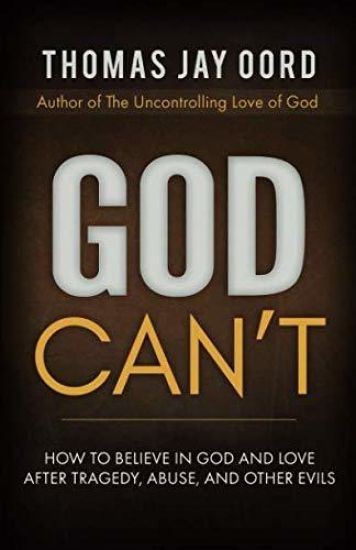
Hurting people ask heart-felt questions about God and suffering. Some "answers" they receive appeal to mystery: "God's ways are not our ways". Some answers say God allows evil for a greater purpose. Some say evil is God's punishment. The usual answers fail. They don't support the truth God loves everyone all the time. God Can't gives a believable answer to why a good and powerful God doesn't prevent evil. Author Thomas Jay Oord says God's love is inherently uncontrolling. God loves everyone and everything, so God can't control anyone or anything. This means God cannot prevent evil singlehandedly. God can't stop evildoers, whether human, animal, organisms, or inanimate objects and forces. In God Can't, Oord gives a plausible reason why some are healed but many others are not. God always works to heal everyone, but sometimes our bodies, organisms, or other creatures do not cooperate with God's healing work. Or the conditions of creation are not right for the healing God wants to do. Some people think God causes or allows suffering to teach us lessons or build our character. God Can't disagrees. Oord says God squeezes good from the evil God didn't want in the first place. God uses pain and suffering without willing or even allowing it. Most people think God can overcome evil singlehandedly. In God Can't, Oord says God needs cooperation for love to reign now and later. This leads to a better view of the afterlife he calls, "relentless love." It rejects traditional ideas of heaven, hell, and annihilation. Relentless love holds to the possibility all creatures and all creation will respond to God's love. God Can't is written in understandable language. Thomas Jay Oord's status as a world-renown theologian brings credibility to the book's radical ideas. He explains these ideas through true stories, illustrations, and scripture. God Can't is for those who want answers to tragedy, abuse, and other evils that make sense What They're Saying... "If conventional notions of God make less and less sense to you, you'll find Thomas Jay Oord's new book a breath of fresh air. Simply put, "God Can't" presents an understanding of God that thoughtful, ethical people can believe in."-- Brian D. McLaren, author of The Great Spiritual Migration "I did not want this book to end. I wish Dr. Oord had written it 100 years ago, or 1000 years ago... To find your understanding of life and your love for God renewed, read this book."-- Dr. Karen Strand Winslow, Ph.D., Biblical and Jewish Studies Professor of Bible, Azusa Pacific University "As a clinical psychologist working with people in trauma, I owe Thomas Jay Oord an enormous debt of gratitude for recasting the so-called problem of evil in terms that are conceptually satisfying, theologically consistent, and pastorally liberating."-- Dr Roger Bretherton- Principal Lecturer at the University of Lincoln (UK), Chair of the British Association of Christians in Psychology "Victims of trauma sometimes hear theological responses that imply their suffering is somehow "God's will." A more careful theological reflection on the nature of the power of a God who is love can help. Oord gives us a clear and compelling alternative in this profoundly insightful and admirably concrete and accessible book."-- Dr. Anna Case-Winters, Professor of Theology at McCormick Theological Seminary "I know of no book that speaks to suffering with the depth of theological sophistication and psychological sensitivity as God Can't. This book is a rare combination of depth and accessibility, truly written for the wounded. I recommend it to my students, parishioners, and therapy clients."-- Dr. Brad D. Strawn, Professor of the Integration of Psychology and Theology, Fuller Theological Seminary
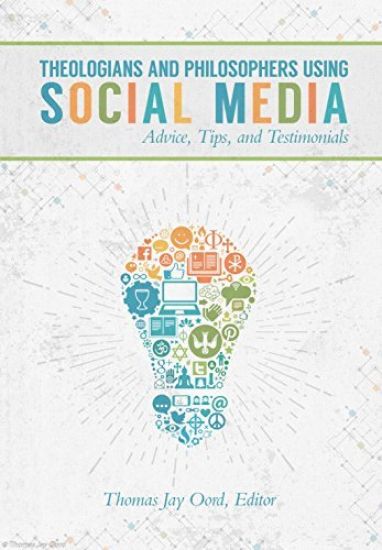
The insights in these 90+ essays are nothing short of inspiring Their tips on best practices for social engagement, time management, social media as a resource for scholarship or creativity, technology and pedagogy, etc. will help readers tremendously.The contributors are diverse. They include....- Public theologians like Ben Corey, Brian McLaren, and Richard Rohr- Younger scholars like Tripp Fuller, Jory Micah, and Alexis Waggoner- Biblical scholars like Michael Gorman, Joel Green, and Daniel Kirk- Philosophers like Helen De Cruz, Aaron Simmons, and Kevin Timpe- Establish scholars like James Crossley, Kwok Pui-lan, and Amos Yong- Scholars outside North America like Deane Galbraith, RT Mullins, Hanna Reichel, and Atle Sovik- Pastoral theologians like Patricia Farmer, Len Sweet, and Kurt Willems- Historical theologians like Kim Alexander and Christine Helmer- Science and religion scholars like Ron Cole-Turner, Karl Giberson, Lea Schweitz, and Jim Stump- Constructive theologians like Oliver Crisp, Grace Ji-Sun Kim, and Jason Lepoj rvi- Ethicists like Miguel De La Torre, David Gushee, and Michael Hardin...and the list goes on Whether the reader is an armchair theologian, a professional scholar, a graduate student, or simply interested in how social media is changing religious and philosophical studies, that reader will find Theologians and Philosophers Using Social Media of great help. pedagogy, religious education, philosophy, religion, theology, Christian education, activism, online education, Facebook, moocs, technology, social media
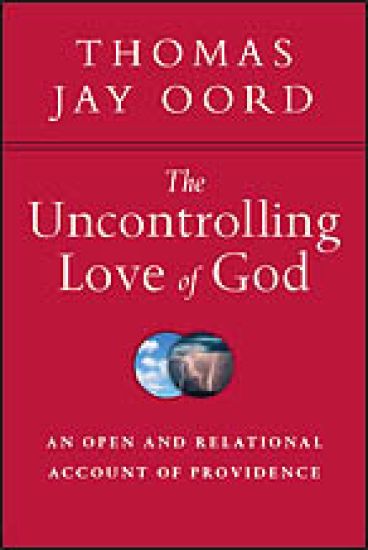
The Uncontrolling Love of God – An Open and Relational Account of Providence
Thomas Jay Oord
Inter-Varsity Press,US
2015
nidottu
IVP Readers' Choice Award Rarely does a new theological position emerge to account well for life in the world, including not only goodness and beauty but also tragedy and randomness. Drawing from Scripture, science, philosophy and various theological traditions, Thomas Jay Oord offers a novel theology of providence—essential kenosis—that emphasizes God's inherently noncoercive love in relation to creation. The Uncontrolling Love of God provides a clear and powerful response to one of the perennial challenges to Christian faith.
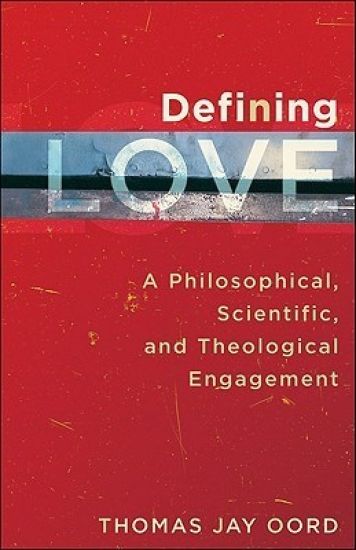
Defining Love – A Philosophical, Scientific, and Theological Engagement
Thomas Jay Oord
Brazos Press, Div of Baker Publishing Group
2010
nidottu
Some scientific studies suggest that human beings are innately selfish and that Christian virtues like self-sacrifice are a delusion. In this intriguing volume, esteemed theologian Thomas Jay Oord interprets the scientific research and responds from a theological and philosophical standpoint, providing a state-of-the-art overview of love and altruism studies. He offers a definition of love that is scientifically, theologically, and philosophically adequate. As Oord helps readers arrive at a clearer understanding of the definition, recipients, and forms of love, he mounts a case for Christian agape and ultimately for a loving God.