Kirjojen hintavertailu. Mukana 12 390 323 kirjaa ja 12 kauppaa.

Kirjailija

Thomas L. Haskell

Kirjat ja teokset yhdessä paikassa: 2 kirjaa, julkaisuja vuodelta 2001, suosituimpien joukossa The Emergence of Professional Social Science. Vertaile teosten hintoja ja tarkista saatavuus suomalaisista kirjakaupoista.

2 kirjaa

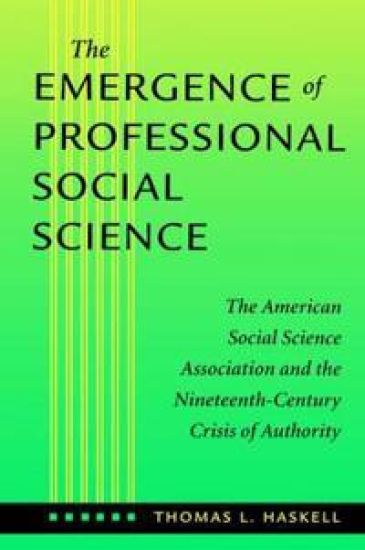
The Emergence of Professional Social Science

The Emergence of Professional Social Science

Thomas L. Haskell

Johns Hopkins University Press
2001
pokkari
Thomas L. Haskell's The Emergence of Professional Social Science signaled the beginning of his distinguished career as a historian of ideas and critic of historical logic. His first book, now available in this paperback edition with a new preface by the author, explores the background and premises of the American Social Science Association (ASSA)-the first American group dedicated to the "scientific" study of humanity and society. Haskell thus helps us to understand a sea change in American intellectual life-the rise of this thing called "social science," the power and implications of the new trend toward secular professionalism, and, ultimately, how it happened that commonsense modes of explanation in terms of conscious choices by individuals came to be overshadowed by a mode of explanation that systematically construes people as creatures of circumstance. How, Haskell asks in his conclusion, did the development of modern society alter "the way we explain human affairs and conceive of man?" This edition includes a new appendix, listing all articles appearing in the Journal of Social Science from 1869 to 1901.
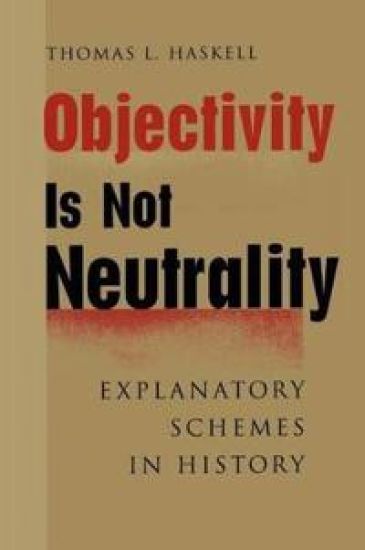
Objectivity Is Not Neutrality

Objectivity Is Not Neutrality

Thomas L. Haskell

Johns Hopkins University Press
2001
pokkari
In Objectivity Is Not Neutrality, Thomas L. Haskell argues for a moderate historicism that acknowledges the force of perspective and reaffirms the pluralistic practices of a liberal democratic society-even while upholding time-honored distinctions between fact and fiction, scholarship and propaganda, right and might. Haskell addresses questions that will interest philosophers and literary theorists no less than historians, exploring topics ranging from the productivity of slave labor to the cultural concomitants of capitalism, from John Stuart Mill's youthful "mental crisis" to the cognitive preconditions that set the stage for antislavery and other humanitarian reforms after 1750. He traces the surprisingly short history of the word responsibility, which turns out to be no older than the United States. He examines the reasons for the rising authority of professional experts in nineteenth-century America. And he wonders whether the epistemological radicalism of recent years leaves us with any adequate basis for justifying human rights-rights of academic freedom, for example, or the right not to be tortured. Written by a thoughtful critic of the historical profession, Objectivity Is Not Neutrality calls upon historians to think deeply about the nature of historical explanation and to acknowledge more fully than ever before the theoretical dimension of their work.