Kirjojen hintavertailu. Mukana 12 390 323 kirjaa ja 12 kauppaa.

Kirjailija

Thomas L Martin

Kirjat ja teokset yhdessä paikassa: 7 kirjaa, julkaisuja vuosilta 1963-2022, suosituimpien joukossa Christ The Life. Vertaile teosten hintoja ja tarkista saatavuus suomalaisista kirjakaupoista.

Mukana myös kirjoitusasut: Thomas L. Martin

7 kirjaa

Kirjojen julkaisuhaarukka 1963-2022.

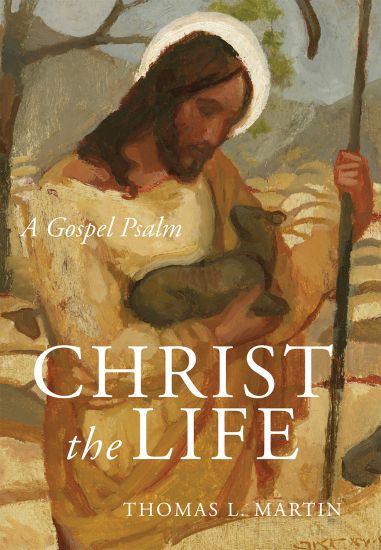
Christ The Life

Christ The Life

Thomas L Martin

PARACLETE PRESS
2022
sidottu
The Life of Christ As It's Never Been Told Before Every scene, in wondrous prose, comes to life anew in this powerful book. How might a literary artist write the incomparable story of Christ for our time? God said so much in the life of his Son, our perfect Savior and his fullest Word. The most beautiful poem in the world occurred when God spoke his Word in time: God's divine poem performed, as old Simeon says, "in the sight of all nations." As readers walk through these pages, sensory detail brings life to the story of Jesus in Roman-occupied Judea of the first century, his words and life unfolding across the major scenes of the Gospels with renewed significance. Christ the Life tells the story of "the consolation of the ages" in a fresh and compelling way to the next generation.
The Renaissance and the Postmodern

The Renaissance and the Postmodern

Thomas L Martin; Duke Pesta

Routledge
2019
nidottu
The Renaissance and the Postmodern reconsiders postmodern readings of Renaissance texts by engaging in a dialectics the authors call comparative critical values. Rather than concede the contemporary hierarchy of theory over literature, the book takes the novel approach of consulting major Renaissance writers about the values at work in postmodern representations of early modern culture. As criticism seeks new directions and takes new forms, insufficient attention has been paid to the literary and philosophical values won and lost in the exchanges. One result is that the way we understand the logical connections, the literary textures, and the philosophical impulses that make up the literature of writers like Spenser, Shakespeare, and Milton has fundamentally changed. Examining theoretical debates now in light of polemical controversies then, the book goes beyond earlier studies in that it systematically examines the effects of these newer critical approaches across their materialist, historicist, deconstructive, and psychoanalytic manifestations. Bringing gravity and focus to this question of critical continuities and discontinuities, each chapter counterposes one major Renaissance voice with a postmodern one to probe these issues and with them the value of the cultural past. As voices on both sides of the historical divide illuminate key differences between the Renaissance and the Postmodern, a critical model emerges from the book to re-engage this period’s humane literature in a contemporary context with intellectual rigor and a renewed sense of cultural enrichment.
The Renaissance and the Postmodern

The Renaissance and the Postmodern

Thomas L Martin; Duke Pesta

Routledge
2016
sidottu
The Renaissance and the Postmodern reconsiders postmodern readings of Renaissance texts by engaging in a dialectics the authors call comparative critical values. Rather than concede the contemporary hierarchy of theory over literature, the book takes the novel approach of consulting major Renaissance writers about the values at work in postmodern representations of early modern culture. As criticism seeks new directions and takes new forms, insufficient attention has been paid to the literary and philosophical values won and lost in the exchanges. One result is that the way we understand the logical connections, the literary textures, and the philosophical impulses that make up the literature of writers like Spenser, Shakespeare, and Milton has fundamentally changed. Examining theoretical debates now in light of polemical controversies then, the book goes beyond earlier studies in that it systematically examines the effects of these newer critical approaches across their materialist, historicist, deconstructive, and psychoanalytic manifestations. Bringing gravity and focus to this question of critical continuities and discontinuities, each chapter counterposes one major Renaissance voice with a postmodern one to probe these issues and with them the value of the cultural past. As voices on both sides of the historical divide illuminate key differences between the Renaissance and the Postmodern, a critical model emerges from the book to re-engage this period’s humane literature in a contemporary context with intellectual rigor and a renewed sense of cultural enrichment.
Poiesis and Possible Worlds

Poiesis and Possible Worlds

Thomas L. Martin

University of Toronto Press
2004
sidottu
In Poiesis and Possible Worlds, Thomas L. Martin makes a highly focused intervention in the debate about poststructuralist and postmodern theorizing and offers a philosophical approach to some of the controversial tenets of recent theorists. The result is an important addition to the existing literature on the usefulness of possible worlds theory for literature. Martin argues that literary studies remain mired in the anomalies of a linguistic methodology derived from early twentieth-century language philosophy, a view challenged not only by theoretical physics, but also by compelling advances in philosophic semantics. The possible-worlds theory of this book moves beyond the understanding of language as an inescapable medium and toward a view of language as calculus, a theoretical outlook that provides richer means to model a wide range of literary worlds. These possible-worlds insights apply to several fundamental issues in literary and critical theory: not to a theory of fiction as other possible-worlds theorists have suggested, but at a lower level to the definition of literature, to verbal figuration in the theory of metaphor, and to models of reading. Well written and argued, Poiesis and Possible World will be of particular interest to literary critics, aestheticians, and philosophers of language.