
Kirjailija
Thomas Love Peacock
Kirjat ja teokset yhdessä paikassa: 161 kirjaa, julkaisuja vuosilta 1982-2026, suosituimpien joukossa Calidore & miscellanea. Vertaile teosten hintoja ja tarkista saatavuus suomalaisista kirjakaupoista.
161 kirjaa
Kirjojen julkaisuhaarukka 1982-2026.
Nightmare Abbey is a novella by Thomas Love Peacock, first published in 1818, widely considered to be Peacock's most enduringly popular work. The narrative centres on Christopher Glowry, a miserly widower, his son Scythrop and a host of dismal-sounding servants in his family pile, Nightmare Abbey. Recovering from an ill-fated love affair, Scythrop dreams up various schemes to reform and regenerate the human species, but misanthropy lurks around every corner, and everything changes when a mermaid is spotted and a strange woman appears in his chamber. Although fundamentally a Gothic novel, and rich in allusion – from Pope to Dante, Rossini to Mozart – Nightmare Abbey is, at heart, a satire, as Peacock makes clear in the preface to a later edition, in which he describes the characters – allusions to his friends – as 'status-quo-ites', 'morbid visionaries', 'romantic enthusiasts' and 'lovers of good dinners'.


"Comic genius of the highest order." --C.H. Herford, 1899The Misfortunes of Elphin (1829), by Thomas Love Peacock, is a historical romance and satire, set in 6th century Wales, about the adventures of the bard Talies, the princes Elphin and Seithenyn, and King Arthur. This romance is considered to be among the finest Arthurian literary work of the Romantic period.Peacock was one of the first to use the word kakistocracy in this novel, which he described as the opposite of aristocracy.
First published in 1818 at a time when the Gothic genre was much in vogue, Nightmare Abbey is a novel by Thomas Love Peacock that displays many Gothic conventions. Peacock's characters are said to be based on his own friends and on other real people from the literary circles of the time. In addition, the novel is basically a satirical appraisal of the romantic and the transcendentalist movements flourishing in the late-eighteenth century. The plot follows Christopher Glowry and his son Scythrop who live in a family estate named Nightmare Abbey. Mr. Glowry is a very eccentric and melancholic man who likes to be surrounded by people who share his mood and obsessions. He has a taste for everything dark and gloomy and even his servants have such Gothic names as "Raven," "Graves", etc. The narrative particularly focuses on the character of Scythrop who is much like his father. Scythrop is obsessed with writing, research and the idea of "social regeneration" to which he devotes most of his time. The rest of his time is devoted to his two beloved females who do not know each other. While he publicly flirts with the one, he keeps the other in the tower's hidden chamber. Unfortunately for Scythrop, his secret is revealed suddenly to both women. The latter decide to leave him for good, which drowns him in depression... Are you looking for one of the best books of all time to read? Then you've come to the right spot Nightmare Abbey by Thomas Love Peacock is one of the best works of all time. Don't miss out on this great classic - read Nightmare Abbey by Thomas Love Peacock today
Maid Marian, and Crotchet Castle. Illustrated by F.H. Townsend
George Saintsbury; Thomas Love Peacock
Hansebooks
2018
nidottu
A morose widower, Mr Glowry lives with his only son Scythrop in his semi-dilapidated family mansion Nightmare Abbey, which is situated on a strip of dry land between the sea and the fens in Lincolnshire. Mr Glowry is a melancholy gentleman who likes to surround himself with servants with long faces or dismal names such as Raven, Graves or Deathshead. The few visitors he welcomes to his home are mostly of a similar cast of mind: Mr Flosky, a transcendental philosopher; Mr Toobad, a Manichaean Millenarian; Mr Listless, Scythrop's languid and world-weary college friend; and Mr Cypress, a misanthropic poet.
Nightmare Abbey (1818). By: Thomas Love Peacock: Gothic novella, Romance novella, Satire
Thomas Love Peacock
Createspace Independent Publishing Platform
2018
nidottu
Thomas Love Peacock (18 October 1785 - 23 January 1866) was an English novelist, poet, and official of the East India Company. He was a close friend of Percy Bysshe Shelley and they influenced each other's work. Peacock wrote satirical novels, each with the same basic setting: characters at a table discussing and criticising the philosophical opinions of the day............... Nightmare Abbey is an 1818 novella by Thomas Love Peacock, and his third long work of fiction to be published. It was written in late March and June 1818, and published in London in November of the same year by T. Hookham Jr of Old Bond Street and Baldwin, Craddock & Joy of Paternoster Row. The novella was lightly revised by the author in 1837 for republication in Volume 57 of Bentley's Standard Novels. Plot summary: Nightmare Abbey is a Gothic topical satire in which the author pokes light-hearted fun at the romantic movement in contemporary English literature, in particular its obsession with morbid subjects, misanthropy and transcendental philosophical systems. Most of the characters in the novella are based on historical figures whom Peacock wishes to pillory. Insofar as Nightmare Abbey may be said to have a plot, it follows the fortunes of Christopher Glowry, Esquire, a morose widower who lives with his only son Scythrop in his semi-dilapidated family mansion Nightmare Abbey, which is situated on a strip of dry land between the sea and the fens in Lincolnshire. Mr Glowry is a melancholy gentleman who likes to surround himself with servants with long faces or dismal names such as Raven, Graves or Deathshead. The few visitors he welcomes to his home are mostly of a similar cast of mind: Mr Flosky, a transcendental philosopher; Mr Toobad, a Manichaean Millenarian; Mr Listless, Scythrop's languid and world-weary college friend; and Mr Cypress, a misanthropic poet. The only exception is the sanguine Mr Hilary, who, as Mr Glowry's brother-in-law, is obliged to visit the abbey from family interests. The Reverend Mr Larynx, the vicar of nearby Claydyke, readily adapts himself to whatever company he is in. Scythrop is recovering from a love affair which ended badly when Mr Glowry and the young woman's father quarrelled over terms and broke off the proposed match. To distract himself Scythrop takes up the study of German romantic literature and transcendental metaphysics. With a penchant for melancholy, gothic mystery and abstruse Kantian metaphysics, Scythrop throws himself into a quixotic mission of reforming the world and regenerating the human species, and dreams up various schemes to achieve these ends. Most of these involve secret societies of Illuminati. He writes a suitably impenetrable treatise on the subject, which only sells seven copies. But Scythrop is not despondent. Seven is a mystical number and he determines to seek out his readers and make of them seven golden candlesticks with which to illuminate the world. He has a hidden chamber constructed in his gloomy tower as a secret retreat from the enemies of mankind, who will no doubt seek to thwart his attempts at social regeneration. Meanwhile, however, he is constantly distracted from these projects by his dalliance with two women - the worldly and flirtatious Marionetta and the mysterious and intellectual Stella - and by the constant stream of visitors to the abbey. Things become interesting when Mr and Mrs Hilary arrive with their niece, the beautiful Marionetta Celestina O'Carroll. She flirts with Scythrop, who quickly falls in love; but when she plays hard to get, he retreats to his tower to nurse his wounded heart. Mr Glowry tries to dissuade Scythrop from setting his mind on a woman who not only has no fortune but is insufferably merry-hearted into the bargain....
Set in a former abbey whose owner, Christopher Glowry, is host to visitors who enjoy his hospitality and engage in endless debate. Among these guests are figures recognizable to Peacock's contemporaries, including characters based on Lord Byron and Samuel Taylor Coleridge. Mr. Glowry's son Scythrop (also modeled on a famous Romantic, Peacock's friend Percy Bysshe Shelley) locks himself up in a tower where he reads German tragedies and transcendental philosophy and develops a "passion for reforming the world." Disappointed in love, a sorrowful Scythrop decides the only thing to do is to commit suicide, but circumstances persuade him to instead follow his father in a love of misanthropy and Madeira.

Marian expects that Robin Hood and his Merry Men can help her gain information that can secure her liberty. What she doesn't expect is to fall in love with the leader of that merry band. Despite their political differences, which sometimes result in fierce arguments between the sharp-tongued duo, the lovers hatch a plan that will outsmart the conniving nobility once and for all.
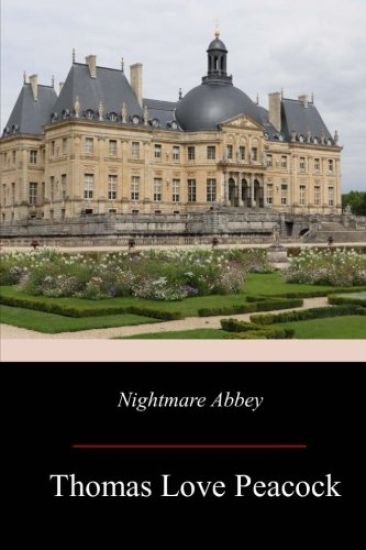
Set in a former abbey whose owner, Christopher Glowry, is host to visitors who enjoy his hospitality and engage in endless debate. Among these guests are figures recognizable to Peacock's contemporaries, including characters based on Lord Byron and Samuel Taylor Coleridge. Mr. Glowry's son Scythrop (also modeled on a famous Romantic, Peacock's friend Percy Bysshe Shelley) locks himself up in a tower where he reads German tragedies and transcendental philosophy and develops a "passion for reforming the world." Disappointed in love, a sorrowful Scythrop decides the only thing to do is to commit suicide, but circumstances persuade him to instead follow his father in a love of misanthropy and Madeira.

Letters to Edward Hookham and Percy B. Shelley, with Fragments of Unpublished Mss.
Thomas Love Peacock
Trieste Publishing
2018
nidottu

Set in a former abbey whose owner, Christopher Glowry, is host to visitors who enjoy his hospitality and engage in endless debate. Among these guests are figures recognizable to Peacock's contemporaries, including characters based on Lord Byron and Samuel Taylor Coleridge. Mr. Glowry's son Scythrop (also modeled on a famous Romantic, Peacock's friend Percy Bysshe Shelley) locks himself up in a tower where he reads German tragedies and transcendental philosophy and develops a "passion for reforming the world." Disappointed in love, a sorrowful Scythrop decides the only thing to do is to commit suicide, but circumstances persuade him to instead follow his father in a love of misanthropy and Madeira.

Marian expects that Robin Hood and his Merry Men can help her gain information that can secure her liberty. What she doesn't expect is to fall in love with the leader of that merry band. Despite their political differences, which sometimes result in fierce arguments between the sharp-tongued duo, the lovers hatch a plan that will outsmart the conniving nobility once and for all.
"The Misfortunes of Elphin" is a 1829 novella by English novelist and poet Thomas Love Peacock. The fifth serious fictional work that he completed, it is set in England at the time of the legendary King Arthur and contains many elements of Welsh legend, although it avoids the magical and preternatural elements common in each. This fantastic story will appeal to lovers of English and Welsh history and legend, and it would make for a worthy addition to any collection. Thomas Love Peacock (18 October 1785 - 23 January 1866) was an English poet, novelist, and important figure in the East India Company. A good friend of Percy Bysshe Shelley, they both had a significant influence on each other's work. Peacock was most famous for writing satirical novels, which usually involved characters sat around a table discussing contemporary philosophical ideas. Other notable works by this author include: "Headlong Hall" (1815), "Gryll Grange" (1861), and "Melincourt" (1817). Many vintage books such as this are increasingly scarce and expensive. It is with this in mind that we are republishing this volume now in an affordable, modern, high-quality edition complete with intoductory essays by Sir Walter Raleigh and Virginia Woolf.
First published in 1818, "Nightmare Abbey" Is a novella by Thomas Love Peacock and his third long work of fiction. It is a Gothic satirical tale that follows Christopher Glowry, Esquire, a melancholic widower who lives with his only son Scythrop in Nightmare Abbey, a run-down mansion that has been in his family for generations. It explores in a comical way the romantic movement in contemporary English literature and its preoccupation with morbidity, misanthropy, and transcendental philosophical systems. This volume is highly recommended for lovers of Gothic literature and satirical writing, and it is not to be missed by those who have read and enjoyed other works by this author. Thomas Love Peacock (18 October 1785 - 23 January 1866) was an English poet, novelist, and important figure in the East India Company. A good friend of Percy Bysshe Shelley, they both had a significant influence on each other's work. Peacock was most famous for writing satirical novels, which usually involved characters sat around a table discussing contemporary philosophical ideas. Other notable works by this author include: "Maid Marian" (1822), "Gryll Grange" (1861), and "Melincourt" (1817). Many vintage books such as this are increasingly scarce and expensive. It is with this in mind that we are republishing this volume now in an affordable, modern, high-quality edition complete with intoductory essays by Sir Walter Raleigh and Virginia Woolf.

This volume contains a collection of interesting essays by Thomas Love Peacock and other writers, including Virginia Woolf. The essays include: "The Satirists and Fantastics," "The Four Ages of Poetry," "Recollections of Childhood," "The Last Day of Windsor Forest," and "Prospectus: Classical Education." The essays chiefly deal with the subject of literature and its history, and are highly recommended for students and lovers of the English language in general. Thomas Love Peacock (18 October 1785 - 23 January 1866) was an English poet, novelist, and important figure in the East India Company. A good friend of Percy Bysshe Shelley, they both had a significant influence on each other's work. Peacock was most famous for writing satirical novels, which usually involved characters sat around a table discussing contemporary philosophical ideas. Other notable works by this author include: "Headlong Hall" (1815), "Gryll Grange" (1861), and "Melincourt" (1817). Many vintage books such as this are increasingly scarce and expensive. It is with this in mind that we are republishing this volume now in an affordable, modern, high-quality edition complete with intoductory essays by Sir Walter Raleigh and Virginia Woolf.
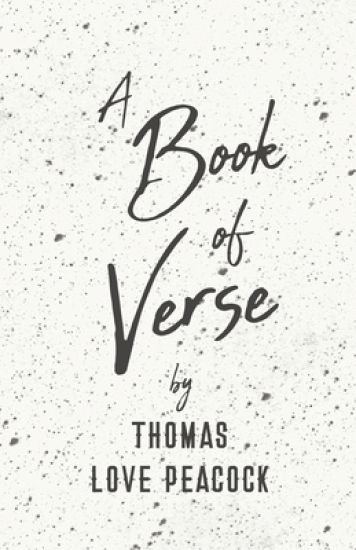
This vintage book contains a wonderful collection of beautiful poetry by English poet and novelist Thomas Love Peacock The poems include: "The Satirists and Fantastics," "The Legend of Saint Laura," "The Monks of St. Mark," "Ballad Terzetto," "The Morning of Love," "The Sundial," "The Magic Bark," "The Round Table," "Beyond the Sea," "Duet," "A Glee," "A Fragment," "Love and Age," "Newark Abbey," "Sir Hornbook," "There is a Fever of the Spirit," and many more. Thomas Love Peacock (18 October 1785 - 23 January 1866) was an English poet, novelist, and important figure in the East India Company. A good friend of Percy Bysshe Shelley, they both had a significant influence on each other's work. Peacock was most famous for writing satirical novels, which usually involved characters sat around a table discussing contemporary philosophical ideas. This collection is not to be missed by lovers of English poetry and those who have read and enjoyed other works by this author. Other notable works by this author include: "Headlong Hall" (1815), "Gryll Grange" (1861), and "Melincourt" (1817). Many vintage books such as this are increasingly scarce and expensive. It is with this in mind that we are republishing this volume now in an affordable, modern, high-quality edition complete with intoductory essays by Sir Walter Raleigh and Virginia Woolf.