

Kirjailija
Thomas M. Wilson
Kirjat ja teokset yhdessä paikassa: 13 kirjaa, julkaisuja vuosilta 1994-2025, suosituimpien joukossa Local Option In Norway. Vertaile teosten hintoja ja tarkista saatavuus suomalaisista kirjakaupoista.
Mukana myös kirjoitusasut: Thomas M Wilson
13 kirjaa
Kirjojen julkaisuhaarukka 1994-2025.

International borders are among the most significant political inventions of modern times. The borders between national states are not just important to the peoples and governments who face each other across the borderline – any international border can become a regional hotspot of global concern. But aside from the significant role borders play in national and international affairs, borders are also places and spaces where people live, work, raise families, and build businesses. Written for students across disciplines, Borders, Boundaries, Frontiers introduces readers to the study of borders and border cultures. Thomas M. Wilson examines both historical foundations and current developments in the field, with an emphasis on anthropological contributions. Ultimately, Borders, Boundaries, Frontiers encourages students to explore the role anthropology plays in the understanding of contemporary borders.
International borders are among the most significant political inventions of modern times. The borders between national states are not just important to the peoples and governments who face each other across the borderline – any international border can become a regional hotspot of global concern. But aside from the significant role borders play in national and international affairs, borders are also places and spaces where people live, work, raise families, and build businesses. Written for students across disciplines, Borders, Boundaries, Frontiers introduces readers to the study of borders and border cultures. Thomas M. Wilson examines both historical foundations and current developments in the field, with an emphasis on anthropological contributions. Ultimately, Borders, Boundaries, Frontiers encourages students to explore the role anthropology plays in the understanding of contemporary borders.
This book addresses issues in cultural change in reconstructing New Europe of the European Community (EC). It offers anthropological perspectives on the transformations of European culture and community which both result from the processes of EC integration.
Politicians can negotiate currency disputes, redraw national boundaries, and raise trade tariffs but what unforeseen problems may be caused by the melding of societal boundaries and the lowering of cultural tariffs? Originating from a range of nationalities and ethnic groups, the contributors to this volume focus on cultural and social processes o

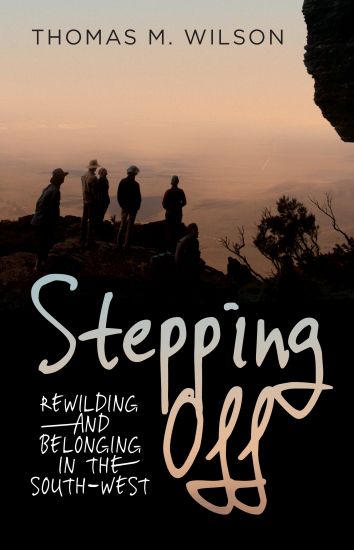
Stepping Off: Rewilding and Belonging in the South-West
Thomas M. Wilson
FREMANTLE PRESS
2017
nidottu
Stepping Off is a book for locals and travellers alike. It is the story of the south-western corner of Western Australia: an environmental history, a social history, an invitation to reconnect with the land - and in doing so, to reconnect with ourselves.
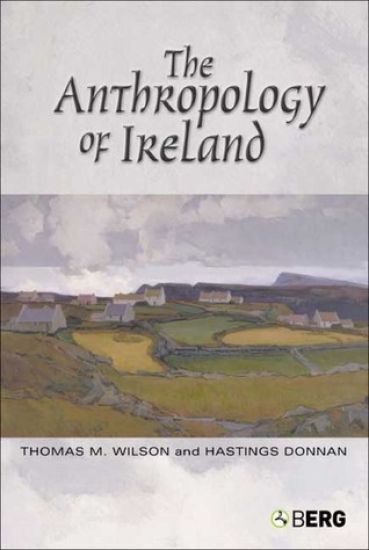
Where and what is Ireland?--What are the identities of the people of Ireland?--How has European Union membership shaped Irish people's lives and interests?--How global is local Ireland?This book argues that such questions can be answered only by understanding everyday aspects of Irish culture and identity. Such understanding is achieved by paying close attention to what people in Ireland themselves say about the radical changes in their lives in the context of wider global transformation. As notions of sex, religion, and politics are radically reworked in an Ireland being re-imagined in ways inconceivable just a generation ago, anthropologists have been at the forefront of recording the results. The first comprehensive book-length introduction to anthropological research on the island as a whole, The Anthropology of Ireland considers the changing place in a changing Ireland of religion, sex, sport, race, dance, young people, the Travellers, St Patrick's Day and much more.

Where and what is Ireland?--What are the identities of the people of Ireland?--How has European Union membership shaped Irish people's lives and interests?--How global is local Ireland?This book argues that such questions can be answered only by understanding everyday aspects of Irish culture and identity. Such understanding is achieved by paying close attention to what people in Ireland themselves say about the radical changes in their lives in the context of wider global transformation. As notions of sex, religion, and politics are radically reworked in an Ireland being re-imagined in ways inconceivable just a generation ago, anthropologists have been at the forefront of recording the results. The first comprehensive book-length introduction to anthropological research on the island as a whole, The Anthropology of Ireland considers the changing place in a changing Ireland of religion, sex, sport, race, dance, young people, the Travellers, St Patrick's Day and much more.
Borders are where wars start, as Primo Levi once wrote. But they are also bridges - that is, sites for ongoing cultural exchange. Anyone studying how nations and states maintain distinct identities while adapting to new ideas and experiences knows that borders provide particularly revealing windows for the analysis of 'self' and 'other'. In representing invisible demarcations between nations and peoples who may have much or very little in common, borders exert a powerful influence and define how people think as well as what they do. Without borders, whether physical or symbolic, nationalism could not exist, nor could borders exist without nationalism. Surprisingly, there have been very few systematic or concerted efforts to review the experiences of nation and state at the local level of borders. Drawing on examples from the US and Mexico, Northern Ireland, Israel and Palestine, Spain and Morocco, as well as various parts of Southeast Asia and Africa, this timely book offers a comparative perspective on culture at state boundaries. The authors examine the role of the state, ethnicity, transnationalism, border symbols, rituals and identity in an effort to understand how nationalism informs attitudes and behaviour at local, national and international levels. Soldiers, customs agents, smugglers, tourists, athletes, shoppers, and prostitutes all provide telling insights into the power relations of everyday life and what these relations say about borders. This overview of the importance of borders to the construction of identity and culture will be an essential text for students and scholars in anthropology, sociology, political science, geography, nationalism and immigration studies.
Borders are where wars start, as Primo Levi once wrote. But they are also bridges - that is, sites for ongoing cultural exchange. Drawing on examples from Northern Ireland, Israel and Palestine, Spain and Morocco, this text offers a comparative perspective on culture at state boundaries.

In recent years, the world has witnessed enormous changes in the political borders between nation-states. These changes have highlighted the function and meaning of physical borders in the construction of nationality. While previous anthropological studies have examined the importance of cultural and symbolic boundaries between groups, this book primarily investigates how ethnicity, nationalism, and cultural identity are marked in everyday life at international borders. It is the first book to collect a wide range of anthropological views on this subject. Areas covered in this text include West Africa, the Turkish-Syrian border, India and the proposed Khalistan, the German-French border, the Portuguese-Spanish border, and Ireland. Contributors include Elizabeth Tonkin, Martin Stokes, Joyce Pettigrew, Tomke Lask, William Kavanagh, Amanda Shanks, Hastings Donnan, and Thomas M. Wilson.