Kirjojen hintavertailu. Mukana 12 192 258 kirjaa ja 12 kauppaa.
Kirjailija
Thomas Marks
Kirjat ja teokset yhdessä paikassa: 8 kirjaa, julkaisuja vuosilta 2014-2026, suosituimpien joukossa Anna Freeman Bentley – make believe. Vertaile teosten hintoja ja tarkista saatavuus suomalaisista kirjakaupoista.
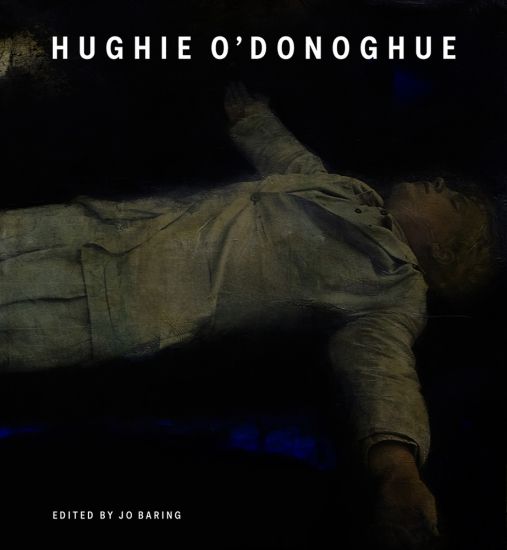
Hughie O’Donoghue (b. 1953) explores themes of universal human experience, ideas of truth and the relationship between memory and identity. Often standing apart from his contemporaries in the scale and ambition of his paintings, O’Donoghue’s work addresses the need to learn the lessons and complexities of recent history through the lens of the often overlooked and anonymous individual. Beautifully illustrated, encompassing four decades of work, this major publication is the broadest survey of the artist to date. Including new writing from the artist alongside four commissioned essays by leading art historians and critics, with a preface by the poet Tom Paulin, this comprehensive book documents O’Donoghue’s ambitious vision.
Anna Freeman Bentley’s paintings use architectural imagery to explore the emotive potential of space. Grounded in an interest in the baroque her source material includes junk shops, restaurants, private members clubs, flea markets and designed interiors. Central to her work is an investigation into surface, tension and the atmosphere evoked by these different interior surroundings. The spaces she depicts are empty, yet visual signifiers point to evidence of people and social happenings.This, Freeman Bentley’s third publication to date, is centred on the relationship between painting and cinema and is divided into sections dedicated to major paintings on canvas and panel, and a number of works on paper (all works 2021–22). Freeman Bentley’s work here is focused on sets from 'The Colour Room' (2021), a film that tells the story of the early career of celebrated British ceramicist Clarice Cliff (1899–1972). The foreword to the book is written by Rollo Campbell and Matt Incledon of Frestonian Gallery. An essay by writer and critic Thomas Marks draws out the importance to her work of historic and contemporary cinema and temporary architecture. Marks notes a change in palette in these new paintings, with Freeman Bentley embracing pastels and tracing parallels between the artist herself and Cliff. An interview with Georgie Paget, co-founder of Caspian Films, production company for 'The Colour Room', meanwhile, provides insight into the artist’s particular interest in the artifice of film props and of the film set as a layered space ‘steeped in meaning, purpose and potential.’ The two discuss the reciprocity of painting and cinema in detail, recounting Freeman Bentley’s experiences on the film’s sets and discussing her working processes, beginning with taking photographs on set, through to oil sketches and the later development of large-scale canvases.The publication is edited by Matt Incledon and Matt Price. It is designed by Joe Gilmore, printed and bound by Gomer, Wales, and co-published by Frestonian Gallery, London, and Anomie Publishing, London. The publication coincides with the second solo show by Anna Freeman Bentley at Frestonian Gallery, by whom the artist is represented. The exhibition, also titled ‘make believe’ is divided between two sites: the 2022 Armory Show, New York, and Frestonian Gallery, London. Anna Freeman Bentley studied Painting at Chelsea College of Art, Kunsthochschule Berlin Weissensee and the Royal College of Art. Awards and residencies include Palazzo Monti Residency, Brescia, Italy, 2019; The Elizabeth Greenshields Foundation Grant 2019 and 2017, and Artist in Restaurant residency at Michelin-starred restaurant Pied à Terre, London, 2012. Selected exhibitions (* denotes solo) include DENK Gallery, Los Angeles, 2019*, Ahmanson Gallery, Irvine, 2018*; Space K, Seoul, 2017; 68projects, Berlin, 2017; the East London Painting Prize 2014 and 2015; Workshop Gallery, Venice, 2012*; MAC Birmingham, 2011; Prague Biennale, 2011, and the Bloomberg New Contemporaries, 2009. Her work is part of the Hotel Crillon collection, Paris; Saatchi Collection, London; Hogan Lovells Collection, London; the Ahmanson Collection, California, and numerous private collections worldwide.
This significant new monograph on Romanian painter Marius Bercea (b. 1979) presents a selection of his work from 2020 to 2025, offering an in-depth view of his recent practice through both critical and personal perspectives. The publication features a new essay by curator and critic Diana Marincu, a conversation with the British painter Nick Goss, chaired by Thomas Marks, an interview with art historian and curator Liviana Dan, and a foreword by Matt Price. The book is published by Anomie Publishing, London, with the support of Jecza Gallery and UniCredit Bank Romania. Bercea is widely recognised as a leading figure of the Cluj School of Painting – a group of artists who emerged in Cluj-Napoca following the 1989 Romanian Revolution. Drawing on his experiences growing up in Communist Romania and his encounters with American culture, particularly during his many visits to Los Angeles, Bercea creates paintings that navigate the intersections of personal and collective memory, history and cultural identity. In recent years, Bercea has focused his portraiture on a generation of young Romanians, specifically those born around 1989, exploring their unique sense of historical memory and their collaged experience of liberal democracy and the free market. In her essay, Diana Marincu examines recurring figures and motifs in Bercea’s recent work. She considers how his painted spaces often function like the scene of a film or the stage of a live performance, populated by characters who seem to await the finished script. Marincu traces the interplay of nostalgia, temporality and imagination in Bercea’s compositions, considering how his paintings negotiate the tension between personal experience and collective history. In a conversation with friend and fellow artist Nick Goss, chaired by Thomas Marks, Bercea discusses his studio practice, techniques and the literary and art-historical references that inform his work. They consider Bercea’s engagement with American modernism, the interplay of interior and exterior spaces and the careful attention paid to the details of his subjects and environments. The dialogue emphasises how memory, storytelling and cinematic imagination converge in Bercea’s paintings. They also discuss their respective art educations and upbringings and how they inform their practices and the overlap between personal and cultural memory. Bercea’s interview with Liviana Dan foregrounds the artist’s intellectual and emotional engagement with painting and its history, tracing the influence of masters from Poussin and Titian to Cézanne and Gerhard Richter. They discuss his approach to portraiture, domestic interiors, colour and geometry, as well as the ways in which his biography and personal life intersect with his artmaking.
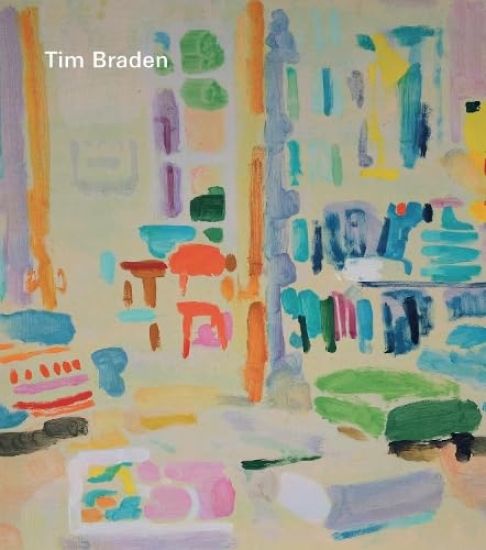
This substantial new monograph on Perth-born, London-based artist Tim Braden presents paintings and works on paper produced over the past twenty years. Featuring new and recent texts by Matt Incledon and Thomas Marks, along with abridged versions of key texts by Jennifer Higgie and Dominic Molon, the publication has been designed by Joe Gilmore and is co-published by Frestonian Gallery and Anomie Publishing, London. Tim Braden’s work sits at the meeting point of restlessness and order. His London studio mirrors this balance: serene white walls and clear worktables face shelves crammed with books, pinned postcards and sketches, racks of brushes and pigments, odd sculptures and suspended remnants of installations. That duality – calm structure alongside eclectic curiosity – animates his painting practice. Across two decades, Braden has resisted linear progression. Within weeks he might move from fine ink drawings to rich oil interiors or expansive acrylic abstractions. His exhibitions are curated like group shows – varied yet unified by a refined command of colour and the interplay between abstraction and figuration, each mode constantly informing the other. Braden’s subjects are equally diverse: mountains and interiors, books, posters, craftspeople and travellers, all rendered through a vivid and enquiring gaze. A formative visit to his cousin Patrick Heron’s studio sparked his lifelong fascination with colour; later influences, including Josef and Anni Albers and the Bauhaus legacy, deepened his engagement with craft, design and teaching. His landscapes – particularly mountains – form a language of peaks, lakes and snow through which he explores structure, scale and the subtleties of tone. Sometimes Western in perspective, sometimes aerial and Eastern in approach, they turn apparent emptiness, such as snow or sky, into delicate fields of chromatic activity. Human presence appears fleetingly – houses, figures or traces of printed media – reminding us that perception is always mediated. Braden’s North African works, especially from Tangier and Algiers, question how artists look at the ‘exotic’. He acknowledges the legacy of Orientalism by painting both the beauty and the filters through which it is seen, often embedding postcards or reproductions within his compositions. His working process preserves the immediacy of sketches even when scaled up, maintaining freshness and spontaneity. A parallel thread, explored in Making is Thinking, celebrates the artistry of labour. Braden paints weavers, gardeners and ceramicists – frequently women – paying homage to forms of making often dismissed as craft. He treats the act of creation as a shared human impulse, echoing Anni Albers’ belief in listening to ‘what the materials want to do’. Whether depicting the studios of admired painters, domestic interiors or his own home, Braden transforms rooms into quiet temples of colour and reflection. His garden scenes likewise suggest care and contemplation in an overstimulated world. Even his travel works – real or imagined – translate distant times and places into present moments of luminous equilibrium. Restless yet disciplined, Braden’s art embodies a profound, ongoing fascination with colour, making and seeing.
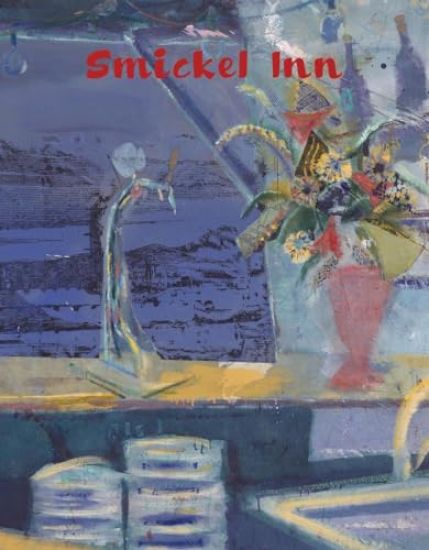
_Smickel Inn_ is a publication of works by London-based Anglo-Dutch artist Nick Goss, produced by Ingleby, Edinburgh, and co-published with Matthew Brown, Los Angeles, and Anomie Publishing, London. Along with around sixty plates and illustrations, the publication features an essay by writer, journalist and critic Hettie Judah, and an in-conversation between Goss, fellow painter Michael Armitage and writer Thomas Marks. ‘Smickel Inn is a real place in an unreal place,’ writes Judah, ‘a snack bar on an outer extremity of the port of Rotterdam.’ It’s a venue that is popular with port workers and sailors—a clientele of regular and transitory people often involved in sea freight or oil shipping, though their lives, personalities and stories are largely played out in Goss’s mixed-media paintings through the bar’s interior décor: an old vase with fresh flowers, a stack of glass ashtrays, a well-worn piano with a pile of books on top, an eclectic selection of picture frames with faded scenes and a clock that might only be right twice a day. Filtered through Goss’s imagination, Smickel Inn carries its history with it, much of it decorating the countertop; it’s a venue that charms with its informality—a place that knows itself, and its disparate customers. In real life, the bar has a cinematic view of the port and the North Sea, translated here, through Goss’s creative process of painting and silk-screening, into a scene from an engraving of seventeenth-century Sicily. Fragments from different places and eras infiltrate his images, creating a patina of palimpsests, visual echoes, perhaps, of memories of travellers coming through the port. The body of work takes us around the wider Dutch coastline and beyond—we see passengers on foot disembarking a ferry, have a backseat view of a car ride around the village of Stavenisse, and join a night-time campfire on the beach at Scheveningen, among other more mysterious, if not abstruse, locations and scenarios. Observation from contemporary life mingles with visual culture spanning centuries and continents in Goss’s oeuvre, creating lyrical yet strangely haunting and melancholic paintings, trapped in time somewhere between personal experience and collective memory. Nick Goss is an Anglo-Dutch painter, born in Bristol in 1981\. He studied first at the Slade School of Art (2002–06) and then at the Royal Academy Schools, London (2006–09). He has exhibited widely in Europe and America, including solo exhibitions with Josh Lilley, London, Matthew Brown, Los Angeles, Simon Preston, New York, and Contemporary Fine Arts, Berlin. His first institutional survey, Morley’s Mirror, was presented in 2019 at Pallant House, Chichester, UK. _Smickel Inn_ is published to coincide with Goss’s first exhibition at Ingleby, Edinburgh, in the autumn of 2023.
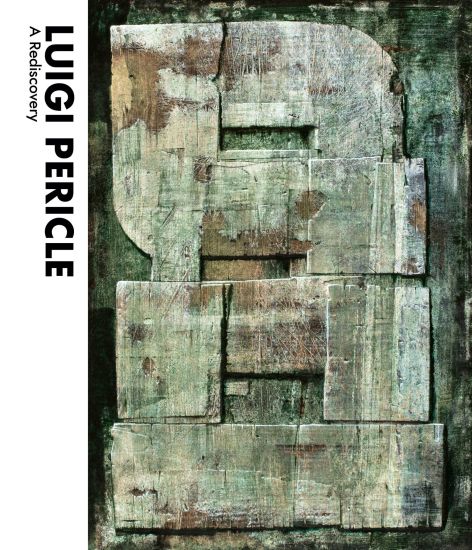
This important book presents the work of the fascinating and singular artist Luigi Pericle (1916–2001). Pericle was a painter, illustrator and scholar, as well as a leading figure in the story of art in the second half of the twentieth century. The artist initially found fame as an illustrator, gaining widespread renown in the 1950s as the inventor of the character Max the Marmot. But his intense, enigmatic and multi-layered paintings increasingly drew the attention of the art world, with works that reflect his personal, metaphysical take on post-war abstraction exhibited at numerous venues in Britain during the 1960s. Pericle then abruptly retreated from the art system, and for the rest of his life continued to paint, write and to study esoteric philosophy in the secluded house he shared with his wife Orsolina on Monte Verit in the Ticino region of Switzerland. The artist’s work was dramatically rediscovered in 2016 when the contents of his former residence were revealed. The process of restoring, cataloguing and researching his vast oeuvre is ongoing, and is overseen by Ascona’s Archivio Luigi Pericle, with which the exhibition has been organised. This beautifully illustrated publication, which accompanies an exhibition at the Estorick Collection, London, includes a full catalogue of the works, as well as essays by noted scholars.
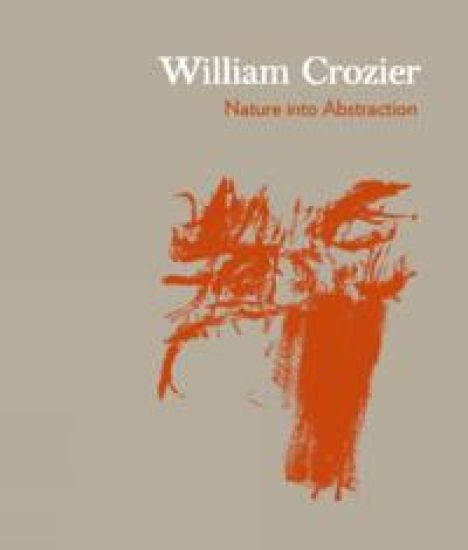
Between 1958 and 1961, William Crozier painted a series of daring and original landscapes. He lived in north Essex at the time and found inspiration in that bleak environment, even as he looked inwards to give his paintings existential angst. William Crozier: Nature into Abstraction brings these works together for the first time since the 1960s. William Crozier: Nature into Abstraction is a fully illustrated catalogue including a poignant introduction by the art critic and writer Thomas Marks. The book shows Crozier to be one of the leading artists in post-war Britain and is published to accompany an exhibition of the same title at The Lightbox, Woking. A prolific artist who produced a dizzying range of styles over short periods of time, William Crozier has yet to receive the recognition his work deserves. This publication offers a detailed look at just three years of the artist’s career, addressing a gap in the existing literature about Crozier.
Insurgency is a political campaign to mobilize the disaffected and the dispossessed into an alternative society. Until it can actually liberate areas openly, this takes the form of covert infrastructure. Always, unless the insurgents are incompetent--which does happen with startling regularity--their ultimate goal in deploying power is to create and safeguard the alternative to the society that they are creating.1 Governments, faced with violence directed at the system, initially go after that which they can see, insurgents with weapons, leaving the infrastructure virtually alone to grow and become ever more deadly. The forces of the state thus normally seek to "close with and destroy the enemy," while the insurgents continue the process of successively dominating areas. What makes it so difficult for systems to see their way clear to an accurate appreciation of the situation is that the people in positions of authority are those who often have benefited from the status quo.