Kirjojen hintavertailu. Mukana 12 390 323 kirjaa ja 12 kauppaa.

Kirjailija

Thomas N Layton

Kirjat ja teokset yhdessä paikassa: 7 kirjaa, julkaisuja vuosilta 1979-2024, suosituimpien joukossa The Archaeology of Silent Snake Springs, Humboldt County, Nevada. Vertaile teosten hintoja ja tarkista saatavuus suomalaisista kirjakaupoista.

Mukana myös kirjoitusasut: Thomas N. Layton

7 kirjaa

Kirjojen julkaisuhaarukka 1979-2024.

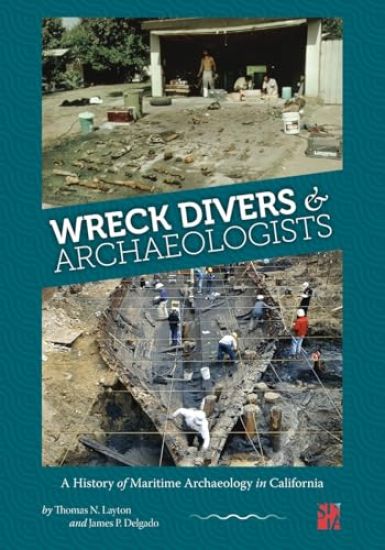
Wreck Divers & Archaeologists

Wreck Divers & Archaeologists

Thomas N Layton; James P Delgado

Society for Historical Archaeology
2024
pokkari
B/W Edition] Maritime archaeology has become a burgeoning discipline with well-established post-graduate university programs providing specialized training for conducting scientific archaeology underwater, and with sufficient knowledge of world commerce, industrial history, and specific regional histories to enable their graduates to ask meaningful questions and to formulate research designs to answer those questions. Meanwhile, individual States and the Federal government have enacted legislation to protect maritime cultural resources, and their agencies, as well as cultural resource management firms, have employed trained maritime archaeologists to manage those resources.This volume documents the slow progression of this professionalization with a focus on California. It presents the personal narratives of six California wreck divers, two of whose exposure to the underwater world began during World War II, and five cultural resource professionals including both the first California State Underwater Archaeologist and his Federal counterpart, together with the perspective of a Native American poet, all of whom were linked by having touched the brig Frolic and its cargo of China trade goods, bound from Canton, China to Gold Rush San Francisco but lost on California's Mendocino County coast in the summer of 1850.These narratives are joined by a history of California maritime archaeology by James Delgado who has known and interacted with most of the discipline's practitioners for over 40 years. James Delgado and Thomas Layton are both past winners of the Society for Historical Archaeology's James Deetz award for accessible writing.
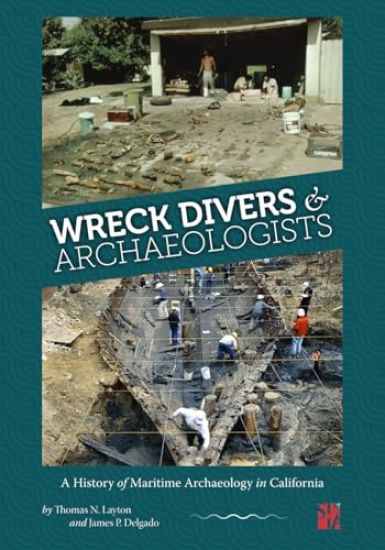
Wreck Divers & Archaeologists

Wreck Divers & Archaeologists

Thomas N Layton; James P Delgado

Society for Historical Archaeology
2024
pokkari
Maritime archaeology has become a burgeoning discipline with well-established post-graduate university programs providing specialized training for conducting scientific archaeology underwater, and with sufficient knowledge of world commerce, industrial history, and specific regional histories to enable their graduates to ask meaningful questions and to formulate research designs to answer those questions. Meanwhile, individual States and the Federal government have enacted legislation to protect maritime cultural resources, and their agencies, as well as cultural resource management firms, have employed trained maritime archaeologists to manage those resources.This volume documents the slow progression of this professionalization with a focus on California. It presents the personal narratives of six California wreck divers, two of whose exposure to the underwater world began during World War II, and five cultural resource professionals including both the first California State Underwater Archaeologist and his Federal counterpart, together with the perspective of a Native American poet, all of whom were linked by having touched the brig Frolic and its cargo of China trade goods, bound from Canton, China to Gold Rush San Francisco but lost on California's Mendocino County coast in the summer of 1850.These narratives are joined by a history of California maritime archaeology by James Delgado who has known and interacted with most of the discipline's practitioners for over 40 years. James Delgado and Thomas Layton are both past winners of the Society for Historical Archaeology's James Deetz award for accessible writing.

The Other Dixwells

The Other Dixwells

Thomas N Layton

PAST Foundation
2021
pokkari
Who could have imagined that the Chinese opium trade, American feminism, and the abolitionist crusade could be connected, or that an entire branch of a prominent Boston commercial family could have been erased from the historic record for a century-and-a-half, or that a multi-decade saga to restore them to history would begin when archaeology students excavated Chinese potsherds from a Native American archaeological site atop a remote ridge on the north coast of California?Archaeologist Tom Layton follows those potsherds to their origin on the 1850 shipwreck of the Frolic, a clipper brig, owned by American merchants who hauled opium from India to China. Those potsherds lead to George Dixwell-opium expert, inventor, and part owner of the Frolic-and to clues about his marriage in China to Hu Ts'ai-shun, a Manchu woman. Further research leads to the women of Dixwell's family tree who turned out to be writers and activists-aunt Judith Sargent Murray, the grandmother of American Feminism, and her niece Henrietta Sargent, a fierce abolitionist who reported the first public speech of an escaped slave-Frederick Douglass. Finally the sherds lead Layton to Ts'ai-shun's four American great-granddaughters who had preserved a trove of letters, photos, and diaries that enabled this story to be told.Layton reveals his scientifically documented archaeological record then dons the hat of a novelist, filling in the spaces among the facts, bringing these characters to life, and producing an unforgettable read-a true adventure revealing the successes, failures, passions, and secrets of a 19th-century American family.
The Other Dixwells (Author's Edition)

The Other Dixwells (Author's Edition)

Thomas N Layton

Society for Historical Archaeology
2021
pokkari
Who could have imagined that the Chinese opium trade, American feminism, and the abolitionist crusade could be connected, or that an entire branch of a prominent Boston commercial family could have been erased from the historic record for a century-and-a-half, or that a multi-decade saga to restore them to history would begin when archaeology students excavated Chinese potsherds from a Native American archaeological site atop a remote ridge on the north coast of California?Archaeologist Tom Layton follows those potsherds to their origin on the 1850 shipwreck of the Frolic, a clipper brig, owned by American merchants who hauled opium from India to China. Those potsherds lead to George Dixwell-opium expert, inventor, and part owner of the Frolic-and to clues about his marriage in China to Hu Ts'ai-shun, a Manchu woman. Further research leads to the women of Dixwell's family tree who turned out to be writers and activists-aunt Judith Sargent Murray, the grandmother of American Feminism, and her niece Henrietta Sargent, a fierce abolitionist who reported the first public speech of an escaped slave-Frederick Douglass. Finally the sherds lead Layton to Ts'ai-shun's four American great-granddaughters who had preserved a trove of letters, photos, and diaries that enabled this story to be told.Layton reveals his scientifically documented archaeological record then dons the hat of a novelist, filling in the spaces among the facts, bringing these characters to life, and producing an unforgettable read-a true adventure revealing the successes, failures, passions, and secrets of a 19th-century American family.
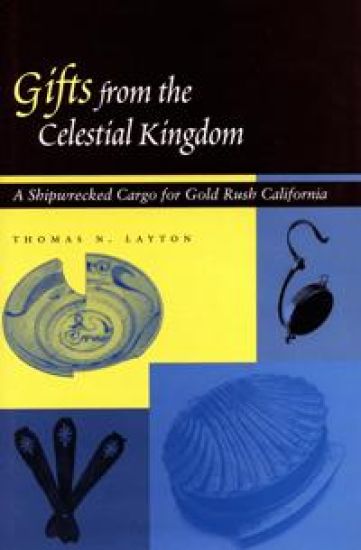
Gifts from the Celestial Kingdom

Gifts from the Celestial Kingdom

Thomas N. Layton

Stanford University Press
2002
sidottu
In a prior volume—The Voyage of the "Frolic": New England Merchants and the Opium Trade (Stanford, 1997)—historical archaeologist Thomas N. Laytontold the story of his excavation of an ancient Pomo Indian village site in Northern California, where, to his surprise, he recovered Chinese porcelain potsherds. Tracing those sherds to a beach on the rugged Mendocino coast, he then followed them out to the submerged remains of the Frolic, a sailing vessel wrecked in the summer of 1850 with a rich cargo of Chinese goods bound for Gold Rush San Francisco. In that volume, Layton used the vessel's earlier role, transporting opium from Bombay to Canton, as a vehicle to tell the story of American participation in the opium trade. Although the Frolic's career as an opium clipper was ended in 1849 by the introduction of steam vessels, the almost simultaneous discovery of gold in California suddenly created enough purchasing power to support direct commerce with China—and thus a new career for the Frolic. In this sequel volume, Layton has two objectives. First, he employs the Frolic's ill-fated first, and final, cargo to San Francisco to tell the broader story of the beginnings of direct commerce between China and California. Second, he attempts to explore the potential of contextual archaeology—the intellectual process of "transporting" artifacts from their resting places back to the behavioral contexts in which they once functioned. Layton accomplishes his objectives by describing the full trajectory of the Frolic's final cargo from four different perspectives: from that of John Hurd Everett, the California merchant who assembled the cargo in China; then from the perspectives of the sailors and Pomo Indians who pillaged the cargo immediately after the wreck; then through the eyes of twentieth-century sport divers who plundered it yet again; then, finally, through Layton's scientific perspective as an archaeologist. To augment his quest for context, he employs carefully documented vignettes to fill the interstices between the facts. Throughout, he discusses his research—replete with visits to archives and antique shops—and in so doing introduces readers to the practice of modern historical archaeology.
Gifts from the Celestial Kingdom

Gifts from the Celestial Kingdom

Thomas N. Layton

Stanford University Press
2002
pokkari
In a prior volume—The Voyage of the "Frolic": New England Merchants and the Opium Trade (Stanford, 1997)—historical archaeologist Thomas N. Laytontold the story of his excavation of an ancient Pomo Indian village site in Northern California, where, to his surprise, he recovered Chinese porcelain potsherds. Tracing those sherds to a beach on the rugged Mendocino coast, he then followed them out to the submerged remains of the Frolic, a sailing vessel wrecked in the summer of 1850 with a rich cargo of Chinese goods bound for Gold Rush San Francisco. In that volume, Layton used the vessel's earlier role, transporting opium from Bombay to Canton, as a vehicle to tell the story of American participation in the opium trade. Although the Frolic's career as an opium clipper was ended in 1849 by the introduction of steam vessels, the almost simultaneous discovery of gold in California suddenly created enough purchasing power to support direct commerce with China—and thus a new career for the Frolic. In this sequel volume, Layton has two objectives. First, he employs the Frolic's ill-fated first, and final, cargo to San Francisco to tell the broader story of the beginnings of direct commerce between China and California. Second, he attempts to explore the potential of contextual archaeology—the intellectual process of "transporting" artifacts from their resting places back to the behavioral contexts in which they once functioned. Layton accomplishes his objectives by describing the full trajectory of the Frolic's final cargo from four different perspectives: from that of John Hurd Everett, the California merchant who assembled the cargo in China; then from the perspectives of the sailors and Pomo Indians who pillaged the cargo immediately after the wreck; then through the eyes of twentieth-century sport divers who plundered it yet again; then, finally, through Layton's scientific perspective as an archaeologist. To augment his quest for context, he employs carefully documented vignettes to fill the interstices between the facts. Throughout, he discusses his research—replete with visits to archives and antique shops—and in so doing introduces readers to the practice of modern historical archaeology.