Kirjojen hintavertailu. Mukana 12 390 323 kirjaa ja 12 kauppaa.

Kirjailija

Thomas Nail

Kirjat ja teokset yhdessä paikassa: 28 kirjaa, julkaisuja vuosilta 2012-2025, suosituimpien joukossa Theory of the Image. Vertaile teosten hintoja ja tarkista saatavuus suomalaisista kirjakaupoista.

28 kirjaa

Kirjojen julkaisuhaarukka 2012-2025.

The Philosophy of Virginia Woolf

The Philosophy of Virginia Woolf

Thomas Nail

BLOOMSBURY PUBLISHING PLC
2025
sidottu
Towards the end of her life, Virginia Woolf defined her “philosophy”—the “constant idea” that “makes her a writer.” She wrote that this idea had given her “the strongest pleasure known to [her].” She called these “exceptional moments,” or “moments of being.”Thomas Nail contends that Woolf is a philosopher of being. And these "moments of being" as forming a unique process philosophy of motion. In her description of these moments Woolf gives us access to a world in motion and process; where all of nature and matter flows, ripples, and quivers. In these moments the anthropocentric division between humans and nature dissolves into metastable patterns—without essences or vital forces. Matter becomes dynamic, and what originally appeared solid is perceived as woven, porous, and fluid.The Philosophy of Virginia Woolf begins by defining the basic idea of the moment of being, why it is important and how to understand it and its philosophical implications. It recounts a series of 14 'moments' each of which explores an aspect of Woolf's philosophy. They show how the moments evolve and articulate Woolf’s process philosophy of movement. Each moment reveals unique aspects of how moments work and the kind of philosophical vision Woolf held. Nail concludes by addressing some of the ethical and political consequences of these moments in Woolf ’s thinking. In the end, the book contends that Woolf offers us an absolutely unique philosophical and aesthetic understanding of phenomena, including nature, culture, desire, gender, writing/reading, consciousness, art, ecology, and sensation. It shows that Woolf is a philosopher in her own right, and held a unique philosophical position that makes a unique contribution to how to think in the world.
The Philosophy of Virginia Woolf

The Philosophy of Virginia Woolf

Thomas Nail

BLOOMSBURY PUBLISHING PLC
2025
nidottu
Towards the end of her life, Virginia Woolf defined her “philosophy”—the “constant idea” that “makes her a writer.” She wrote that this idea had given her “the strongest pleasure known to [her].” She called these “exceptional moments,” or “moments of being.”Thomas Nail contends that Woolf is a philosopher of being. And these "moments of being" as forming a unique process philosophy of motion. In her description of these moments Woolf gives us access to a world in motion and process; where all of nature and matter flows, ripples, and quivers. In these moments the anthropocentric division between humans and nature dissolves into metastable patterns—without essences or vital forces. Matter becomes dynamic, and what originally appeared solid is perceived as woven, porous, and fluid.The Philosophy of Virginia Woolf begins by defining the basic idea of the moment of being, why it is important and how to understand it and its philosophical implications. It recounts a series of 14 'moments' each of which explores an aspect of Woolf's philosophy. They show how the moments evolve and articulate Woolf’s process philosophy of movement. Each moment reveals unique aspects of how moments work and the kind of philosophical vision Woolf held. Nail concludes by addressing some of the ethical and political consequences of these moments in Woolf ’s thinking. In the end, the book contends that Woolf offers us an absolutely unique philosophical and aesthetic understanding of phenomena, including nature, culture, desire, gender, writing/reading, consciousness, art, ecology, and sensation. It shows that Woolf is a philosopher in her own right, and held a unique philosophical position that makes a unique contribution to how to think in the world.
The Philosophy of Movement

The Philosophy of Movement

Thomas Nail; Daniel W. Smith

UNIVERSITY OF MINNESOTA PRESS
2024
sidottu
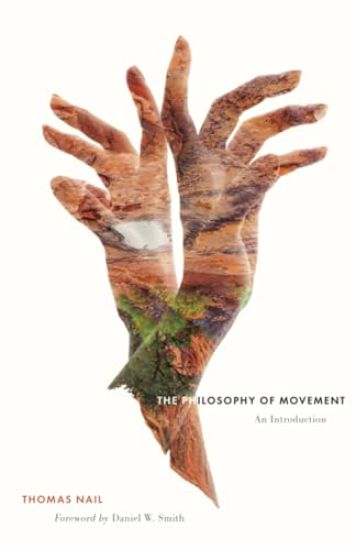
An influential thinker distills years of work on the philosophy of movement into one accessible account Why are city dwellers worldwide walking on average ten percent faster than they were a decade ago? Why are newcomer immigrant groups so often maligned when migration has always constituted civilization? To analyze and understand the depth of the reasons, Thomas Nail suggests that it serves us well to turn to a philosophy of movement. Synthesizing and extending many years of his influential work, The Philosophy of Movement is a comprehensive argument for how motion is the primary force in human and natural history. Nail critiques the bias toward stasis at the core of Western thought, asking: what would a philosophy that began with the primacy of movement look like? Interrogating the consequences of movement throughout history and in daily life in the twenty-first century, he draws connections and traces patterns between scales of reality, periods of history, and fields of knowledge. In our age of rapid movements shaped by accelerating climate change and ensuing mass global migration, as well as ubiquitous digital media, Nail provides a contemporary philosophy that helps us understand how we got here and how to grapple with these interlocking challenges. With a foreword by philosopher Daniel W. Smith, The Philosophy of Movement: An Introduction is a must-read for scholars and students not only of philosophy but also history, anthropology, science and technology studies, mobility studies, and other fields across the humanities and social sciences.
The Philosophy of Movement

The Philosophy of Movement

Thomas Nail; Daniel W. Smith

UNIVERSITY OF MINNESOTA PRESS
2024
nidottu
An influential thinker distills years of work on the philosophy of movement into one accessible account Why are city dwellers worldwide walking on average ten percent faster than they were a decade ago? Why are newcomer immigrant groups so often maligned when migration has always constituted civilization? To analyze and understand the depth of the reasons, Thomas Nail suggests that it serves us well to turn to a philosophy of movement. Synthesizing and extending many years of his influential work, The Philosophy of Movement is a comprehensive argument for how motion is the primary force in human and natural history. Nail critiques the bias toward stasis at the core of Western thought, asking: what would a philosophy that began with the primacy of movement look like? Interrogating the consequences of movement throughout history and in daily life in the twenty-first century, he draws connections and traces patterns between scales of reality, periods of history, and fields of knowledge. In our age of rapid movements shaped by accelerating climate change and ensuing mass global migration, as well as ubiquitous digital media, Nail provides a contemporary philosophy that helps us understand how we got here and how to grapple with these interlocking challenges. With a foreword by philosopher Daniel W. Smith, The Philosophy of Movement: An Introduction is a must-read for scholars and students not only of philosophy but also history, anthropology, science and technology studies, mobility studies, and other fields across the humanities and social sciences.
Matter and Motion

Matter and Motion

Thomas Nail

EDINBURGH UNIVERSITY PRESS
2023
nidottu
Tells a new history of materialism from prehistory to the present that resists stasis, heirarchy and domination Traces a lineage of thinkers who have philosophically integrated ideas of matter, motion, indeterminacy, relationality and process Discusses thinkers drawn from the ancient to the modern from the Bronze Age to quantum physics who each offer their own kind of evidence for a world without metaphysics or hierarchy Shows that the established hierarchies that govern Western thought and society are in fact contingent and performative there is no ontologically legitimate justification for social, aesthetic or scientific domination Thomas Nail traces an alternative history of ancient and modern thinkers who share a radically different understanding of the nature of matter and motion compared to the rest of the Euro-Western tradition. From Archaic Greek poetry and Bronze Age Minoan religion to the Roman poet Lucretius, and from German philosopher Karl Marx and English writer Virginia Woolf to contemporary physicists Carlo Rovelli and Karen Barad, Nail identifies a minor tradition of what he calls kinetic materialism and its three central ideas: indeterminacy, relationality and process. For the most part, Western thinkers have considered matter and motion to be inferior to more formal and static principles. Philosophers placed metaphysical categories such as eternity, God, the soul, forms and essences at the 'top' of a hierarchy that secured and ordered the movement at the bottom. This has real consequences in our world. By placing stasis above motion, this hierarchy places form above matter, life above death, God above humans, humans above nature, men above women, white skin above brown skin, the first world over the third world, citizens above migrants, straight above queer The result? Patriarchy, capitalism, racism, homophobia, ecocide. Nail seeks to undermine this inherited hierarchy and the notion that matter and motion are inferior. There are no fixed authorities. This new history of matter and motion leaves the good life up to us, whoever we may become.
Matter and Motion

Matter and Motion

Thomas Nail

EDINBURGH UNIVERSITY PRESS
2023
sidottu
Tells a new history of materialism from prehistory to the present that resists stasis, heirarchy and domination Traces a lineage of thinkers who have philosophically integrated ideas of matter, motion, indeterminacy, relationality and process Discusses thinkers drawn from the ancient to the modern from the Bronze Age to quantum physics who each offer their own kind of evidence for a world without metaphysics or hierarchy Shows that the established hierarchies that govern Western thought and society are in fact contingent and performative there is no ontologically legitimate justification for social, aesthetic or scientific domination Thomas Nail traces an alternative history of ancient and modern thinkers who share a radically different understanding of the nature of matter and motion compared to the rest of the Euro-Western tradition. From Archaic Greek poetry and Bronze Age Minoan religion to the Roman poet Lucretius, and from German philosopher Karl Marx and English writer Virginia Woolf to contemporary physicists Carlo Rovelli and Karen Barad, Nail identifies a minor tradition of what he calls kinetic materialism and its three central ideas: indeterminacy, relationality and process. For the most part, Western thinkers have considered matter and motion to be inferior to more formal and static principles. Philosophers placed metaphysical categories such as eternity, God, the soul, forms and essences at the 'top' of a hierarchy that secured and ordered the movement at the bottom. This has real consequences in our world. By placing stasis above motion, this hierarchy places form above matter, life above death, God above humans, humans above nature, men above women, white skin above brown skin, the first world over the third world, citizens above migrants, straight above queer The result? Patriarchy, capitalism, racism, homophobia, ecocide. Nail seeks to undermine this inherited hierarchy and the notion that matter and motion are inferior. There are no fixed authorities. This new history of matter and motion leaves the good life up to us, whoever we may become.
Lucretius III

Lucretius III

Thomas Nail

EDINBURGH UNIVERSITY PRESS
2022
nidottu
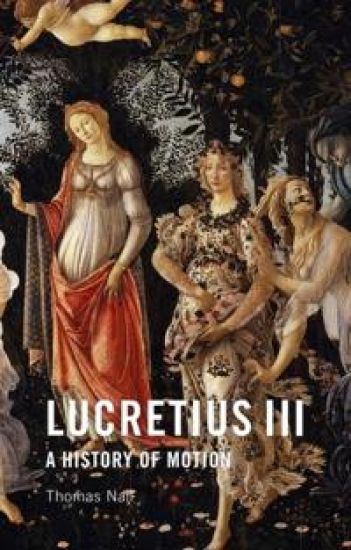
Offers a new theory of history through an original reading of Lucretius' De Rerum NaturaFor Lucretius, history means something surprisingly different than we ordinarily think. Instead of thinking of history in terms of time, he thought of it in terms of motion. This book unpacks the implications of this unique kinetic philosophy of history. In the final volume of his trilogy on De Rerum Natura, Thomas Nail argues that in books five and six, Lucretius described a world born to die. What does it mean to live in such a world? De Rerum Natura provides a guidebook to answering this question.
Lucretius III

Lucretius III

Thomas Nail

EDINBURGH UNIVERSITY PRESS
2022
sidottu
Offers a new theory of history through an original reading of Lucretius' De Rerum NaturaFor Lucretius, history means something surprisingly different than we ordinarily think. Instead of thinking of history in terms of time, he thought of it in terms of motion. This book unpacks the implications of this unique kinetic philosophy of history. In the final volume of his trilogy on De Rerum Natura, Thomas Nail argues that in books five and six, Lucretius described a world born to die. What does it mean to live in such a world? De Rerum Natura provides a guidebook to answering this question.
Theory of the Object

Theory of the Object

Thomas Nail

Edinburgh University Press
2021
nidottu
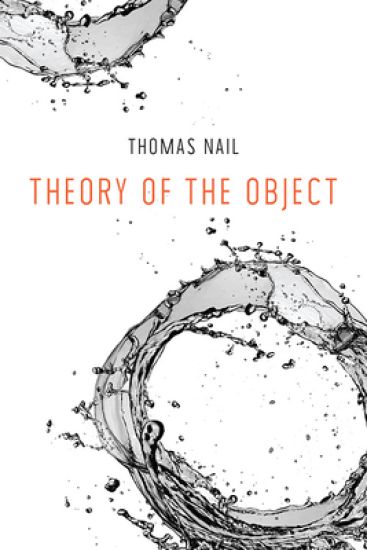
Thomas Nail approaches the theory of objects historically in order to tell a completely new story in which objects themselves are the true agents of scientific knowledge. They are processes, not things. This is the first history of science and technology, from prehistory to the present, illuminating the agency, knowledge and mobility of objects.
Theory of the Object

Theory of the Object

Thomas Nail

Edinburgh University Press
2021
sidottu
Thomas Nail approaches the theory of objects historically in order to tell a completely new story in which objects themselves are the true agents of scientific knowledge. They are processes, not things. This is the first history of science and technology, from prehistory to the present, illuminating the agency, knowledge and mobility of objects.
Theory of the Earth

Theory of the Earth

Thomas Nail

Stanford University Press
2021
pokkari
We need a new philosophy of the earth. Geological time used to refer to slow and gradual processes, but today we are watching land sink into the sea and forests transform into deserts. We can even see the creation of new geological strata made of plastic, chicken bones, and other waste that could remain in the fossil record for millennia or longer. Crafting a philosophy of geology that rewrites natural and human history from the broader perspective of movement, Thomas Nail provides a new materialist, kinetic ethics of the earth that speaks to this moment. Climate change and other ecological disruptions challenge us to reconsider the deep history of minerals, atmosphere, plants, and animals and to take a more process-oriented perspective that sees humanity as part of the larger cosmic and terrestrial drama of mobility and flow. Building on his earlier work on the philosophy of movement, Nail argues that we should shift our biocentric emphasis from conservation to expenditure, flux, and planetary diversity. Theory of the Earth urges us to rethink our ethical relationship to one another, the planet, and the cosmos at large.
Theory of the Earth

Theory of the Earth

Thomas Nail

Stanford University Press
2021
sidottu
We need a new philosophy of the earth. Geological time used to refer to slow and gradual processes, but today we are watching land sink into the sea and forests transform into deserts. We can even see the creation of new geological strata made of plastic, chicken bones, and other waste that could remain in the fossil record for millennia or longer. Crafting a philosophy of geology that rewrites natural and human history from the broader perspective of movement, Thomas Nail provides a new materialist, kinetic ethics of the earth that speaks to this moment. Climate change and other ecological disruptions challenge us to reconsider the deep history of minerals, atmosphere, plants, and animals and to take a more process-oriented perspective that sees humanity as part of the larger cosmic and terrestrial drama of mobility and flow. Building on his earlier work on the philosophy of movement, Nail argues that we should shift our biocentric emphasis from conservation to expenditure, flux, and planetary diversity. Theory of the Earth urges us to rethink our ethical relationship to one another, the planet, and the cosmos at large.
Marx in Motion

Marx in Motion

Thomas Nail

Oxford University Press Inc
2020
nidottu
Karl Marx is the most historically foundational and systematic critic of capitalism to date, and the years since the 2008 financial crisis have witnessed a rebirth of his popular appeal. In a world of rising income inequality, right-wing nationalisms, and global climate change, people are again looking to the father of modern socialism for answers. As this book argues, every era since Marx's death has reinvented him to fit its needs. There is not one Marx forever and for all time. There are a thousand Marxes. As Thomas Nail contends, one of the most significant contributions of Marx's work is that it treats theory itself as a historical practice. Reading Marx is not just an interpretative activity but a creative one. As our historical conditions change, so do the kinds of questions we pose and the kinds of answers we find in Marx's writing. This book is a return to the writings of Karl Marx, including his under-appreciated dissertation, through the lens of the pressing philosophical and political problems of our time: ecological crisis, gender inequality, colonialism, and global mobility. However, the aim of this book is not to make Marxism relevant by "applying" it to contemporary issues. Instead, Marx in Motion, the first new materialist interpretation of Marx's work, treats Capital as if it were already a response to the present. Thomas Nail argues that Marx was a new materialist avant la lettre. He argues that Marx did not believe history was determined, or that matter was passive, or that humans were separate or superior to nature. Marx did not even have a labor theory of value. Marxists argue that new materialists lack a sufficient political and economic theory, and new materialists argue that Marx's materialism is human-centric and mechanistic. This book aims to solve both problems by proposing a new materialist Marxism.
Marx in Motion

Marx in Motion

Thomas Nail

Oxford University Press Inc
2020
sidottu
Karl Marx is the most historically foundational and systematic critic of capitalism to date, and the years since the 2008 financial crisis have witnessed a rebirth of his popular appeal. In a world of rising income inequality, right-wing nationalisms, and global climate change, people are again looking to the father of modern socialism for answers. As this book argues, every era since Marx's death has reinvented him to fit its needs. There is not one Marx forever and for all time. There are a thousand Marxes. As Thomas Nail contends, one of the most significant contributions of Marx's work is that it treats theory itself as a historical practice. Reading Marx is not just an interpretative activity but a creative one. As our historical conditions change, so do the kinds of questions we pose and the kinds of answers we find in Marx's writing. This book is a return to the writings of Karl Marx, including his under-appreciated dissertation, through the lens of the pressing philosophical and political problems of our time: ecological crisis, gender inequality, colonialism, and global mobility. However, the aim of this book is not to make Marxism relevant by "applying" it to contemporary issues. Instead, Marx in Motion, the first new materialist interpretation of Marx's work, treats Capital as if it were already a response to the present. Thomas Nail argues that Marx was a new materialist avant la lettre. He argues that Marx did not believe history was determined, or that matter was passive, or that humans were separate or superior to nature. Marx did not even have a labor theory of value. Marxists argue that new materialists lack a sufficient political and economic theory, and new materialists argue that Marx's materialism is human-centric and mechanistic. This book aims to solve both problems by proposing a new materialist Marxism.
Lucretius II

Lucretius II

Thomas Nail

Edinburgh University Press
2020
sidottu
Human suffering, the fear of death, war, poverty, ecological destruction and social inequality: almost 2,000 ago Lucretius proposed an ethics of motion as simple and stunning solution to these ethical problems. Thomas Nail argues that Lucretius was the first to locate the core of all these ethical ills in our obsession with stasis, our fear of movement and our hatred of matter. Instead of trying to transcend nature with our minds, escape it with our immortal souls and dominate it with our technologies, Lucretius was perhaps the first in the Western tradition to forcefully argue for a completely materialist, immanent and naturalistic ethics based on moving well with and as nature. If we want to survive and live well on this planet, Lucretius taught us, our best chance is not to struggle against nature but to embrace it and facilitate its movement.
Lucretius II

Lucretius II

Thomas Nail

Edinburgh University Press
2020
nidottu
Human suffering, the fear of death, war, poverty, ecological destruction and social inequality: almost 2,000 ago Lucretius proposed an ethics of motion as simple and stunning solution to these ethical problems. Thomas Nail argues that Lucretius was the first to locate the core of all these ethical ills in our obsession with stasis, our fear of movement and our hatred of matter. Instead of trying to transcend nature with our minds, escape it with our immortal souls and dominate it with our technologies, Lucretius was perhaps the first in the Western tradition to forcefully argue for a completely materialist, immanent and naturalistic ethics based on moving well with and as nature. If we want to survive and live well on this planet, Lucretius taught us, our best chance is not to struggle against nature but to embrace it and facilitate its movement.
Theory of the Image

Theory of the Image

Thomas Nail

Oxford University Press Inc
2019
nidottu
We live in an age of the mobile image. The world today is absolutely saturated with images of all kinds circulating around the world at an incredible rate. The movement of the image has never been more extraordinary than it is today. This recent kinetic revolution of the image has enormous consequences not only for the way we think about contemporary art and aesthetics but also for art history as well. Responding to this historical moment, Theory of the Image offers a fresh new theory and history of art from the perspective of this epoch-defining mobility. The image has been understood in many ways, but it is rarely understood to be fundamentally in motion. The original and materialist approach is what defines Theory of the Image and what allows it to offer the first kinetic history of the Western art tradition. In this book, Thomas Nail further develops his larger philosophy of movement into a comprehensive kinesthetic of the moving image from prehistory to the present. The book concludes with a vivid analysis of the contemporary digital image and its hybridity, ultimately outlining new territory for research and exploration across aesthetics, art history, cultural theory, and media studies.
Theory of the Image

Theory of the Image

Thomas Nail

Oxford University Press Inc
2019
sidottu
We live in an age of the mobile image. The world today is absolutely saturated with analog and digital images of all kinds circulating around the world at an incredible rate. The movement of the image has never been more extraordinary than it is today. This recent kinetic revolution of the image has hitherto unconsidered consequences not only for the way we think about contemporary art and aesthetics but also for art history as well. Responding to this historical moment, Theory of the Image offers a fresh new aesthetics and history of art from the perspective of this epoch-defining mobility. The image has been understood in many ways, but rarely, if ever, has it been understood to be, primarily and above all, in motion. This original approach is what defines Theory of the Image and what allows it to offer the first kinetic history of the Western art tradition. In this book, Thomas Nail further develops his larger philosophy of movement into a comprehensive "kinesthetics" of the moving image from prehistory to the present. The book concludes with a vivid analysis of the contemporary digital image and its hybridity, ultimately outlining new territory for research and exploration across aesthetics, art history, cultural theory, and media studies.
Being and Motion

Being and Motion

Thomas Nail

Oxford University Press Inc
2019
sidottu
More than at any other time in human history, we live in an age defined by movement and mobility; and yet, we lack a unifying theory which takes this seriously as a starting point for philosophy. The history of philosophy has systematically explained movement as derived from something else that does not move: space, eternity, force, and time. Why, when movement has always been central to human societies, did a philosophy based on movement never take hold? This book finally overturns this long-standing metaphysical tradition by placing movement at the heart of philosophy. In doing so, Being and Motion provides a completely new understanding of the most fundamental categories of ontology from a movement-oriented perspective: quality, quantity, relation, modality, and others. It also provides the first history of the philosophy of motion, from early prehistoric mythologies up to contemporary ontologies. Through its systematic ontology of movement, Being and Motion provides a path-breaking historical ontology of our present.
Being and Motion

Being and Motion

Thomas Nail

Oxford University Press Inc
2018
nidottu
More than at any other time in human history, we live in an age defined by movement and mobility; and yet, we lack a unifying theory which takes this seriously as a starting point for philosophy. The history of philosophy has systematically explained movement as derived from something else that does not move: space, eternity, force, and time. Why, when movement has always been central to human societies, did a philosophy based on movement never take hold? This book finally overturns this long-standing metaphysical tradition by placing movement at the heart of philosophy. In doing so, Being and Motion provides a completely new understanding of the most fundamental categories of ontology from a movement-oriented perspective: quality, quantity, relation, modality, and others. It also provides the first history of the philosophy of motion, from early prehistoric mythologies up to contemporary ontologies. Through its systematic ontology of movement, Being and Motion provides a path-breaking historical ontology of our present.