Kirjojen hintavertailu. Mukana 12 152 606 kirjaa ja 12 kauppaa.

Kirjailija

Thomas P. Kasulis

Kirjat ja teokset yhdessä paikassa: 8 kirjaa, julkaisuja vuosilta 1987-2018, suosituimpien joukossa Ethics Embodied. Vertaile teosten hintoja ja tarkista saatavuus suomalaisista kirjakaupoista.

8 kirjaa

Kirjojen julkaisuhaarukka 1987-2018.

Ethics Embodied

Ethics Embodied

Erin McCarthy; Thomas P. Kasulis

Lexington Books
2011
nidottu
While the body has been largely neglected in much of traditional Western philosophy, there is a rich tradition of Japanese philosophy in which this is not the case. Ethics Embodied explains how Japanese philosophy includes the body as an integral part of selfhood and ethics and shows how it provides an alternative and challenge to the traditional Western philosophical view of self and ethics. Through a comparative feminist approach, the book articulates the striking similarities that exist between certain strands of Japanese philosophy and feminist philosophy concerning selfhood, ethics and the body. Despite the similarities, McCarthy argues that there are significant differences between these philosophies and that each reveals important limitations of the other. Thus, the book urges a view of ethical embodied selfhood that goes beyond where each of these views leaves us when considered in isolation. With keen analysis and constructive comparison, this book will be accessible for students and scholars familiar with the Western philosophical tradition, while still adding a more global perspective.
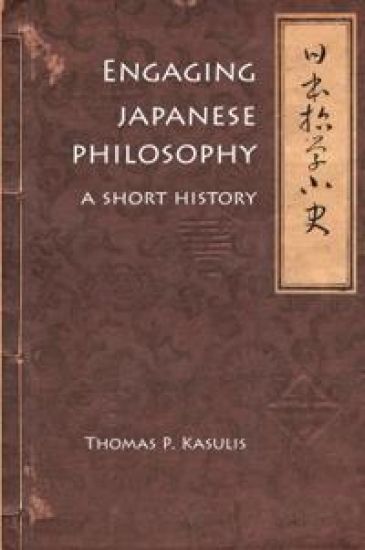
Engaging Japanese Philosophy

Engaging Japanese Philosophy

Thomas P. Kasulis

University of Hawai'i Press
2018
nidottu
Philosophy challenges our assumptions—especially when it comes to us from another culture. In exploring Japanese philosophy, a dependable guide is essential. The present volume, written by a renowned authority on the subject, offers readers a historical survey of Japanese thought that is both comprehensive and comprehensible.Adhering to the Japanese philosophical tradition of highlighting engagement over detachment, Thomas Kasulis invites us to think with, as well as about, the Japanese masters by offering ample examples, innovative analogies, thought experiments, and jargon-free explanations. He assumes little previous knowledge and addresses themes—aesthetics, ethics, the samurai code, politics, among others—not in a vacuum but within the conditions of Japan’s cultural and intellectual history. For readers new to Japanese studies, he provides a simplified guide to pronouncing Japanese and a separate discussion of the language and how its syntax, orthography, and linguistic layers can serve the philosophical purposes of a skilled writer and subtle thinker. For those familiar with the Japanese cultural tradition but less so with philosophy, Kasulis clarifies philosophical expressions and problems, Western as well as Japanese, as they arise.Half of the book’s chapters are devoted to seven major thinkers who collectively represent the full range of Japan’s historical epochs and philosophical traditions: Kukai, Shinran, Dogen, Ogyu Sorai, Motoori Norinaga, Nishida Kitaro, and Watsuji Tetsuro. Nuanced details and analyses enable an engaged understanding of Japanese Buddhism, Confucianism, Shinto, and modern academic philosophy. Other chapters supply social and cultural background, including brief discussions of nearly a hundred other philosophical writers. (For additional information, cross references to material in the companion volume Japanese Philosophy: A Sourcebook are included.) In his closing chapter Kasulis reflects on lessons from Japanese philosophy that enhance our understanding of philosophy itself. He reminds us that philosophy in its original sense means loving wisdom, not studying ideas. In that regard, a renewed appreciation of engaged knowing can play a critical role in the revitalization of philosophy in the West as well as the East.
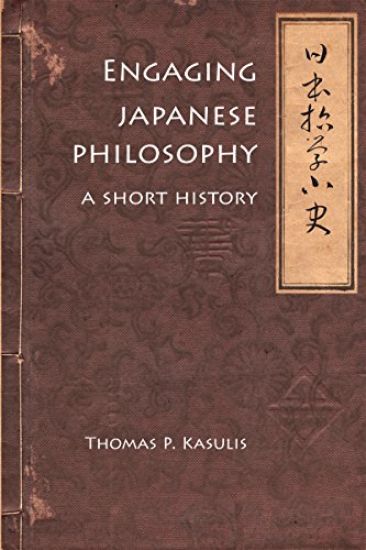
Engaging Japanese Philosophy

Engaging Japanese Philosophy

Thomas P. Kasulis

University of Hawai'i Press
2017
sidottu
Philosophy challenges our assumptions—especially when it comes to us from another culture. In exploring Japanese philosophy, a dependable guide is essential. The present volume, written by a renowned authority on the subject, offers readers a historical survey of Japanese thought that is both comprehensive and comprehensible.Adhering to the Japanese philosophical tradition of highlighting engagement over detachment, Thomas Kasulis invites us to think with, as well as about, the Japanese masters by offering ample examples, innovative analogies, thought experiments, and jargon-free explanations. He assumes little previous knowledge and addresses themes—aesthetics, ethics, the samurai code, politics, among others—not in a vacuum but within the conditions of Japan’s cultural and intellectual history. For readers new to Japanese studies, he provides a simplified guide to pronouncing Japanese and a separate discussion of the language and how its syntax, orthography, and linguistic layers can serve the philosophical purposes of a skilled writer and subtle thinker. For those familiar with the Japanese cultural tradition but less so with philosophy, Kasulis clarifies philosophical expressions and problems, Western as well as Japanese, as they arise.Half of the book’s chapters are devoted to seven major thinkers who collectively represent the full range of Japan’s historical epochs and philosophical traditions: Kukai, Shinran, Dogen, Ogyu Sorai, Motoori Norinaga, Nishida Kitaro, and Watsuji Tetsuro. Nuanced details and analyses enable an engaged understanding of Japanese Buddhism, Confucianism, Shinto, and modern academic philosophy. Other chapters supply social and cultural background, including brief discussions of nearly a hundred other philosophical writers. (For additional information, cross references to material in the companion volume Japanese Philosophy: A Sourcebook are included.) In his closing chapter Kasulis reflects on lessons from Japanese philosophy that enhance our understanding of philosophy itself. He reminds us that philosophy in its original sense means loving wisdom, not studying ideas. In that regard, a renewed appreciation of engaged knowing can play a critical role in the revitalization of philosophy in the West as well as the East.
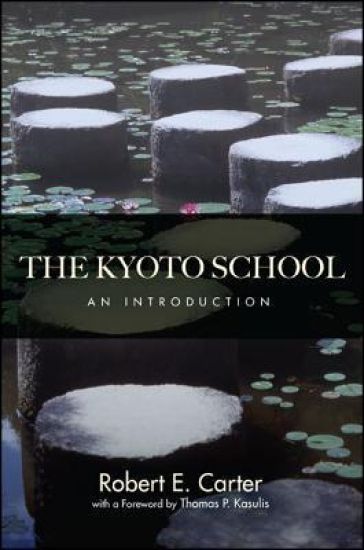
The Kyoto School

The Kyoto School

Robert E. Carter; Thomas P. Kasulis

State University of New York Press
2013
pokkari
An accessible discussion of the thought of key figures of the Kyoto School of Japanese philosophy.This book provides a much-needed introduction to the Kyoto School of Japanese philosophy. Robert E. Carter focuses on four influential Japanese philosophers: the three most important members of the Kyoto School (Nishida Kitaro, Tanabe Hajime, and Nishitani Keiji), and a fourth (Watsuji Tetsuro), who was, at most, an associate member of the school. Each of these thinkers wrestled systematically with the Eastern idea of "nothingness," albeit from very different perspectives.Many Western scholars, students, and serious general readers are intrigued by this school of thought, which reflects Japan's engagement with the West. A number of works by various thinkers associated with the Kyoto School are now available in English, but these works are often difficult to grasp for those not already well-versed in the philosophical and historical context. Carter's book provides an accessible yet substantive introduction to the school and offers an East-West dialogue that enriches our understanding of Japanese thought while also shedding light on our own assumptions, habits of thought, and prejudices.
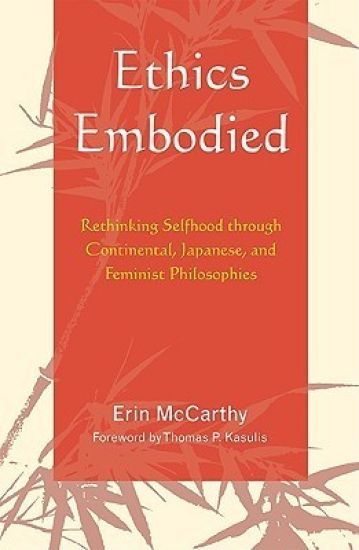
Ethics Embodied

Ethics Embodied

Erin McCarthy; Thomas P. Kasulis

Lexington Books
2010
sidottu
While the body has been largely neglected in much of traditional Western philosophy, there is a rich tradition of Japanese philosophy in which this is not the case. Ethics Embodied explains how Japanese philosophy includes the body as an integral part of selfhood and ethics and shows how it provides an alternative and challenge to the traditional Western philosophical view of self and ethics. Through a comparative feminist approach, the book articulates the striking similarities that exist between certain strands of Japanese philosophy and feminist philosophy concerning selfhood, ethics and the body. Despite the similarities, McCarthy argues that there are significant differences between these philosophies and that each reveals important limitations of the other. Thus, the book urges a view of ethical embodied selfhood that goes beyond where each of these views leaves us when considered in isolation. With keen analysis and constructive comparison, this book will be accessible for students and scholars familiar with the Western philosophical tradition, while still adding a more global perspective.
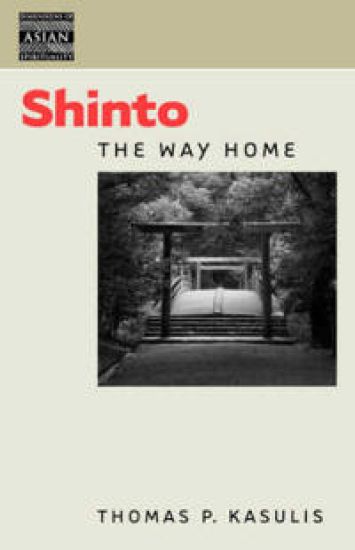
Shinto

Shinto

Thomas P. Kasulis

University of Hawai'i Press
2004
nidottu
Nine out of ten Japanese claim some affiliation with Shinto, but in the West the religion remains the least studied of the major Asian spiritual traditions. It is so interlaced with Japanese cultural values and practices that scholarly studies usually focus on only one of its dimensions: Shinto as a ""nature religion,"" an ""imperial state religion,"" a ""primal religion,"" or a ""folk amalgam of practices and beliefs."" Thomas Kasulis' fresh approach to Shinto explains with clarity and economy how these different aspects interrelate. As a philosopher of religion, he first analyzes the experiential aspect of Shinto spirituality underlying its various ideas and practices. Second, as a historian of Japanese thought, he sketches several major developments in Shinto doctrines and institutions from prehistory to the present, showing how its interactions with Buddhism, Confucianism, and nationalism influenced its expression in different times and contexts. In Shinto's idiosyncratic history, Kasulis finds the explicit interplay between two forms of spirituality: the ""existential"" and the ""essentialist."" Although the dynamic between the two is particularly striking and accessible in the study of Shinto, he concludes that a similar dynamic may be found in the history of other religions as well. Two decades ago, Kasulis' Zen Action/Zen Person brought an innovative understanding to the ideas and practices of Zen Buddhism, an understanding influential in the ensuing decades of philosophical Zen studies. Shinto: The Way Home promises to do the same for future Shinto studies.
Intimacy or Integrity

Intimacy or Integrity

Thomas P. Kasulis

University of Hawai'i Press
2002
nidottu
How can I know something? How can I convince someone of the rightness of my position? How does reality function? What is artistic creativity? What is the role of the state? It is well known that people from various cultures give dissimilar answers to such philosophical questions. After three decades in the cross-cultural study of ideas and values, Thomas Kasulis found that culture influences not only the answers to these questions, but often how one arrives at the answers. In generalizing cultural difference, Kasulis identifies two kinds of orientation: intimacy and integrity. Both determine how we think about relations among people and among things, and each is reasonable, effective, and consistent. Yet the two are so incompatible in their basic assumptions that they cannot successfully engage each other. Cultural difference extends beyond nations. Cultural identities crystallize in relation to religion, occupation, race, gender, class. Rather than attempt to transcend cultural difference, Kasulis urges a deeper awareness of its roots by moving beyond mere cultural relativism toward a cultural bi-orientationality that will allow us to adapt ourselves to different cultural contexts as the situation demands. Wonderfully clear and unburdened by jargon, Intimacy or Integrity is accessible to readers from a variety of perspectives and backgrounds. By analyzing the synergy between thought and culture, it increases our understanding of cultural difference and guides us in developing strategies for dealing with orientations different from our own.