Kirjojen hintavertailu. Mukana 12 595 353 kirjaa ja 12 kauppaa.

Kirjailija

Thomas P. Scheck

Kirjat ja teokset yhdessä paikassa: 7 kirjaa, julkaisuja vuosilta 2008-2021, suosituimpien joukossa Origen and the History of Justification. Vertaile teosten hintoja ja tarkista saatavuus suomalaisista kirjakaupoista.

7 kirjaa

Kirjojen julkaisuhaarukka 2008-2021.

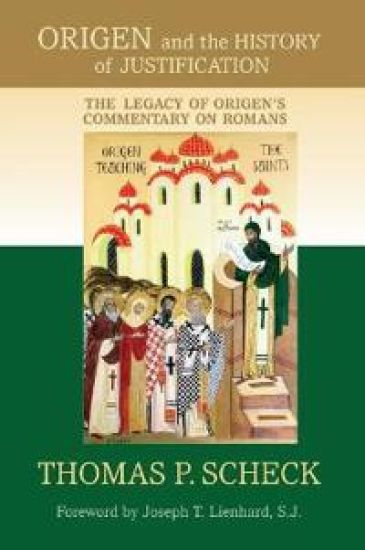
Origen and the History of Justification

Origen and the History of Justification

Thomas P. Scheck; Joseph T. Lienhard

University of Notre Dame Press
2016
nidottu
Standard accounts of the history of interpretation of Paul's Letter to the Romans often begin with St. Augustine. As Thomas P. Scheck demonstrates, however, the Commentary on the Epistle to the Romans by Origen of Alexandria (185-254 CE) was a major work of Pauline exegesis which, by means of the Latin translation preserved in the West, had a significant influence on the Christian exegetical tradition. Scheck begins by exploring Origen's views on justification and on the intimate connection of faith and post-baptismal good works as essential to justification. He traces the enormous influence Origen's Commentary on Romans had on later theologians in the Latin West, including the ways in which theologians often appropriated Origen's exegesis in their own work. Scheck analyzes in particular the reception of Origen by Pelagius, Augustine, William of St. Thierry, Erasmus, Cornelius Jansen, the Anglican Bishop Richard Montagu, and the Catholic lay apologist John Heigham, as well as Martin Luther, Philip Melanchthon, and other Protestant Reformers who harshly attacked Origen's interpretation as fatally flawed. But as Scheck shows, theologians through the post-Reformation controversies of the sixteenth and seventeenth centuries studied and engaged Origen extensively, even if not always in agreement. An important work in patristics, biblical interpretation, and historical theology, Origen and the History of Justification establishes the formative role played by Origen's Pauline exegesis, while also contributing to our understanding of the theological issues surrounding justification in the western Christian tradition.
Origen and the History of Justification

Origen and the History of Justification

Thomas P. Scheck; Joseph T. Lienhard

University of Notre Dame Press
2008
sidottu
Standard accounts of the history of interpretation of Paul's Letter to the Romans often begin with St. Augustine. As Thomas P. Scheck demonstrates, however, the Commentary on the Epistle to the Romans by Origen of Alexandria (185-254 CE) was a major work of Pauline exegesis which, by means of the Latin translation preserved in the West, had a significant influence on the Christian exegetical tradition. Scheck begins by exploring Origen's views on justification and on the intimate connection of faith and post-baptismal good works as essential to justification. He traces the enormous influence Origen's Commentary on Romans had on later theologians in the Latin West, including the ways in which theologians often appropriated Origen's exegesis in their own work. Scheck analyzes in particular the reception of Origen by Pelagius, Augustine, William of St. Thierry, Erasmus, Cornelius Jansen, the Anglican Bishop Richard Montagu, and the Catholic lay apologist John Heigham, as well as Martin Luther, Philip Melanchthon, and other Protestant Reformers who harshly attacked Origen's interpretation as fatally flawed. But as Scheck shows, theologians through the post-Reformation controversies of the sixteenth and seventeenth centuries studied and engaged Origen extensively, even if not always in agreement. An important work in patristics, biblical interpretation, and historical theology, Origen and the History of Justification establishes the formative role played by Origen's Pauline exegesis, while also contributing to our understanding of the theological issues surrounding justification in the western Christian tradition.
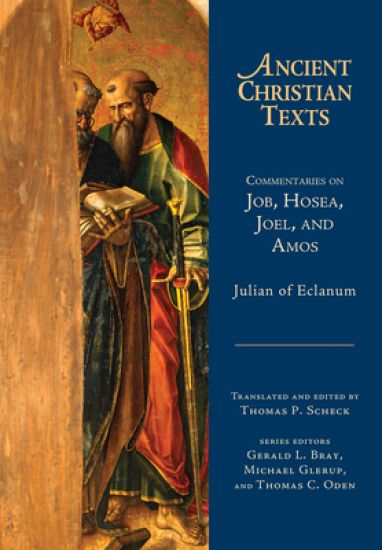
Commentaries on Job, Hosea, Joel, and Amos

Commentaries on Job, Hosea, Joel, and Amos

Thomas P. Scheck

IVP Academic
2021
sidottu
"Then the Lord answered Job out of the whirlwind . . . " Julian of Eclanum (c. 386–455) was the bishop of Eclanum, located in modern-day Italy. In this volume in IVP's Ancient Christian Texts series, Thomas Scheck provides a new translation of Julian's commentaries on the biblical books of Job and those of three Minor Prophets: Hosea, Joel, and Amos. Here, readers will gain insight into how early Christians read texts such as God's speech to Job, Hosea's symbolic representation of God's unending love for a faithless Israel, Joel's anticipation of the outpouring of the Holy Spirit, and Amos's call for social justice. While Julian was a well-known leader among the Pelagians, whose theology was famously opposed by Augustine of Hippo and ultimately determined to be outside the bounds of the church's orthodoxy, the Pelagian movement was a significant element within the early church. And although Julian's Pelagianism does not fundamentally affect the commentaries presented in this volume, Christians can gain insight into the truths of Scripture by reading the text alongside others, even when—or perhaps especially when—we might disagree with other aspects of their beliefs. Ancient Christian Texts are new English translations of full-length commentaries or sermon series from ancient Christian authors that allow you to study key writings of the early church fathers in a fresh way.
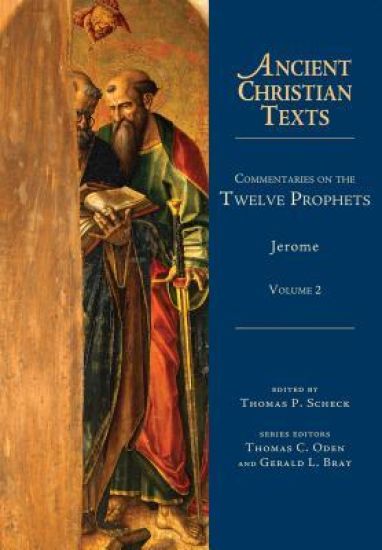
Commentaries on the Twelve Prophets – Volume 2

Commentaries on the Twelve Prophets – Volume 2

Thomas P. Scheck

Inter-Varsity Press,US
2017
nidottu
Jerome (c. 347-419/20), one of the West's four doctors of the church, was recognized early on as one of the church's foremost translators, commentators, and advocates of Christian asceticism. Skilled in Hebrew and Greek in addition to his native Latin, he was thoroughly familiar with Jewish traditions and brought this expertise to bear on his understanding of the Old Testament. Beginning in 379, Jerome used his considerable linguistic skills to translate Origen's commentaries and, eventually, to translate and comment on Scripture himself. Jerome began writing commentaries on the twelve minor prophets in 392 while preparing his Latin Vulgate translation of the Bible. After completing Nahum, Micah, Zephaniah, Haggai, and Habakkuk, he was interrupted in 393 by the Origenist controversy, after which he became a vocal critic of Origen of Alexandria. He finished his commentaries on Jonah and Obadiah in 396. These seven commentaries are available in the ACT volume Commentaries on the Twelve Prophets, Volume 1. The Origenist controversy and his commentary on Matthew occupied Jerome's time for the next several years. He finally completed his commentaries on the rest of the twelve prophets in 406. This volume, edited by Thomas Scheck, includes those final five commentaries on Zechariah, Malachi, Hosea, Joel, and Amos. Throughout these commentaries, Jerome refers frequently to the work of previous commentators, and his spiritual exegesis relies heavily on the exegetical work of Origen - though he acknowledges that "I have not followed them in everything." Jerome hears in these texts God's judgment and mercy not only on Israel but especially on the Christian community. In Amos, for example, he says that "whatever we have said about Judah refers to the church." He wrestles especially with the scandalous message of Hosea, which he refers to as drowning with Pharaoh during the crossing of the Red Sea. But he trusts that "the ways of the Lord are the reading of the Old and New Testament, the understanding of the holy Scriptures." By sharing the wisdom he received from these biblical texts, Jerome's magisterial commentaries help us walk more faithfully in God's ways. Ancient Christian Texts are new English translations of full-length commentaries or sermon series from ancient Christian authors that allow you to study key writings of the early church fathers in a fresh way.
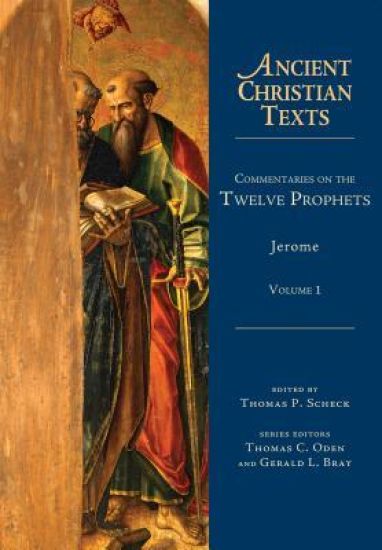
Commentaries on the Twelve Prophets – Volume 1

Commentaries on the Twelve Prophets – Volume 1

Thomas P. Scheck

Inter-Varsity Press,US
2016
nidottu
Jerome (c. 347-419/20), one of the West's four doctors of the church, was recognized early on as one of the church's foremost translators, commentators and advocates of Christian asceticism. Skilled in Hebrew and Greek in addition to his native Latin, he was thoroughly familiar with Jewish traditions and brought them to bear on his understanding of the Old Testament. Beginning in 379, Jerome used his considerable linguistic skills to translate Origen's commentaries and, eventually, to translate and comment on Scripture himself. In 392, while preparing his Latin Vulgate translation of the Bible, Jerome wrote his commentary on Nahum, the first in a series of commentaries on five of the twelve minor prophets. Micah, Zephaniah, Haggai and Habakkuk soon followed. He was interrupted in 393 by the Origenist controversy, after which he became a vocal critic of Origen of Alexandria—a controversy he referred to in his commentaries on Jonah and Obadiah in 396. This Ancient Christian Texts volume, edited and translated by Thomas Scheck in collaboration with classics students from Ave Maria University, includes these seven commentaries. The second volume contains Jerome's commentaries on Zechariah, Malachi, Hosea, Joel and Amos, all of which were written in 406, completing the group of twelve prophets. Throughout these commentaries Jerome displays his familiarity with both Hebrew and Greek texts. His spiritual exegesis relies heavily on the exegetical work of Origen. Jerome looks beyond the nationalistic sentiments of the prophets to see a wider message about God's mercy and justice. His commitment to the truthfulness of the Scriptures as the Word of God is exemplified by his defense of the historicity of Jonah. He finds the fundamental message of the prophets to be the intent to console the saints, so that they may disdain the things of this world and prepare themselves for the day of judgment. Ancient Christian Texts are new English translations of full-length commentaries or sermon series from ancient Christian authors that allow you to study key writings of the early church fathers in a fresh way.
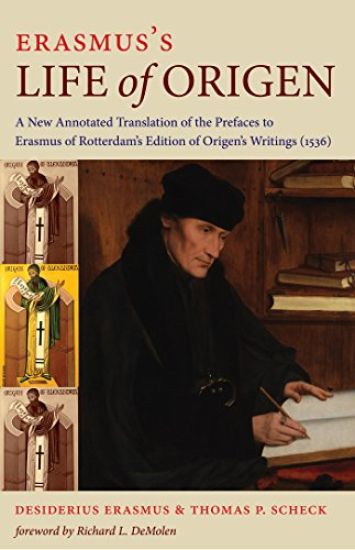
Erasmus's Life of Origen

Erasmus's Life of Origen

Thomas P. Scheck; Richard L. DeMolen

The Catholic University of America Press
2016
sidottu
Erasmus of Rotterdam (1466–1536) hailed Origen of Alexandria (185–254) as a holy priest, a gifted homilist, a heroic Christian, and a celebrated exegete and theologian of the ancient Church. In this book Thomas Scheck presents one of the fruits of Erasmus’s endeavors in the field of patristic studies (a particularly neglected field of scholarshipwithin Erasmus studies) by providing the first English translation, annotated and thoroughly introduced, of Erasmus final work, the Prefaces to his Edition of Origen’s writings (1536). Originally published posthumously two months after Erasmus’s death, the work surveys Origen of Alexandria’s life, writings, preaching, and contribution to the Catholic Church. The staggering depth and breadth of Erasmus’s learning are exhibited here, as well as the maturity of his theological reflections, which in many ways anticipate the irenicism of the Second Vatican Council with respect to Origen. Erasmus presents Origen as a marvelous doctor of the ancient Church who made a tremendous contribution to the Catholic exegetical tradition and who lived a saintly life.Scheck’s translation of Erasmus’s prefaces is prefaced by four substantial chapters of introductory material, outlining Erasmus’s program for theological renewal, a survey of Origen’s life and works from a modern perspective, a discussion of Origen’s legacy in the Church as an exegete and theologian (focusing particularly on Origen’s influence on St. Jerome), and the immediate 16th century background of Erasmus’s Edition of Origen. These chapters are followed by the translation itself, to which is then appended a lengthy appendix chapter that discusses Erasmus’s own legacy in the Catholic Church in the 16th century.
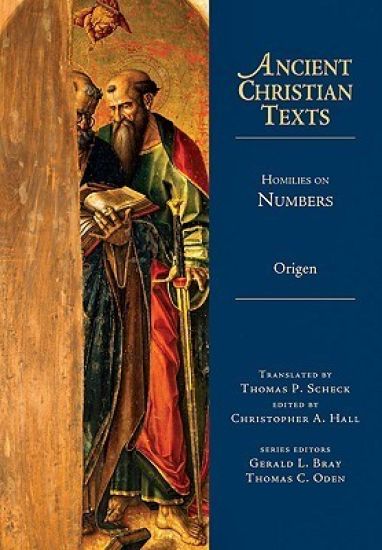
Homilies on Numbers

Homilies on Numbers

Thomas P. Scheck; Christopher A. Hall

Inter-Varsity Press,US
2009
nidottu
Origen of Alexandria (185-254), one of the most prolific authors of antiquity and arguably the most important and influential pre-Nicene Christian theologian, was a man of deep learning and holiness of life. Regrettably, many of his works are no longer extant, in part due to the condemnation of his ideas by the Fifth Ecumenical Council in 553. The condemnation, however, took little account of his historical circumstances and the tentative nature of his speculations. The anathemas were more likely directed toward sixth-century Origenist views than to the views of Origen himself, though clearly he expounded some views that would be judged unacceptable today. Origen's numerous homilies provide the oldest surviving corpus of Christian sermons and shaped exegesis for succeeding centuries. With Jerome he was one of the early church's great critical and literal exegetes. Devoutly he sought to develop a spiritual exegesis of the Old Testament grounded in the revelation of Jesus Christ. The Homilies on Numbers presented here offer a splendid example of his spiritual interpretation of Old Testament texts. He asks, What foreshadowing, what warning, what instruction, what encouragement, reproof, correction or exhortation, do we find in the narratives of Numbers for our benefit as Christians? Here, based on Baehren's critical Latin text, is the first English edition of these homilies, ably translated with explanatory notes by Thomas P. Scheck. Ancient Christian Texts are new English translations of full-length commentaries or sermon series from ancient Christian authors that allow you to study key writings of the early church fathers in a fresh way.