Kirjojen hintavertailu. Mukana 12 595 353 kirjaa ja 12 kauppaa.

Kirjailija

Thomas R. Flynn

Kirjat ja teokset yhdessä paikassa: 8 kirjaa, julkaisuja vuosilta 1986-2019, suosituimpien joukossa Sartre and Marxist Existentialism. Vertaile teosten hintoja ja tarkista saatavuus suomalaisista kirjakaupoista.

8 kirjaa

Kirjojen julkaisuhaarukka 1986-2019.

Sartre, Foucault, and Historical Reason, Volume Two

Sartre, Foucault, and Historical Reason, Volume Two

Thomas R. Flynn

University of Chicago Press
2005
sidottu
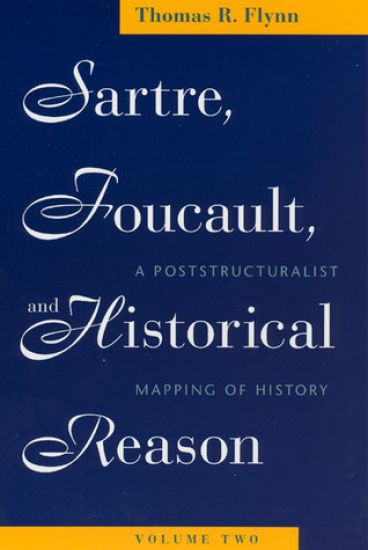
Sartre and Foucault were two of the most prominent and at times mutually antagonistic philosophical figures of the twentieth century. And nowhere are the antithetical natures of their existentialist and poststructuralist philosophies more apparent than in their disparate approaches to historical understanding. In Volume One of this authoritative two-volume study, Thomas R. Flynn conducted a pivotal and comprehensive reconstruction of Sartrean historical theory. This long-awaited second volume offers a comprehensive and critical reading of the Foucauldian counterpoint.A history, theorized Foucault, should be a kind of map, a comprehensive charting of structural transformations and displacements over time. Contrary to other Foucault scholars, Flynn proposes an "axial" rather than a developmental reading of Foucault's work. This allows aspects of Foucault's famous triad of knowledge, power, and the subject to emerge in each of his major works. Flynn maps existentialist categories across Foucault's "quadrilateral," the model that Foucault proposes as defining modernist conceptions of knowledge. At stake is the degree to which Sartre's thought is fully captured by this mapping, whether he was, as Foucault claimed, "a man of the nineteenth century trying to think in the twentieth."
Sartre and Marxist Existentialism

Sartre and Marxist Existentialism

Thomas R. Flynn

University of Chicago Press
1986
nidottu
In this important book, Thomas R. Flynn reinterprets and evaluates Sartre's social and political philosophy, arguing that the existential ethics of Sartre's early phase is consistent with the Marxist-inspired views of his later writings. Displaying his mastery of Sartre's entire corpus, Flynn reconstructs Sartre's social ontology with its sensitive balance of the existentialist's respect for moral responsibility and the Marxist's sense of social causation. Flynn focuses on the issue of collective responsibility as a particularly apt test-case for assessing any proposed union of existentialist and Marxist perspectives. The study begins with an examination of the uses of "responsibility" in Being and Nothingness and in several postwar essays. Flynn then concentrates on the Critique of Dialectical Reason, offering a thorough analysis of the remarkable social theory Sartre constructs there. A masterful contribution to Sartre scholarship, Sartre and Marxist Existentialism will be of great interest to social and political philosophers involved in the debate over collective responsibility.
Sartre

Sartre

Thomas R. Flynn

Cambridge University Press
2019
pokkari
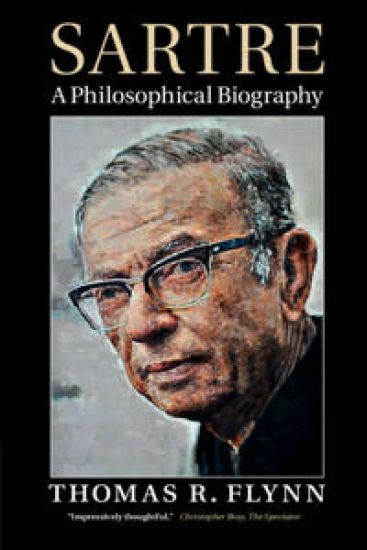
Jean-Paul Sartre (1905–1980) was one of the most influential thinkers of the twentieth century. Regarded as the father of existentialist philosophy, he was also a political critic, moralist, playwright, novelist, and author of biographies and short stories. Thomas R. Flynn provides the first book-length account of Sartre as a philosopher of the imaginary, mapping the intellectual development of his ideas throughout his life, and building a narrative that is not only philosophical but also attentive to the political and literary dimensions of his work. Exploring Sartre's existentialism, politics, ethics, and ontology, this book illuminates the defining ideas of Sartre's oeuvre: the literary and the philosophical, the imaginary and the conceptual, his descriptive phenomenology and his phenomenological concept of intentionality, and his conjunction of ethics and politics with an 'egoless' consciousness. It will appeal to all who are interested in Sartre's philosophy and its relation to his life.
Sartre

Sartre

Thomas R. Flynn

Cambridge University Press
2014
sidottu
Jean-Paul Sartre (1905–1980) was one of the most influential thinkers of the twentieth century. Regarded as the father of existentialist philosophy, he was also a political critic, moralist, playwright, novelist, and author of biographies and short stories. Thomas R. Flynn provides the first book-length account of Sartre as a philosopher of the imaginary, mapping the intellectual development of his ideas throughout his life, and building a narrative that is not only philosophical but also attentive to the political and literary dimensions of his work. Exploring Sartre's existentialism, politics, ethics, and ontology, this book illuminates the defining ideas of Sartre's oeuvre: the literary and the philosophical, the imaginary and the conceptual, his descriptive phenomenology and his phenomenological concept of intentionality, and his conjunction of ethics and politics with an 'egoless' consciousness. It will appeal to all who are interested in Sartre's philosophy and its relation to his life.
Oral and Maxillofacial Infections: 15 Unanswered Questions, An Issue of Oral and Maxillofacial Surgery Clinics
This special issue will review the many unanswered questions regarding oral and maxillofacial infections. Questions include: Should we extract teeth in the presence of infection? Should we wait for development of an abscess before we perform incision and drainage? What are the antibiotics of choice for odontogenic infections, and how long should the treatment course last? Is clindamycin losing its effectiveness in odontogenic infections? Should we use prophylactic antibiotics for removal of erupted teeth, impacted teeth, dental implants, or other dentoalveolar surgery? How can we as dentists minimize our contribution to the problem of antibiotic resistance? How will culture and antibiotic sensitivity testing be done in the foreseeable future? How can osteomyelitis of the jaws be diagnosed at the earliest possible time? How should the practicing oral and maxillofacial surgeon manage cases of odontogenic deep neck infections that extend beyond his/her area of expertise? Do dental infections really cause central nervous system infections? What are the lessons we can glean from review of recent closed malpractice cases involving oral and maxillofacial infections? How do we manage oral infections in the severely immunocompromised host, such as in chemotherapy for blood cancers or in bone marrow transplant patients? What is the role of biofilms in severe head and neck infections? How strong is the evidence supporting oral inflammation as a cause of systemic disease?
Sartre, Foucault, and Historical Reason, Volume Two

Sartre, Foucault, and Historical Reason, Volume Two

Thomas R. Flynn

University of Chicago Press
2005
nidottu
Sartre and Foucault were two of the most prominent and at times mutually antagonistic philosophical figures of the twentieth century. And nowhere are the antithetical natures of their existentialist and poststructuralist philosophies more apparent than in their disparate approaches to historical understanding. In Volume One of this authoritative two-volume study, Thomas R. Flynn conducted a pivotal and comprehensive reconstruction of Sartrean historical theory. This long-awaited second volume offers a comprehensive and critical reading of the Foucauldian counterpoint.A history, theorized Foucault, should be a kind of map, a comprehensive charting of structural transformations and displacements over time. Contrary to other Foucault scholars, Flynn proposes an "axial" rather than a developmental reading of Foucault's work. This allows aspects of Foucault's famous triad of knowledge, power, and the subject to emerge in each of his major works. Flynn maps existentialist categories across Foucault's "quadrilateral," the model that Foucault proposes as defining modernist conceptions of knowledge. At stake is the degree to which Sartre's thought is fully captured by this mapping, whether he was, as Foucault claimed, "a man of the nineteenth century trying to think in the twentieth."
Sartre, Foucault, and Historical Reason, Volume One

Sartre, Foucault, and Historical Reason, Volume One

Thomas R. Flynn

University of Chicago Press
1997
nidottu
Sartre and Foucault were two of the most prominent and at times mutually antagonistic philosophical figures of the twentieth century. And nowhere are the antithetical natures of their existentialist and poststructuralist philosophies more apparent than in their disparate approaches to historical understanding. A history, thought Foucault, should be a kind of map, a comparative charting of structural transformations and displacements. But for Sartre, authentic historical understanding demanded a much more personal and committed narrative, a kind of interpretive diary of moral choices and risks compelled by critical necessity and an exacting reality. Sartre's history, a rational history of individual lives and their intrinsic social worlds, was in essence immersed in biography. In Volume One of this authoritative two-volume work, Thomas R. Flynn conducts a pivotal and comprehensive reconstruction of Sartrean historical theory, and provocatively anticipates the Foucauldian counterpoint to come in Volume Two.
Sartre, Foucault, and Historical Reason, Volume One

Sartre, Foucault, and Historical Reason, Volume One

Thomas R. Flynn

University of Chicago Press
1997
sidottu
Sartre and Foucault were two of the most prominent and at times mutually antagonistic philosophical figures of the twentieth century. And nowhere are the antithetical natures of their existentialist and poststructuralist philosophies more apparent than in their disparate approaches to historical understanding. A history, thought Foucault, should be a kind of map, a comparative charting of structural transformations and displacements. But for Sartre, authentic historical understanding demanded a much more personal and committed narrative, a kind of interpretive diary of moral choices and risks compelled by critical necessity and an exacting reality. Sartre's history, a rational history of individual lives and their intrinsic social worlds, was in essence immersed in biography. In Volume One of this authoritative two-volume work, Thomas R. Flynn conducts a pivotal and comprehensive reconstruction of Sartrean historical theory, and provocatively anticipates the Foucauldian counterpoint to come in Volume Two.