Kirjojen hintavertailu. Mukana 12 390 323 kirjaa ja 12 kauppaa.

Kirjailija

Thomas R. Mockaitis

Kirjat ja teokset yhdessä paikassa: 21 kirjaa, julkaisuja vuosilta 1999-2025, suosituimpien joukossa The New Terrorism. Vertaile teosten hintoja ja tarkista saatavuus suomalaisista kirjakaupoista.

Mukana myös kirjoitusasut: Thomas R Mockaitis

21 kirjaa

Kirjojen julkaisuhaarukka 1999-2025.

The New Terrorism

The New Terrorism

Thomas R. Mockaitis

Praeger Publishers Inc
2006
sidottu
As shocking as the attacks of 9/11 were, we have been too quick to view the post-9/11 struggle against terrorism as entirely new and unprecedented. Without denying certain novel aspects of Al Qaeda and its affiliates, the newness of its purpose and methods has been overemphasized. Many aspects of contemporary terrorism bear a striking resemblance to past movements. Others represent the culmination of trends evolving over decades. Even seemingly novel characteristics of terrorist methods may be more the outcome of earlier developments than a truly new phenomenon. The increased lethality of terrorist attacks is a case in point. Usually attributed to lack of restraint brought on by religious extremism, the emphasis on body count may owe as much to a kind of threshold phenomenon. Numbed by decades of violence, people do not shock as easily as they once did. It now takes thousands of deaths to produce the same effect once caused by a relative handful. This book places today's terrorism in historical context and challenges the idea of a global war on terrorism.
Violent Extremists

Violent Extremists

Thomas R. Mockaitis

BLOOMSBURY PUBLISHING PLC
2024
nidottu
Written for general readers and professionals alike, this succinct but comprehensive work examines the hybrid nature of the two violent extremist movements threatening the United States: Islamist extremism and white nationalism. Scholarship as well as popular discourse on terrorism often focuses disproportionately on specific groups without paying sufficient attention to the ideology that motivates them. This book emphasizes understanding and countering the ideology that fuels extremism over preoccupation with specific organizations such as Al Qaeda or ISIS. It sets contemporary terrorist threats in perspective, avoiding fearmongering and political rhetoric. The book examines the nature of violent extremism today in all its forms, including lone wolves and cyber threats. Focusing on both international and domestic terrorism, it analyzes each threat in depth as a multidimensional hybrid phenomenon: as an ideology, as distinct groups espousing that ideology, and as a network of followers. Written in an accessible style by an author who has studied terrorism for more than 30 years and provided extensive media coverage on the subject, this book makes a valuable contribution to the literature on violent extremism.
Conventional and Unconventional War

Conventional and Unconventional War

Thomas R. Mockaitis

BLOOMSBURY PUBLISHING PLC
2024
nidottu
This volume offers a comprehensive history of warfare since 1648, covering conventional and unconventional operations and demonstrating how most modern wars have been hybrid affairs that involved both. Military historian Thomas R. Mockaitis considers how epic struggles like the American Civil War, World Wars I and II, and the conflicts in the Middle East, among many others, shaped human history. The coverage serves to highlight four themes: the relationship between armed forces and the societies that create them, the impact of technology (not just armaments) on warfare, the role of ideas and attitudes toward violence in determining why and how wars are fought, and the relationship between conventional and unconventional operations. The book also covers the advent and evolution of unconventional warfare, including counterinsurgency, the War on Terror, and current conflicts in the Middle East. It concludes with consideration of the forms armed conflict will take in the future. The book includes valuable excerpts from the writings of military thinkers such as Clausewitz and Sun Tzu, an extensive bibliography of primary and secondary sources, and supporting maps and diagrams.
Violent Extremists

Violent Extremists

Thomas R. Mockaitis

Praeger Publishers Inc
2019
sidottu
Written for general readers and professionals alike, this succinct but comprehensive work examines the hybrid nature of the two violent extremist movements threatening the United States: Islamist extremism and white nationalism.Scholarship as well as popular discourse on terrorism often focuses disproportionately on specific groups without paying sufficient attention to the ideology that motivates them. This book emphasizes understanding and countering the ideology that fuels extremism over preoccupation with specific organizations such as Al Qaeda or ISIS. It sets contemporary terrorist threats in perspective, avoiding fearmongering and political rhetoric.The book examines the nature of violent extremism today in all its forms, including lone wolves and cyber threats. Focusing on both international and domestic terrorism, it analyzes each threat in depth as a multidimensional hybrid phenomenon: as an ideology, as distinct groups espousing that ideology, and as a network of followers. Written in an accessible style by an author who has studied terrorism for more than 30 years and provided extensive media coverage on the subject, this book makes a valuable contribution to the literature on violent extremism.
The Coin Conundrum

The Coin Conundrum

Thomas R Mockaitis

Lulu.com
2018
pokkari
Counterinsurgency (COIN) has once again become the subject of contentious debate within the U.S. Army. Its supporters insist that the new approach enshrined in the U.S. Army/Marine Corps Field Manual (FM) 3-24, Counterinsurgency, led coalition forces to turn the tide of the campaign in Iraq. Critics argue that the surge and the end of the Shia uprising, not COIN, led to the dramatic decline in violence from 2006-2009. The failure of the new approach in Afghanistan, they claim, supports their argument that expeditionary COIN does not work. How this debate gets resolved could have significant implications for U.S. Army force structure in a time of shrinking defense budgets. The author, Dr. Thomas R. Mockaitis, considers what role, if any, COIN should play in the Army of the future. He examines the U.S. military's historical experience with intrastate conflict as background for understanding the wars in Afghanistan and Iraq. He then reviews the current debate over COIN...
The COIN Conundrum :

The COIN Conundrum :

Thomas R. Mockaitis

Alpha Editions
2017
nidottu
The debate over counterinsurgency (COIN), seemingly dormant since the end of the Vietnam War, has been rekindled by the conflicts in Iraq and Afghanistan. Since the 2006 publication of the U.S. Army/ Marine Corps Field Manual (FM) 3-24, 'Counterinsurgency', practitioners and scholars have argued over the efficacy of COIN. Supporters insist that the new approach outlined in the manual led to the creation of a strategy that defeated the Iraqi insurgents between 2006-2009. Critics argue that the surge of 30,000 additional troops, robust conventional operations, and the end of the Shia uprising-not a new COIN strategy-caused violence in Iraq to decline dramatically. They point to the failure of the campaign in Afghanistan as further evidence that COIN does not work. In an era of declining Pentagon budgets, this debate has significant implications for U.S. land forces. This monograph considers the place of COIN in U.S. Army doctrine, training, and resource allocation. It begins with a brief overview of the U.S. military's historical experience combating insurgency before considering the recent campaigns in Iraq and Afghanistan. The monograph then examines in detail the contemporary, scholarly, and professional debate over the efficacy of COIN and its place in U.S. defense planning. Recognizing that consideration of this important issue must be grounded in an examination of the contemporary security environment, the monograph reviews official threat assessments. It then considers the current U.S. military capacity for addressing identified threats. That capacity includes force structure, doctrine, and learning institutions.
Conventional and Unconventional War

Conventional and Unconventional War

Thomas R. Mockaitis

Praeger Publishers Inc
2017
sidottu
This volume offers a comprehensive history of warfare since 1648, covering conventional and unconventional operations and demonstrating how most modern wars have been hybrid affairs that involved both.Military historian Thomas R. Mockaitis considers how epic struggles like the American Civil War, World Wars I and II, and the conflicts in the Middle East, among many others, shaped human history. The coverage serves to highlight four themes: the relationship between armed forces and the societies that create them, the impact of technology (not just armaments) on warfare, the role of ideas and attitudes toward violence in determining why and how wars are fought, and the relationship between conventional and unconventional operations.The book also covers the advent and evolution of unconventional warfare, including counterinsurgency, the War on Terror, and current conflicts in the Middle East. It concludes with consideration of the forms armed conflict will take in the future. The book includes valuable excerpts from the writings of military thinkers such as Clausewitz and Sun Tzu, an extensive bibliography of primary and secondary sources, and supporting maps and diagrams.
Civil-Military Cooperation in Peace Operations: the Case of Kosovo

Civil-Military Cooperation in Peace Operations: the Case of Kosovo

Thomas R. Mockaitis; Strategic Studies Institute

Lulu.com
2014
nidottu
The U.S. missions to Bosnia and Kosovo and the current operation in Iraq make it clear that winning wars accomplishes little if we cannot also win the peace. The strategic goals for which the wars are fought can only be achieved if the follow-on mission leaves an occupied territory more stable and democratic than before. Civilmilitary cooperation (CIMIC) is the key to achieving such stability. Although such cooperation has occurred in the past, the North Atlantic Treaty Organization developed its own CIMIC doctrine in response to the humanitarian interventions of the 1990s. Humanitarian intervention requires the intervening military force to provide security and lend its considerable assets to relief operations and rebuilding. CIMIC provides the mechanism for such cooperation and support. Like any concept employed in coalition warfare, CIMIC application varies widely. Examining diverse national approaches to CIMIC in the field reveals best practices and common mistakes.
The Iraq War: Learning from the Past, Adapting to the Present, and Planning for the Future
The Iraq War has been the subject of heated political debate and intense academic scrutiny. Much argument has focused on the decision to invade and the size of the force tasked with the campaign. While these factors have contributed to the challenge of counterinsurgency operations, so has the American approach to unconventional war. Taking full account of the factors beyond the control of the U.S. military and avoiding glib comparisons with Vietnam, this monograph examines how the American approach has affected operations. The author, Dr. Thomas Mockaitis, draws on the experience of other nations, particularly the United Kingdom, to identify broad lessons that might inform the conduct of this and future campaigns. He also documents the process by which soldiers and Marines in Iraq have adapted to the challenging situation and incorporated both historic and contemporary lessons into the new counterinsurgency doctrine contained in Field Manual 3-24
Soldiers of Misfortune?

Soldiers of Misfortune?

Thomas R. Mockaitis

Lulu.com
2014
nidottu
The long counterinsurgency campaigns in Iraq and Afghanistan have made two facts abundantly clear about military contractors: 1) The U.S. Army has become dependent upon them; and, 2) They frequently create problems for, and sometimes actually interfere with, accomplishing the mission. In order to free up Soldiers for their core task of fighting and winning the nation's wars, the U.S. Government began in the 1980s to hire private companies to provide services previously handled by the military itself. Contractors gradually took over building bases, running mess halls, and doing laundry for U.S. troops at home and abroad. Providing such logistics support allowed a smaller land force to do as much as a large one had previously done. Logistics contractors also provided a surge capacity. They could be hired for a mission and let go once the mission was completed.
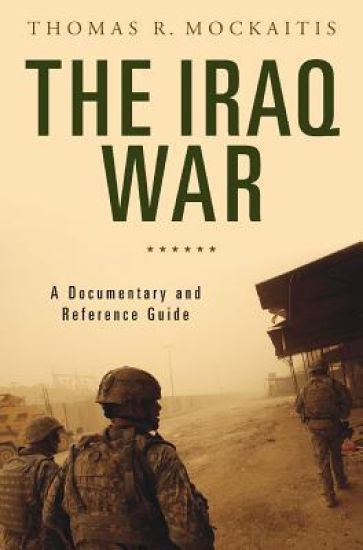
The Iraq War

The Iraq War

Thomas R. Mockaitis

Greenwood Press
2012
sidottu
Ideal for general readers as well as professionals conducting extensive research, this informative book offers a collection of documents on the origins and conduct of the Iraq War.The Iraq War: A Documentary and Reference Guide gives readers the opportunity to investigate this costly and controversial conflict as professional researchers do—by looking closely at key samples of historical evidence. As readers will see, that evidence proves to be extraordinarily revealing about the drive to war, the course of the initial invasion, the counterinsurgency, the "surge," and the continuing difficulties in unifying and stabilizing the country.From relevant exchanges in the 2000 Bush/Gore debates to interviews with Saddam Hussein to the latest reorganization of the Coalition Provisional Authority, The Iraq War gives readers an insider's view of the conflict's key decisions and events. Each chapter brings together primary and secondary sources on an important phase of the war, with the author providing context, analysis, and insight from a historian's perspective. The book also provides a solid framework for working with the documentary record—a particularly difficult task in this case, as so many vital sources will remain classified and inaccessible for years to come.
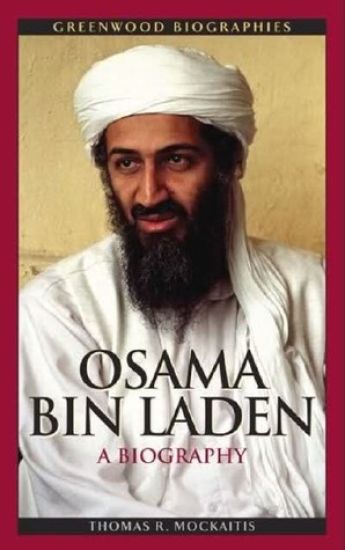
Osama bin Laden

Osama bin Laden

Thomas R. Mockaitis

Greenwood Press
2010
sidottu
This concise biography of the world's most notorious terrorist tells the fascinating story of the evolution of a wealthy businesman's son to the 9/11 mastermind who declared war on America. Osama bin Laden: A Biography offers a concise, fact-based portrait of a man whose rise from obscurity to notoriety coincides with some of the most traumatic events of the 21st century. It follows bin Laden's story from his life in Saudi society in the 1960s and 1970s to his religious conversion, his emergence as a jihadist leader, his horrifying terrorist attacks, and his near-mythic status in parts of the Muslim world today. Drawing on a wide range of sources, Osama bin Laden finds the political and religious roots of a worldview that combines devout faith with a belief in violence and terrorism. The book pays particular attention to the spread of radical Islam from Egypt to Saudi Arabia and beyond, as well as the development of Al Qaeda and its current scope and capabilities.
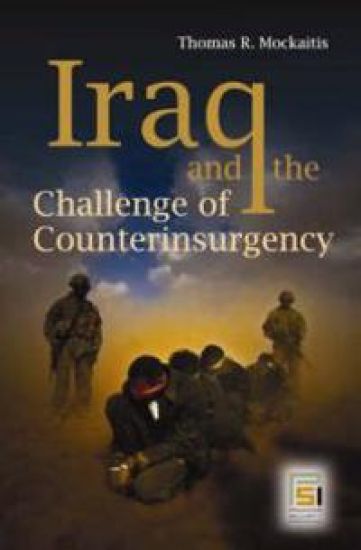
Iraq and the Challenge of Counterinsurgency

Iraq and the Challenge of Counterinsurgency

Thomas R. Mockaitis

Praeger Publishers Inc
2008
sidottu
Mockaitis begins by providing a working definition of counterinsurgency that distinguishes it from conventional war while discussing the insurgents' uses of terror as a method to support their broader strategy of gaining control of a country. Insurgent movements, he notes, use terror far more selectively than do terrorist organizations like al-Qaeda, which kills indiscriminately and is more than willing to produce mass casualties. Such methods stand in stark contrast to the American approach to armed conflict, which is more ideally suited to pragmatic culture leery of involvement in protracted foreign wars and demands immediate results. Within this context, Mocktaitis examines the conflict in Iraq, from post conflict troubles with Saddam in the early 1990s, to pre-invasion planning in 2003. He then moves into a discussion of the rise of insurgent movements and the challenges they posed in the aftermath of the fighting, tracing the ongoing efforts to shape a doctrine that allows US forces to successfully deal with the growing insurgency. The U.S. military in Iraq faces the most complex counterinsurgency campaign in its history and perhaps the history of modern warfare. At the outset, it confronted as many as 22 different domestic insurgent and foreign terrorist groups in an environment made more difficult by thousands of criminals released by Saddam Hussein. Over the past three years, the conflict has evolved with growing ethnic violence complicating an already difficult security situation. Even the most optimistic assessments predict a continued deployment of significant U.S. forces for at least five years for the country to be stabilized. It remains to be seen whether public opinion will support such a deployment. Mockaitis situates the Iraq War in its broad historical and cultural context. He argues that failure to prepare for counterinsurgency in the decades following the end of the Vietnam War left the U.S. military ill equipped to handle irregular warfare in the streets of Baghdad. Lack of preparation and inadequate troop strength led American forces to adopt a conventional approach to unconventional war. Over-reliance on firepower combined with cultural insensitivity to alienate many Iraqis. However, during the first frustrating year of occupation, U.S. forces revised their approach, relearning lessons from past counterinsurgency campaigns and adapting them to the new situation. By the end of 2004, they had developed an effective strategy and tactics but continued to be hampered by troop shortages, compounded by the unreliability of many Iraqi police and military units. The Army's new doctrine, embodied in FM 3-24 Counterinsurgency, outlines the correct approach to winning Iraq. However, three years of desultory conflict amid ongoing revelations that the premises upon which the administration argued the need for invading Iraq may be false have eroded support for the war. The American armed forces may soon find themselves in the unfortunate situation of having found a formula for success at almost the same time the voters demand withdrawal.
The "New" Terrorism

The "New" Terrorism

Thomas R. Mockaitis

Stanford University Press
2008
pokkari
As shocking as the attacks of 9/11 were, we have been too quick to view the post-9/11 struggle against terrorism as entirely new and unprecedented. Without denying certain novel aspects of Al Qaeda and its affiliates, the "newness" of its purpose and methods has been overemphasized. Many aspects of contemporary terrorism bear a striking resemblance to past movements. Others represent the culmination of trends evolving over decades. Even seemingly novel characteristics of terrorist methods may be more the outcome of earlier developments than a truly new phenomenon. The increased lethality of terrorist attacks is a case in point. Usually attributed to lack of restraint brought on by religious extremism, the emphasis on body count may owe as much to a kind of threshold phenomenon. Numbed by decades of violence, people do not shock as easily as they once did. It now takes thousands of deaths to produce the same effect once caused by a relative handful. This book examines the nature of the contemporary threat within a historical context to discern continuities and change in terrorist behavior. It challenges the idea of a global war on terrorism and suggests that the United States, or any threatened country, would be better served by a policy aimed at reducing the risk of terrorist attack to an acceptable level at a reasonable cost. The book concludes by proposing a workable strategy for achieving this reasonable level of security.