Kirjojen hintavertailu. Mukana 12 542 813 kirjaa ja 12 kauppaa.

Kirjailija

Thomas Rid

Kirjat ja teokset yhdessä paikassa: 9 kirjaa, julkaisuja vuosilta 2007-2021, suosituimpien joukossa Survival 59.5. Vertaile teosten hintoja ja tarkista saatavuus suomalaisista kirjakaupoista.

9 kirjaa

Kirjojen julkaisuhaarukka 2007-2021.

Survival 59.5

Survival 59.5

Michael O'Hanlon; Erica Frantz; Andrea Kendall-Taylor; Gordon Barrass; John A. Gans; Teresita C Schaffer; Ray Takeyh; Erik Jones; Thomas Rid; Rebecca Friedman Lissner

Routledge
2017
nidottu
Survival, the bi-monthly publication from The International Institute for Strategic Studies, is a leading forum for analysis and debate of international and strategic affairs. With a diverse range of authors, thoughtful reviews and review essays, Survival is scholarly in depth while vivid, well-written and policy-relevant in approach. Shaped by its editors to be both timely and forward-thinking, the publication encourages writers to challenge conventional wisdom and bring fresh, often controversial, perspectives to bear on the strategic issues of the moment.
Active Measures

Active Measures

Thomas Rid

Profile Books Ltd
2021
pokkari
We live in an age of subterfuge. Spy agencies pour vast resources into hacking, leaking, and forging data, often with the goal of weakening the very foundation of liberal democracy: trust in facts. Thomas Rid, a renowned expert on technology and national security, was one of the first to sound the alarm. Even before the 2016 election, he warned that Russian military intelligence was 'carefully planning and timing a high-stakes political campaign' to disrupt the democratic process. But as crafty as such so-called active measures have become, they are not new. In this astonishing journey through a century of secret psychological war, Rid reveals for the first time some of history's most significant operations - many of them nearly beyond belief. A White Russian ploy backfires and brings down a New York police commissioner; a KGB-engineered, anti-Semitic hate campaign creeps back across the Berlin Wall; the CIA backs a fake publishing empire, run by a former Wehrmacht U-boat commander that produces Germany's best jazz magazine.
Active Measures: The Secret History of Disinformation and Political Warfare
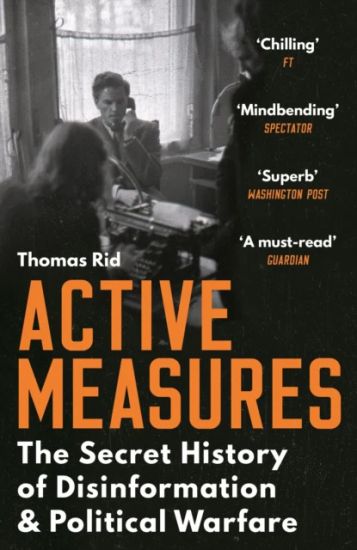
This revelatory and dramatic history of disinformation traces the rise of secret organized deception operations from the interwar period to contemporary internet troll farms We live in the age of disinformation--of organized deception. Spy agencies pour vast resources into hacking, leaking, and forging data, often with the goal of weakening the very foundation of liberal democracy: trust in facts. Thomas Rid, a renowned expert on technology and national security, was one of the first to sound the alarm. More than four months before the 2016 election, he warned that Russian military intelligence was "carefully planning and timing a high-stakes political campaign" to disrupt the democratic process. But as crafty as such so-called active measures have become, they are not new. The story of modern disinformation begins with the post-Russian Revolution clash between communism and capitalism, which would come to define the Cold War. In Active Measures, Rid reveals startling intelligence and security secrets from materials written in more than ten languages across several nations, and from interviews with current and former operatives. He exposes the disturbing yet colorful history of professional, organized lying, revealing for the first time some of the century's most significant operations--many of them nearly beyond belief. A White Russian ploy backfires and brings down a New York police commissioner; a KGB-engineered, anti-Semitic hate campaign creeps back across the Iron Curtain; the CIA backs a fake publishing empire, run by a former Wehrmacht U-boat commander, that produces Germany's best jazz magazine. Rid tracks the rise of leaking, and shows how spies began to exploit emerging internet culture many years before WikiLeaks. Finally, he sheds new light on the 2016 election, especially the role of the infamous "troll farm" in St. Petersburg as well as a much more harmful attack that unfolded in the shadows. Active Measures takes the reader on a guided tour deep into a vast hall of mirrors old and new, pointing to a future of engineered polarization, more active and less measured--but also offering the tools to cut through the deception.
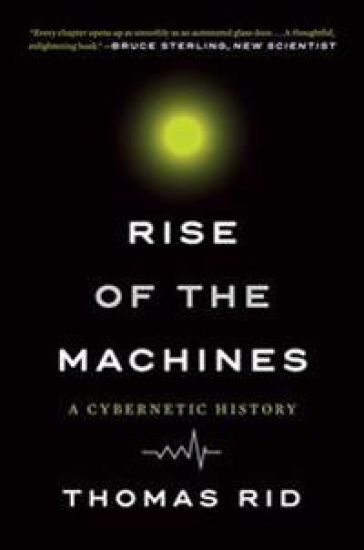
Rise of the Machines: A Cybernetic History

Rise of the Machines: A Cybernetic History

Thomas Rid

W. W. Norton Company
2017
nidottu
As lives offline and online merge even more, it is easy to forget how we got here. Rise of the Machines reclaims the spectacular story of cybernetics, one of the twentieth century's pivotal ideas.Springing from the mind of mathematician Norbert Wiener amid the devastation of World War II, the cybernetic vision underpinned a host of seductive myths about the future of machines. Cybernetics triggered blissful cults and military gizmos, the Whole Earth Catalog and the air force's foray into virtual space, as well as crypto-anarchists fighting for internet freedom.In Rise of the Machines, Thomas Rid draws on unpublished sources--including interviews with hippies, anarchists, sleuths, and spies--to offer an unparalleled perspective into our anxious embrace of technology.
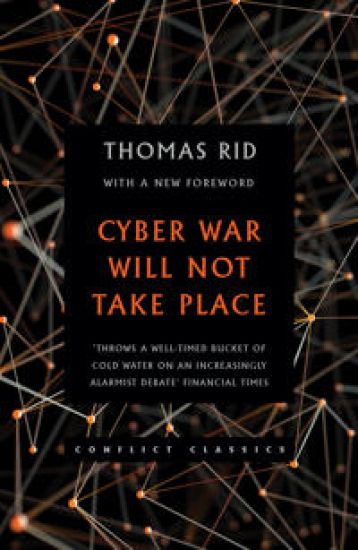
Cyber War Will Not Take Place

Cyber War Will Not Take Place

Thomas Rid

C Hurst Co Publishers Ltd
2017
nidottu
'Cyber war is coming,' announced a landmark RAND report in 1993. In 2005, the U.S. Air Force boasted it would now fly, fight, and win in cyberspace, the 'fifth domain' of warfare. This book takes stock, twenty years on: is cyber war really coming? Has war indeed entered the fifth domain?Cyber War Will Not Take Place cuts through the hype and takes a fresh look at cyber security. Thomas Rid argues that the focus on war and winning distracts from the real challenge of cyberspace: non-violent confrontation that may rival or even replace violence in surprising ways.The threat consists of three different vectors: espionage, sabotage, and subversion. The author traces the most significant hacks and attacks, exploring the full spectrum of case studies from the shadowy world of computer espionage and weaponised code. With a mix of technical detail and rigorous political analysis, the book explores some key questions: What are cyber weapons? How have they changed the meaning of violence? How likely and how dangerous is crowd-sourced subversive activity? Why has there never been a lethal cyber attack against a country's critical infrastructure?How serious is the threat of 'pure' cyber espionage, of exfiltrating data without infiltrating humans first? And who is most vulnerable: which countries, industries, individuals?
Rise of the Machines: A Cybernetic History

Rise of the Machines: A Cybernetic History

Thomas Rid

W. W. Norton Company
2016
sidottu
As lives offline and online merge even more, it's easy to forget how we got here. Rise of the Machines reclaims the spectacular story of cybernetics, a control theory of man and machine. In a history that unpacks one of the twentieth century's pivotal ideas, Thomas Rid delivers a thought-provoking portrait of our technology-enraptured era.Springing from the febrile mind of mathematician Norbert Wiener amid the devastation of World War II, the cybernetic vision underpinned a host of seductive myths about the future of machines. This vision would radically transform the postwar world, ushering in sweeping cultural change. From the Cold War's monumental SAGE bomber defense system to enhanced humans, Wiener's scheme turned computers from machines of assured destruction into engines of brilliant utopias. Cybernetics triggered blissful cults, the Whole Earth Catalog, and feminist manifestos, just as it fueled martial gizmos and the air force's foray into virtual space.As Rid shows, cybernetics proved a powerful tool for two competing factions--those who sought to make a better world and those who sought to control the one at hand. In the Bay Area, techno-libertarians embraced networked machines as the portal to a new electronic frontier: a peaceful, open space of freedom. In Washington, DC, cyberspace provided the perfect theater for dominance and war. Meanwhile the future arrived secretly in 1996, with Moonlight Maze, dawn of a new age of digital state-on-state espionage. That "first cyberwar," as Rid reveals in a blow-by-blow account, went on for years--and indeed has never stopped. In our long-promised cybernetic future, the line between utopia and dystopia continues to be disturbingly thin.Drawing on new sources and interviews with hippies, anarchists, sleuths, and spies, Rise of the Machines offers an unparalleled perspective into our anxious embrace of technology and today's clash of digital privacy and security.
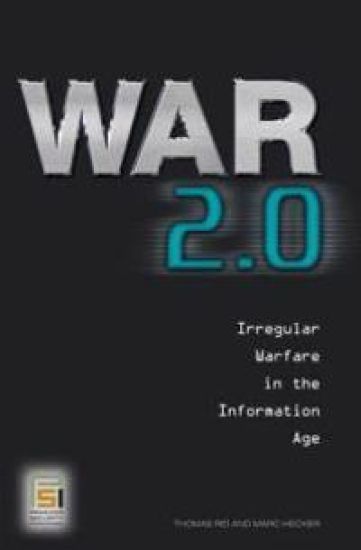
War 2.0

War 2.0

Thomas Rid; Marc Hecker

Praeger Publishers Inc
2009
sidottu
War 2.0: Irregular Warfare in the Information Age argues that two intimately connected grassroots trends—the rise of insurgencies and the rise of the web—are putting modern armies under huge pressure to adapt new forms of counterinsurgency to new forms of social war. After the U.S. military—transformed into a lean, lethal, computerized force—faltered in Iraq after 2003, a robust insurgency arose. Counterinsurgency became a social form of war—indeed, the U.S. Army calls it "armed social work"—in which the local population was the center of gravity and public opinion at home the critical vulnerability. War 2.0 traces the contrasting ways in which insurgents and counterinsurgents have adapted irregular conflict to novel media platforms. It examines the public affairs policies of the U.S. land forces, the British Army, and the Israel Defense Forces. Then, it compares the media-related counterinsurgency methods of these conventional armies with the methods devised by their irregular adversaries, showing how such organizations as al-Qaeda, the Taliban, and Hezbollah use the web, not merely to advertise their political agenda and influence public opinion, but to mobilize a following and put violent ideas into action.
War and Media Operations

War and Media Operations

Thomas Rid

Routledge
2008
nidottu
This is the first academic analysis of the role of embedded media in the 2003 Iraq War, providing a concise history of US military public affairs management since Vietnam.In late summer 2002, the Pentagon considered giving the press an inside view of the upcoming invasion of Iraq. The decision was surprising, and the innovative "embedded media program" itself received intense coverage in the media. Its critics argued that the program was simply a new and sophisticated form of propaganda. Their implicit assumption was that the Pentagon had become better at its news management and had learned to co-opt the media.This new book tests this assumption, introducing a model of organizational learning and redraws the US military’s cumbersome learning curve in public affairs from Vietnam, Grenada, Panama, the Persian Gulf, Somalia, the Balkans to Afghanistan, examining whether past lessons were implemented in Iraq in 2003. Thomas Rid argues that while the US armed forces have improved their press operations, America’s military is still one step behind fast-learning and media-savvy global terrorist organizations.War and Media Operations will be of great interest to students of the Iraq War, media and war, propaganda, political communications and military studies in general.
War and Media Operations

War and Media Operations

Thomas Rid

Routledge
2007
sidottu
This is the first academic analysis of the role of embedded media in the 2003 Iraq War, providing a concise history of US military public affairs management since Vietnam.In late summer 2002, the Pentagon considered giving the press an inside view of the upcoming invasion of Iraq. The decision was surprising, and the innovative "embedded media program" itself received intense coverage in the media. Its critics argued that the program was simply a new and sophisticated form of propaganda. Their implicit assumption was that the Pentagon had become better at its news management and had learned to co-opt the media.This new book tests this assumption, introducing a model of organizational learning and redraws the US military’s cumbersome learning curve in public affairs from Vietnam, Grenada, Panama, the Persian Gulf, Somalia, the Balkans to Afghanistan, examining whether past lessons were implemented in Iraq in 2003. Thomas Rid argues that while the US armed forces have improved their press operations, America’s military is still one step behind fast-learning and media-savvy global terrorist organizations.War and Media Operations will be of great interest to students of the Iraq War, media and war, propaganda, political communications and military studies in general.