Kirjojen hintavertailu. Mukana 12 224 885 kirjaa ja 12 kauppaa.

Kirjailija

Thomas S. Szayna

Kirjat ja teokset yhdessä paikassa: 17 kirjaa, julkaisuja vuosilta 2001-2017, suosituimpien joukossa Assessing Security Cooperation as a Preventive Tool. Vertaile teosten hintoja ja tarkista saatavuus suomalaisista kirjakaupoista.

Mukana myös kirjoitusasut: Thomas S Szayna

17 kirjaa

Kirjojen julkaisuhaarukka 2001-2017.

Assessing Security Cooperation as a Preventive Tool

Assessing Security Cooperation as a Preventive Tool

Michael J. McNerney; Angela O'Mahony; Thomas S. Szayna; Derek Eaton; Caroline Baxter; Colin P. Clarke; Emma Cutrufello; Michael McGee; Heather Peterson; Leslie Adrienne Payne; Calin Trenkov-Wermuth

RAND
2014
pokkari
The report tested the assertion that U.S. security cooperation (SC) can help reduce fragility in partner states. Based on an analysis of SC data and state fragility scores for 107 countries in 1991 2008, the study found a correlation between provision of SC by the United States and a reduction in partner state fragility, though the presence and degree of correlation depended on partner country characteristics and the type of SC provided."
The Emergence of Peer Competitors

The Emergence of Peer Competitors

Thomas S. Szayna; Daniel L. Byman; Steven C. Bankes; Derek Eaton; Seth G. Jones

RAND
2001
pokkari
One-liner: A framework for intelligence analysts to use to think systematically about the potential for the rise of a peer competitor to the United States. The potential emergence of a peer competitor is probably the most important long-term planning challenge for the Department of Defense. This report addresses the issue by developing a conceptual framework of how a proto-peer (meaning a state that is not yet a peer but has the potential to become one) might interact with the hegemon (the dominant global power). The central aspect of the framework is an interaction between the main strategies for power aggregation available to the proto-peer and the main strategies for countering the rise of a peer available to the hegemon. Then, using exploratory modeling techniques, the pathways of the various proto-peer and hegemon interactions are modeled to identify the specific patterns and combinations of actions that might lead to rivalries. The dominant power has an array of options available to limit the growth of its rivals or to change their ultimate intentions.Too confrontational a strategy, however, risks making a potential neutral power into a foe, while too conciliatory a stance may speed the growth of a competitor. Exploratory modeling suggests which attributes of the countries are most important and the sensitivity of the dominant power to perception errors.
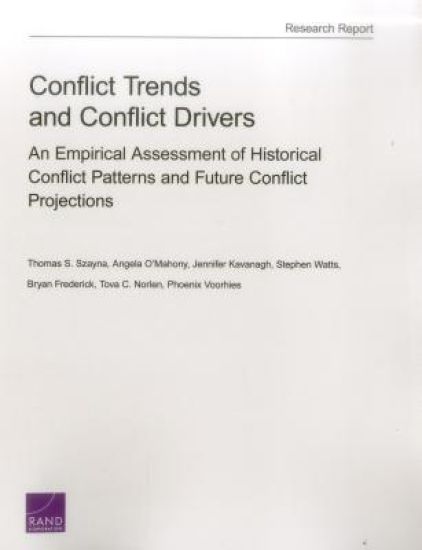
Conflict Trends and Conflict Drivers

Conflict Trends and Conflict Drivers

Thomas S Szayna; Angela O'Mahony; Jennifer Kavanagh

RAND
2017
nidottu
Future conflict projections suggest a continued decline in both interstate and intrastate conflict is likely through 2040. RAND researchers conclude the Army should help to support these trends by preparing for conventional wars against other states, although its most likely future missions will continue to involve irregular warfare against nonstate actors.
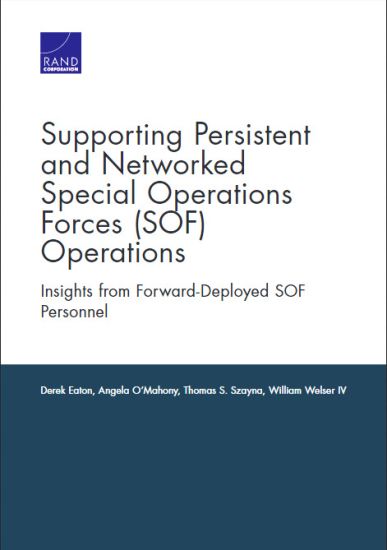
Supporting Persistent and Networked Special Operations Forces (Sof) Operations
Using a multipronged approach, RAND Corporation researchers identified three key operational challenges that forward-deployed personnel have encountered--unity of effort, continuity of effort, and administrative complexity--and then assessed the extent to which persistent, networked, and distributed operations can mitigate these challenges.
The Global Landpower Network

The Global Landpower Network

Angela O'Mahony; Thomas S Szayna; Christopher G Pernin; Laurinda L Rohn; Derek Eaton; Elizabeth Bodine-Baron; Joshua Mendelsohn; Osonde A Osoba; Sherry Oehler; Katharina Ley Best; Leila Bighash

RAND
2017
nidottu
The U.S. Army has introduced the global landpower network (GLN) concept as a means to integrate, sustain, and advance the Army's considerable ongoing efforts to meet U.S. national security guidance emphasizing the importance of working closely with partner nations to achieve U.S. strategic objectives. This report develops the GLN concept further.
Assessing the Value of Regionally Aligned Forces in Army Security Cooperation

Assessing the Value of Regionally Aligned Forces in Army Security Cooperation

Angela O'Mahony; Thomas S Szayna; Michael J McNerney

RAND
2017
nidottu
This document reports on a study to assist the Army, geographic combatant commands, and the rest of the U.S. Department of Defense in better aligning security cooperation missions with national interests and security goals. In addition, the report provides some recommendations and analytic tools for the Army's leadership and regionally aligned force planners to improve regionally aligned force implementation.
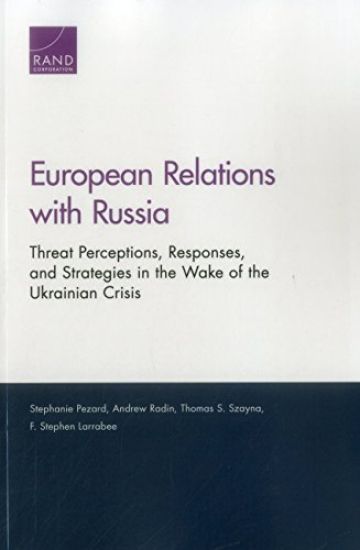
European Relations with Russia

European Relations with Russia

Stephanie Pezard; Andrew Radin; Thomas S Szayna; F Stephen Larrabee

RAND
2017
nidottu
Russia's 2014 annexation of Crimea has challenged the integrity of Europe's territorial borders and had a broader negative impact on the European security environment. This report analyzes how Europeans perceive the Russian threat--whether European states regard Russia's policy in eastern and northern Europe as a security priority, how they have responded to Russian behavior, and how officials see the future of Russo-European relations.
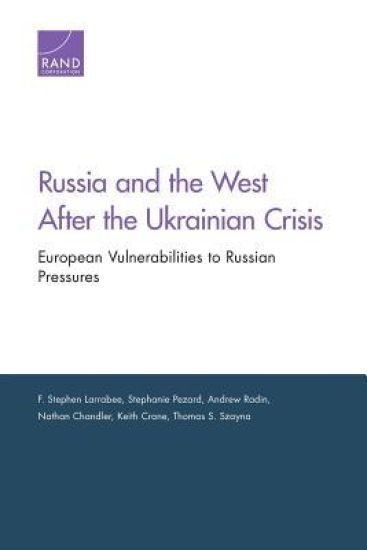
Russia & the West After the Ukrainian Crisis

Russia & the West After the Ukrainian Crisis

F. Stephen Larrabee; Stephanie Pezard; Andrew Radin; Nathan Chandler; Keith Crane; Thomas S. Szayna

RAND
2017
pokkari
Given Russia's annexation of Crimea and continued aggression in eastern Ukraine, Europe must reassess its approach to a regional security environment previously thought to be stable and relatively benign. This report analyzes the vulnerability of European states to possible forms of Russian influence, pressure, and intimidation and examines four areas of potential European vulnerability: military, trade and investment, energy, and politics.
Considerations for Integrating Women into Closed Occupations in U.S. Special Operations Forces

Considerations for Integrating Women into Closed Occupations in U.S. Special Operations Forces

Thomas S. Szayna; Eric V. Larson; Angela O'Mahony; Sean Robson; Agnes Gereben Schaefer; Miriam Matthews; J.Michael Polich; Lynsay Ayer; Derek Eaton; William Marcellino; Lisa Miyashiro; Marek Posard; James Syme; Zev Winkelman; Cameron Wright; Megan Zander-Cotugno; William Welser

RAND
2016
pokkari
Integrating women into special operations forces poses potential challenges for unit cohesion. The integration of women raises issues of effectiveness, in terms of physical standards and ensuring the readiness, cohesion, and morale essential to high-performing teams. This report assesses those challenges and provides analytical support for validating occupational standards for positions controlled by U.S. Special Operations Command.
Authorities and Options for Funding Ussocom Operations

Authorities and Options for Funding Ussocom Operations

Elvira N. Loredo; John E. Peters; Karlyn D. Stanley; Matthew E. Boyer; William Welser; Thomas S. Szayna

RAND
2014
pokkari
This report examines mechanisms, sources, and inter-Service agreements for funding special operations forces (SOF) operations and provides recommendations to reduce the frequency and duration of disputes between the United States Special Operations Command, the Military Departments, and Geographic Combatant Commands over their respective funding responsibilities for SOF.
Stabilization and Reconstruction Staffing

Stabilization and Reconstruction Staffing

Terrence K. Kelly; Ellen E. Tunstall; Thomas S. Szayna; Deanna Weber Prine

RAND
2008
pokkari
This book uses the Office of Personnel Management's Human Capital Assessment and Accountability Framework, which advocates strategic alignment, workforce planning and development, and leadership and knowledge management, to assess the U.S. civilian personnel and staffing requirements for stability and reconstruction operations.It presents a framework for improving U.S. civilian personnel and staffing programs for stability and reconstruction operations.
Preparing the Army for Stability Operations
Much activity is being aimed at revising the approach to planning and implementing Stabilization, Security, Transition, and Reconstruction (SSTR) operations. The changes are meant to ensure a common U.S. strategy rather than a collection of individual departmental and agency efforts and on involving all available government assets in the effort. The authors find that some elements essential to the success of the process are not yet in place.
The Civil-Military Gap in the United States: Does it Exist, Why, and Does it Matter?

The Civil-Military Gap in the United States: Does it Exist, Why, and Does it Matter?

Thomas S. Szayna; Kevin F. McCarthy; Jerry M. Sollinger; Linda J. Demaine; Jefferson P. Marquis

RAND
2007
pokkari
What is the potential for a divergence in views among civilian and military elites (sometimes referred to as the civil-military gap) to undermine military effectiveness? Although a variety of differences were found among the views of military and civilian survey respondents, these differences mostly disappeared when the authors focused on the attitudes that are pertinent to civilian control of the military and military effectiveness.
Improving the Planning and Management of U.S. Army Security Cooperation

Improving the Planning and Management of U.S. Army Security Cooperation

Thomas S. Szayna; Adam Grissom; Jefferson Marquis; Thomas-Durell Young; Brian Rosen; Yuna Huh

RAND
2006
pokkari
Discusses the Army's current process for planning and resourcing its security cooperation activities and explores avenues for improvement. In the realm of security cooperation--peacetime activities undertaken by the U.S. armed services with other armed forces and countries--the U.S. Army's current planning process is exceedingly complex and difficult to coordinate, control, and measure. This monograph seeks to help the U.S. Army improve its ability to assess future demand for resources devoted to security cooperation and to evaluate the impact of these demands upon the resources available to the Army.
Faultlines of Conflict in Central Asia and the South Caucasus
Central Asia and the South Caucasus is a region that has witnessed violent clashes both within and between states in recent decades. Moreover, conflict is likely to be a continuing problem over the next 10-15 years. Depending on how the region develops, the form and degree of conflict may or may not grow to involve other states, including the United States. The authors identify and evaluate key faultlines in Central Asia and the South Caucasus and how they affect the like-lihood and possible evolution of armed conflict in these regions. These faultlines include the role of state political and economic weakness; the impact of crime and the drug trade; the effects of ethnic tensions, foreign interests, and influence; and the impact of competition over natural resources. The analysis then examines the ways in which the emergence of conflict could draw the United States into the strife and examines the operational challenges the region poses for possible Army deployments in the 2010-2015 time frame. Although this research was largely completed prior to the 9/11 attacks on the United States, the report has been updated in light of the changed security environment and U.S. military presence on the ground in the Caspian region.The operations in Afghanistan have not altered the faultlines; they are long-term and structural in nature. In fact, U.S. presence on the ground highlights the importance of understanding these faultlines and responding to them effectively.
Improving Army Planning for Future Multinational Coalition Operations

Improving Army Planning for Future Multinational Coalition Operations

Thomas S. Szayna; Frances M. Lussier; Krista Magras; Olga Oliker; Michele Zanini; Robert Howe

RAND
2001
pokkari
The Army currently lacks effective and appropriate processes to plan for enhanced multinational force compatibility (MFC). The current system was not designed for, and therefore is not capable of, supporting centralized oversight of MFC activities. The authors address this problem by focusing recommendations on two primary issues, the management of resources and a means of prioritizing between partners and activities. On the first point, the authors point out the difficulties in identification and control over resources devoted to MFC and stress the need to sensitize the Army Program Evaluation Groups to provide the data required. On the second point, the study outlines a four-step integrated planning system that: (1) identifies the most likely long-term U.S. coalition partners (on the basis of a methodology designed for this purpose); (2) provides a way to pinpoint the compatibility shortcomings of the potential partners across the full range of missions (on the basis of a software program designed for this purpose); (3) links specific Army MFC policies to the shortcomings (on the basis of previous RAND work); (4) once the resource data problems are solved, allows for the determination of cost-effective resource allocation.When cost-effectiveness assessments of MFC efforts become possible, a fifth--currently hypothetical--step of integrating the Army's own force planning with that of allies and likely partners would become a realistic option. In other words, Army planners could carry out cost-benefit assessments on the basis of tradeoffs between own and ally capabilities, knowing in detail the costs involved, and possibly in cooperation with select allies and partners.
NATO's Further Enlargement

NATO's Further Enlargement

Thomas S. Szayna

RAND
2001
pokkari
In the 1990s, NATO began a course of enlargement and transformation to remain relevant in Europe's post Cold War security environment. As part of its commitment to enlargement, it admitted three new members - Poland, Hungary, and the Czech Republic in 1999 and has plans to admit more countries in the future. NATO's enlargement has profound military implications for the U.S. and its allies in terms of future planning and shaping strategies. Both have been driven primarily by political imperatives, not by a sense of direct threat, but by an environment - shaping agenda of democratization and integration. This report develops and applies an analytical framework for thinking about the determinants of future NATO enlargement, the specific defense challenges they pose, and shaping policies that might aid in addressing these challenges.